
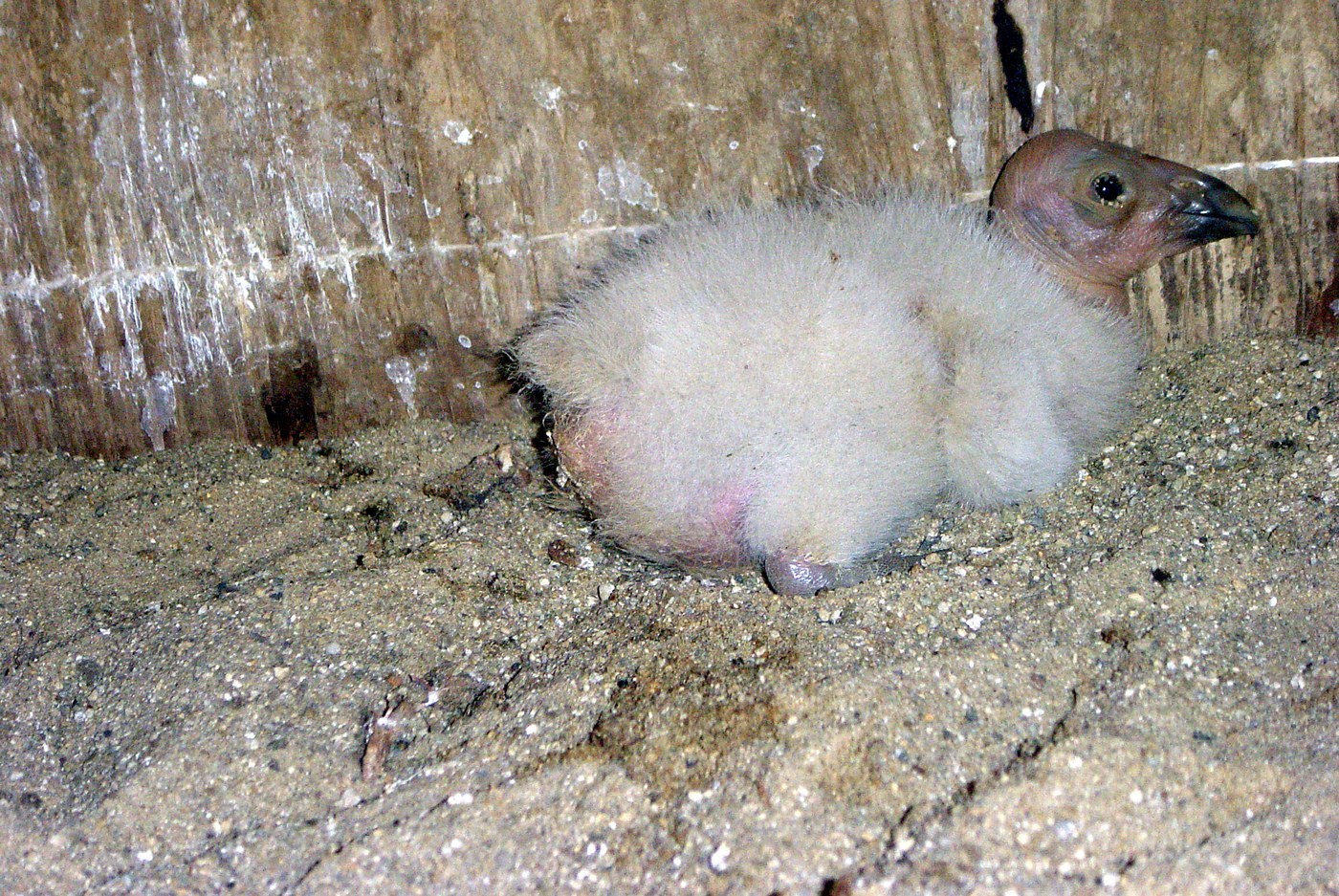
California Condor
Gymnogyps californianus
North America's largest flying land bird, an enormous black scavenger with a naked orange-pink head, brought back from the brink of extinction through intensive captive breeding.
- Size
- 109-140 cm (43-55 in) long, up to 300 cm (9.8 ft) wingspan
- Habitat
- rugged mountains, canyons, and coastal cliffs of California, Arizona, Utah, and Baja California
- Type
- raptor
Spotted a bird like this?
Identify any bird from a photo, free.
Overview
The California Condor is an enormous New World vulture and the largest flying land bird in North America, with a wingspan approaching three meters (nearly ten feet). Adults are almost entirely black except for triangular white patches on the underwing linings, and have a bare head and neck that ranges from grayish to vivid orange, pink, and yellow, with skin color and pattern varying with mood and social status.
Juveniles have dark, grayish heads and mottled underwing linings that whiten with age over several years to adult plumage. Condors are slow to mature, typically not breeding until six to eight years of age, and can live several decades in the wild.
The species came perilously close to extinction in the twentieth century, with the total wild population dropping to just 22 individuals by 1987, prompting an unprecedented captive-breeding and reintroduction program that has since restored a still-fragile population to parts of its historic range.
How to identify it
Key Field Marks
- Immense size and wingspan, dwarfing all other North American raptors
- Bare head and neck, colored gray to orange-pink-yellow in adults, dark gray in juveniles
- Broad, black wings with white triangular patches on the underwing (adults) visible from below
- Soars on flat wings with primary feathers spread like fingers, rarely flapping
Similar Species
- Turkey Vulture is much smaller with a red head, two-toned silvery underwings across the whole flight feather area, and a shallow V-shaped wing posture rather than flat.
- Golden Eagle is also large but has a fully feathered head and different, more angled wing shape, without the condor's massive white underwing triangles.
- Numbered wing tags on many wild condors, used for individual tracking, are a helpful confirmation clue.
Habitat & range
California Condors historically ranged across much of western North America but by the twentieth century survived only in the mountains of southern California. Reintroduction efforts since the 1990s have reestablished free-flying populations in central and southern California, the Grand Canyon region of Arizona and southern Utah, and Baja California, Mexico, where the birds use rugged mountains, canyons, and coastal cliffs with updrafts suitable for soaring, along with adjacent open rangeland for foraging.
Condors are non-migratory but range widely in search of carrion, sometimes traveling over a hundred miles in a single day.
Behavior & voice
Behavior
Condors are highly social, often congregating at carcasses and communal roosts, with complex dominance hierarchies reflected in head and neck skin color changes. They rely almost entirely on soaring flight, using thermals and updrafts to travel great distances with minimal energy expenditure.
Voice
Like other New World vultures, condors lack a true syrinx and are essentially silent, producing only grunts, hisses, and low guttural sounds during social interactions.
Feeding
Condors feed exclusively on carrion, especially large mammal carcasses such as deer, cattle, and marine mammals along the coast, and can consume large quantities at a single feeding, then go days without eating.
Nesting & Breeding
Pairs nest in caves, rock crevices, or large tree cavities on cliffs, laying a single egg every one to two years. Both parents share incubation and an extended period of chick-rearing, with young condors remaining dependent on parents for many months after fledging - one of the slowest reproductive rates of any North American bird.
Frequently asked questions
Why did the California Condor almost go extinct?
Lead poisoning from ingesting spent ammunition in carcasses, along with historical shooting, habitat loss, and DDT-related eggshell thinning, drove the wild population down to just 22 birds by 1987.
How was the California Condor saved?
All remaining wild condors were captured for an intensive captive-breeding program starting in 1987, and captive-bred birds have since been released back into parts of California, Arizona, Utah, and Baja California, though the population remains critically endangered.
How big is a California Condor?
It is the largest flying land bird in North America, with a wingspan that can approach 3 meters (nearly 10 feet) and a body length over a meter.
Why do condors have bald, colorful heads?
The bare skin helps keep the head clean while feeding inside carcasses, and its color can shift with mood and social status, playing a role in communication among condors.
How can you tell a California Condor from a Turkey Vulture?
The condor is vastly larger, with flat (not V-shaped) wings, prominent white underwing triangles, and often a visible numbered wing tag, while the smaller Turkey Vulture has silvery two-toned wings held in a shallow V.
California Condor guides
In-depth guides for identifying, finding, and understanding California Condor.
Other birds you may enjoy
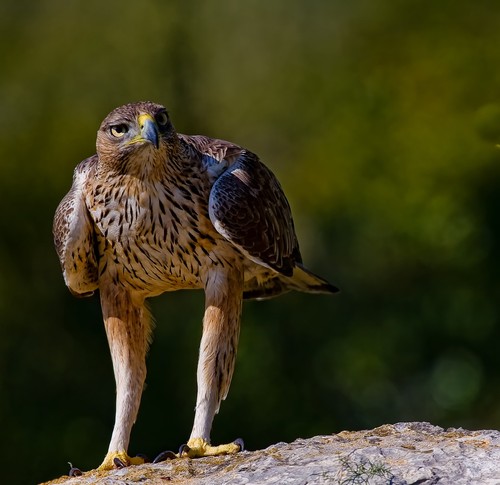
Bonelli's Eagle
Body 65–72 cm (26–28 in); wingspan 150–180 cm (59–71 in)
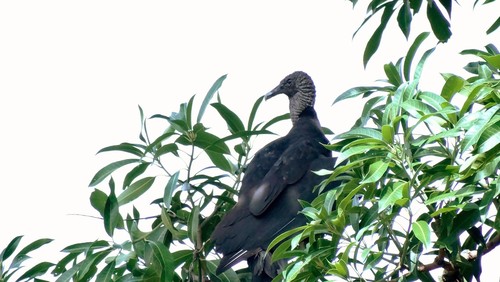
Black Vulture
56-68 cm (22-27 in) long, 137-165 cm wingspan
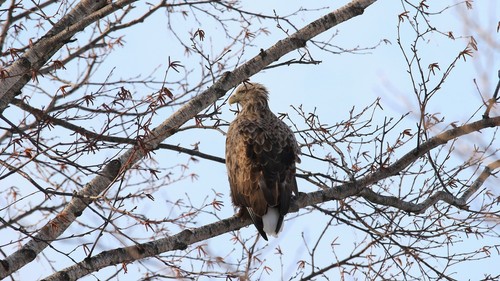
White-tailed Eagle
66-94 cm body length; wingspan 178-245 cm, among the largest eagles in the world
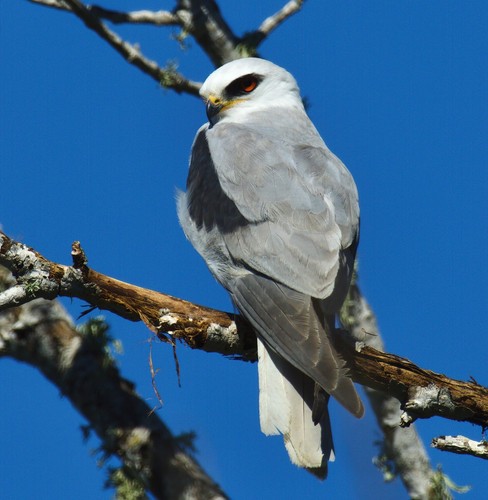
White-tailed Kite
35-43 cm (14-17 in) long, 88-102 cm (35-40 in) wingspan
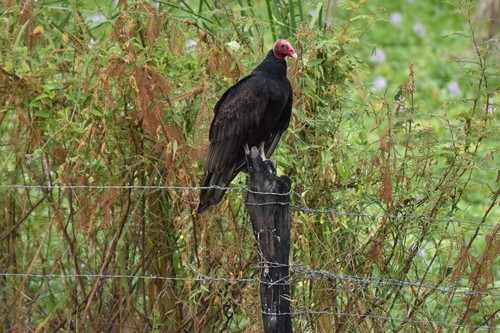
Turkey Vulture
64-81 cm (25-32 in) long, 160-183 cm wingspan
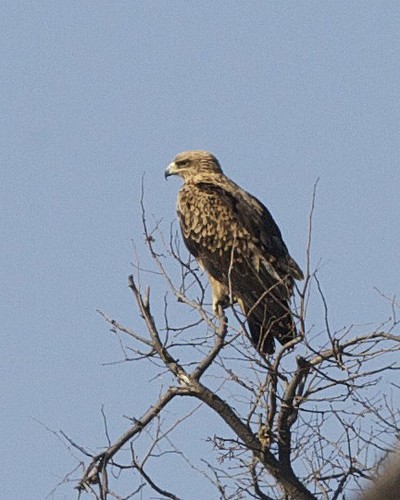
Tawny Eagle
62–75 cm long; wingspan 1.65–2.0 m
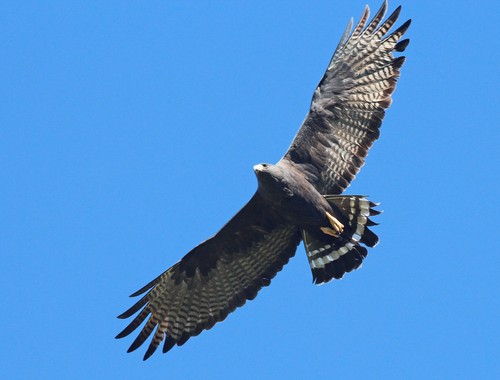
Zone-tailed Hawk
46-56 cm (18-22 in) long, 118-140 cm (46-55 in) wingspan
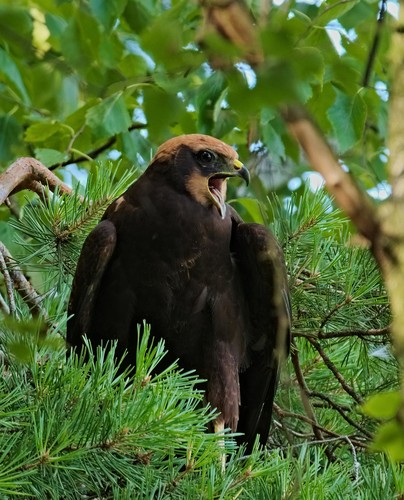
Western Marsh Harrier
Body 43-56 cm; wingspan 115-140 cm
Swallow-tailed Kite
48-68 cm (19-27 in) long including tail streamers, 112-136 cm (44-54 in) wingspan
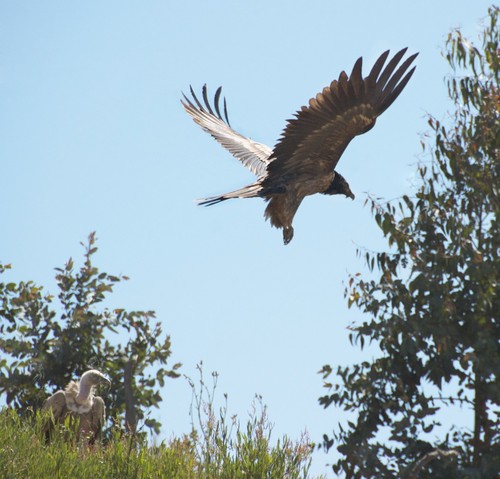
White-backed Vulture
78-98 cm long, wingspan 1.96-2.25 m
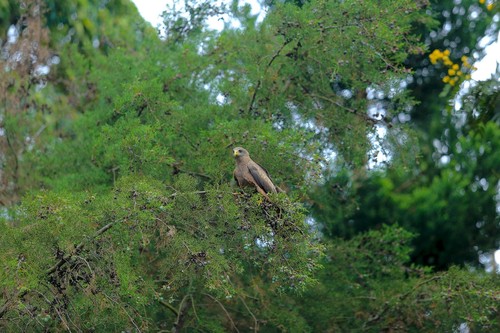
Yellow-billed Kite
55-60 cm long; wingspan 130-155 cm
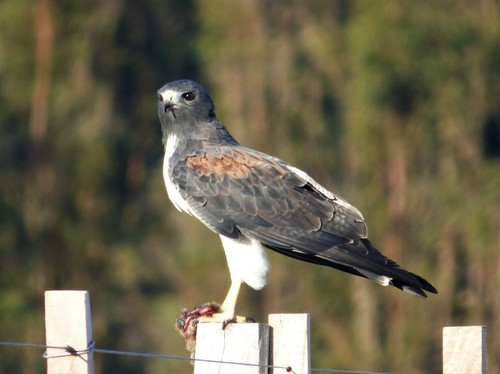
White-tailed Hawk
46-59 cm (18-23 in) long, 122-142 cm (48-56 in) wingspan