
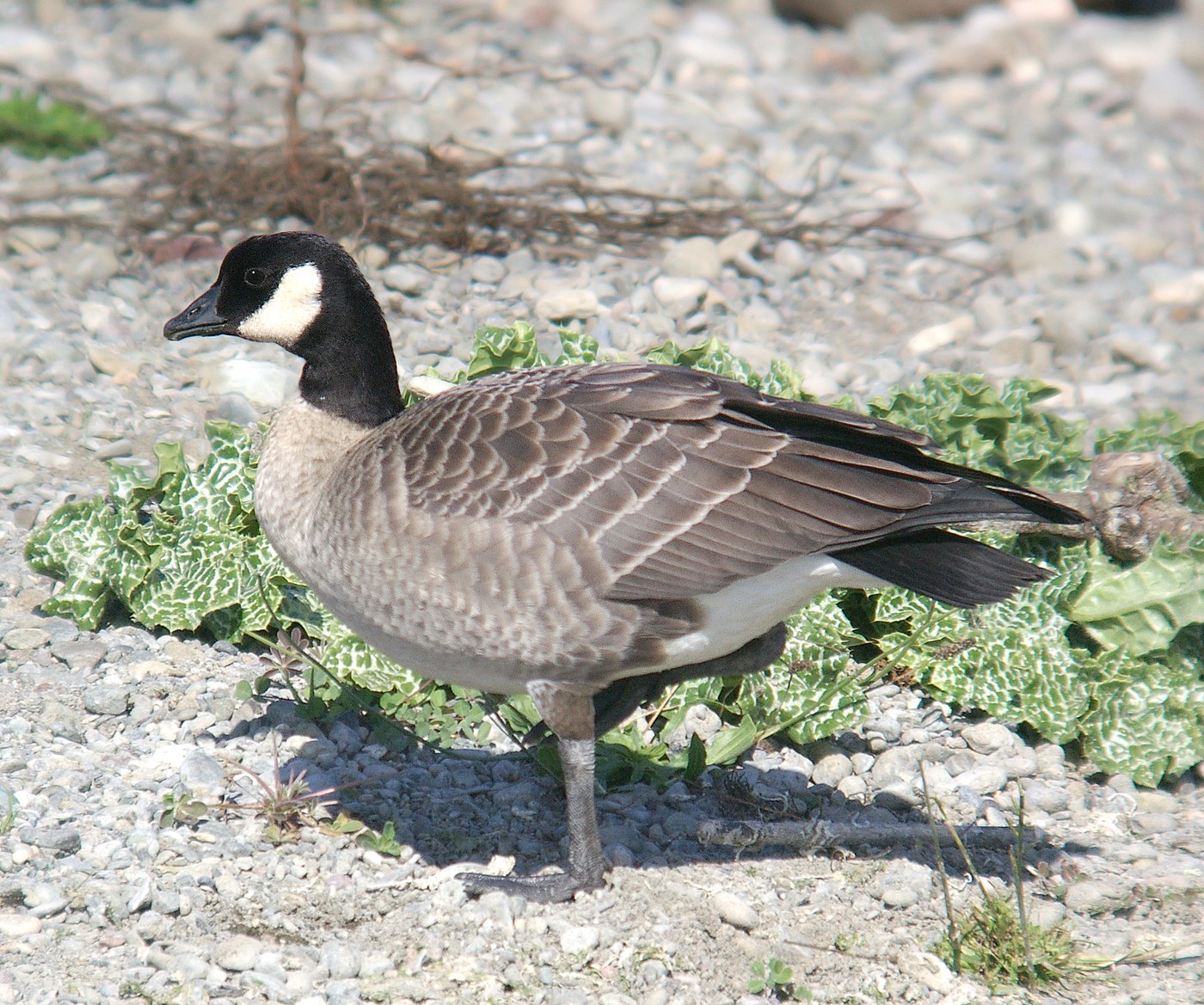
Cackling Goose
Branta hutchinsii
A smaller, stubby-billed look-alike of the Canada Goose, formerly considered the same species.
- Size
- 58-70 cm (23-28 in) long, roughly 100-115 cm wingspan
- Habitat
- Arctic and subarctic tundra (breeding), agricultural fields and wetlands (winter)
- Type
- waterfowl
Spotted a bird like this?
Identify any bird from a photo, free.
Overview
The Cackling Goose is a small, compact goose that looks like a miniature version of the Canada Goose, with the same black head and neck and bold white chinstrap, but a shorter neck, a stubby triangular bill, and an overall daintier build. Once classified as a subspecies of the Canada Goose, it was recognized as a full species based on genetic and morphological differences.
Cackling Geese breed on Arctic and subarctic tundra and winter in large flocks in the interior and coastal United States, often mixing with the more numerous and larger Canada Goose.
How to identify it
Key field marks
- Small size with a short neck and a stubby, steep, triangular bill
- Black head and neck with a white chinstrap patch, essentially identical in pattern to Canada Goose
- Rounded head shape and compact, almost duck-like body proportions
Similar species
The Canada Goose shares the same head pattern but is larger overall with a longer neck and a longer, more sloped bill; separating the two, especially mid-sized Canada Goose subspecies from large Cackling Goose subspecies, can be genuinely challenging and relies on subtle structural differences and direct size comparison in mixed flocks.
Habitat & range
Cackling Geese breed on Arctic and subarctic tundra in Alaska and parts of northern Canada, nesting on the ground near ponds, coastal marshes, and tundra wetlands. They winter primarily in the interior valleys and coastal areas of the western and southern United States, often in large flocks that also include Canada Geese, favoring agricultural fields, wetlands, and open grasslands.
Behavior & voice
Behavior
Highly social, forming large wintering flocks often mixed with Canada Geese; behavior is broadly similar to that species, including grazing on land and strong pair bonds.
Voice
Gives a higher-pitched, more yelping or cackling call than the deeper honk of the Canada Goose, which helps distinguish mixed flocks by ear.
Feeding
Grasses, sedges, grains, and other plant material, grazed on land and in shallow wetlands.
Nesting
Nests on the ground on Arctic and subarctic tundra, often close to water; clutches typically hold 3-6 eggs.
Frequently asked questions
Is the Cackling Goose the same as the Canada Goose?
No, it was formerly classified as a subspecies of the Canada Goose but is now recognized as a separate, smaller species with a shorter neck and stubbier bill.
How can you tell Cackling and Canada Geese apart in a mixed flock?
Look for the Cackling Goose's notably smaller size, shorter neck, and small, steep, triangular bill compared to the larger, longer-necked, longer-billed Canada Goose; voice also differs, with Cackling Geese giving a higher, more yelping call.
Where do Cackling Geese breed?
On Arctic and subarctic tundra in Alaska and parts of northern Canada.
Where do Cackling Geese spend the winter?
Mainly in the interior and coastal United States, often mixed with wintering flocks of Canada Geese.
Cackling Goose guides
In-depth guides for identifying, finding, and understanding Cackling Goose.
Other birds you may enjoy
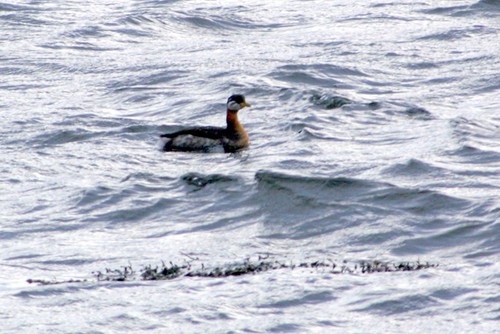
Red-necked Grebe
40-55 cm (16-22 in) long, 77-85 cm wingspan
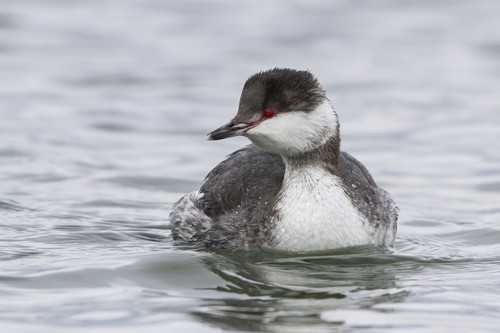
Horned Grebe
31-38 cm (12-15 in) long, 46-55 cm wingspan
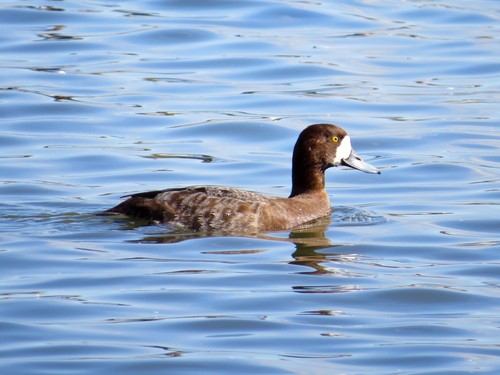
Greater Scaup
42-51 cm (16.5-20 in) long, 71-84 cm wingspan
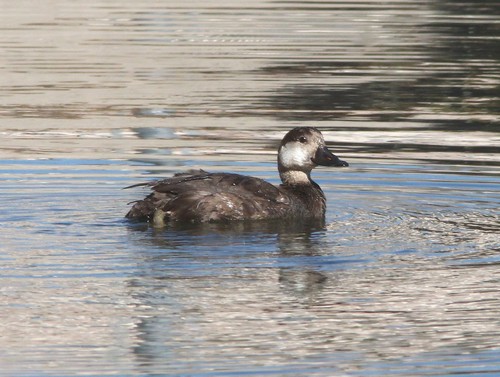
Black Scoter
43-54 cm (17-21 in) long, 79-90 cm wingspan
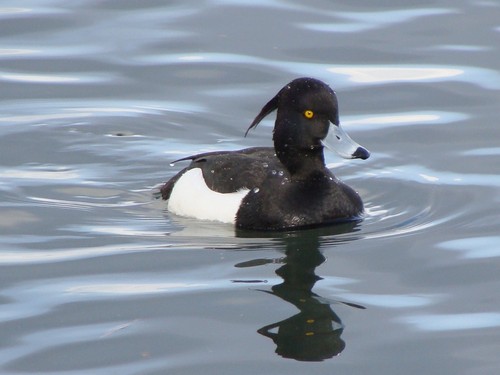
Tufted Duck
40-47 cm (16-18.5 in) long, 67-73 cm wingspan
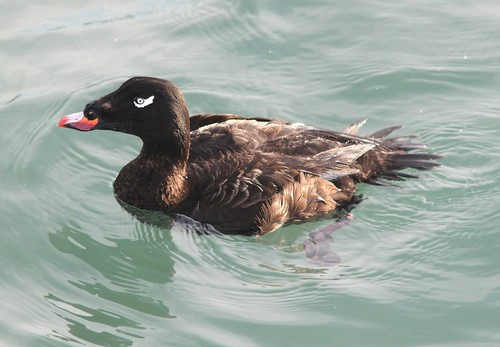
White-winged Scoter
48-58 cm (19-23 in) long, 86-99 cm wingspan
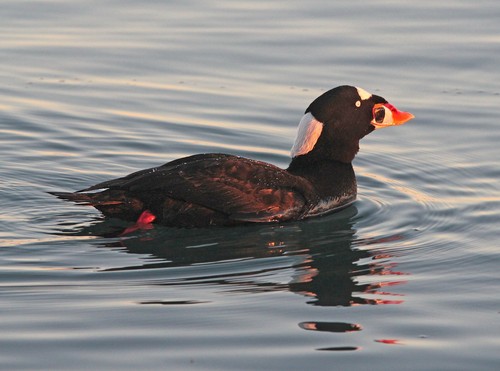
Surf Scoter
45-56 cm (18-22 in) long, 78-92 cm wingspan
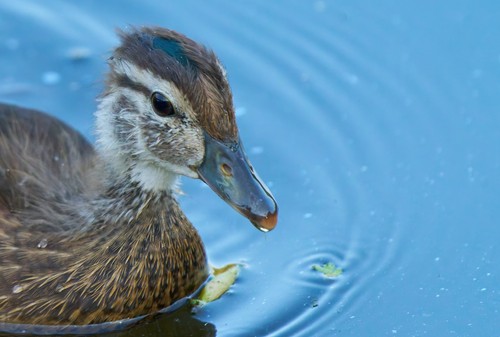
Wood Duck
47-54 cm (18.5-21 in) long, 66-73 cm wingspan
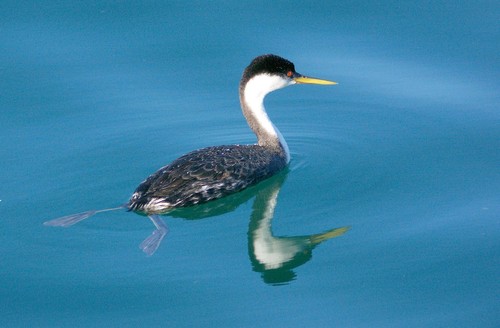
Western Grebe
56-74 cm (22-29 in) long, 79-102 cm wingspan
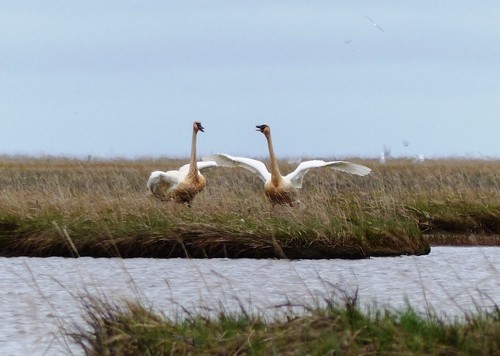
Tundra Swan
115-150 cm (45-59 in) long, about 180 cm wingspan
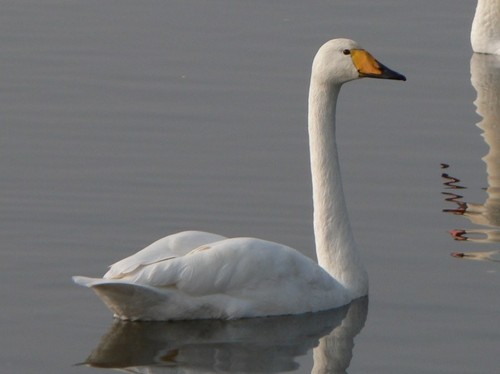
Whooper Swan
140-165 cm (55-65 in) long, 205-235 cm wingspan
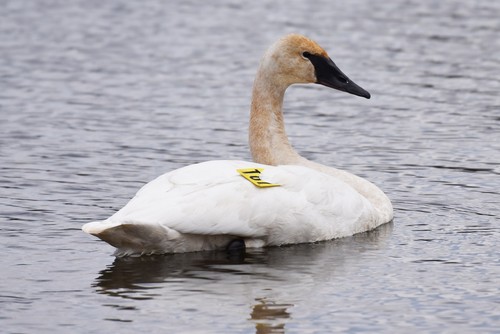
Trumpeter Swan
150-180 cm (59-71 in) long, up to 300 cm wingspan