
Bufflehead
Bucephala albeola
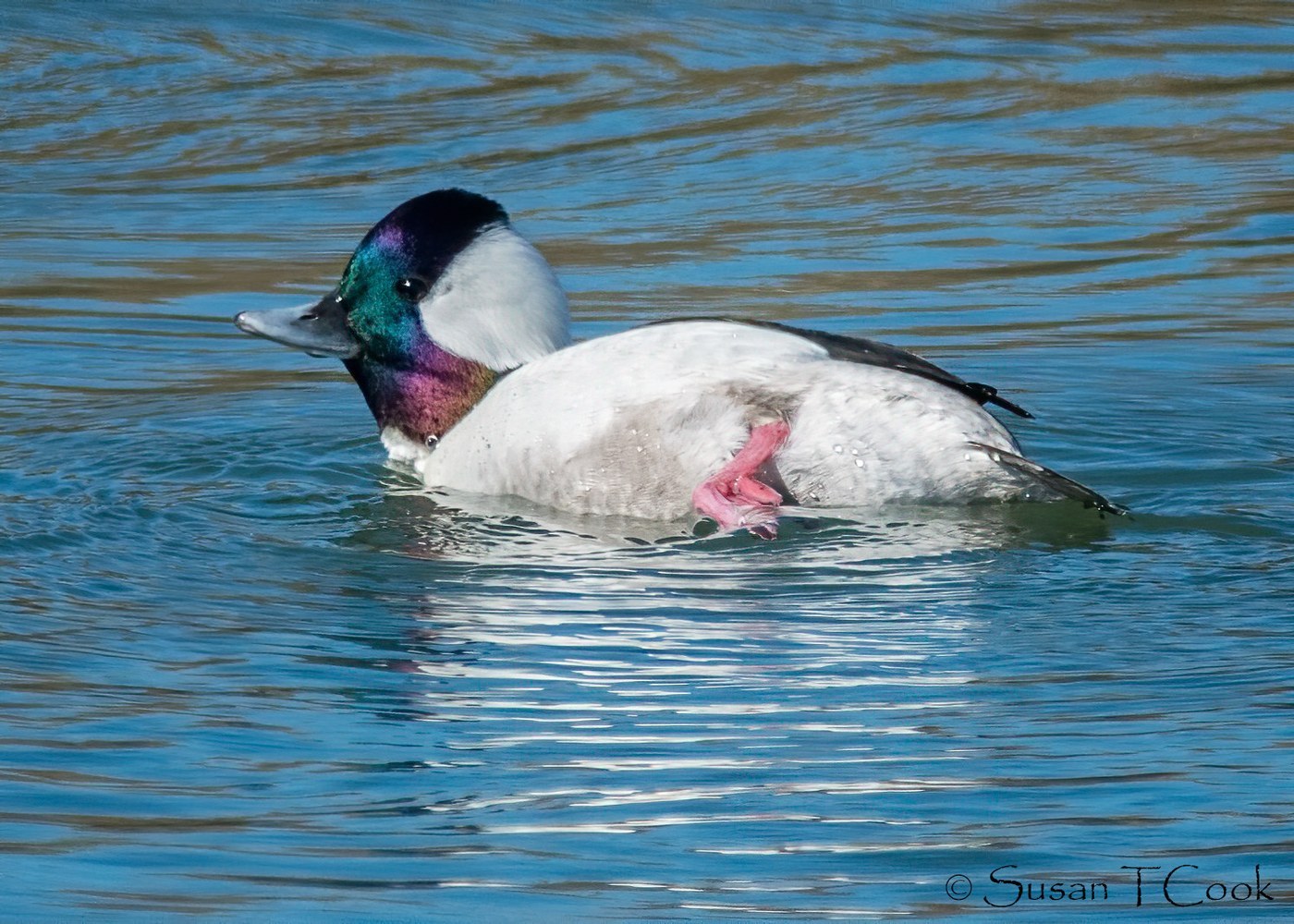
North America's smallest diving duck, the compact drake striking with a large white patch wrapping around an iridescent black-and-purple head.
- Size
- 32-40 cm (12.5-16 in) long, 50-61 cm wingspan
- Habitat
- small lakes, ponds, and sheltered bays; nests in old woodpecker cavities near boreal forest wetlands
- Type
- waterfowl
Spotted a bird like this?
Identify any bird from a photo, free.
Overview
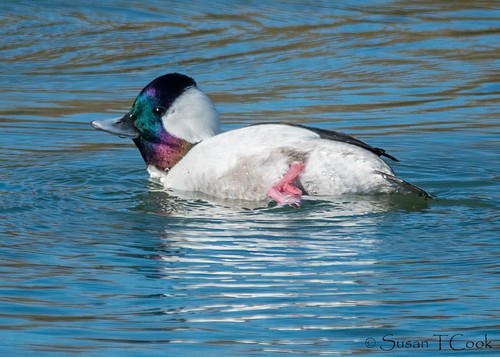
The Bufflehead is the smallest diving duck in North America, a compact, large-headed bird that appears almost oversized in the head relative to its tiny body. The breeding drake is strikingly patterned, with a puffy, iridescent head showing shifting purple and green highlights, dominated by a large white patch that wraps around the back of the head from eye to eye.
Females are much plainer, dusky gray-brown overall with a small, elongated white cheek patch behind the eye. The species' small size, quick wingbeats, and habit of diving frequently make it a distinctive and endearing sight on small ponds and sheltered coastal waters.
How to identify it
Key Field Marks
- Very small size with a disproportionately large, puffy head
- Breeding drake: iridescent purple-and-green head with a large white patch wrapping around the back of the crown, black back, white body
- Female: dusky gray-brown with a small oval white cheek patch
- Fast, low, whirring flight
Similar Species
No other North American duck combines the Bufflehead's tiny size with its large white head patch; the male's bold pattern and the female's small white cheek spot are both distinctive at a glance, and its small size alone typically separates it from all other diving ducks it associates with.
Habitat & range
Buffleheads breed across the boreal forest zone of Canada and Alaska, nesting almost exclusively in old Northern Flicker cavities (and occasionally other small woodpecker holes) in trees near small lakes and ponds — their small body size is closely tied to fitting into these relatively narrow cavities. They winter widely across the United States and southern Canada on small lakes, ponds, rivers, and sheltered coastal bays and estuaries.
The species shows strong nest-site fidelity, with females often returning to the same cavity or nearby cavities in subsequent years.
Behavior & voice
Buffleheads are active diving ducks, feeding on aquatic invertebrates such as insect larvae and small crustaceans, along with small fish and some plant seeds, diving frequently and quickly in short bursts. They are often seen in small groups, diving somewhat asynchronously so that some birds remain on the surface as lookouts.
The voice is generally quiet, with males giving soft, guttural notes during courtship displays and squeaky calls, while females give a harsh, low growl. As an obligate cavity nester dependent on old flicker holes, the female lays 6-11 eggs, and ducklings leap from the nest entrance to the ground shortly after hatching, then are led to water by the female.
Frequently asked questions
Is the Bufflehead the smallest North American duck?
Yes, it is the smallest diving duck in North America.
Where do Buffleheads nest?
They nest almost exclusively in old Northern Flicker cavities in trees near boreal forest lakes and ponds, a habit closely tied to their small body size.
How do you identify a male Bufflehead?
Look for a small, puffy, iridescent purple-and-green head with a large white patch wrapping around the back of the crown, set against a white body and black back.
What do Buffleheads eat?
They dive for aquatic invertebrates, small fish, and some plant seeds.
Why is the Bufflehead sometimes called 'butterball'?
The nickname refers to its small, round, plump body shape.
Bufflehead guides
In-depth guides for identifying, finding, and understanding Bufflehead.
Bufflehead identified by the community
Real birds identified with Bird Identifier.
Other birds you may enjoy
Red-necked Grebe
40-55 cm (16-22 in) long, 77-85 cm wingspan
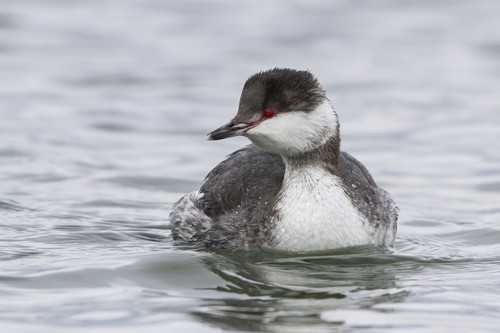
Horned Grebe
31-38 cm (12-15 in) long, 46-55 cm wingspan
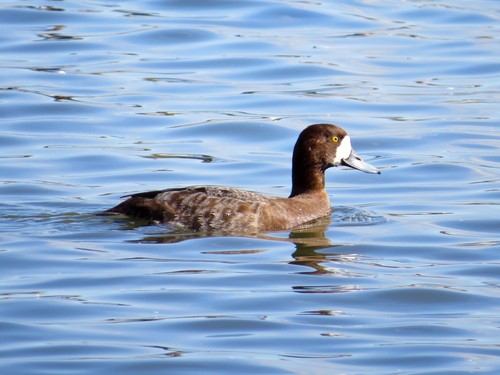
Greater Scaup
42-51 cm (16.5-20 in) long, 71-84 cm wingspan
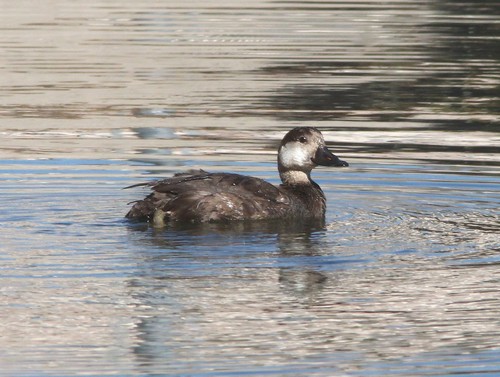
Black Scoter
43-54 cm (17-21 in) long, 79-90 cm wingspan
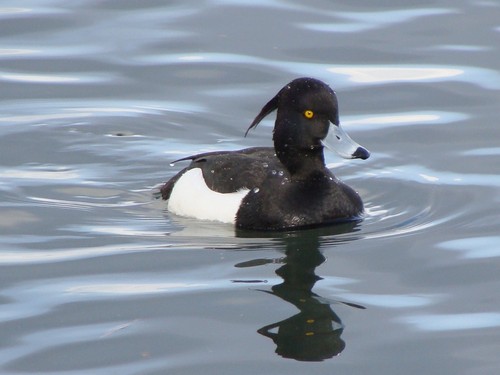
Tufted Duck
40-47 cm (16-18.5 in) long, 67-73 cm wingspan
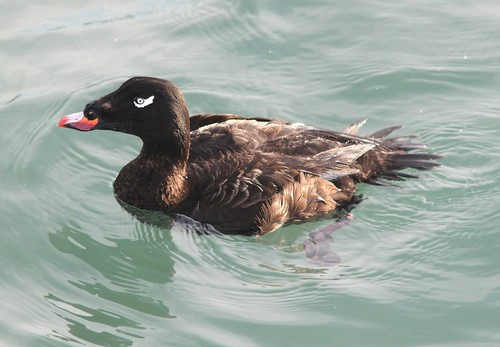
White-winged Scoter
48-58 cm (19-23 in) long, 86-99 cm wingspan
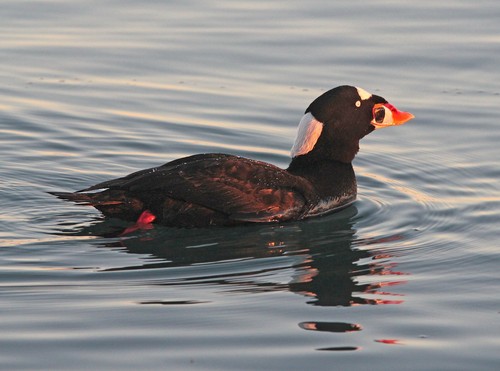
Surf Scoter
45-56 cm (18-22 in) long, 78-92 cm wingspan
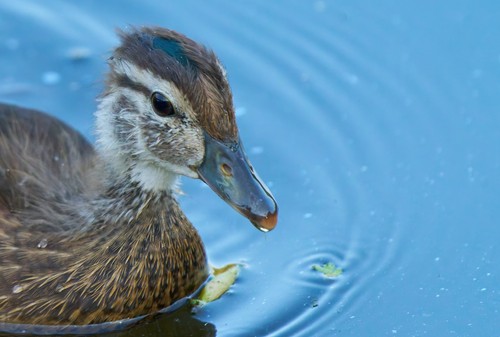
Wood Duck
47-54 cm (18.5-21 in) long, 66-73 cm wingspan
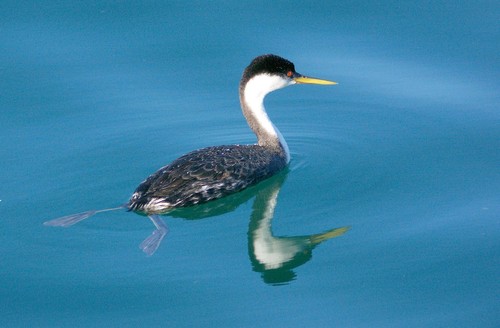
Western Grebe
56-74 cm (22-29 in) long, 79-102 cm wingspan
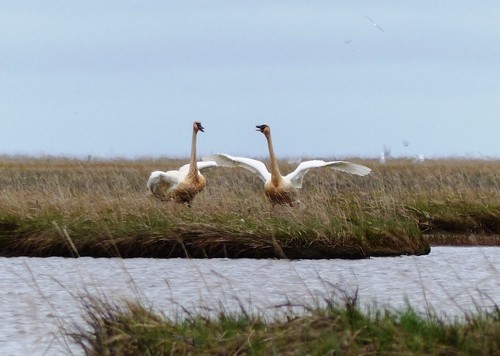
Tundra Swan
115-150 cm (45-59 in) long, about 180 cm wingspan
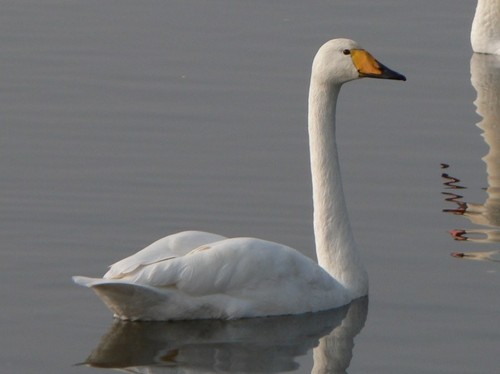
Whooper Swan
140-165 cm (55-65 in) long, 205-235 cm wingspan
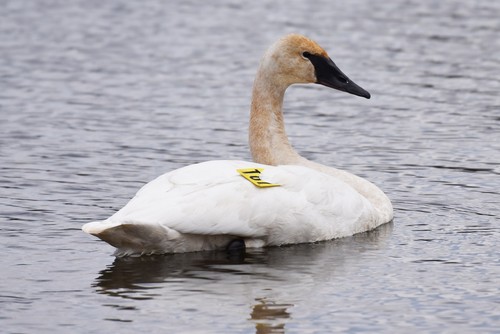
Trumpeter Swan
150-180 cm (59-71 in) long, up to 300 cm wingspan