

Brown Booby
Sula leucogaster
A widespread tropical seabird with dark chocolate-brown upperparts sharply set off from a clean white belly and underwings.
- Size
- 64-74 cm (25-29 in) long, about 132-150 cm wingspan
- Habitat
- tropical and subtropical coasts, islands, and open ocean worldwide
- Type
- seabird
Spotted a bird like this?
Identify any bird from a photo, free.
Overview
The Brown Booby is the most widely distributed booby in the world, found across tropical and subtropical oceans on nearly every continent's warm coastlines. It shows a bold, sharply demarcated plumage pattern: rich chocolate-brown covering the head, back, and breast, cutting cleanly across the chest to a crisp white belly and underwing coverts. The bill and facial skin are yellow to greenish-yellow, brighter in males, and the legs are a similar dull yellow.
As a familiar sight resting on buoys, boats, and rocky islets throughout the tropics, the Brown Booby is often the booby species most likely to be seen by casual observers along tropical coastlines.
How to identify it
Key field marks
- Sharp two-tone pattern: dark brown chest and upperparts, white belly
- White underwing coverts contrasting with dark flight feathers
- Yellow to greenish-yellow bill and facial skin
- Yellowish legs and feet (not red or blue)
Similar species
- Red-footed Booby is smaller with red feet and more variable plumage, including all-white and brown morphs.
- Masked and Nazca Boobies are white-bodied with black masks, quite different from the all-brown chest of Brown Booby.
- Juveniles are more uniformly grey-brown overall, lacking the crisp adult contrast, and take a couple of years to mature.
Habitat & range
Brown Boobies breed on rocky islets, cliffs, and sandy cays throughout the tropical and subtropical Atlantic, Pacific, and Indian Oceans, nesting close to warm coastal waters. They are less pelagic than some relatives, often staying near coastlines, reefs, and continental shelves rather than ranging far into open ocean.
The species is essentially non-migratory, though individuals, especially young birds, can wander considerable distances and are increasingly recorded well outside their core tropical range, including occasional vagrants along temperate coastlines.
Behavior & voice
Behavior
Brown Boobies are agile plunge-divers, often hunting cooperatively or alongside other seabirds and predatory fish that push baitfish to the surface; they also frequently rest on buoys, ships, and rocky perches.
Voice
At colonies, they give harsh honking and quacking calls, with males typically higher-pitched and thinner than the deeper calls of females.
Feeding
Small fish such as flying fish, herring, and anchovies, along with squid, are caught in shallow plunge dives close to shore or over reefs.
Nesting and breeding
Nests are simple ground scrapes on rocky or sandy substrate, sometimes lined with vegetation; typically two eggs are laid, though usually only one chick survives to fledging due to sibling competition.
Frequently asked questions
Where does the Brown Booby live?
It has the widest range of any booby, breeding on tropical and subtropical islands and coasts across the Atlantic, Pacific, and Indian Oceans.
How do you identify a Brown Booby?
Look for the sharp contrast between its dark brown chest and upperparts and its clean white belly, along with yellowish bill and legs.
What does the Brown Booby eat?
Small schooling fish and squid, caught by plunge-diving, often near reefs or in association with predatory fish driving baitfish to the surface.
Is the Brown Booby the same as other boobies?
No, it is a distinct species; it differs from Blue-footed, Red-footed, Masked, and Nazca Boobies in plumage pattern, leg color, and typical habitat.
Do Brown Boobies migrate?
They are largely resident year-round near their breeding islands, though some individuals, especially juveniles, disperse widely.
Brown Booby guides
In-depth guides for identifying, finding, and understanding Brown Booby.

Other birds you may enjoy

Peruvian Pelican
137-152 cm (54-60 in) long, up to 228 cm wingspan
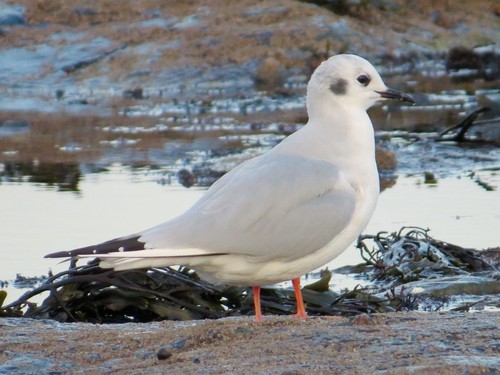
Bonaparte's Gull
28-33 cm (11-13 in) long, 76-84 cm wingspan
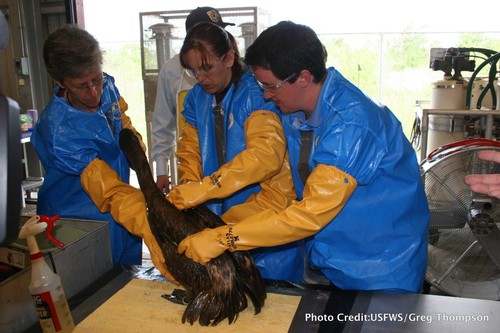
Brown Pelican
106-137 cm (42-54 in) long, 200-230 cm wingspan
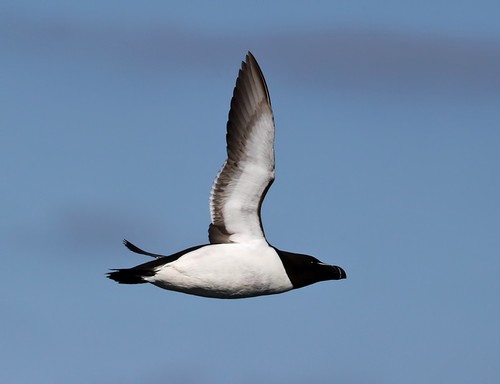
Razorbill
37-39 cm (15-15.5 in) long, 63-68 cm wingspan
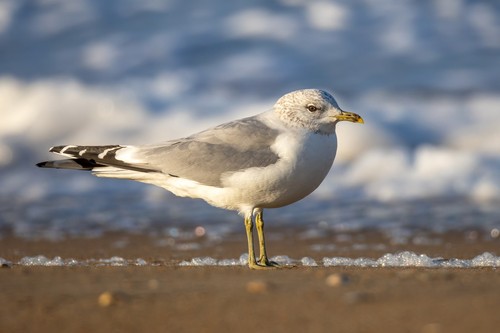
Common Gull
40-46 cm (16-18 in) long, 110-130 cm wingspan
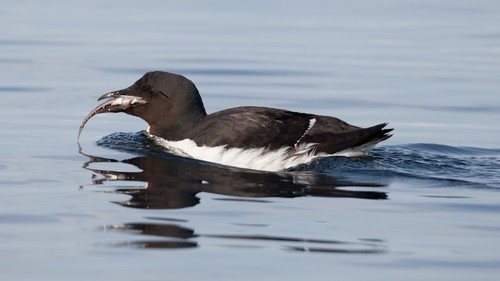
Thick-billed Murre
40-48 cm (16-19 in) long, 65-75 cm wingspan
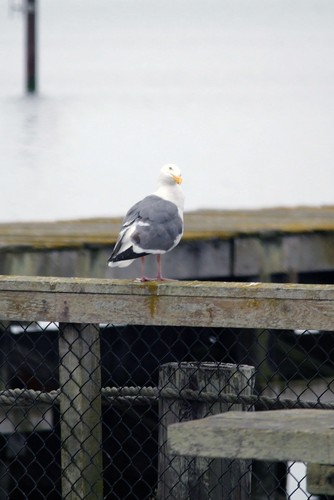
Western Gull
55-68 cm (22-27 in) long, 130-144 cm wingspan
Yellow-billed Loon
76-97 cm (30-38 in) long, 135-152 cm wingspan
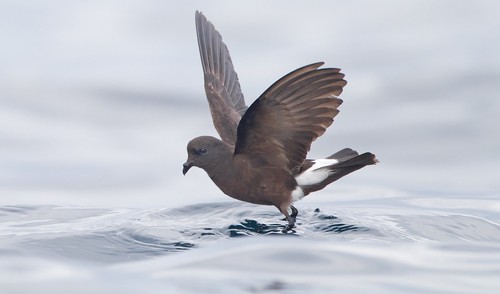
Wilson's Storm-Petrel
15-19 cm (6-7.5 in) long, wingspan 38-42 cm (15-16.5 in)
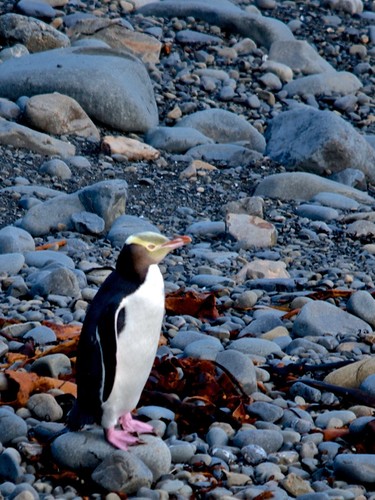
Yellow-eyed Penguin
62-79 cm (24-31 in) tall, 3-8.5 kg (6.6-18.7 lb)
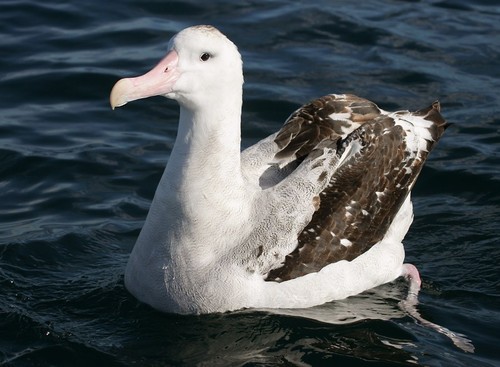
Wandering Albatross
107-135 cm (42-53 in) long, wingspan up to 3.5 m (11.5 ft)
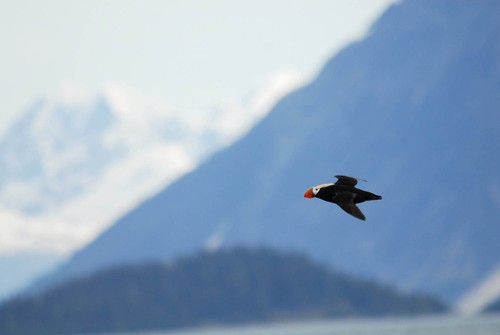
Tufted Puffin
35-41 cm (14-16 in) long, about 63-70 cm wingspan