
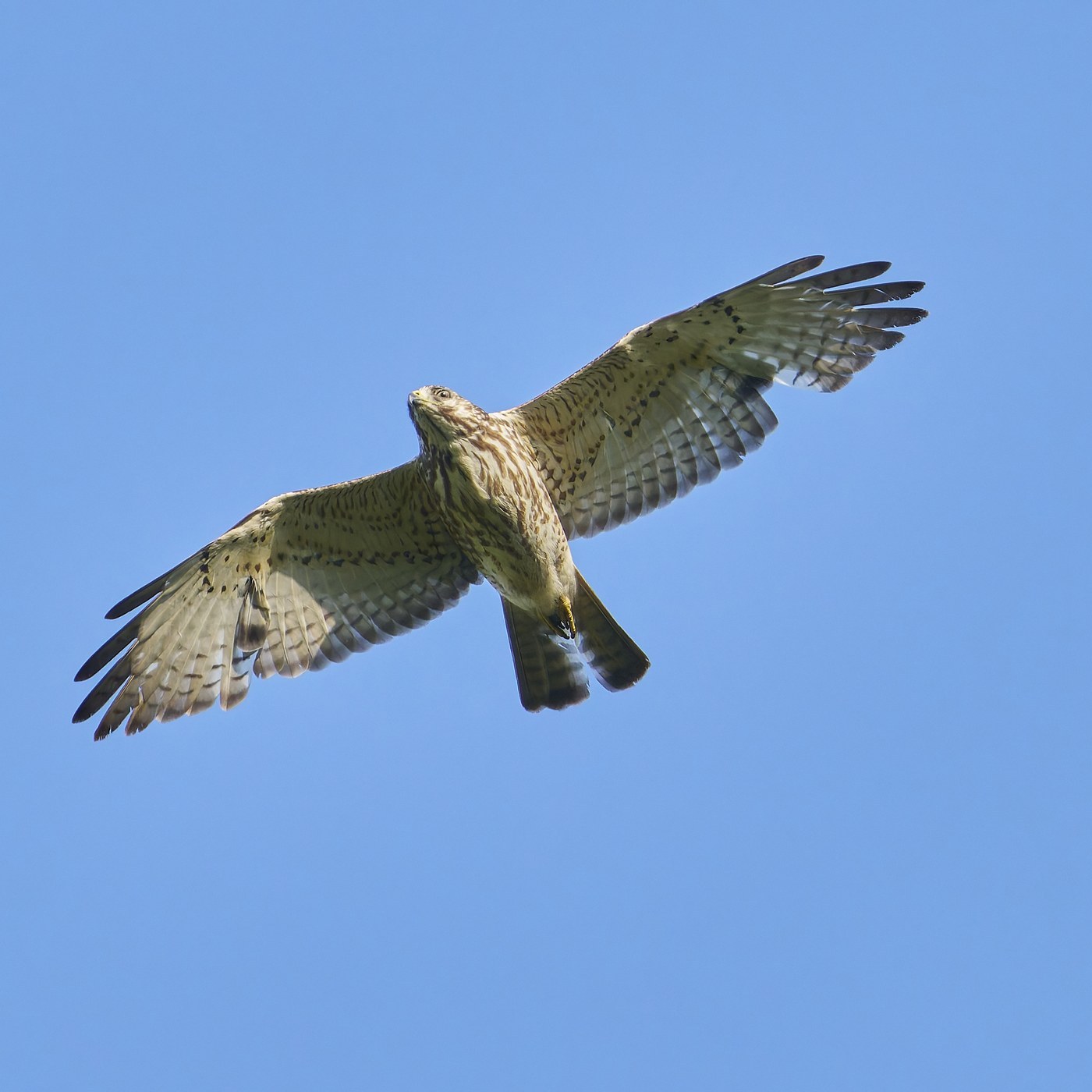
Broad-winged Hawk
Buteo platypterus
A compact eastern forest hawk famous for gathering by the thousands into swirling migratory "kettles" each fall.
- Size
- 34-44 cm (13.4-17.3 in) long, 81-100 cm (32-39 in) wingspan
- Habitat
- deciduous and mixed forests, especially during breeding; open sky during migration
- Type
- raptor
Spotted a bird like this?
Identify any bird from a photo, free.
Overview
The Broad-winged Hawk is a small, stocky buteo of eastern and northern forests, quiet and inconspicuous for most of the year but spectacularly visible during its fall migration. Adults show reddish-brown barring across the breast, a strongly banded black-and-white tail with wide bands, and pointed wingtips compared to other buteos.
Broad-winged Hawks are best known for forming massive migratory flocks called "kettles," in which hundreds to thousands of birds circle together on rising thermals, a spectacle that draws birdwatchers to hawk-watch sites each September.
How to identify it
Key field marks
- Small, compact buteo with relatively pointed wingtips
- Tail with broad, alternating black and white bands (fewer, wider bands than Red-shouldered Hawk)
- Reddish-brown barred breast in adults
- Pale underwings with a dark border along the trailing edge, visible in flight
Similar species
Red-shouldered Hawk is larger with more numerous, narrower white tail bands, rufous shoulder patches, and a translucent wing crescent rather than a solid dark wing border. Red-tailed Hawk is larger still with broader wings and a solid red (unbanded) adult tail.
Habitat & range
Habitat
Breeds in continuous, mature deciduous and mixed forest, often selecting sites near forest openings or water. During migration, occurs in open sky virtually anywhere along major migration corridors.
Range
Breeds across the eastern United States and southeastern Canada. One of the most strongly migratory North American buteos, nearly the entire population funnels south each fall to winter in Central and South America, with famous concentrations passing over sites like Hawk Mountain, Pennsylvania, and coastal Veracruz, Mexico.
Behavior & voice
Behavior
During the breeding season, Broad-winged Hawks are quiet, retiring forest hawks, often detected mainly by voice. In migration, they become highly social, riding thermals in enormous circling flocks (kettles) to conserve energy over long-distance flights, sometimes numbering in the tens of thousands at a single site in a single day.
Voice
Gives a thin, high-pitched, whistled two-note call, often rendered as "pee-teeee," quite different in tone from the calls of larger buteos.
Feeding and nesting
Diet includes small mammals, amphibians, reptiles, and large insects, reflecting its forest-floor hunting style. Builds a modest stick nest in the forest interior, often reusing an old nest built by another species such as a crow.
Frequently asked questions
What is a hawk "kettle"?
A kettle is a large, swirling flock of migrating hawks — especially Broad-winged Hawks — riding a shared thermal of rising warm air to gain altitude efficiently before gliding onward, sometimes involving thousands of birds at once.
Where do Broad-winged Hawks migrate to?
Nearly the entire population migrates to Central and South America for winter, funneling through famous corridors such as Hawk Mountain, Pennsylvania, and coastal Veracruz, Mexico.
How do you identify a Broad-winged Hawk?
Look for a small, compact buteo with pointed wingtips and a tail marked with a few broad black and white bands, quite different from the many narrow bands of Red-shouldered Hawk.
What do Broad-winged Hawks eat?
Small mammals, amphibians, reptiles, and large insects, hunted mostly within forest habitat.
When is the best time to see Broad-winged Hawk migration?
Mid-September is peak migration season at many eastern hawk-watch sites, when large kettles are most likely on days with favorable winds and thermals.
Broad-winged Hawk guides
In-depth guides for identifying, finding, and understanding Broad-winged Hawk.
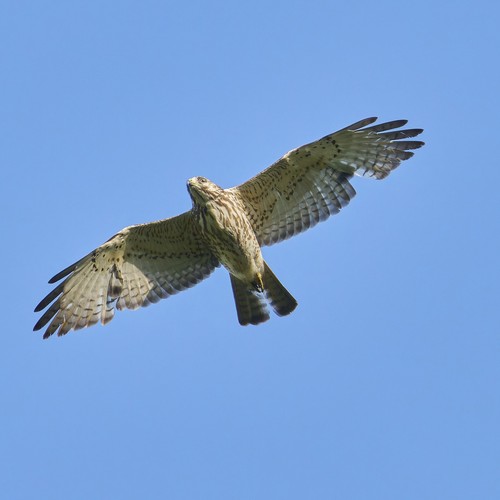
Other birds you may enjoy
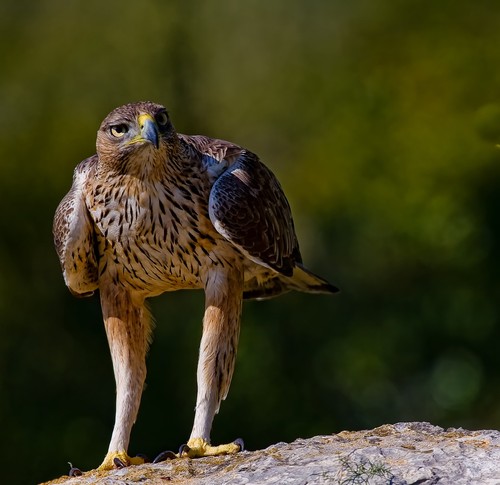
Bonelli's Eagle
Body 65–72 cm (26–28 in); wingspan 150–180 cm (59–71 in)
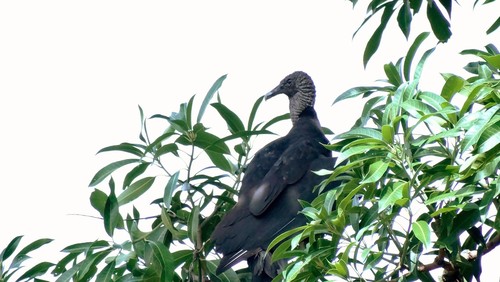
Black Vulture
56-68 cm (22-27 in) long, 137-165 cm wingspan
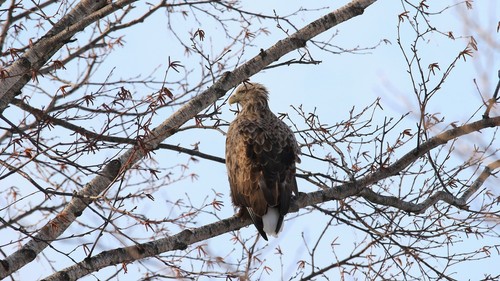
White-tailed Eagle
66-94 cm body length; wingspan 178-245 cm, among the largest eagles in the world
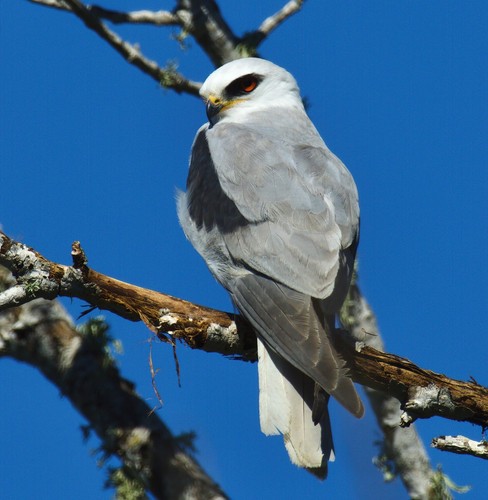
White-tailed Kite
35-43 cm (14-17 in) long, 88-102 cm (35-40 in) wingspan
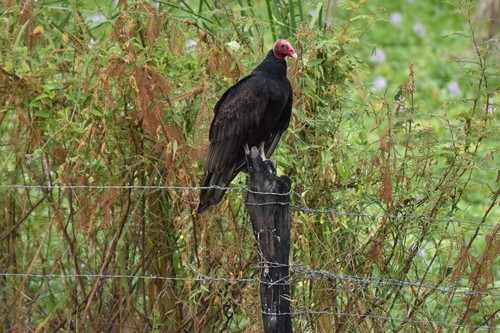
Turkey Vulture
64-81 cm (25-32 in) long, 160-183 cm wingspan
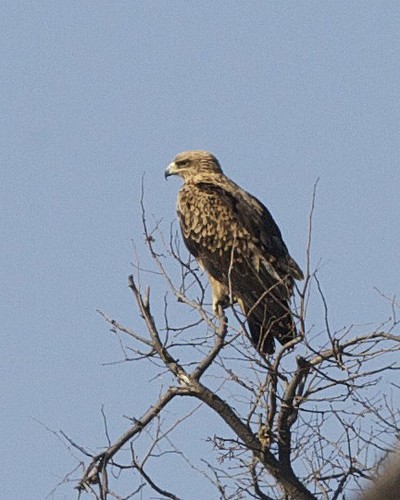
Tawny Eagle
62–75 cm long; wingspan 1.65–2.0 m
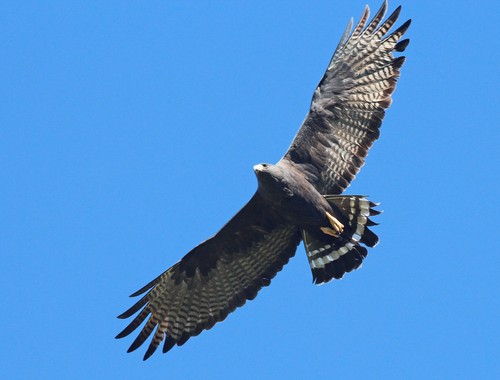
Zone-tailed Hawk
46-56 cm (18-22 in) long, 118-140 cm (46-55 in) wingspan
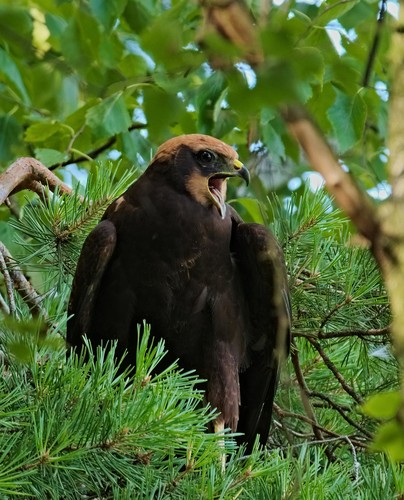
Western Marsh Harrier
Body 43-56 cm; wingspan 115-140 cm
Swallow-tailed Kite
48-68 cm (19-27 in) long including tail streamers, 112-136 cm (44-54 in) wingspan
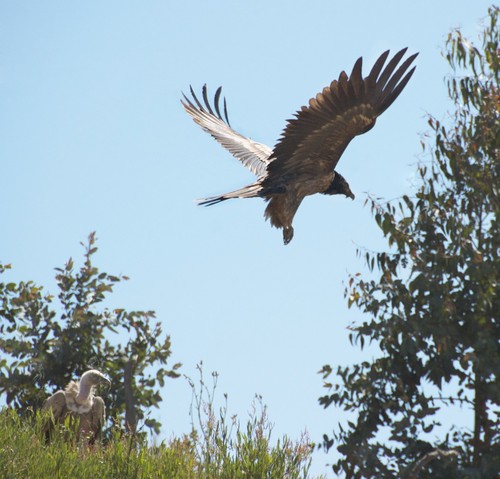
White-backed Vulture
78-98 cm long, wingspan 1.96-2.25 m
Yellow-billed Kite
55-60 cm long; wingspan 130-155 cm
White-tailed Hawk
46-59 cm (18-23 in) long, 122-142 cm (48-56 in) wingspan