
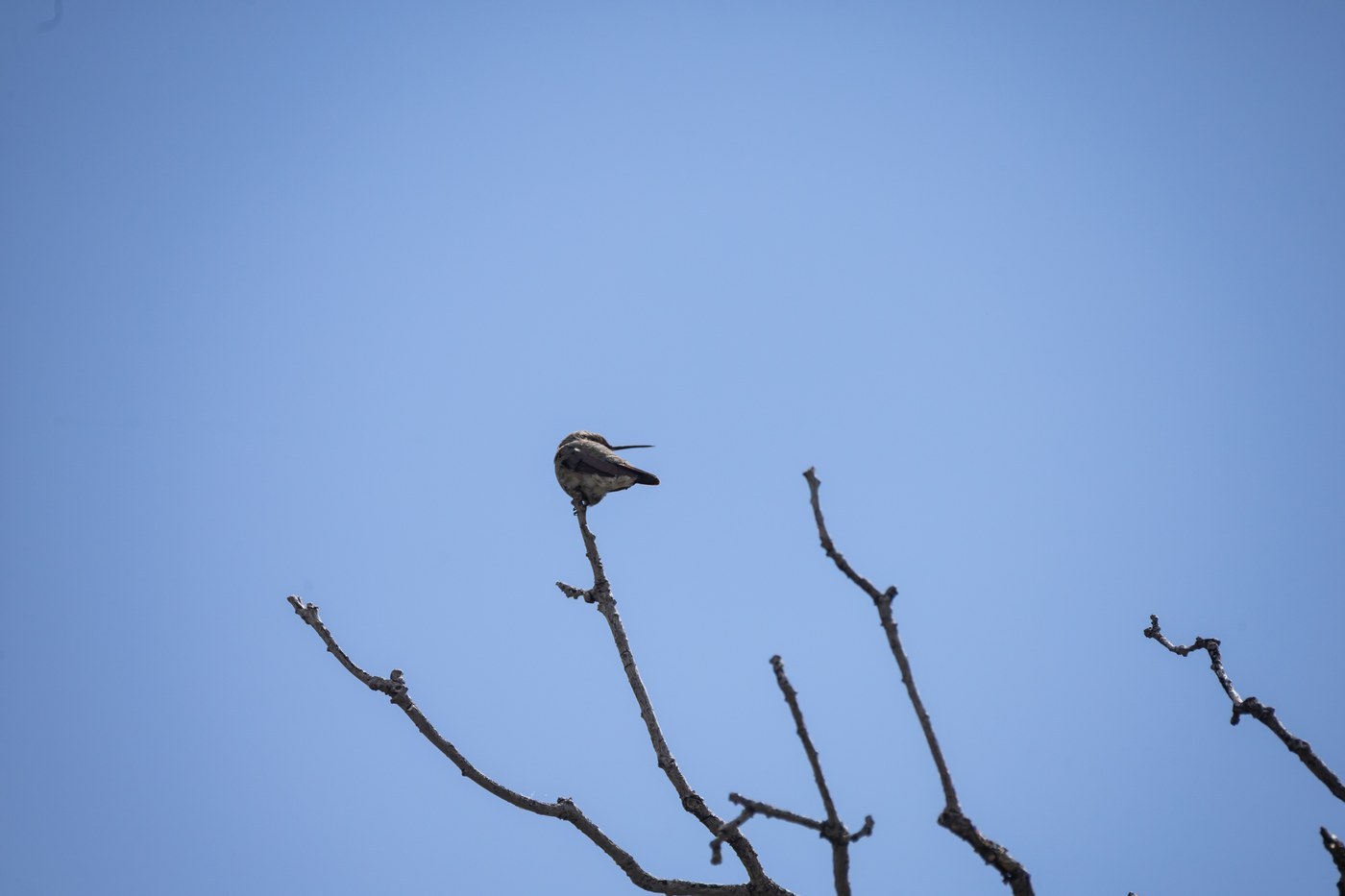
Broad-tailed Hummingbird
Selasphorus platycercus
A high-elevation hummingbird of the Rocky Mountains whose wings produce a distinctive cricket-like trill in flight.
- Size
- 9-10.5 cm (3.5-4 in) long, 13 cm wingspan
- Habitat
- high mountain meadows, coniferous forests, and canyons
- Type
- hummingbird
Spotted a bird like this?
Identify any bird from a photo, free.
Overview
The Broad-tailed Hummingbird is a hardy species of the Rocky Mountain region, breeding at elevations up to and above 10,000 feet where nighttime temperatures can drop below freezing. Adult males show a brilliant rose-magenta gorget, a metallic green back and crown, and whitish underparts. Females lack the colorful throat, instead showing a green back, buffy sides, fine dark spotting on the throat, and rufous highlights in the tail.
One of the most useful identification clues is entirely acoustic: the male's wings produce a distinctive high-pitched, insect-like trilling sound in flight that can be heard well before the bird is seen.
How to identify it
Key Field Marks
- Male: rose-magenta gorget, green back and crown, white breast
- Female: green back, buffy flanks, spotted throat, rufous-edged tail
- Male's wings make a loud, cricket-like trilling sound in flight, unique among similar species
- Fairly large for a Selasphorus hummingbird with a proportionally broad, rounded tail
Similar Species
- Rufous and Allen's Hummingbird males have orange, not magenta, gorgets and more rufous overall coloring.
- Calliope Hummingbird is noticeably smaller with streaked (not solid) magenta gorget feathers.
- Ruby-throated Hummingbird overlaps little in range and has a red, not magenta-pink, gorget.
Habitat & range
Habitat
This species breeds in mountain meadows, aspen groves, and open coniferous forest, typically at middle to high elevations, often near streams or wet meadows rich in wildflowers.
Range
It breeds throughout the Rocky Mountains and adjacent ranges from Idaho and Wyoming south through Colorado, Utah, Arizona, and New Mexico into Mexico and Guatemala.
Migration
Broad-tailed Hummingbirds are medium- to long-distance migrants, wintering primarily in central Mexico and returning to their high-elevation breeding grounds by late spring.
Behavior & voice
Behavior
Males defend nectar-rich territories and perform steep, arcing display dives accompanied by their signature wing trill to court females and warn off rivals.
Voice
Besides the mechanical wing trill, both sexes give sharp "chip" and "tchip" call notes; there is no true song.
Feeding
They feed on nectar from a variety of high-elevation wildflowers, including scarlet gilia and penstemon, and catch small insects on the wing to supplement their diet, especially important for females raising young.
Nesting
Females build a compact nest of plant down and spider silk, often reused or built atop an old nest in successive years, saddled on a horizontal branch near water.
Frequently asked questions
What makes the Broad-tailed Hummingbird's trilling sound?
The male's outer wing feathers are specially shaped and vibrate during flight, producing a distinctive high, cricket-like trill that is audible well before the bird is seen.
How does a Broad-tailed Hummingbird survive cold mountain nights?
Like many high-elevation hummingbirds, it can enter torpor, a controlled, temporary drop in body temperature and metabolism, to conserve energy overnight.
How can you tell a female Broad-tailed from a female Rufous Hummingbird?
Both are green-backed with spotted throats, but female Broad-taileds generally show less rufous in the tail and plumper proportions; range and elevation are also helpful clues.
Where do Broad-tailed Hummingbirds go in winter?
Most migrate to central and southern Mexico, leaving their high-elevation Rocky Mountain breeding grounds by early autumn.
Broad-tailed Hummingbird guides
In-depth guides for identifying, finding, and understanding Broad-tailed Hummingbird.
Other birds you may enjoy
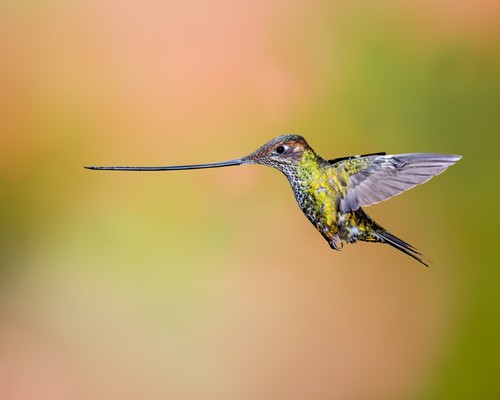
Sword-billed Hummingbird
Body about 13-15 cm (5-6 in) including a bill up to 10 cm long, the longest bill relative to body size of any bird
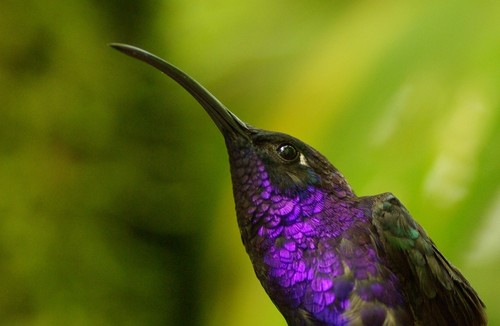
Violet Sabrewing
14-15 cm (5.5-6 in) long
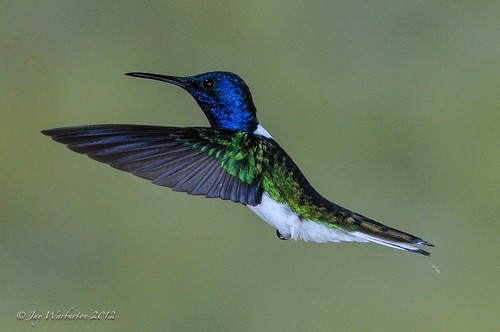
White-necked Jacobin
11-12 cm (4.3-4.7 in) long
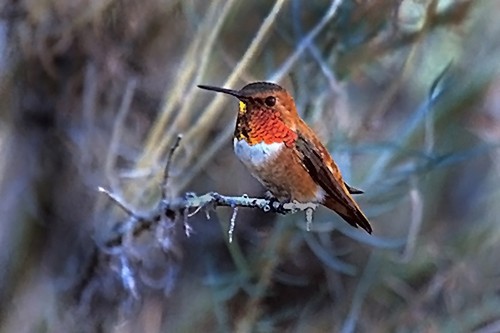
Rufous Hummingbird
8-9 cm (3-3.5 in) long, 11 cm wingspan
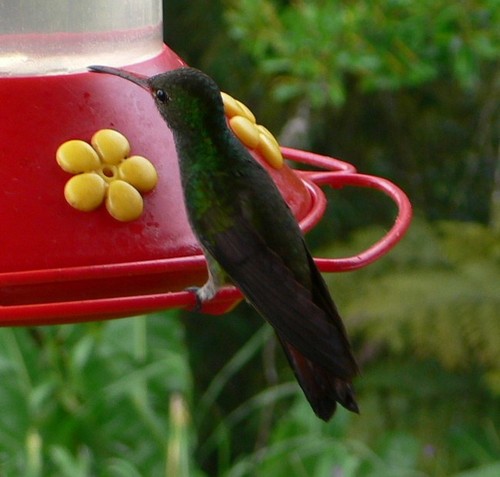
Rufous-tailed Hummingbird
10-11.5 cm (4-4.5 in) long
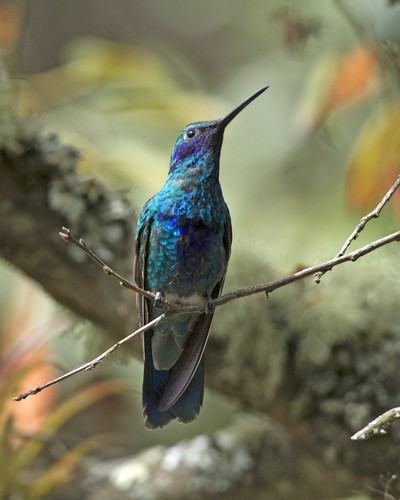
Sparkling Violetear
13-14 cm (5-5.5 in) long including bill
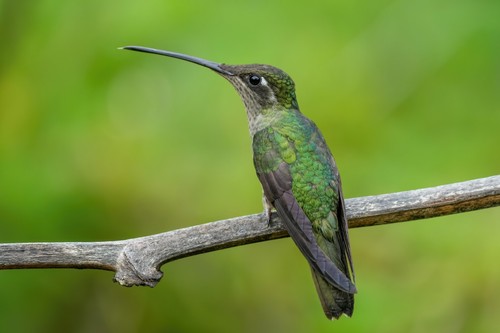
Rivoli's Hummingbird
11-14 cm (4.5-5.5 in) long, 17-18 cm wingspan
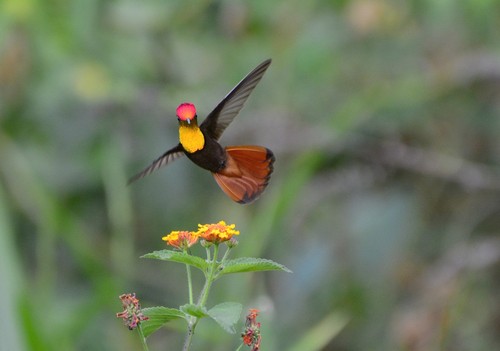
Ruby-topaz Hummingbird
7.5-9 cm (3-3.5 in) long
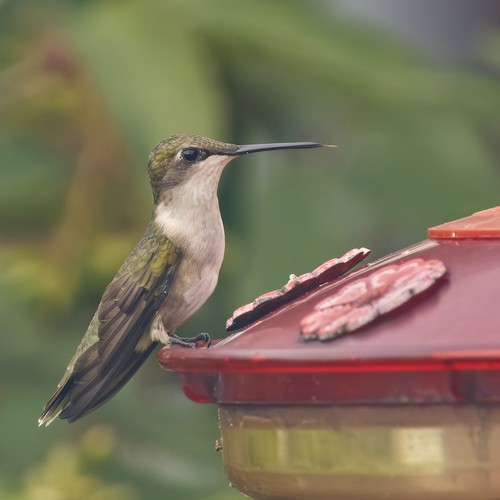
Ruby-throated Hummingbird
7-9 cm (3-3.5 in) long, 8-11 cm wingspan
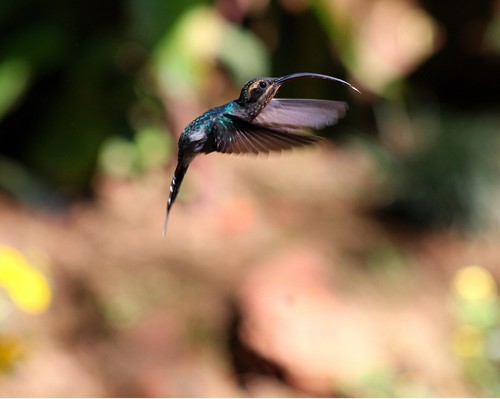
Green Hermit
15-16 cm (6-6.3 in) long including elongated central tail feathers
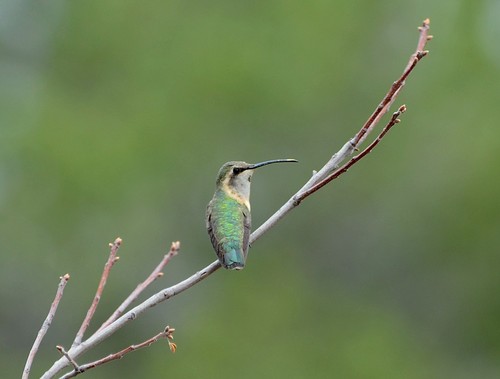
Lucifer Hummingbird
8.5-9.5 cm (3.5 in) long, 11 cm wingspan
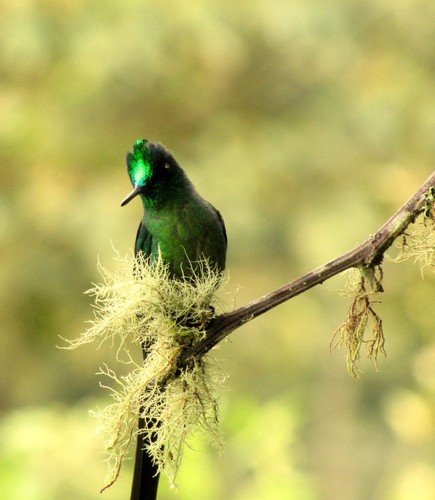
Long-tailed Sylph
males 18-19 cm (7-7.5 in) including tail; females 9-10 cm (3.5-4 in)