
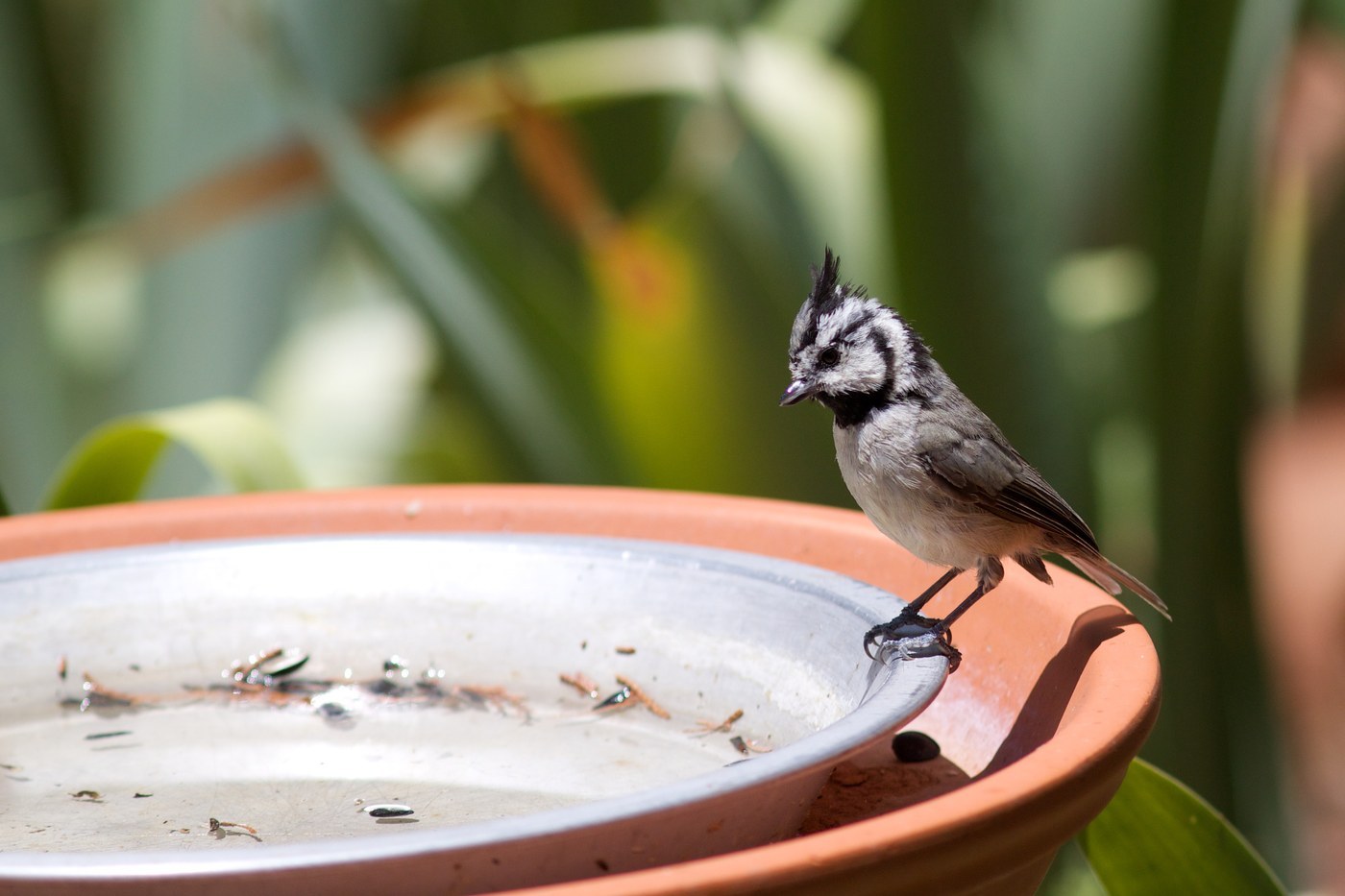
Bridled Titmouse
Baeolophus wollweberi
A small, boldly patterned titmouse with a striking black-and-white "bridled" facial pattern, found in oak canyons of the Southwest.
- Size
- 12-13 cm (4.7-5.1 in) long, 18-20 cm wingspan
- Habitat
- oak and pine-oak woodlands of the southwestern United States and Mexico
- Type
- songbird
Spotted a bird like this?
Identify any bird from a photo, free.
Overview
The Bridled Titmouse is the most boldly patterned member of its family in North America, sporting a distinctive black-and-white facial pattern that looks like a tiny bridle or harness across the face, along with a gray crest tipped in black. This gives it an immediately recognizable, almost clownish appearance compared to the plain-faced Oak and Juniper Titmice. The body is gray above and pale gray-white below.
This species occurs in oak and pine-oak canyons of the mountains of southeastern Arizona and southwestern New Mexico, extending south through the highlands of Mexico, and is often one of the more conspicuous and vocal small birds in its favored canyon habitats.
How to identify it
Key Field Marks
- Bold black-and-white striped facial pattern (the "bridle")
- Gray crest with black tip
- Black chin/throat patch
- Gray back and wings, pale underparts
Similar Species
- Oak Titmouse / Juniper Titmouse: both entirely plain-faced without any bold pattern, easily distinguished from the boldly marked Bridled Titmouse.
- Black-crested Titmouse: has a solid black crest without the intricate facial striping of the Bridled Titmouse.
- No other North American titmouse shows this species' striking facial pattern, making it essentially unmistakable within its range.
Habitat & range
Habitat
Bridled Titmice favor oak and pine-oak woodland in canyons and foothills, particularly in "sky island" mountain ranges rising from surrounding desert and grassland.
Range
The species occurs in southeastern Arizona and southwestern New Mexico, ranging south through the Sierra Madre and highlands of Mexico into Central America.
Migration
Bridled Titmice are non-migratory residents, remaining within their canyon woodland habitat year-round.
Behavior & voice
Behavior
Active, social, and often the most conspicuous small bird in its canyon habitat, the Bridled Titmouse frequently forms small flocks and joins mixed-species foraging groups with warblers, nuthatches, and other songbirds.
Voice
The song is a rapid, chattering series of whistled notes; the call is a scratchy, scolding chatter typical of titmice, often given persistently when disturbed.
Feeding
Diet includes insects, spiders, and seeds gleaned from oak and pine foliage and bark, foraging actively and acrobatically through the canopy.
Nesting
Nests are built in tree cavities, often old woodpecker holes in oaks or sycamores, lined with soft plant material and fur. Clutches typically number 5-6 eggs.
Frequently asked questions
What does the 'bridled' in Bridled Titmouse refer to?
It refers to the bird's distinctive black-and-white facial striping, which resembles the straps of a horse's bridle across the face.
Where can I find a Bridled Titmouse?
Look in oak and pine-oak canyons of the mountains of southeastern Arizona and southwestern New Mexico, and southward through highland Mexico.
How is it different from other titmice?
It is the only North American titmouse with a bold black-and-white facial pattern; other titmice in its range are either plain-faced or have a solid black crest without facial striping.
Does the Bridled Titmouse migrate?
No, it is a non-migratory resident, staying in its oak and pine-oak canyon habitat throughout the year.
What does the Bridled Titmouse eat?
Mainly insects, spiders, and seeds gleaned from foliage and bark in oak and pine woodlands.
Bridled Titmouse guides
In-depth guides for identifying, finding, and understanding Bridled Titmouse.
Other birds you may enjoy
Black Redstart
13-14.5 cm (5.1-5.7 in) long, 23-26 cm wingspan
Black-throated Sparrow
12-14 cm (4.7-5.5 in) long, about 19-20 cm (7.5-8 in) wingspan
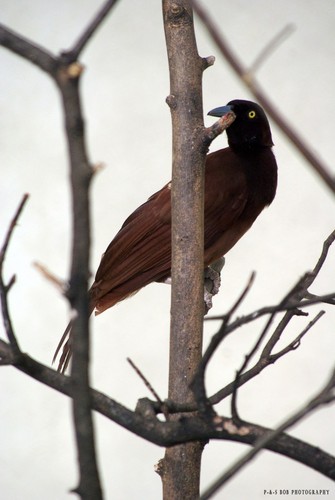
Greater Bird-of-paradise
Body about 43 cm; males with additional flank plumes up to 50 cm and long tail wires
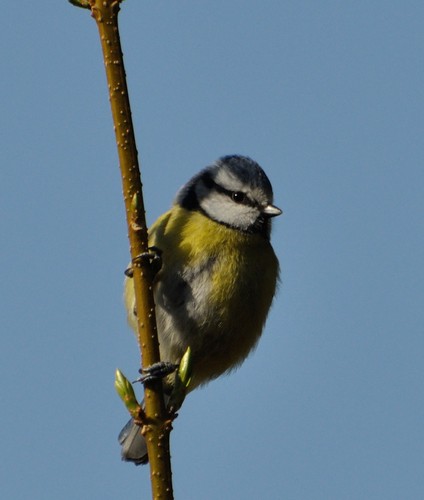
Blue Tit
11-12 cm (4.3-4.7 in) long, 17-20 cm wingspan
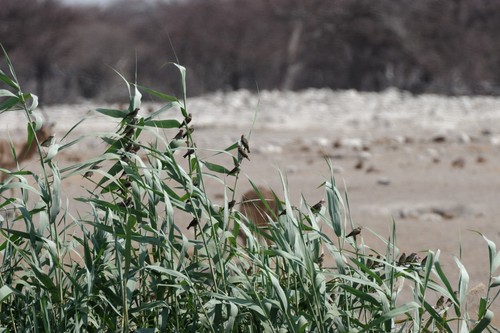
Red-billed Quelea
11.5–13 cm long, wingspan about 20–22 cm
White-plumed Antbird
13-14 cm (5-5.5 in) long
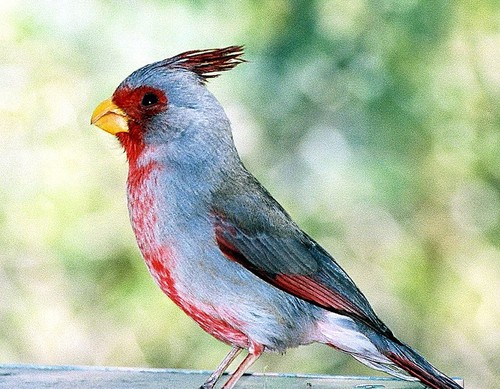
Pyrrhuloxia
19-22 cm (7.5-8.7 in) long, 30 cm wingspan
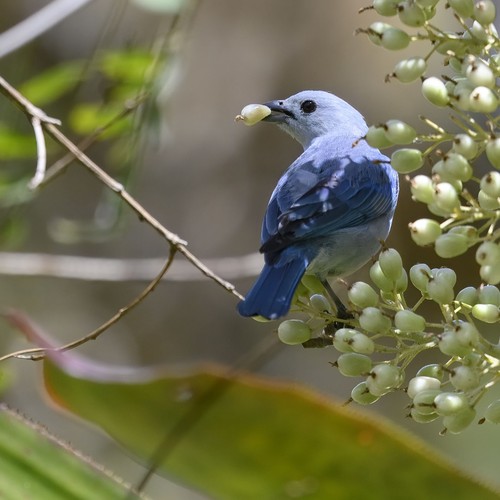
Blue-gray Tanager
16-18 cm (6-7 in) long
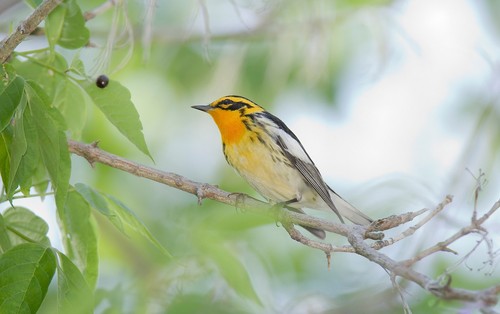
Blackburnian Warbler
11-13 cm (4.3-5.1 in) long, 20-22 cm wingspan
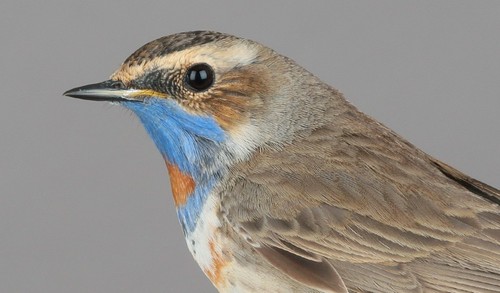
Bluethroat
13-14 cm (5.1-5.5 in) long, 20-22 cm wingspan
Eurasian Nuthatch
12-14.5 cm (4.7-5.7 in) long, 22.5-27 cm wingspan
Wood Thrush
19-21 cm (7.5-8.3 in) long, about 33 cm (13 in) wingspan