
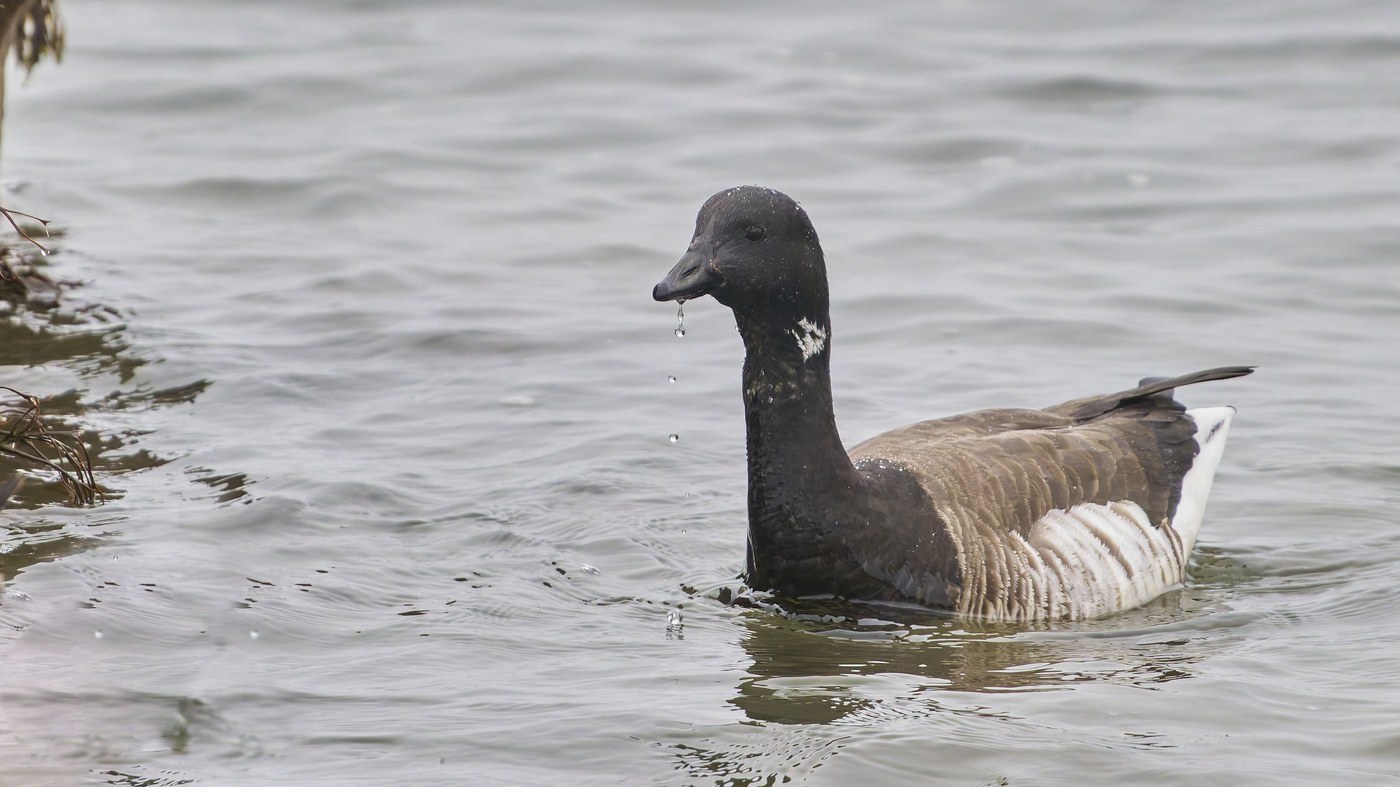
Brant
Branta bernicla
A small, dark sea goose with a stubby black bill and neck, closely tied to coastal eelgrass beds.
- Size
- 56-66 cm (22-26 in) long, 106-121 cm wingspan
- Habitat
- Arctic tundra coasts (breeding), coastal bays and estuaries with eelgrass (winter)
- Type
- waterfowl
Spotted a bird like this?
Identify any bird from a photo, free.
Overview
The Brant is a small, compact sea goose with a dark, sooty body, a black head and neck, and a small white necklace-like patch on the sides of the neck (more complete and bolder in some populations than others). It is closely tied to coastal waters year-round, rarely straying far inland, and is especially dependent on eelgrass beds for food during the nonbreeding season.
Breeding on high Arctic tundra near the coast, Brant migrate in tight flocks to temperate coastal bays and estuaries for the winter, where large concentrations can be found feeding on marine vegetation in shallow water.
How to identify it
Key field marks
- Small size for a goose, short neck, and a stubby black bill
- Black head, neck, and breast with a small white patch on the sides of the neck
- Dark brownish-gray body, paler in some populations ('gray-bellied' vs 'black-bellied' forms)
Similar species
The Canada Goose is much larger with a bold white chinstrap patch under the chin rather than a small neck-side patch, and a longer neck. No other small goose shares the Brant's combination of an all-dark body and small white neck mark.
Habitat & range
Brant breed on Arctic tundra close to the coast across northern Canada, Alaska, Greenland, and parts of Russia, nesting on the ground near the sea. They are strongly coastal in winter as well, favoring sheltered bays, estuaries, and lagoons with extensive eelgrass beds along both the Atlantic and Pacific coasts of North America, as well as parts of Europe and Asia, rarely venturing far from salt water.
Behavior & voice
Behavior
Brant are highly social, migrating and wintering in large, tight flocks, and their movements are closely tied to the availability of eelgrass and other marine vegetation.
Voice
Gives a low, rolling, guttural 'cr-r-r-uk' call, often heard continuously from feeding or flying flocks.
Feeding
Primarily eelgrass and other marine algae and plants, grazed in shallow coastal waters and exposed mudflats at low tide.
Nesting
Nests on the ground on Arctic tundra near the coast, often in loose colonies; clutches typically hold 3-5 eggs.
Frequently asked questions
What is the difference between Brant and Canada Goose?
Brant are much smaller with an all-dark body, a stubby bill, and a small white patch on the sides of the neck, rather than the bold white chinstrap under the chin found on Canada Goose.
Why are Brant so dependent on eelgrass?
Eelgrass and other marine vegetation form the core of their diet, especially in winter, and historic eelgrass die-offs have significantly affected Brant populations in the past.
Are Brant found inland?
Rarely; they are strongly coastal year-round, favoring bays, estuaries, and lagoons over inland lakes and fields.
Where do Brant breed?
On Arctic tundra close to the coast across northern Canada, Alaska, Greenland, and parts of Russia.
Brant guides
In-depth guides for identifying, finding, and understanding Brant.
Other birds you may enjoy
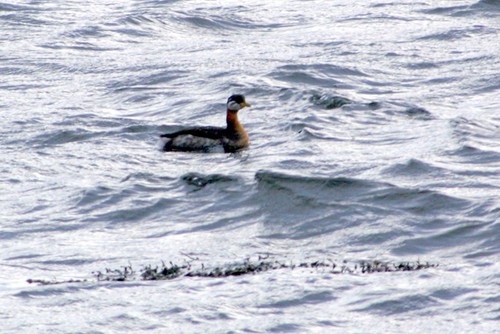
Red-necked Grebe
40-55 cm (16-22 in) long, 77-85 cm wingspan
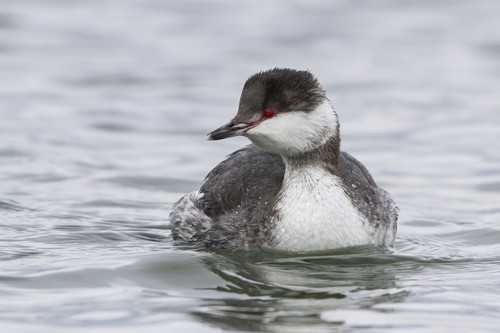
Horned Grebe
31-38 cm (12-15 in) long, 46-55 cm wingspan
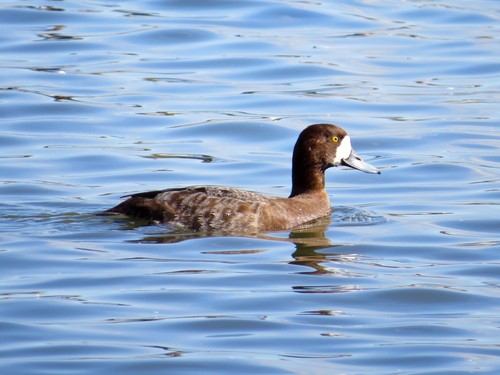
Greater Scaup
42-51 cm (16.5-20 in) long, 71-84 cm wingspan
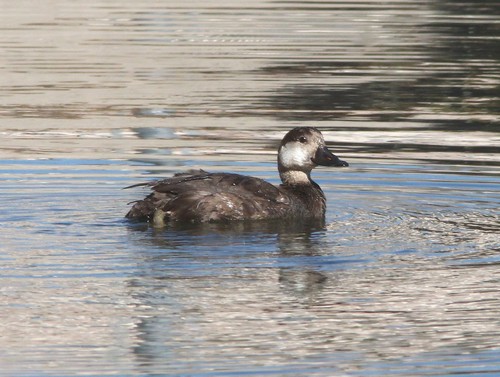
Black Scoter
43-54 cm (17-21 in) long, 79-90 cm wingspan
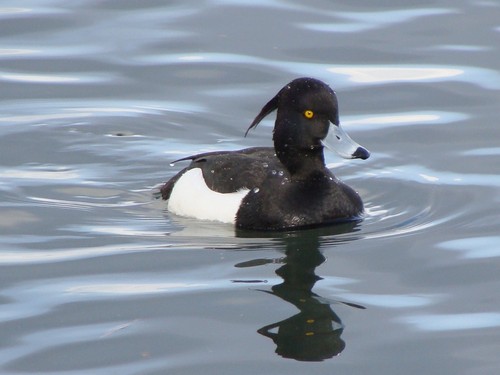
Tufted Duck
40-47 cm (16-18.5 in) long, 67-73 cm wingspan
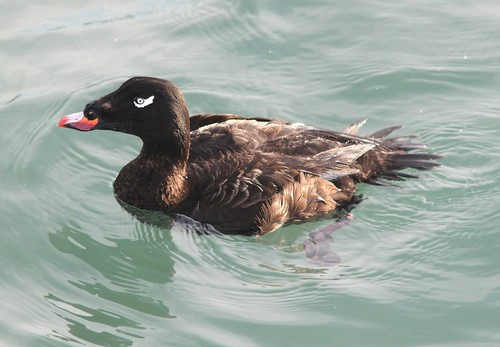
White-winged Scoter
48-58 cm (19-23 in) long, 86-99 cm wingspan
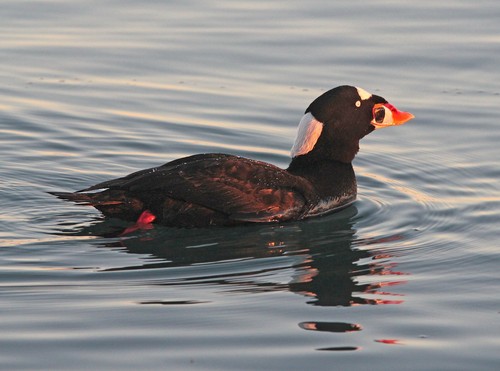
Surf Scoter
45-56 cm (18-22 in) long, 78-92 cm wingspan
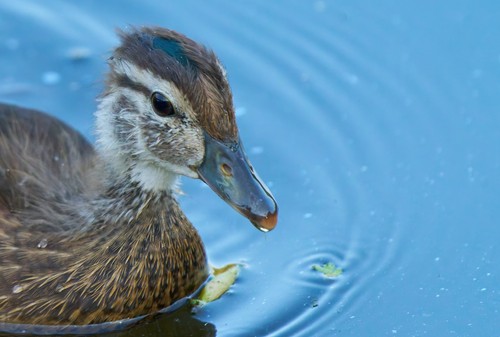
Wood Duck
47-54 cm (18.5-21 in) long, 66-73 cm wingspan
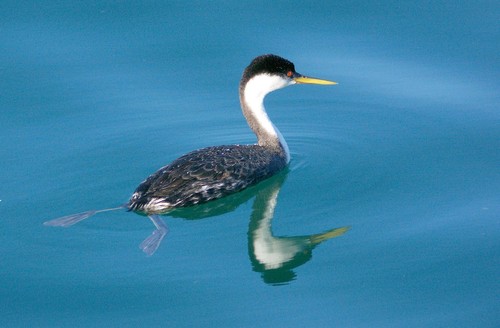
Western Grebe
56-74 cm (22-29 in) long, 79-102 cm wingspan
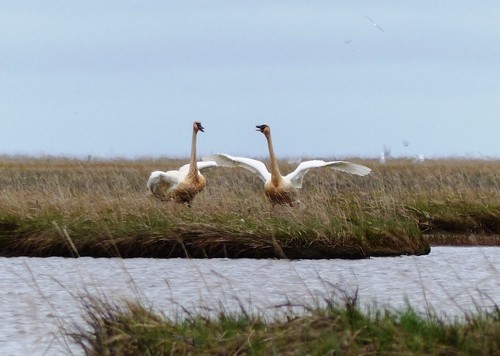
Tundra Swan
115-150 cm (45-59 in) long, about 180 cm wingspan
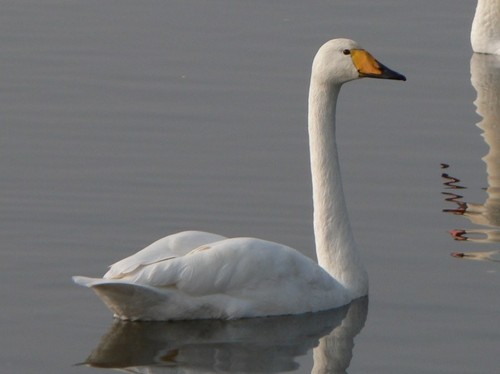
Whooper Swan
140-165 cm (55-65 in) long, 205-235 cm wingspan
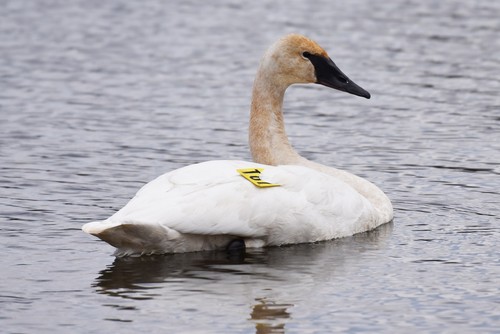
Trumpeter Swan
150-180 cm (59-71 in) long, up to 300 cm wingspan