
Brant Identification Guide
A small, compact sea goose with an all-dark head and neck broken only by a white necklace, closely tied to coastal bays and eelgrass beds.
Read the full Brant encyclopedia entry →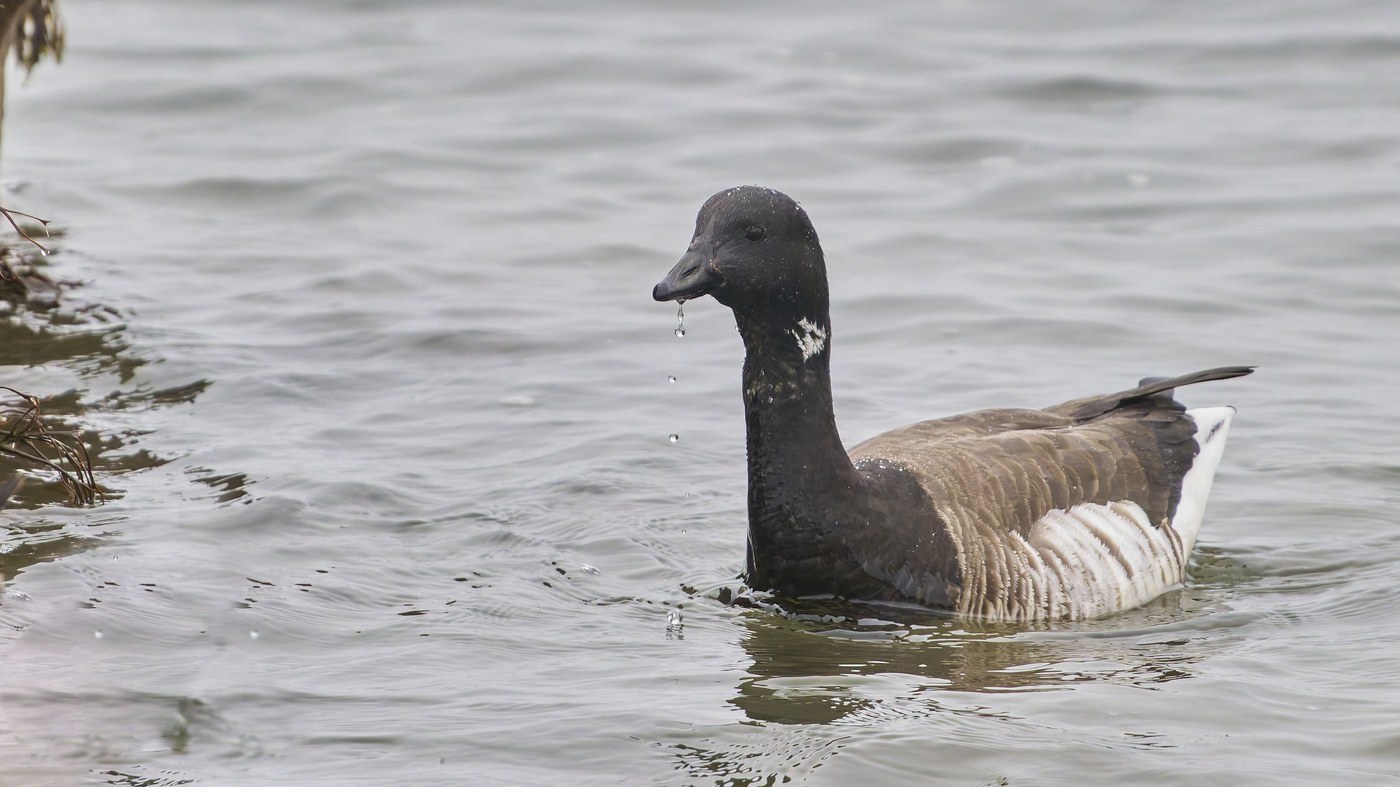
Key Field Marks
- Size & shape: A small goose, about 60 cm, noticeably smaller and more compact than a Canada Goose, with a short neck and stubby bill.
- Plumage: Black head, neck, and breast with a small white necklace patch on the sides of the neck (broken or partial); body plumage ranges from pale gray-brown (Atlantic populations) to sooty blackish-brown (Pacific/Black Brant) depending on subspecies.
- In flight: Shows a dark body with a white U-shaped rump/undertail patch, and flocks often fly in loose, irregular lines rather than tight V formations.
Separating from Similar Species
- Canada Goose: Much larger, with a bold white chinstrap across the cheeks (Brant lacks any white on the face), and a longer neck; Brant's neck and head are uniformly black with only the small neck-side necklace.
- Atlantic vs. Pacific (Black) Brant: Atlantic Brant shows a pale, whitish-gray belly contrasting with the dark breast; Pacific/Black Brant has a uniformly dark, sooty belly matching the breast, with a more complete white neck ring.
- No other regularly occurring goose combines small size, all-dark head/neck, and a partial white neck collar.
Habitat, Range & Season
- Highly tied to coastal saltwater habitats — bays, estuaries, and lagoons with eelgrass and sea lettuce beds, its primary winter food.
- Breeds in the high Arctic tundra of North America and Siberia during summer.
- Winters along both the Atlantic and Pacific coasts of North America (and parts of Eurasia), typically arriving in large numbers in late fall and departing by spring.
Voice
- A distinctive, guttural, rolling "cronk" or "rrrk-rrrk," quite different from the higher honking of Canada Goose.
- Flocks feeding or resting on the water give a continuous low, murmuring chorus of these guttural notes.
Frequently asked questions
How is Brant different from Canada Goose?
Brant is much smaller and has an all-black head and neck with no white cheek patch, only a small white necklace mark on the neck sides — Canada Goose has a bold white chinstrap across the face.
What is the difference between Atlantic Brant and Black Brant?
Atlantic Brant has a pale, whitish belly contrasting with its dark breast, while Black (Pacific) Brant has a uniformly dark belly and a more complete white neck collar.
Where do Brant spend the winter?
In coastal bays and estuaries with eelgrass beds along the Atlantic and Pacific coasts of North America, arriving in late fall.
What does a Brant sound like?
A low, guttural, rolling croak or "cronk," quite distinct from the classic honk of a Canada Goose.