
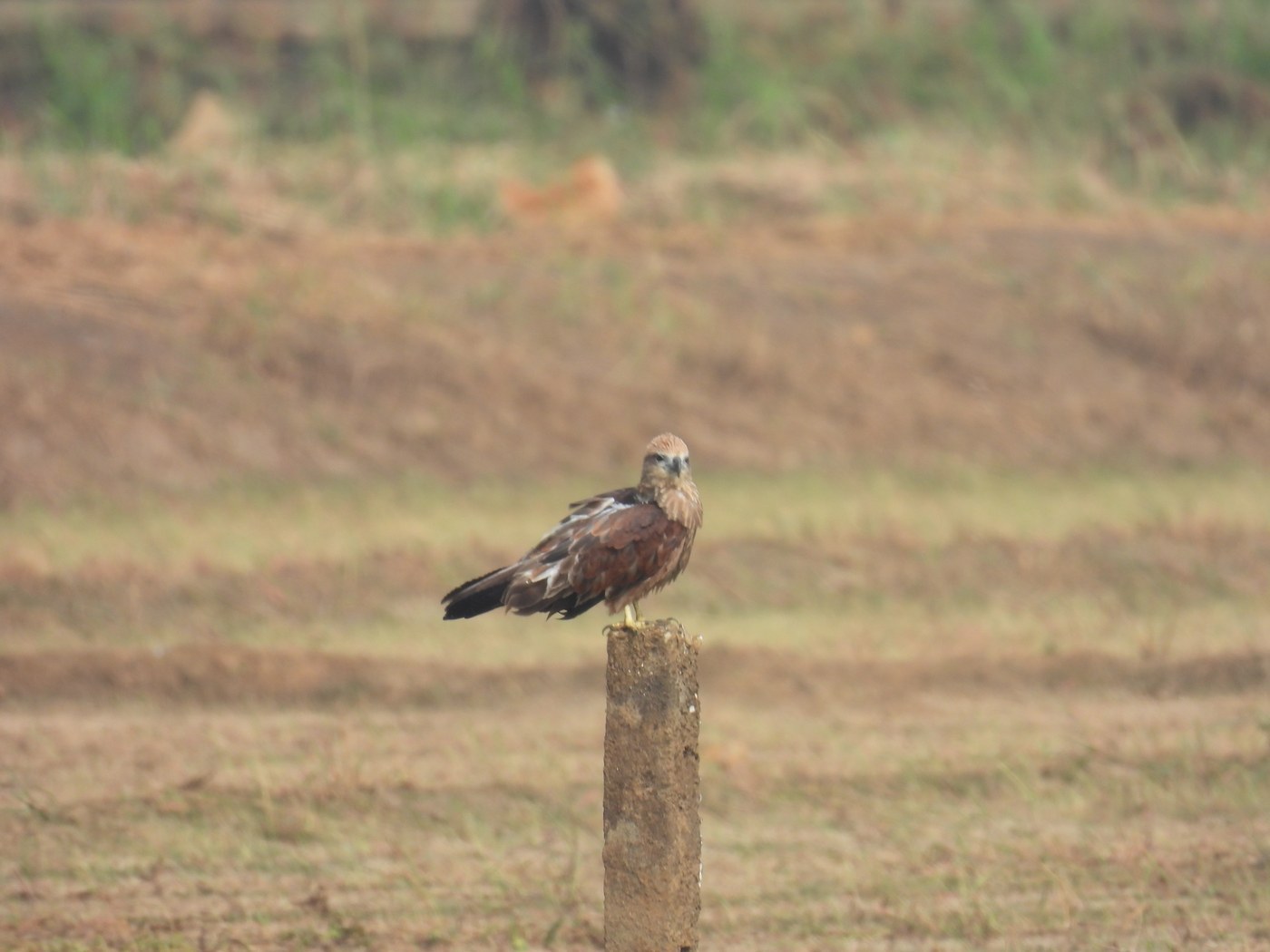
Brahminy Kite
Haliastur indus
A striking chestnut-and-white kite of coastal wetlands across South and Southeast Asia and northern Australia.
- Size
- 44-52 cm long, wingspan 110-125 cm
- Habitat
- Coastlines, estuaries, mangroves, rivers, and wetlands
- Type
- raptor
Spotted a bird like this?
Identify any bird from a photo, free.
Overview
The Brahminy Kite is a medium-sized bird of prey closely associated with coastal and wetland habitats, easily recognized by its handsome two-toned plumage. Adults have a rich chestnut-brown body and wings that contrast sharply with a pure white head, neck, and breast.
In flight, the rounded wingtips and moderately short, slightly rounded tail give it a distinctive silhouette compared to true eagles or accipiters. Juveniles are largely dark brown with mottled white patches on the underwing and body, gradually acquiring the clean white head and chestnut body over about three years.
How to identify it
Key field marks
- Adult: white head, neck, and breast sharply contrasting with rich chestnut body and wings
- Rounded wingtips, short, only slightly notched tail
- No white patches at the base of the primaries (unlike many sea eagles)
- Juvenile: mottled dark brown overall with paler underwing patches, taking a few years to reach full adult plumage
Similar species
- White-bellied Sea Eagle: much larger, with grey and white plumage, no chestnut coloring
- Black Kite: overall brown with a forked tail, lacks the white head/chestnut body contrast
- Osprey: white underparts with a dark eye-stripe and long, angled wings, entirely different structure
Habitat & range
Range
Found from the Indian subcontinent through Southeast Asia to New Guinea and northern and eastern coastal Australia.
Habitat
Strongly tied to water, favoring coastlines, estuaries, mangroves, mudflats, rivers, and large lakes; also frequents harbors and fishing ports, often becoming tame around human settlements.
Migration
Largely sedentary/resident across its range, with local movements related to food availability rather than long-distance migration.
Behavior & voice
Feeding
Opportunistic, feeding on fish (live or dead), crabs, and other aquatic invertebrates snatched from the water's surface, as well as scavenged carrion and refuse near fishing communities.
Voice
Gives a distinctive high, nasal, mewing call, often described as a wheezy kyeer or descending squeal, frequently heard as birds soar or perch near nesting territory.
Nesting
Builds a bulky stick nest high in a tree, often near water, and typically lays 1-2 eggs. Pairs are often seen soaring together over their territory.
Social behavior
Often seen soaring in pairs or small groups, sometimes scavenging around fishing boats and markets alongside gulls and other opportunistic feeders.
Frequently asked questions
How do you identify a Brahminy Kite?
Look for its striking contrast of a white head and breast against a rich chestnut body and wings, along with a short, rounded tail.
Where does the Brahminy Kite live?
It is found along coastlines, estuaries, and wetlands from South Asia through Southeast Asia to northern Australia.
What does a Brahminy Kite eat?
It mainly eats fish and crabs taken from the water's surface, along with carrion and scraps near fishing areas.
Is the Brahminy Kite the same as a sea eagle?
No, though it shares coastal habitat with sea eagles, it is a distinct and smaller species in the kite group.
How long does it take a Brahminy Kite to get adult plumage?
Juveniles are mottled brown and take roughly two to three years to develop the full white head and chestnut body of adults.
Brahminy Kite guides
In-depth guides for identifying, finding, and understanding Brahminy Kite.
Other birds you may enjoy
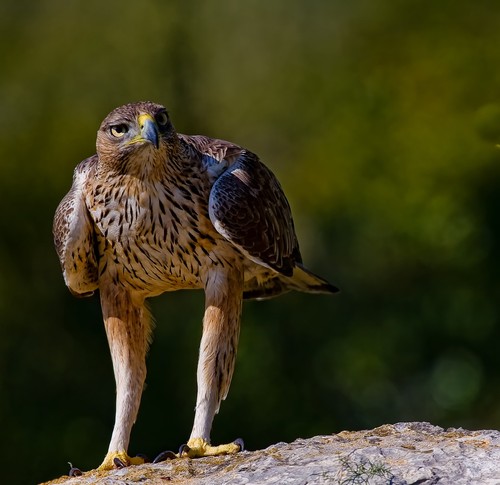
Bonelli's Eagle
Body 65–72 cm (26–28 in); wingspan 150–180 cm (59–71 in)
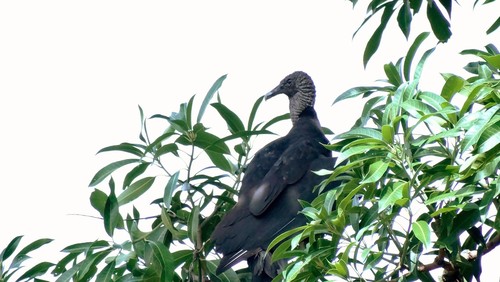
Black Vulture
56-68 cm (22-27 in) long, 137-165 cm wingspan
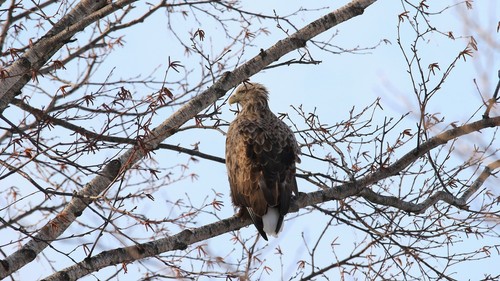
White-tailed Eagle
66-94 cm body length; wingspan 178-245 cm, among the largest eagles in the world
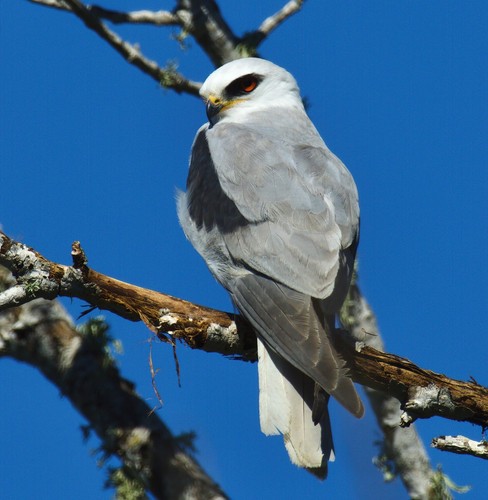
White-tailed Kite
35-43 cm (14-17 in) long, 88-102 cm (35-40 in) wingspan
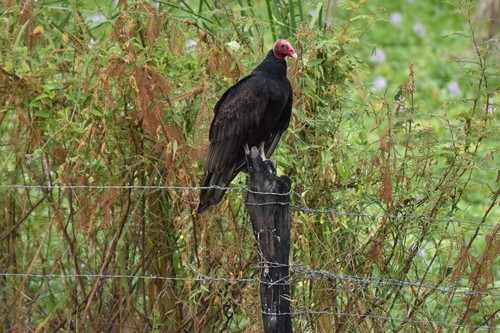
Turkey Vulture
64-81 cm (25-32 in) long, 160-183 cm wingspan
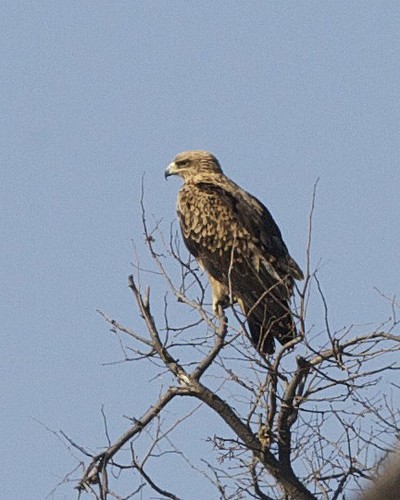
Tawny Eagle
62–75 cm long; wingspan 1.65–2.0 m
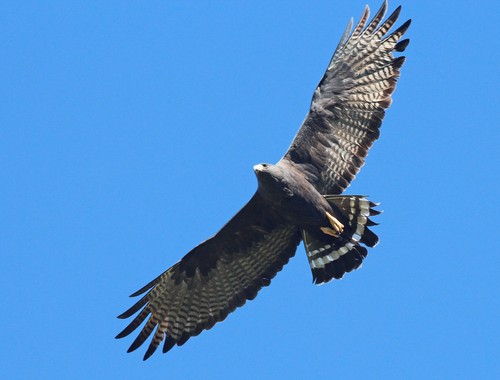
Zone-tailed Hawk
46-56 cm (18-22 in) long, 118-140 cm (46-55 in) wingspan
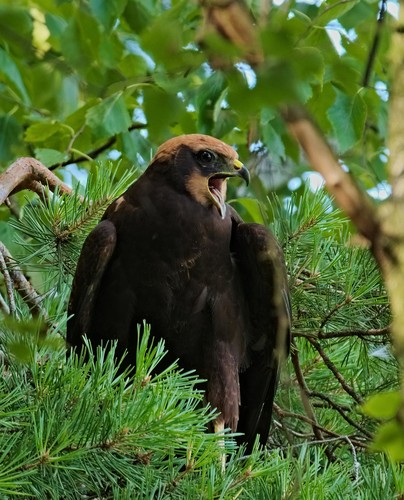
Western Marsh Harrier
Body 43-56 cm; wingspan 115-140 cm
Swallow-tailed Kite
48-68 cm (19-27 in) long including tail streamers, 112-136 cm (44-54 in) wingspan
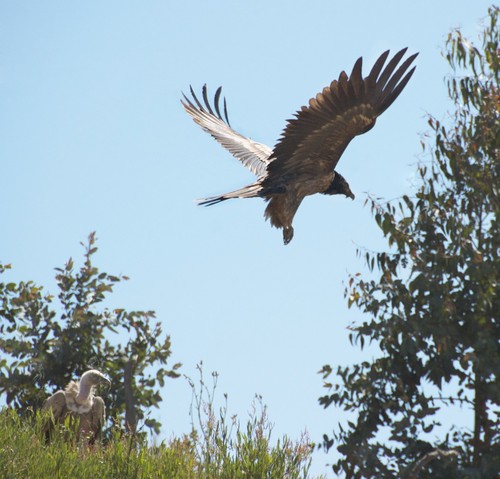
White-backed Vulture
78-98 cm long, wingspan 1.96-2.25 m
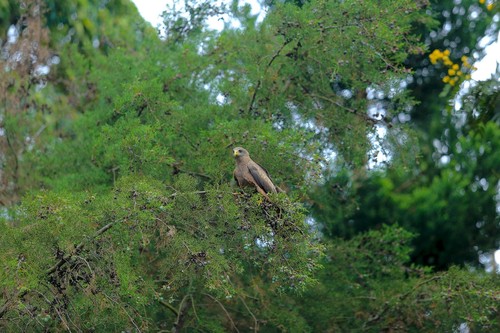
Yellow-billed Kite
55-60 cm long; wingspan 130-155 cm
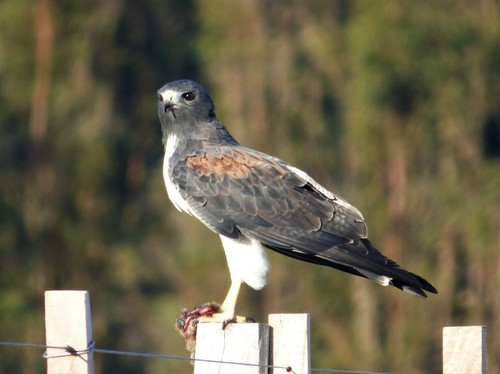
White-tailed Hawk
46-59 cm (18-23 in) long, 122-142 cm (48-56 in) wingspan