
Brahminy Kite Identification Guide
A striking chestnut-and-white raptor of Indo-Pacific coastlines, wetlands, and rivers, distinguished from other kites by its rounded wings and unforked tail.
Read the full Brahminy Kite encyclopedia entry →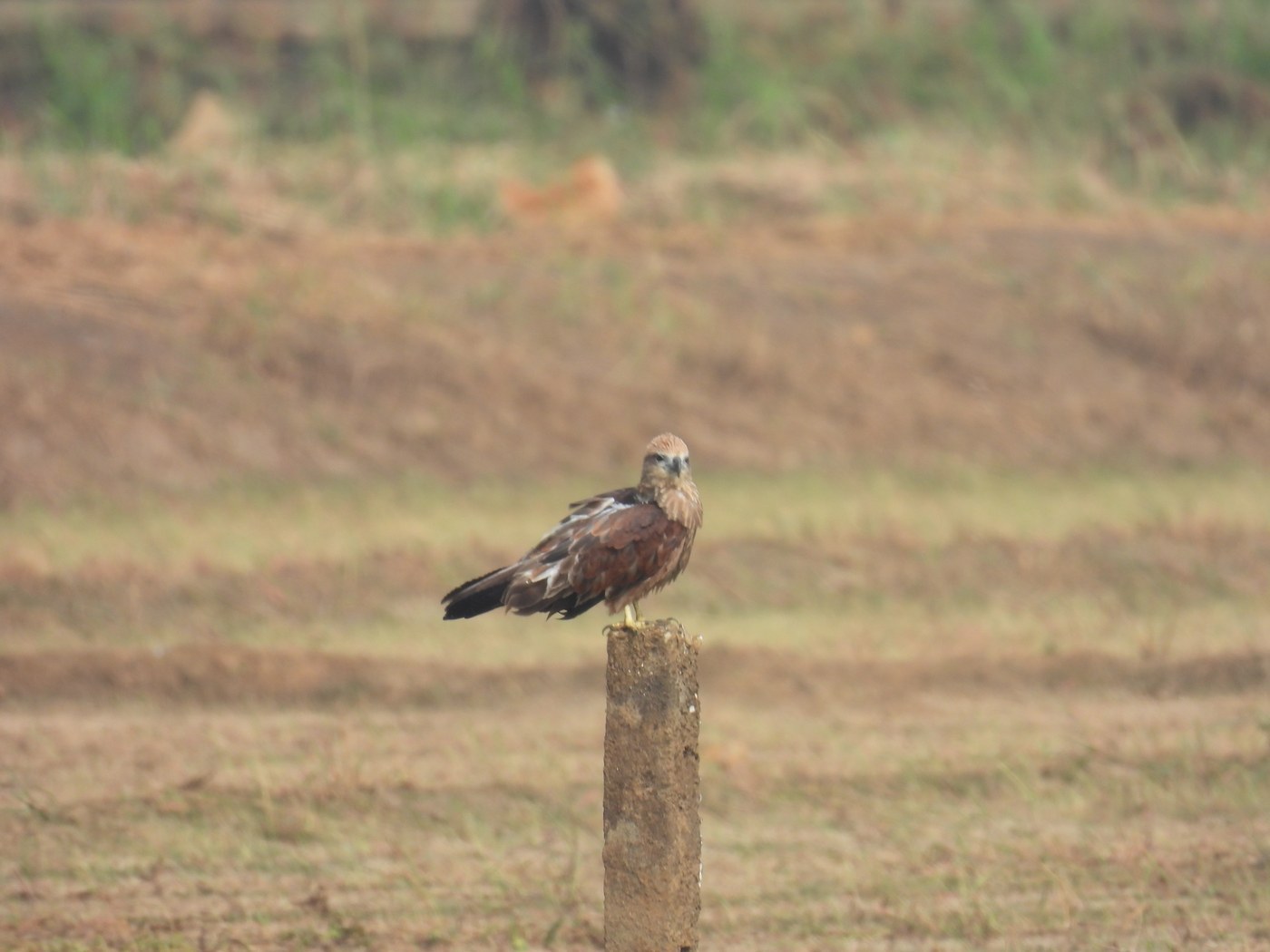
Key Field Marks
- Size & shape: Medium-sized raptor, about 45 cm long, with broad, rounded wings and a short, rounded (not forked) tail.
- Adult plumage: Clean white head, neck, and breast contrasting sharply with rich chestnut-red body, wings, and tail — a striking and distinctive combination.
- Juvenile plumage: Much browner and more mottled overall, with buffy streaking on the underparts; lacks the crisp white head of adults and can take up to three years to reach full adult plumage.
- Flight: Soars and glides on flattish to slightly raised wings, often over water, showing pale patches at the base of the primaries from below.
Separating from Similar Species
- Black Kite: Juvenile Brahminy Kites can resemble Black Kites, but Black Kite has a distinctly forked tail (visible when fanned) versus the Brahminy's rounded tail, and Black Kite is more uniformly brown without the rich chestnut tones of adult Brahminy.
- Whistling Kite: Paler, sandy-brown overall with pale underwing coverts contrasting with darker flight feathers; lacks the sharp white-head/chestnut-body contrast of adult Brahminy Kite.
- Adult Brahminy Kites are essentially unmistakable once the white head and chestnut body are seen well.
Habitat, Range & Season
- Strongly associated with water: coastlines, mangroves, estuaries, rivers, lakes, and wetlands across South Asia, Southeast Asia, and northern/coastal Australia.
- A resident species through most of its range, with some local movements; present year-round wherever suitable wetland or coastal habitat occurs.
- Frequently seen soaring over fishing harbors, mudflats, and rice paddies, often in loose association with other scavenging birds.
Voice & Behavior
- Call is a distinctive, drawn-out nasal mewing, often rendered as "kyeew" or "pee-ah," given both perched and in flight.
- Feeds on fish, crabs, and carrion, often snatching prey from the water's surface in a shallow dive without submerging.
- Frequently seen soaring in slow circles or gliding low over water on steady wingbeats interspersed with glides.
Frequently asked questions
How do I tell an adult Brahminy Kite from a Black Kite?
Adult Brahminy Kites have a clean white head and chestnut body, unlike any Black Kite. For confusing juveniles, check the tail shape: Brahminy Kite has a rounded tail, while Black Kite's tail is forked.
What habitat is best for finding Brahminy Kites?
Coastal areas, mangroves, estuaries, and rivers throughout South and Southeast Asia and coastal Australia — they are rarely found far from water.
Does the Brahminy Kite migrate?
It is largely resident throughout its range, though individuals may make local movements in response to food availability.
What does a young Brahminy Kite look like?
Juveniles are mostly brown and mottled with buffy streaking below, lacking the white head of adults; they gradually molt into adult plumage over about three years.