
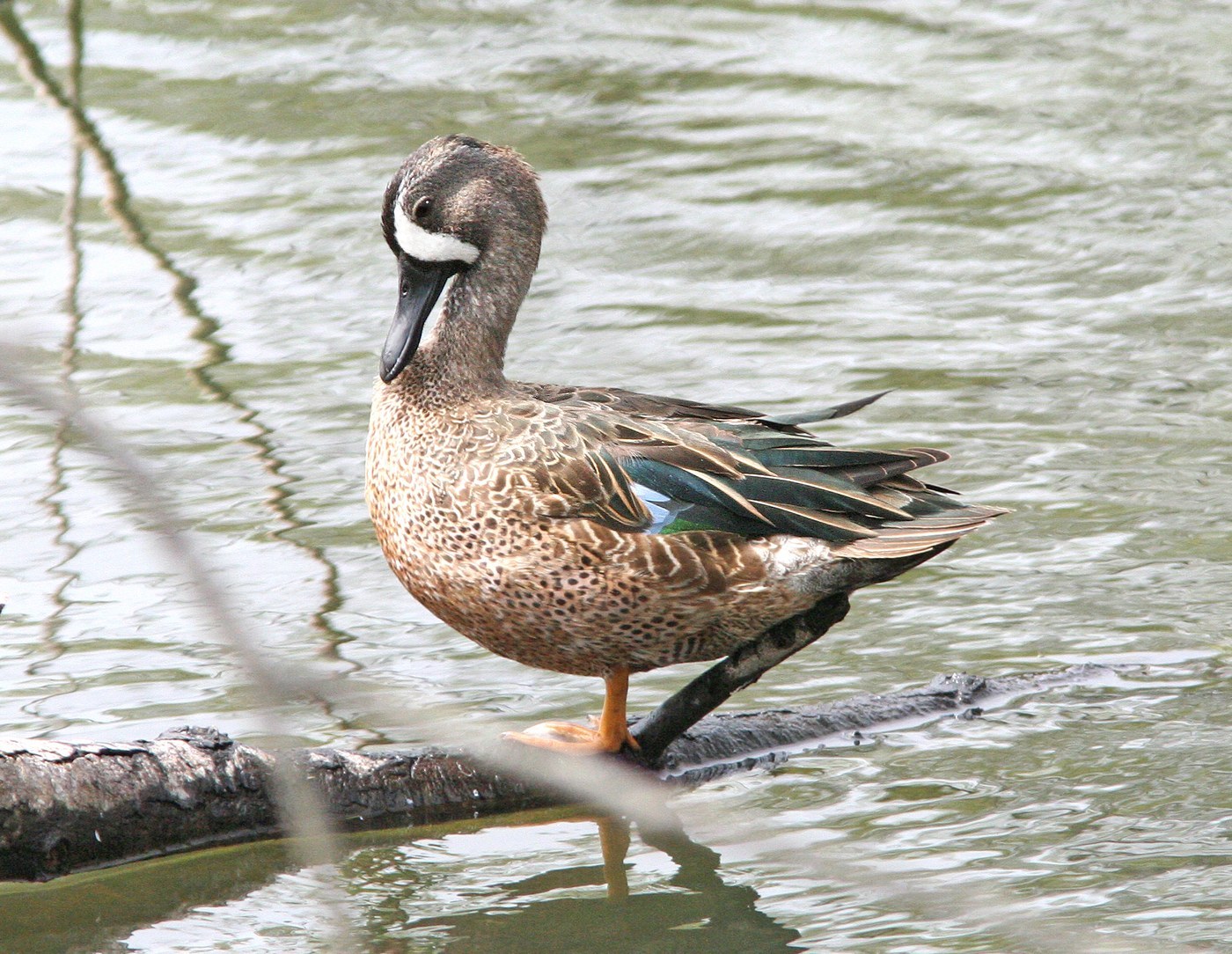
Blue-winged Teal
Spatula discors
A small, long-distance migrant dabbling duck whose drake shows a bold white crescent before the eye and a powder-blue wing patch in flight.
- Size
- 37-41 cm (14.5-16 in) long, 58-64 cm wingspan
- Habitat
- prairie potholes, marshes, and shallow ponds across North America
- Type
- waterfowl
Spotted a bird like this?
Identify any bird from a photo, free.
Overview
The Blue-winged Teal is a small, dainty dabbling duck closely related to the Cinnamon and Northern Shoveler. The breeding drake is a warm mottled brown overall, most notable for a bold white crescent on the face just in front of the eye, set against a slate-gray head, with the body speckled in dark spots.
Females are mottled brown, similar to other small dabbler hens, but both sexes reveal a pale powder-blue patch on the forewing in flight — the source of the species' name — bordered by a green speculum.
How to identify it
Key Field Marks
- Small size, similar to Green-winged Teal
- Breeding drake: slate-gray head with a bold white facial crescent, mottled brown spotted body, black rear end
- Female: mottled brown, plain face lacking bold markings
- Pale blue forewing patch visible in flight on both sexes, bordered by a green speculum
Similar Species
Cinnamon Teal drakes are overall deep rusty-red rather than brown-spotted and lack the white facial crescent; female Cinnamon and Blue-winged Teal are extremely similar and best separated by subtle differences in bill shape and face pattern, often requiring careful, close observation. Both share the same pale blue wing patch.
Habitat & range
Blue-winged Teal breed extensively across the prairie pothole region of the north-central United States and southern Canada, favoring shallow marshes, ponds, and wetlands with good emergent vegetation. They are among the earliest ducks to migrate south in fall and among the latest to return in spring, wintering farther south on average than most North American ducks, including large numbers in Mexico, Central America, and northern South America.
During migration, they often gather in large flocks on shallow wetlands and flooded fields.
Behavior & voice
Blue-winged Teal feed by dabbling in shallow water, taking seeds, aquatic invertebrates, and plant material, often foraging actively along muddy edges and in flooded vegetation. Their small size and quick, agile flight allow them to use small, temporary wetlands.
The male's call is a thin, high-pitched whistle, while the female gives a soft quack. Nests are built on the ground in grassy cover, often some distance from water, with females incubating a clutch of 9-13 eggs alone; the species' long-distance migratory habits mean pairs typically form on the wintering grounds or during spring migration rather than on the breeding grounds themselves.
Frequently asked questions
How do you identify a male Blue-winged Teal?
Look for a slate-gray head with a bold white crescent in front of the eye, and a mottled brown, dark-spotted body.
Why is it called 'blue-winged'?
Both sexes show a pale powder-blue patch on the forewing, visible especially in flight.
How far do Blue-winged Teal migrate?
They are among the longest-distance migrant ducks in North America, with many wintering as far south as northern South America.
How can you tell Blue-winged Teal from Cinnamon Teal?
Male Cinnamon Teal are solid rusty-red without a white facial crescent, while male Blue-winged Teal are brown and spotted with a bold white facial crescent; females of the two species are very similar and harder to separate.
What do Blue-winged Teal eat?
They eat seeds, aquatic invertebrates, and plant material found in shallow wetlands.
Blue-winged Teal guides
In-depth guides for identifying, finding, and understanding Blue-winged Teal.
Other birds you may enjoy
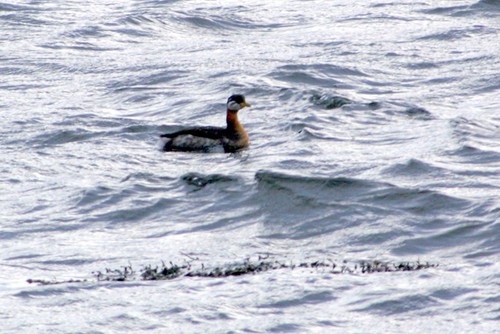
Red-necked Grebe
40-55 cm (16-22 in) long, 77-85 cm wingspan
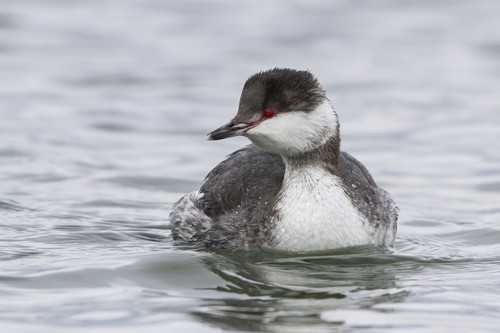
Horned Grebe
31-38 cm (12-15 in) long, 46-55 cm wingspan
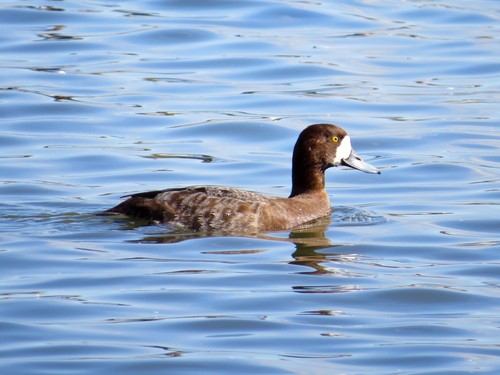
Greater Scaup
42-51 cm (16.5-20 in) long, 71-84 cm wingspan
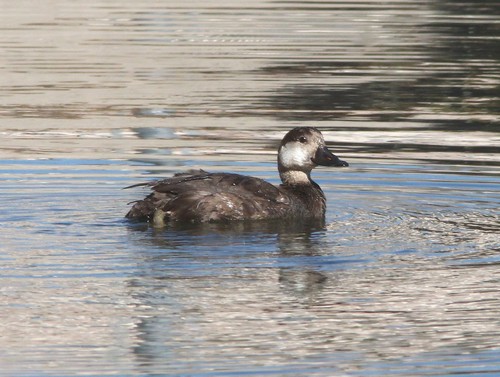
Black Scoter
43-54 cm (17-21 in) long, 79-90 cm wingspan
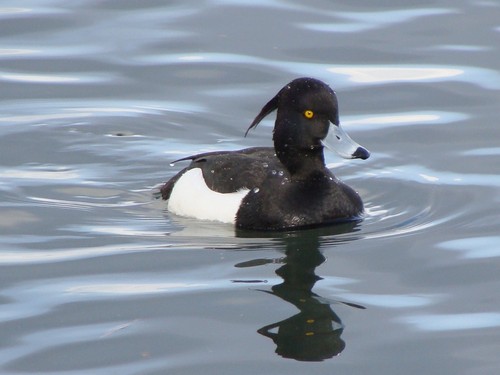
Tufted Duck
40-47 cm (16-18.5 in) long, 67-73 cm wingspan
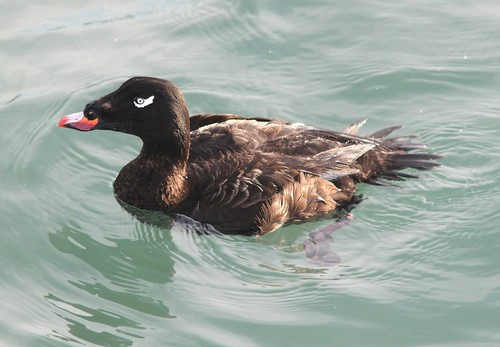
White-winged Scoter
48-58 cm (19-23 in) long, 86-99 cm wingspan
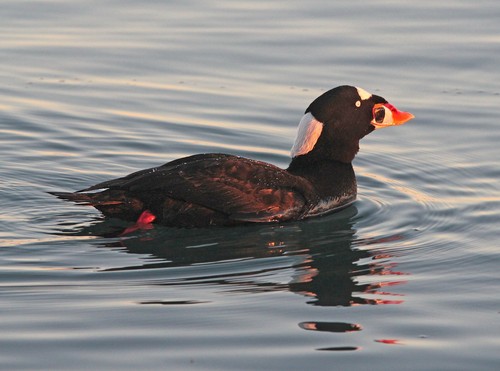
Surf Scoter
45-56 cm (18-22 in) long, 78-92 cm wingspan
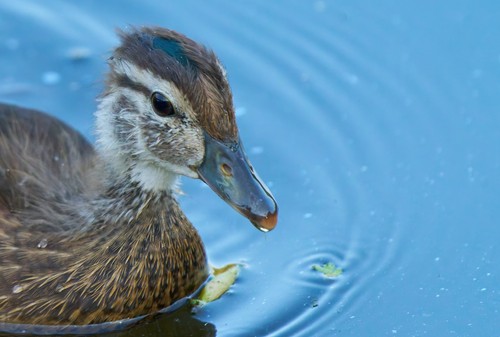
Wood Duck
47-54 cm (18.5-21 in) long, 66-73 cm wingspan
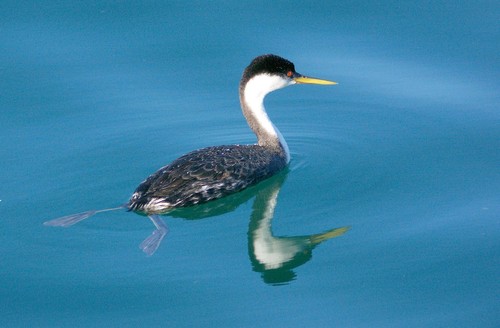
Western Grebe
56-74 cm (22-29 in) long, 79-102 cm wingspan
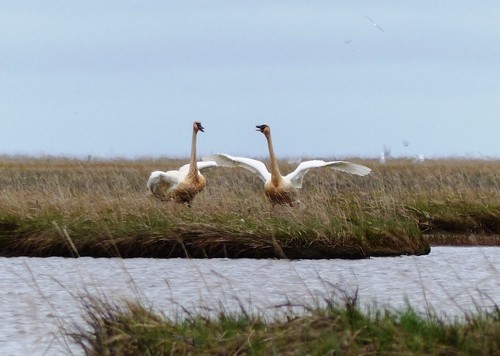
Tundra Swan
115-150 cm (45-59 in) long, about 180 cm wingspan
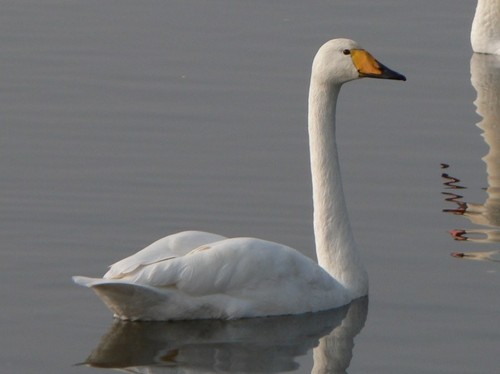
Whooper Swan
140-165 cm (55-65 in) long, 205-235 cm wingspan
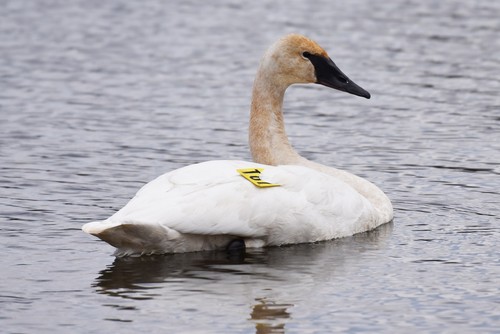
Trumpeter Swan
150-180 cm (59-71 in) long, up to 300 cm wingspan