
Blue-winged Teal Identification Guide
A small, fast-flying dabbling duck of prairie wetlands, males marked by a bold white facial crescent and pale blue wing patch shared by both sexes.
Read the full Blue-winged Teal encyclopedia entry →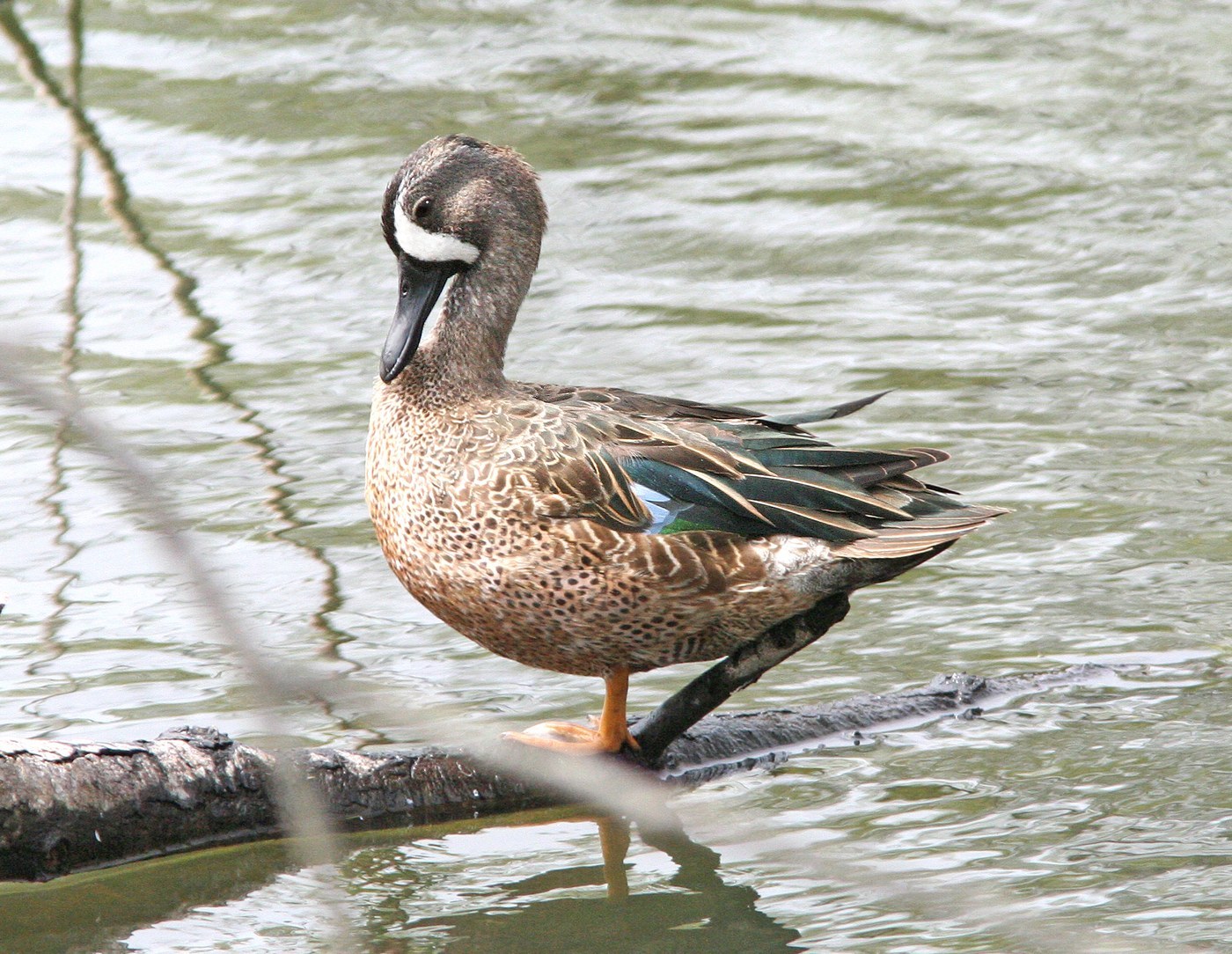
Key Field Marks
- Size & shape: A small dabbling duck, about 36-41 cm (14-16 in), with a proportionally large bill (spatulate but smaller than a Northern Shoveler's) and compact body.
- Plumage (breeding male): Grayish-brown head with a bold, white crescent shape in front of the eye, warm brown body finely spotted with dark markings, and a black-bordered white patch near the rear flank.
- Plumage (female/eclipse male): Mottled brown overall, closely resembling female Cinnamon Teal and other small brown ducks, best separated by structure and companion birds.
- Wing patch: Both sexes show a pale, powdery blue patch on the forewing (upperwing coverts), conspicuous in flight and a key identification feature at any time of year.
- Behavior: Dabbles and tips up in shallow water and mudflats; flies in tight, fast, erratic flocks low over water and marsh vegetation, among the earliest ducks to depart south in fall.
Similar Species
- Cinnamon Teal: Breeding male is deep reddish-cinnamon overall rather than brown with a white facial crescent; females are extremely similar to female Blue-winged Teal and often require bill shape/size and range/season for confident separation.
- Green-winged Teal: Smaller, with a green (not blue) speculum and, in males, a chestnut head with a green eye patch rather than a white facial crescent.
- Northern Shoveler: Much larger spatulate bill and, in males, a green head and white breast; female Shoveler also shows a similar blue wing patch but has a notably larger, heavier bill.
- The pale blue forewing patch is shared with Cinnamon Teal and Northern Shoveler, so head pattern, bill size, and overall structure are needed to clinch the identification.
Where & When to See It
- Range: Breeds across the northern Great Plains and prairie pothole region of the U.S. and Canada; winters from the southern U.S. through Mexico, Central America, and into South America — one of the longest-distance migrant dabbling ducks in North America.
- Habitat: Shallow marshes, prairie potholes, flooded fields, and other shallow wetlands with abundant emergent vegetation, both for breeding and on migration/wintering grounds.
- Season: Among the earliest ducks to arrive in spring and the earliest dabblers to migrate south in fall, often departing breeding areas by early-to-mid autumn well before most other waterfowl.
Voice & Song Cues
- Males give a soft, high-pitched, whistled peep or thin whistling note, much quieter than the calls of larger dabbling ducks.
- Females give a soft, descending series of quacks, similar to but higher and weaker than a Mallard's quack.
- Generally a quieter duck overall, with calls more often heard at close range or during flushing than as a primary identification tool.
Frequently asked questions
How do I tell male Blue-winged Teal from male Cinnamon Teal?
Male Blue-winged Teal has a grayish-brown head with a bold white crescent in front of the eye, while male Cinnamon Teal is uniformly deep reddish-cinnamon with no white facial crescent.
Do both sexes show the blue wing patch?
Yes, both males and females show a pale powdery blue patch on the upperwing coverts, visible especially in flight.
When does Blue-winged Teal migrate?
It is one of the earliest ducks to head south in fall, often departing breeding areas well before most other dabbling ducks, and one of the earliest to return in spring.
What habitat does Blue-winged Teal prefer?
Shallow marshes and prairie pothole wetlands with abundant emergent vegetation, used for both breeding and migration stopovers.