
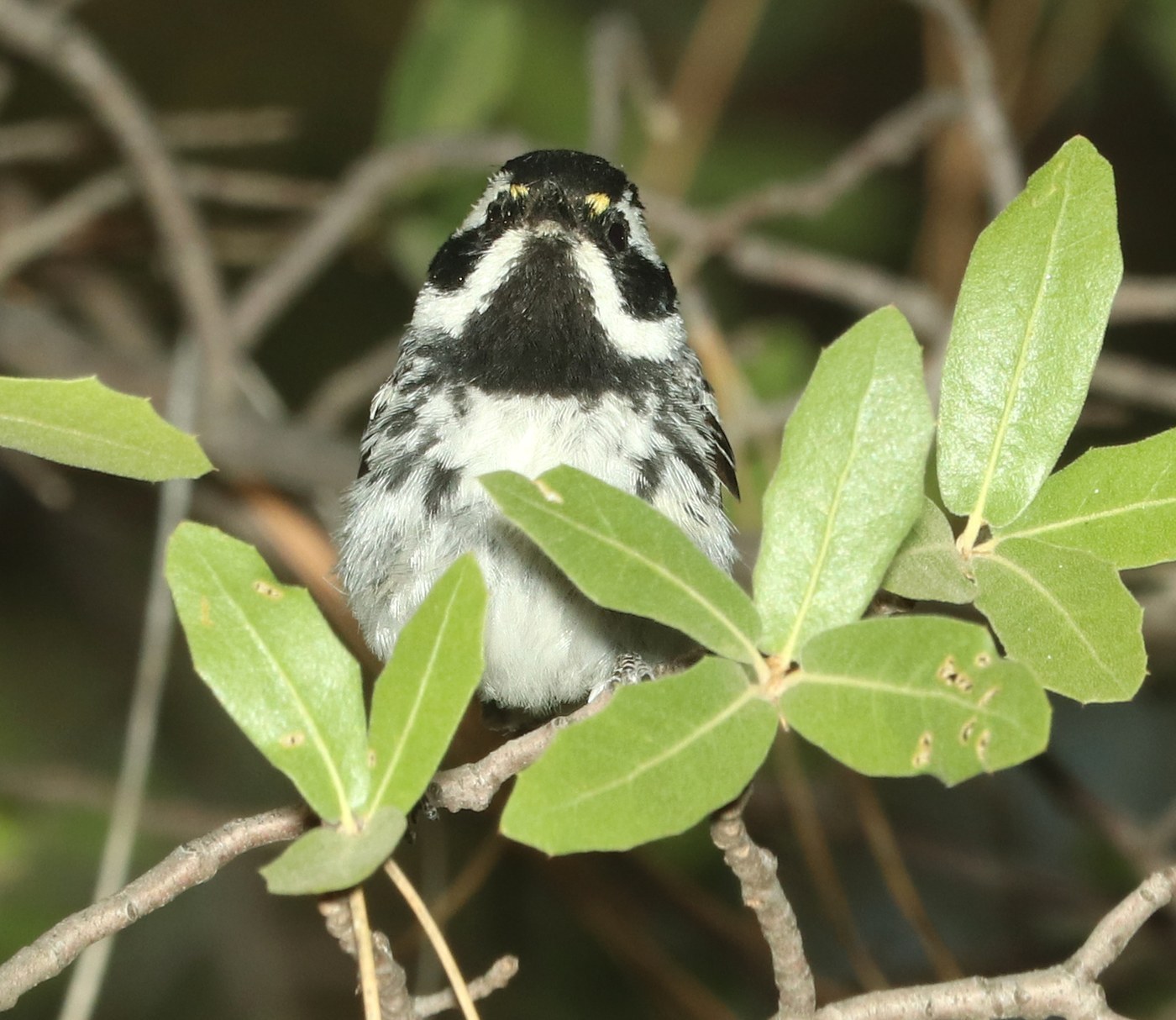
Black-throated Gray Warbler
Setophaga nigrescens
A crisply patterned gray, black, and white warbler of dry western woodlands, with a small yellow spot in front of the eye as its only splash of color.
- Size
- 11-13 cm (4.3-5.1 in) long, 18-19 cm wingspan
- Habitat
- dry oak woodland, pinyon-juniper, and mixed conifer scrub
- Type
- songbird
Spotted a bird like this?
Identify any bird from a photo, free.
Overview
The Black-throated Gray Warbler is a striking, sharply patterned bird, entirely gray, black, and white apart from a small but distinctive yellow spot just in front of the eye (the lores). Adult males show a bold black-and-white striped face and a solid black throat and bib, while females have a paler, less extensive throat patch, sometimes largely white.
The back is plain gray, the underparts white with black streaking along the flanks, and two crisp white wingbars complete a clean, high-contrast pattern that stands out well against the dry woodland habitats it favors.
How to identify it
Key field marks
- Gray upperparts, black-and-white striped face
- Black throat/bib (more extensive and solid in males)
- Small yellow spot in front of the eye (lores)
- White underparts with black streaking on the flanks
- Two white wingbars
Similar species
Black-and-white Warbler is superficially similar in overall gray-black-white tone but is boldly striped overall (including the crown and back) and lacks the yellow lore spot, plus it creeps along tree trunks and branches rather than foraging like a typical foliage-gleaning warbler.
Habitat & range
Black-throated Gray Warblers breed in dry woodland habitats across the western United States, including oak woodland, pinyon-juniper, chaparral, and mixed conifer scrub, generally favoring drier, more open habitat than many other western warblers.
They winter mainly in Mexico, with some individuals wintering in the southwestern United States, particularly in similarly dry scrub and woodland habitats.
Behavior & voice
Behavior and voice
Black-throated Gray Warblers forage actively in shrubs and trees, gleaning insects from foliage and twigs, typically staying at low to mid-levels in woodland vegetation rather than high in the canopy.
The song is a buzzy series often rendered as "weezy-weezy-weezy-weet," with a rising or emphasized final note.
Nesting
The nest is built in a shrub or low tree, often well concealed in foliage, made of plant fibers, bark strips, and down. Clutches typically contain 3-5 eggs.
Frequently asked questions
What is the only spot of color on a Black-throated Gray Warbler?
A small yellow spot in front of the eye, on the lores, is the bird's only touch of color amid an otherwise gray, black, and white plumage.
How do you tell it apart from a Black-and-white Warbler?
Black-and-white Warbler is boldly striped overall, including the crown and back, lacks a yellow lore spot, and creeps along trunks and branches like a nuthatch, while Black-throated Gray Warbler has a plain gray back and forages more like a typical foliage-gleaning warbler.
What habitat does the Black-throated Gray Warbler prefer?
Dry western woodland habitats such as oak woodland, pinyon-juniper, chaparral, and mixed conifer scrub.
Where does the Black-throated Gray Warbler winter?
Mainly in Mexico, with some individuals wintering in the southwestern United States.
How can you tell a male from a female Black-throated Gray Warbler?
Males have a solid, extensive black throat and bib, while females show a paler, less extensive throat patch that can be largely white.
Black-throated Gray Warbler guides
In-depth guides for identifying, finding, and understanding Black-throated Gray Warbler.
Other birds you may enjoy
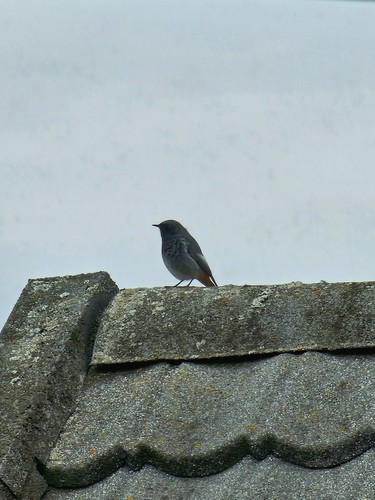
Black Redstart
13-14.5 cm (5.1-5.7 in) long, 23-26 cm wingspan
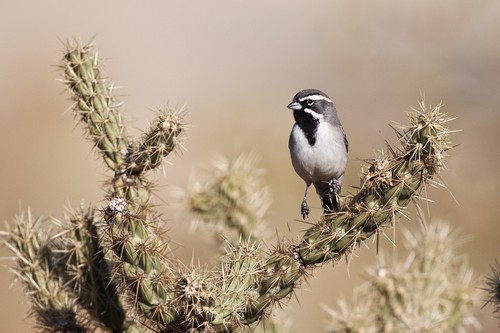
Black-throated Sparrow
12-14 cm (4.7-5.5 in) long, about 19-20 cm (7.5-8 in) wingspan
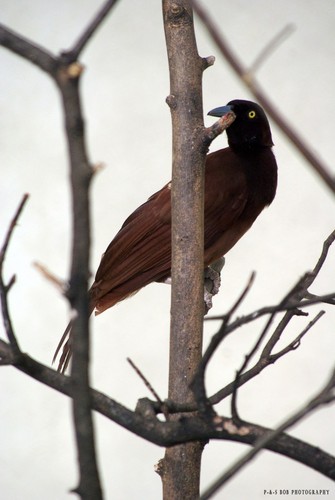
Greater Bird-of-paradise
Body about 43 cm; males with additional flank plumes up to 50 cm and long tail wires
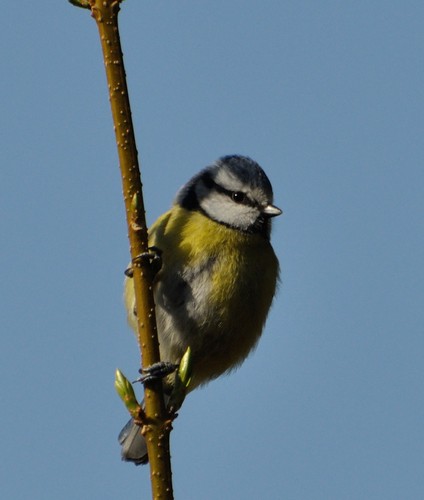
Blue Tit
11-12 cm (4.3-4.7 in) long, 17-20 cm wingspan
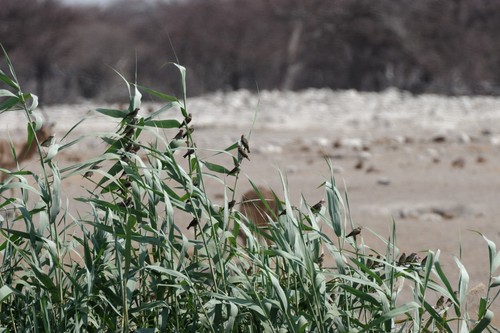
Red-billed Quelea
11.5–13 cm long, wingspan about 20–22 cm
White-plumed Antbird
13-14 cm (5-5.5 in) long
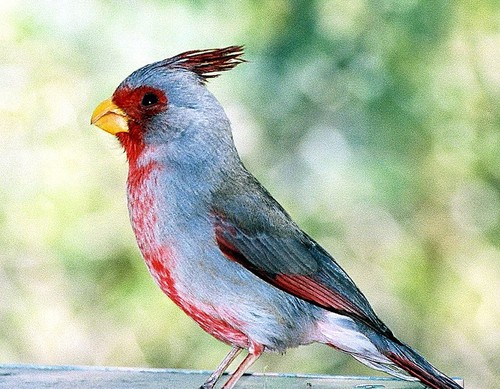
Pyrrhuloxia
19-22 cm (7.5-8.7 in) long, 30 cm wingspan
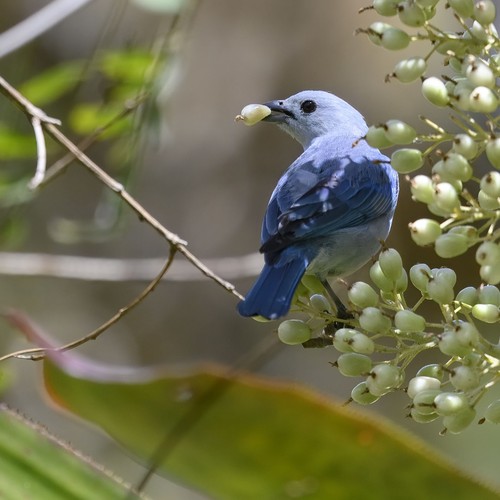
Blue-gray Tanager
16-18 cm (6-7 in) long
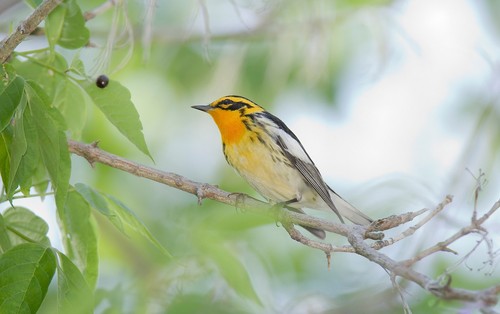
Blackburnian Warbler
11-13 cm (4.3-5.1 in) long, 20-22 cm wingspan
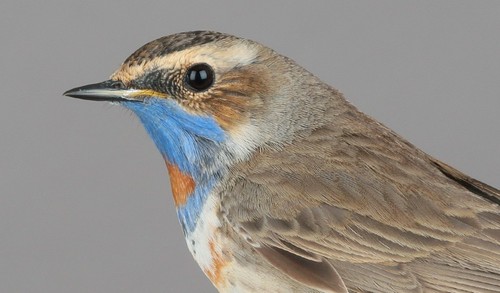
Bluethroat
13-14 cm (5.1-5.5 in) long, 20-22 cm wingspan
Eurasian Nuthatch
12-14.5 cm (4.7-5.7 in) long, 22.5-27 cm wingspan
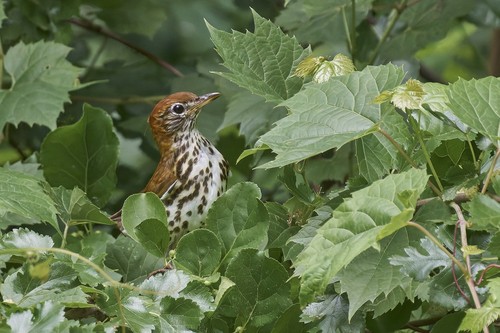
Wood Thrush
19-21 cm (7.5-8.3 in) long, about 33 cm (13 in) wingspan