
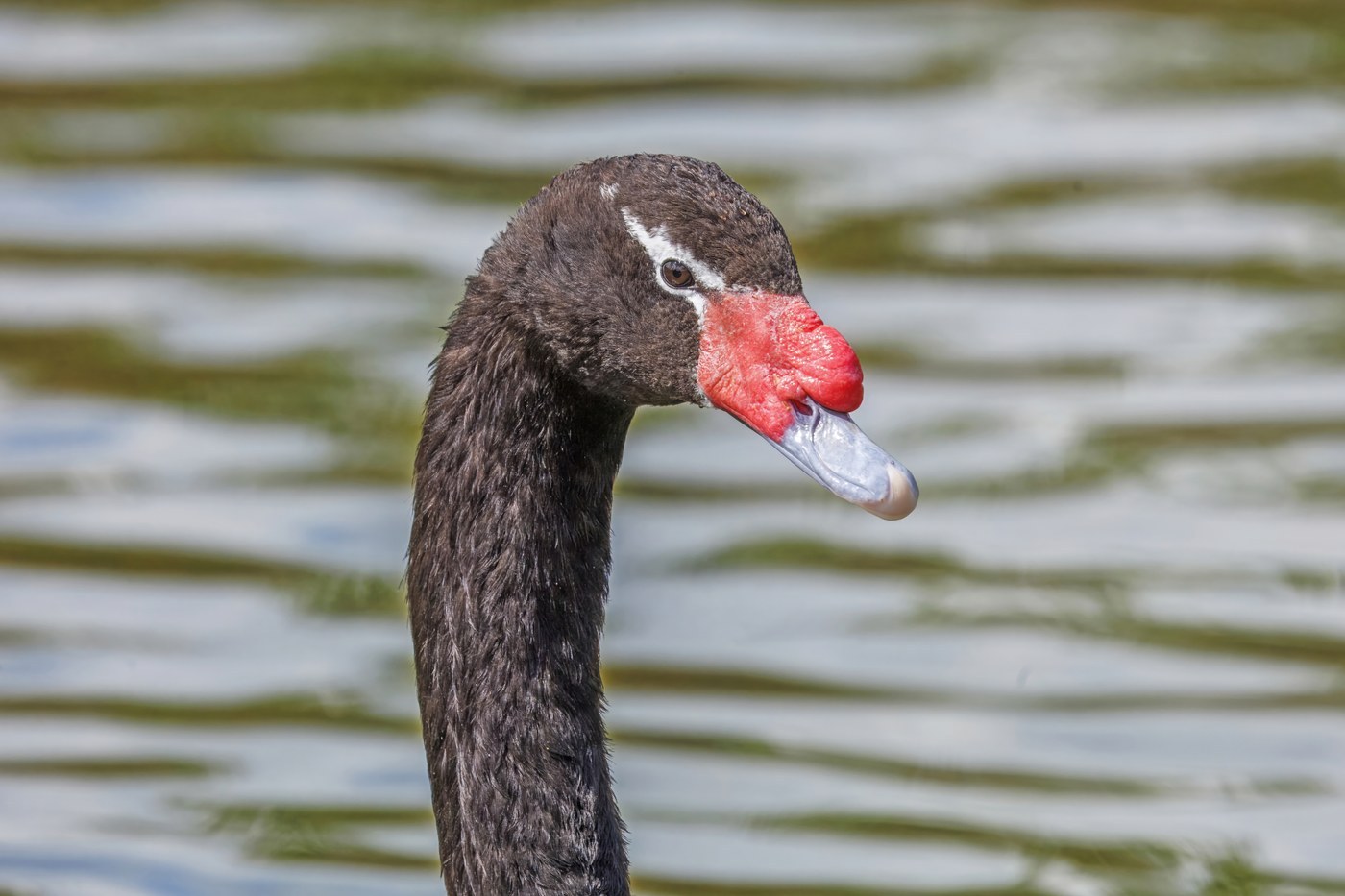
Black-necked Swan
Cygnus melancoryphus
A striking South American swan with a snow-white body, jet-black head and neck, and a bright red knob at the base of its bill.
- Size
- 102-124 cm (40-49 in) long, about 150-177 cm wingspan
- Habitat
- freshwater lakes, marshes, and coastal lagoons of southern South America
- Type
- waterfowl
Spotted a bird like this?
Identify any bird from a photo, free.
Overview
The Black-necked Swan is the smallest of the world's swan species and one of the most visually striking, with a clean white body contrasting sharply against an entirely black head and neck. A prominent red-orange fleshy knob sits at the base of the grey bill, particularly noticeable in adult males, and the legs are pink.
It is South America's only swan species and a familiar sight on wetlands throughout the southern part of the continent, often swimming with cygnets carried on an adult's back, a behavior it shares with only a few waterfowl species.
How to identify it
Key field marks
- Pure white body plumage
- Solid black head and neck, sharply demarcated from the white body
- Red-orange knob at the base of the bill
- Pink legs and feet
Similar species
No other swan combines a white body with an entirely black head and neck, making this species unmistakable within its South American range. It is smaller and more compact than the mostly black Black Swan of Australia, which lacks any white body plumage.
Habitat & range
Range and habitat
The Black-necked Swan is found across southern South America, including Chile, Argentina, Paraguay, Uruguay, and southern Brazil, inhabiting freshwater lakes, marshes, slow rivers, and sheltered coastal lagoons.
Migration
Southern breeding populations, particularly in Tierra del Fuego and southern Patagonia, migrate northward to escape harsh winters, while more northerly populations tend to be largely resident.
Behavior & voice
Behavior
Black-necked Swans are strong swimmers that often gather in flocks outside the breeding season and, notably, frequently carry cygnets on their backs while swimming, a behavior that offers protection from predators and cold water.
Voice
Calls include soft whistling and low grunting notes, generally quieter than the calls of Northern Hemisphere swans.
Feeding
They feed primarily on aquatic vegetation and algae obtained by upending in shallow water, using their long necks to reach submerged plants.
Nesting and breeding
Nests are built as large mounds of reeds and vegetation near water, often on small islands; pairs are monogamous, and the habit of carrying cygnets on the back is a notable and well-documented parental behavior in this species.
Frequently asked questions
Where do Black-necked Swans live?
They are native to southern South America, including Chile, Argentina, Uruguay, Paraguay, and southern Brazil, on freshwater and coastal wetlands.
Why does the Black-necked Swan carry its young on its back?
Parents, especially in colder southern parts of the range, carry cygnets on their backs while swimming to protect them from predators, cold water, and exhaustion.
Is the Black-necked Swan the smallest swan species?
Yes, it is generally considered the smallest of the world's swan species.
How can you tell a Black-necked Swan from a Black Swan?
The Black-necked Swan has a white body with only the head and neck black, while the Australian Black Swan is almost entirely black-bodied.
Black-necked Swan guides
In-depth guides for identifying, finding, and understanding Black-necked Swan.
Other birds you may enjoy
Red-necked Grebe
40-55 cm (16-22 in) long, 77-85 cm wingspan
Horned Grebe
31-38 cm (12-15 in) long, 46-55 cm wingspan
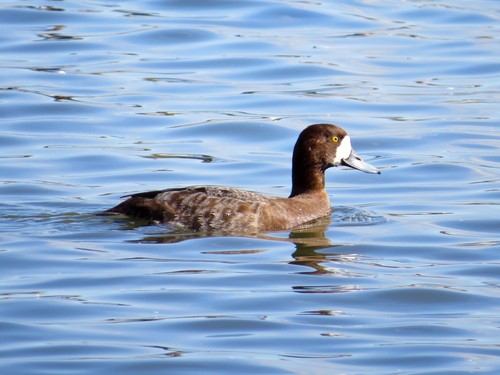
Greater Scaup
42-51 cm (16.5-20 in) long, 71-84 cm wingspan
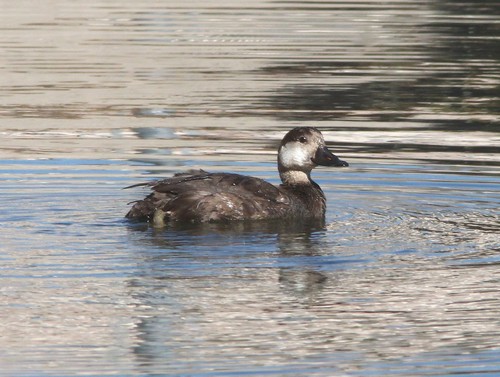
Black Scoter
43-54 cm (17-21 in) long, 79-90 cm wingspan
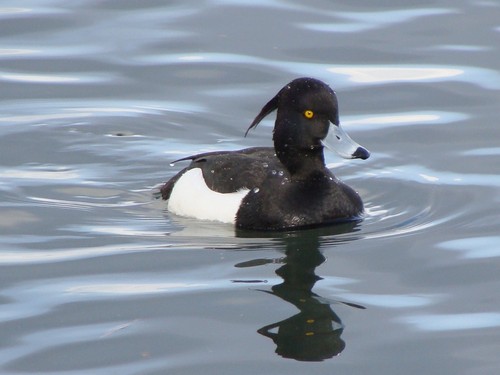
Tufted Duck
40-47 cm (16-18.5 in) long, 67-73 cm wingspan
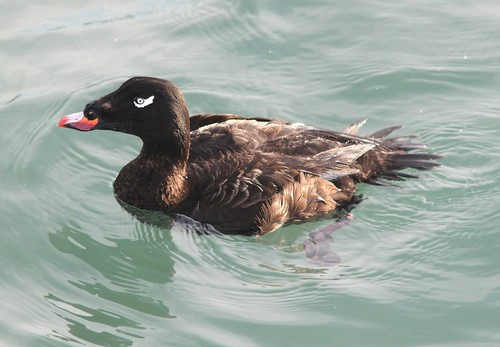
White-winged Scoter
48-58 cm (19-23 in) long, 86-99 cm wingspan
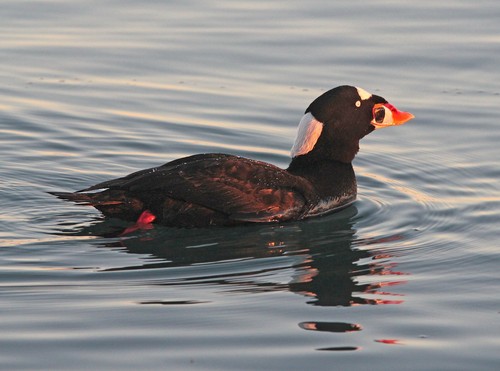
Surf Scoter
45-56 cm (18-22 in) long, 78-92 cm wingspan
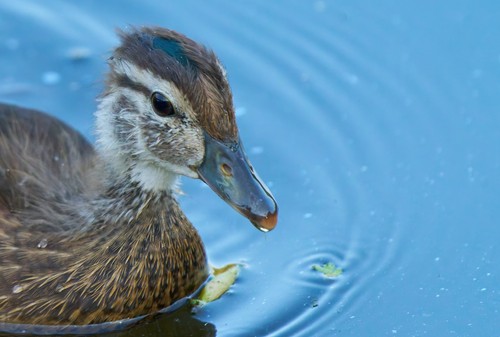
Wood Duck
47-54 cm (18.5-21 in) long, 66-73 cm wingspan
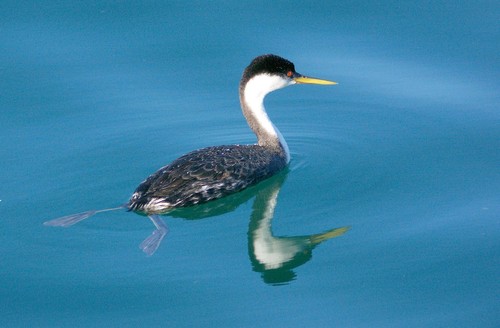
Western Grebe
56-74 cm (22-29 in) long, 79-102 cm wingspan
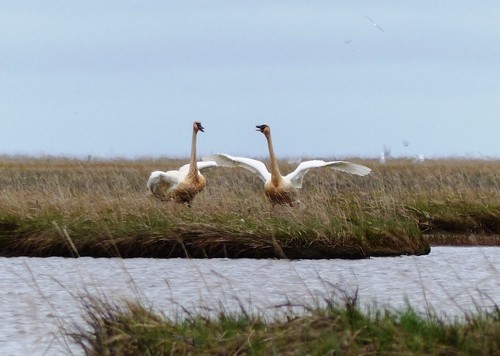
Tundra Swan
115-150 cm (45-59 in) long, about 180 cm wingspan
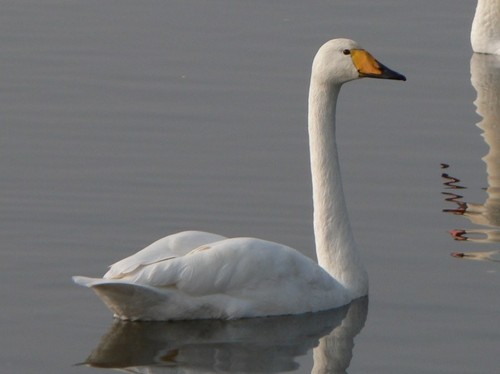
Whooper Swan
140-165 cm (55-65 in) long, 205-235 cm wingspan
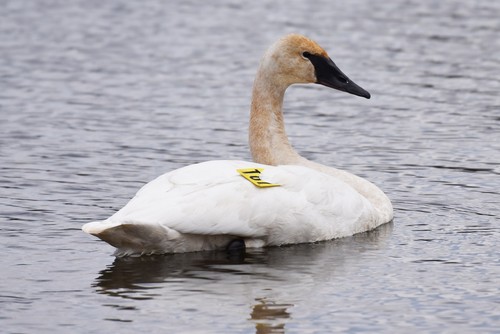
Trumpeter Swan
150-180 cm (59-71 in) long, up to 300 cm wingspan