
Black-necked Swan Identification Guide
The smallest swan species and the only one with a black head and neck contrasting a pure white body, native to the wetlands of southern South America.
Read the full Black-necked Swan encyclopedia entry →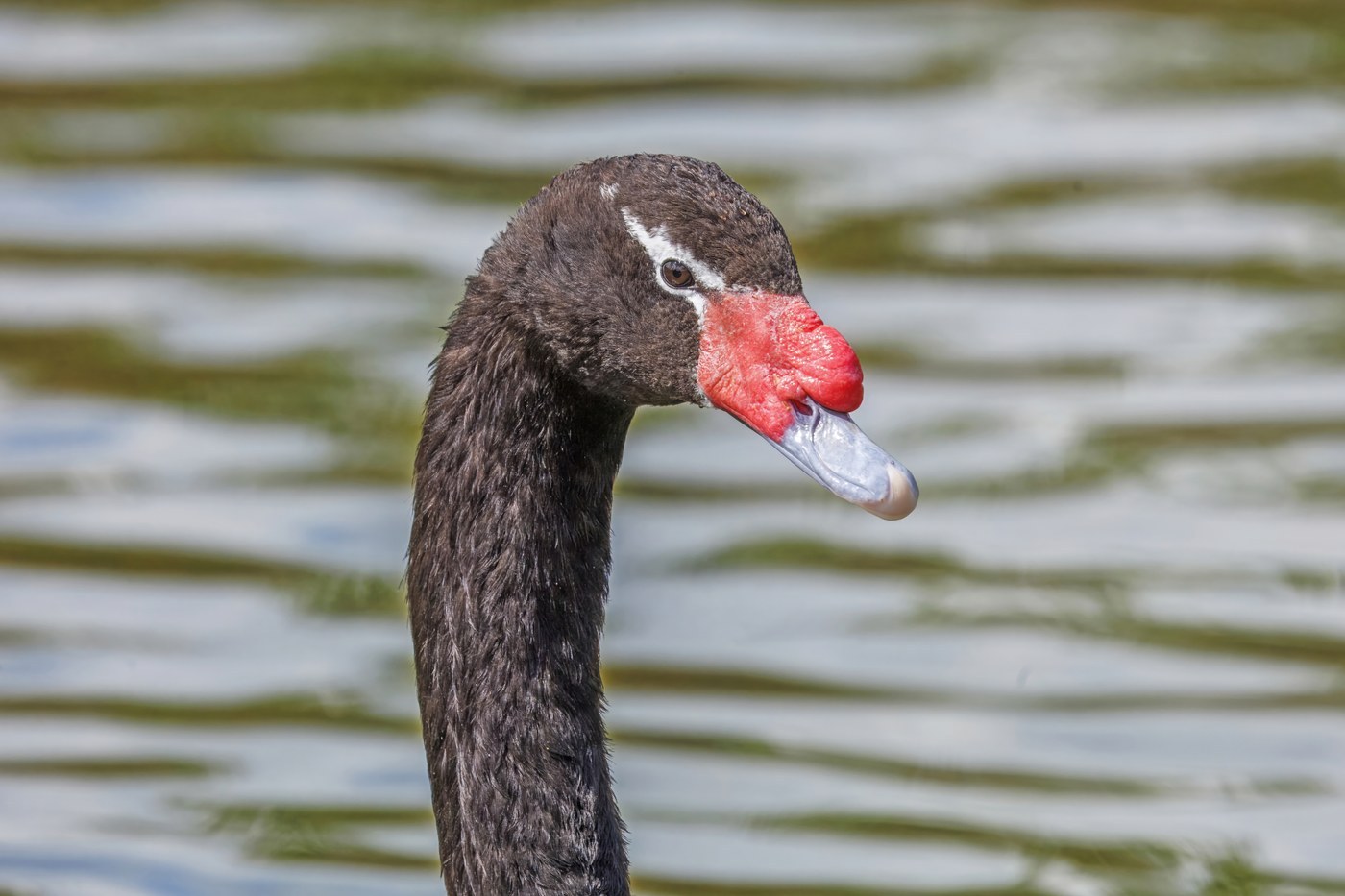
Key Field Marks
- Smallest of the world's swan species, with an all-white body and a strikingly contrasting black head and neck — a pattern unique among swans.
- Bill is gray-blue with a prominent bright red knob (caruncle) at the base in adults, larger and brighter in breeding males.
- Neck is proportionally shorter and held less rigidly upright than in the larger white swans of the Northern Hemisphere.
- Juveniles are duller, with grayish rather than crisp black-and-white plumage, gradually acquiring adult coloration.
Behavior
- Forms strong pair bonds and is often seen in pairs or family groups; also gathers in larger flocks on productive wetlands outside the breeding season.
- Feeds mainly by upending or dabbling in shallow water for aquatic vegetation, and also grazes on land at times.
- Nests on platforms of vegetation near or over water, often on small islands or dense marsh vegetation for protection from predators.
Separating from Similar Species
- Unmistakable within its native range — no other swan species is found in southern South America, and the black head/neck versus white body pattern is unique among all swans worldwide.
- Coscoroba Swan: sometimes found alongside Black-necked Swan in the same wetlands but is entirely white with a red bill and legs and no black on the head or neck at all.
Habitat & Range
- Native to southern South America, including southern Chile, Argentina, southern Brazil, and the Falkland Islands.
- Inhabits freshwater and brackish lakes, lagoons, marshes, and sheltered estuaries with abundant aquatic vegetation.
- Partially migratory in the far south of its range, with some populations shifting north to milder wetlands in winter.
Voice
- Gives soft, melodious whistling calls, notably quieter and less trumpeting than the loud bugling calls of Northern Hemisphere swans such as Trumpeter or Whooper Swan.
Frequently asked questions
What makes the Black-necked Swan unique among swans?
It is the only swan species with a black head and neck contrasting a white body, and it is also the smallest swan species in the world.
Where is the Black-necked Swan found?
It is native to southern South America, including southern Chile, Argentina, southern Brazil, and the Falkland Islands, on lakes, lagoons, and marshes.
How do I tell a Black-necked Swan from a Coscoroba Swan?
Coscoroba Swan is entirely white with a red bill and legs and shows no black at all, while Black-necked Swan has a black head and neck against a white body.
What does the red knob on a Black-necked Swan's bill indicate?
The bright red caruncle at the base of the bill is a normal adult feature, typically larger and more prominent in breeding males.