
Black Guillemot
Cepphus grylle
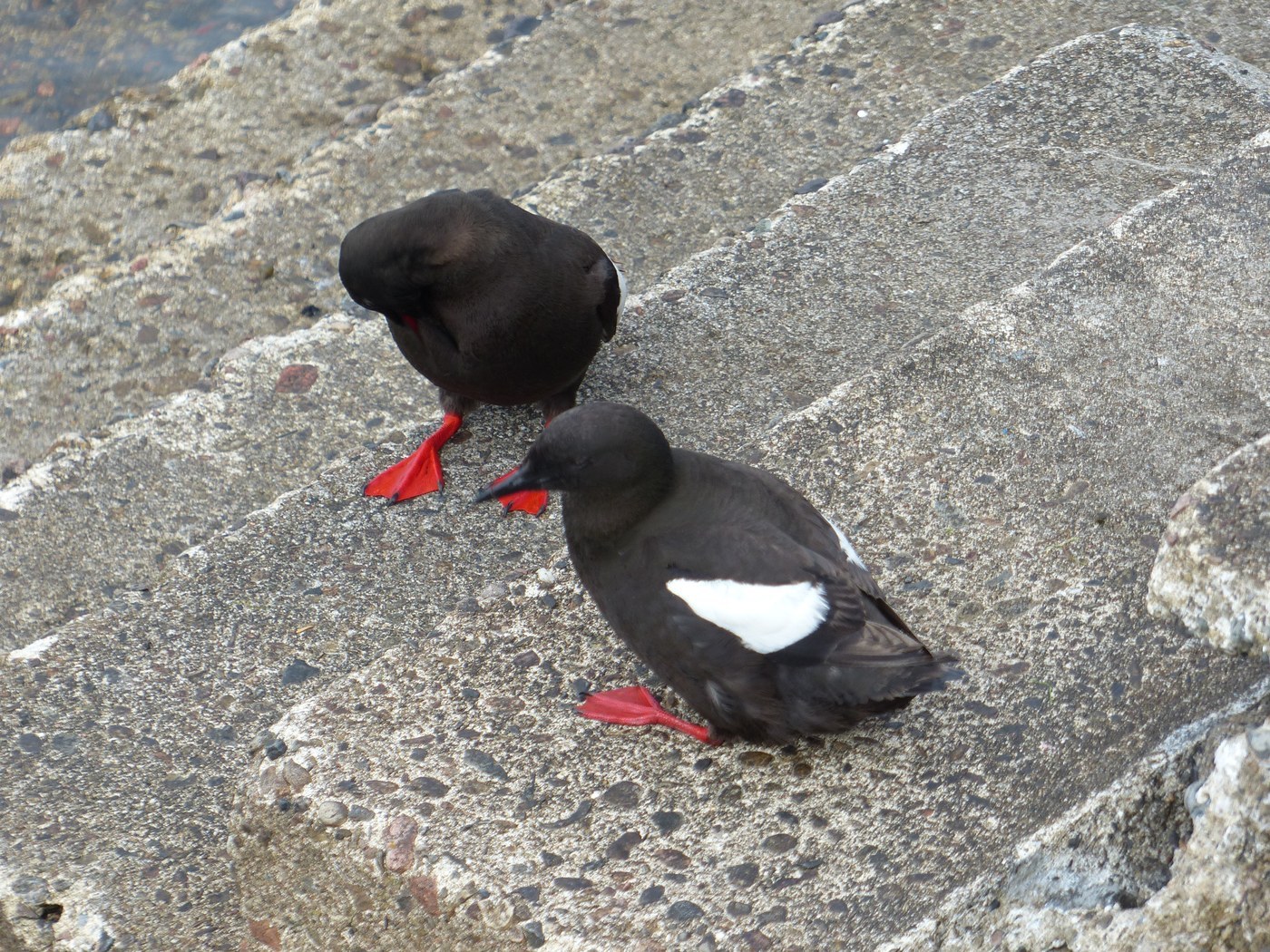
A small all-black auk with striking white wing patches and bright red legs and mouth lining, found along rocky North Atlantic coasts.
- Size
- 30-32 cm (12-13 in) long, 52-58 cm wingspan
- Habitat
- rocky North Atlantic and Arctic coasts, nearshore waters
- Type
- seabird
Spotted a bird like this?
Identify any bird from a photo, free.
Overview
The Black Guillemot is a distinctive small auk of rocky northern coastlines, easily told in breeding plumage by its overall sooty-black body set off by a large, bold white oval patch on each wing. The legs and feet are a bright coral red, and the inside of the mouth is a striking scarlet, visible when the bird calls or displays. In winter, the plumage becomes largely white with mottled grey upperparts, retaining the white wing patch as a useful year-round field mark.
Unlike many auks that breed in vast, dense colonies on open cliffs, Black Guillemots are more solitary or loosely social nesters, often found in small numbers along rocky, boulder-strewn shorelines close to shallow feeding grounds.
How to identify it
Key field marks
- Overall black body in breeding plumage with a large white wing patch
- Bright red legs and feet
- Red mouth lining, visible when calling
- Winter birds are largely white with mottled grey-and-white upperparts, retaining the white wing patch
Similar species
- Pigeon Guillemot is very similar but has a dark wedge interrupting the white wing patch and occurs in the North Pacific rather than the Atlantic, so ranges do not overlap.
- Razorbill and murres are larger with white underparts, quite different from the mostly black Black Guillemot.
- No other North Atlantic auk shows the combination of black body and bold white wing oval.
Habitat & range
Black Guillemots breed along rocky coastlines, cliffs, and boulder fields around the North Atlantic and Arctic, including Britain and Ireland, Scandinavia, Iceland, Greenland, and northeastern North America. They favor shallow, nearshore waters for feeding, often remaining close to the coast year-round rather than ranging far out to sea like many other auks.
The species is largely non-migratory or only a short-distance disperser, with many populations remaining near their breeding areas throughout the year, moving only as far as needed to find open, ice-free water in winter.
Behavior & voice
Behavior
Black Guillemots forage in shallow coastal waters, diving from the surface to search the seabed for small fish and invertebrates, often near rocky reefs and kelp beds close to shore.
Voice
A high-pitched, thin whistling call is given, quite different from the growls of murres and Razorbills.
Feeding
Small bottom-dwelling fish such as blennies and gobies form a large part of the diet, along with crustaceans and mollusks gleaned from the shallow seafloor.
Nesting and breeding
Pairs nest in rock crevices, under boulders, or in burrows, often in loose association rather than dense colonies; typically two eggs are laid, more than most other auks, and both parents share incubation and chick-rearing duties.
Frequently asked questions
How do you identify a Black Guillemot?
Look for an all-black body with a large white oval patch on each wing and bright red legs, or in winter, white body plumage retaining the white wing patch.
Where do Black Guillemots live?
Along rocky coastlines of the North Atlantic and Arctic, including Britain, Scandinavia, Iceland, Greenland, and northeastern North America.
How is the Black Guillemot different from the Pigeon Guillemot?
The Black Guillemot's white wing patch is unbroken, while the Pigeon Guillemot's is interrupted by a dark wedge; the two species also occur in different oceans.
Do Black Guillemots migrate?
Most populations are largely resident, staying near their breeding coasts year-round and moving only as needed to avoid sea ice in winter.
What does a Black Guillemot eat?
Mainly small bottom-dwelling fish like blennies and gobies, along with crustaceans and mollusks found in shallow coastal waters.
Black Guillemot guides
In-depth guides for identifying, finding, and understanding Black Guillemot.
Other birds you may enjoy
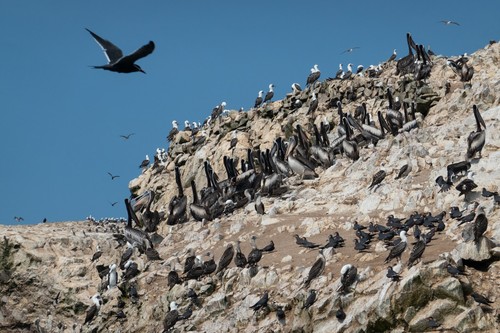
Peruvian Pelican
137-152 cm (54-60 in) long, up to 228 cm wingspan
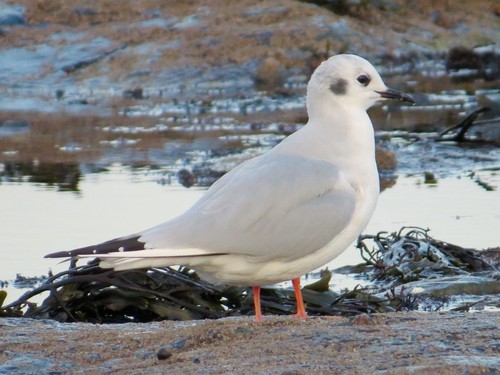
Bonaparte's Gull
28-33 cm (11-13 in) long, 76-84 cm wingspan
Brown Pelican
106-137 cm (42-54 in) long, 200-230 cm wingspan
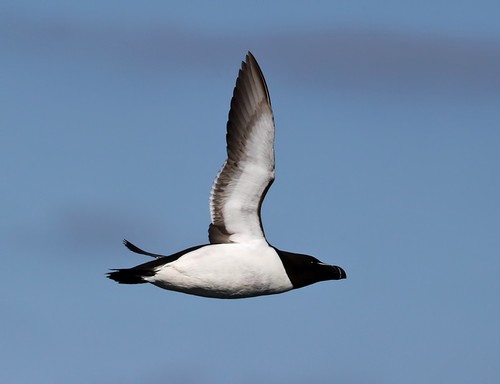
Razorbill
37-39 cm (15-15.5 in) long, 63-68 cm wingspan
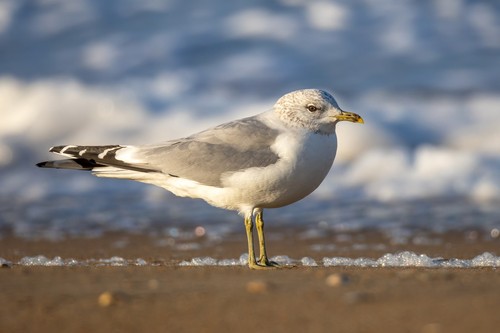
Common Gull
40-46 cm (16-18 in) long, 110-130 cm wingspan
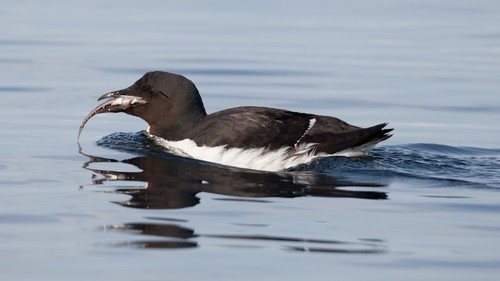
Thick-billed Murre
40-48 cm (16-19 in) long, 65-75 cm wingspan
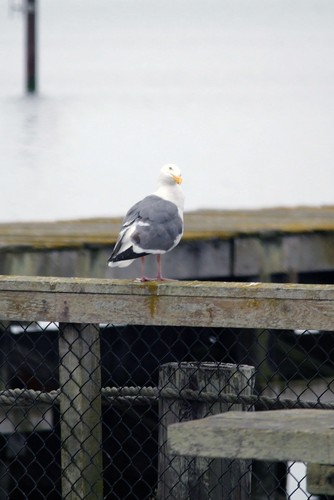
Western Gull
55-68 cm (22-27 in) long, 130-144 cm wingspan
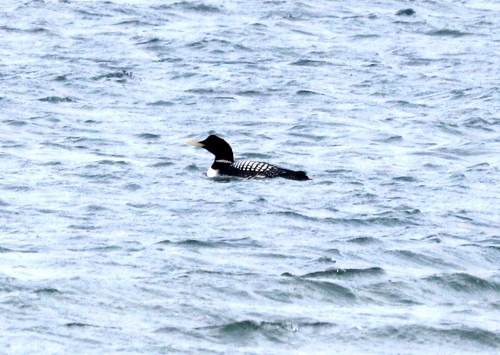
Yellow-billed Loon
76-97 cm (30-38 in) long, 135-152 cm wingspan
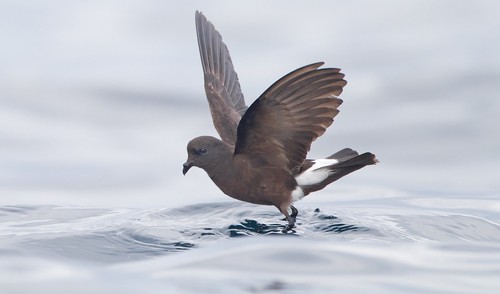
Wilson's Storm-Petrel
15-19 cm (6-7.5 in) long, wingspan 38-42 cm (15-16.5 in)
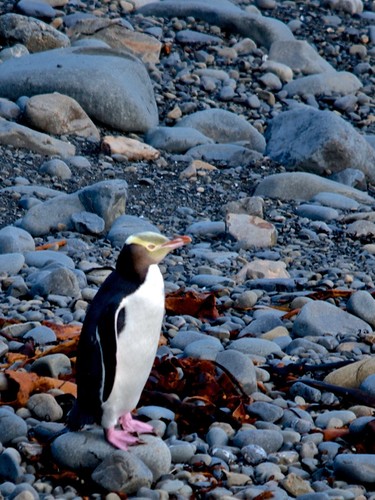
Yellow-eyed Penguin
62-79 cm (24-31 in) tall, 3-8.5 kg (6.6-18.7 lb)
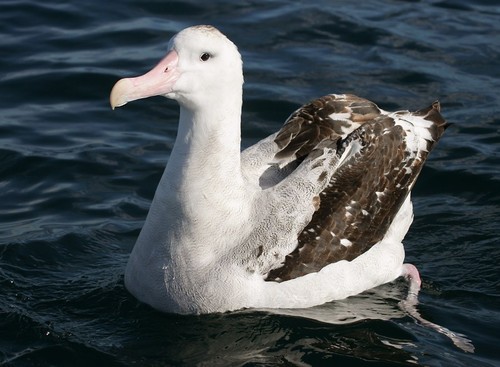
Wandering Albatross
107-135 cm (42-53 in) long, wingspan up to 3.5 m (11.5 ft)
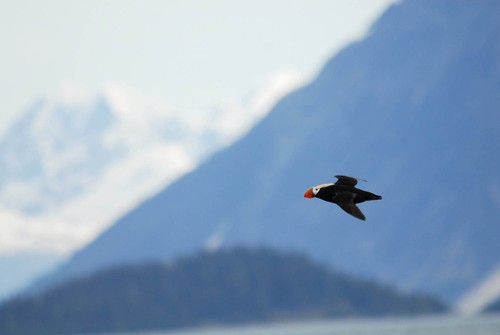
Tufted Puffin
35-41 cm (14-16 in) long, about 63-70 cm wingspan