
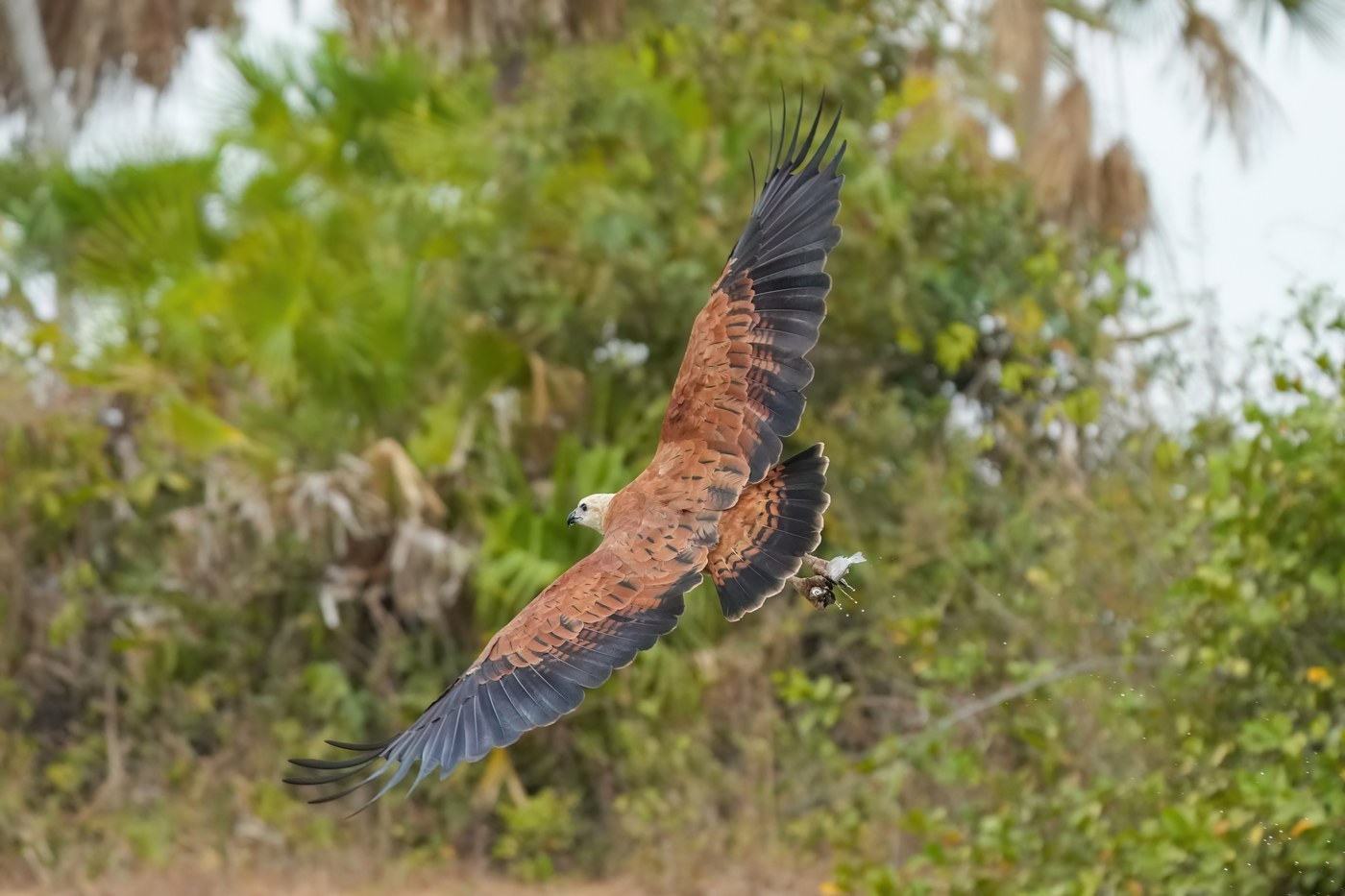
Black-collared Hawk
Busarellus nigricollis
A rufous wetland raptor with a pale head and a distinctive black band across the upper breast, specialized for hunting fish over open water.
- Size
- 48-56 cm (19-22 in) long, 118-144 cm wingspan
- Habitat
- wetlands, marshes, lakes, and rivers
- Type
- raptor
Spotted a bird like this?
Identify any bird from a photo, free.
Overview
The Black-collared Hawk is a distinctive raptor of Neotropical wetlands, easily recognized by its warm cinnamon-rufous body, pale buffy-white head, and a bold black "collar" or gorget crossing the upper breast just below the throat. Broad, rounded wings suited to soaring low over open water complete its fish-eagle-like profile, and it is often seen perched on snags or low branches overlooking marshes and lakes, or flying low with slow wingbeats while scanning for prey.
How to identify it
Key field marks
- Rich cinnamon-rufous body plumage.
- Pale, whitish-buff head contrasting with the body.
- Distinct black band ("collar") across the upper breast.
- Broad, rounded wings, often seen soaring low over wetlands.
Similar species
No other Neotropical raptor combines a pale head, rufous body, and black breast collar; its wetland-hunting habits and fish-eagle-like silhouette further aid identification, distinguishing it from buteos and kites that share similar habitat.
Habitat & range
Black-collared Hawks are closely tied to freshwater wetlands, marshes, lakes, slow rivers, and mangroves, from lowland Mexico through Central America and across much of tropical South America to northern Argentina. They are non-migratory residents that rarely stray far from water, and their distribution closely tracks the availability of suitable wetland foraging habitat.
Behavior & voice
Voice
A series of loud, high-pitched squealing or whistled calls, given especially near the nest or during territorial encounters.
Feeding
This species hunts mainly fish, which it catches by swooping low over open water and snatching prey from near the surface with its feet, in a manner reminiscent of ospreys and fish eagles; it also takes amphibians and aquatic invertebrates opportunistically.
Nesting and breeding
Pairs build a large stick nest in a tree near water, sometimes reusing the same nest site over multiple years. Both parents share incubation and provisioning of the young, which remain in the nest for an extended period typical of raptors.
Frequently asked questions
What does a Black-collared Hawk eat?
Mainly fish, caught by swooping low over water, supplemented with amphibians and aquatic invertebrates.
How can you identify a Black-collared Hawk?
Look for a pale buffy-white head, cinnamon-rufous body, and a distinctive black band across the upper breast.
Where does the Black-collared Hawk live?
Around freshwater wetlands, marshes, and rivers from Mexico through Central America and across much of tropical South America.
Is the Black-collared Hawk similar to an osprey?
It has a broadly similar fish-hunting lifestyle and low soaring flight over water, though the two are not closely related and differ in plumage and structure.
Black-collared Hawk guides
In-depth guides for identifying, finding, and understanding Black-collared Hawk.
Other birds you may enjoy
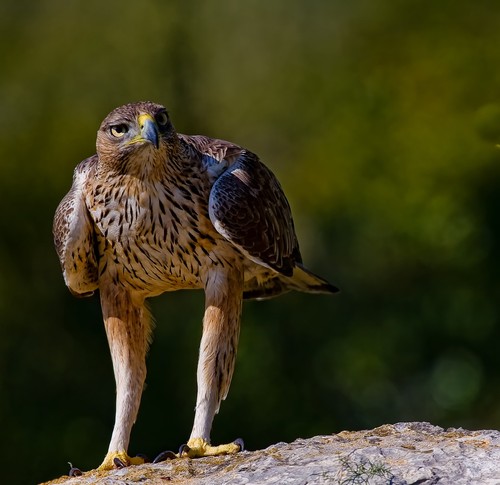
Bonelli's Eagle
Body 65–72 cm (26–28 in); wingspan 150–180 cm (59–71 in)
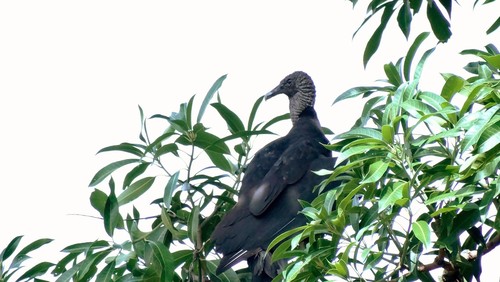
Black Vulture
56-68 cm (22-27 in) long, 137-165 cm wingspan
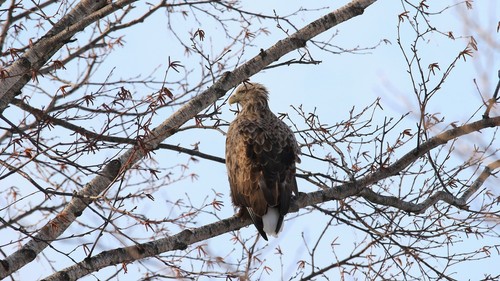
White-tailed Eagle
66-94 cm body length; wingspan 178-245 cm, among the largest eagles in the world
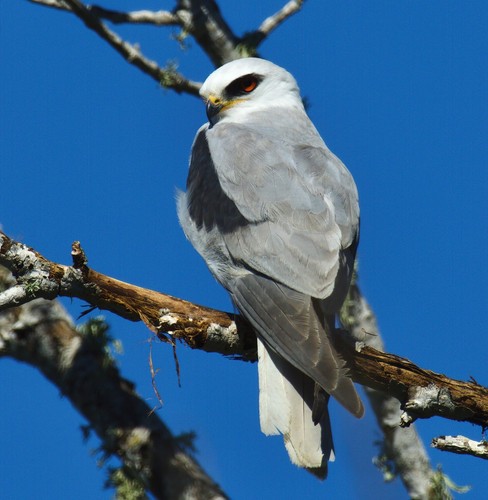
White-tailed Kite
35-43 cm (14-17 in) long, 88-102 cm (35-40 in) wingspan
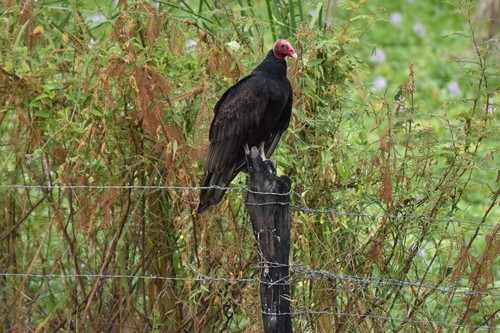
Turkey Vulture
64-81 cm (25-32 in) long, 160-183 cm wingspan
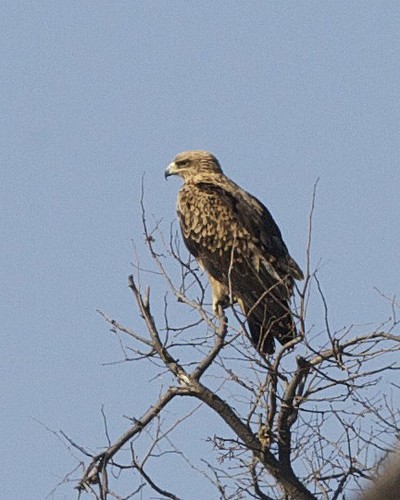
Tawny Eagle
62–75 cm long; wingspan 1.65–2.0 m
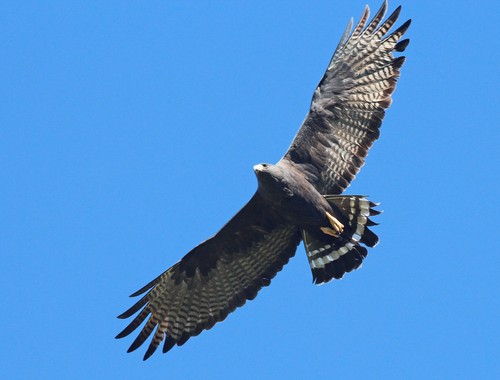
Zone-tailed Hawk
46-56 cm (18-22 in) long, 118-140 cm (46-55 in) wingspan
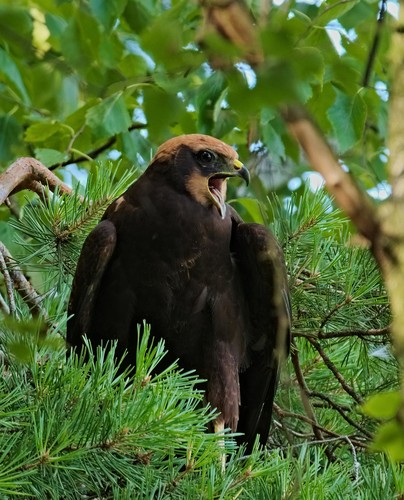
Western Marsh Harrier
Body 43-56 cm; wingspan 115-140 cm
Swallow-tailed Kite
48-68 cm (19-27 in) long including tail streamers, 112-136 cm (44-54 in) wingspan
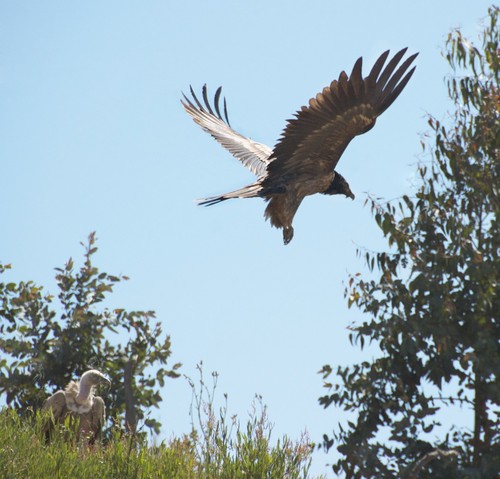
White-backed Vulture
78-98 cm long, wingspan 1.96-2.25 m
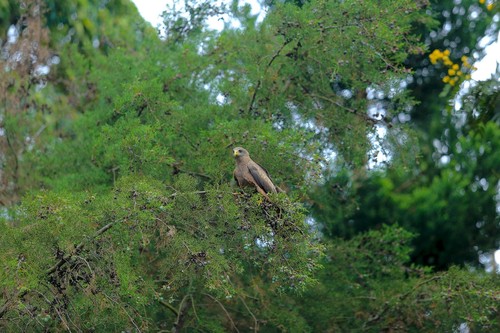
Yellow-billed Kite
55-60 cm long; wingspan 130-155 cm
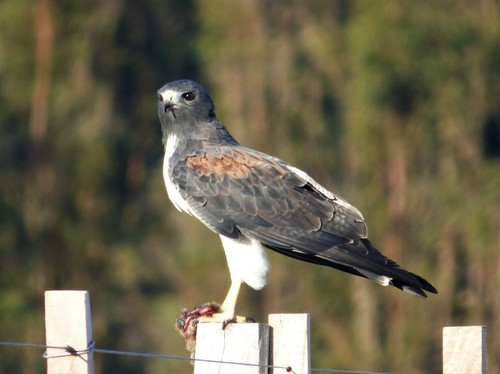
White-tailed Hawk
46-59 cm (18-23 in) long, 122-142 cm (48-56 in) wingspan