
Black-collared Hawk Identification Guide
A rich rufous, pale-headed raptor of Neotropical wetlands, identified by its small black breast collar and its habit of snatching fish from the water's surface.
Read the full Black-collared Hawk encyclopedia entry →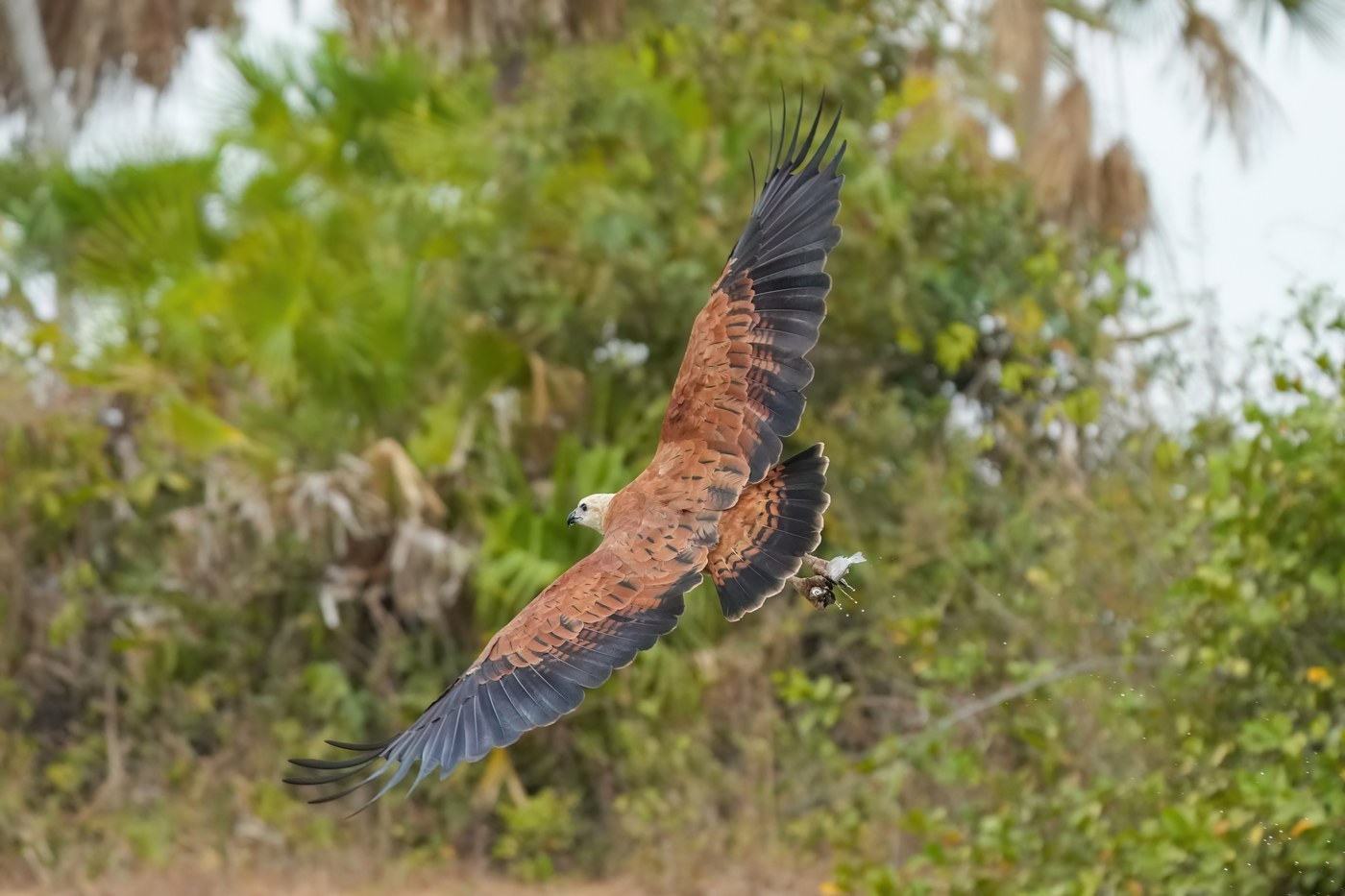
Key Field Marks
- Medium-large raptor with broad, rounded wings, built for maneuvering low over water.
- Body plumage is rich rufous-chestnut, contrasting with a pale, creamy-white head.
- A small but distinctive black band or "collar" crosses the upper breast, giving the species its name.
- Dark flight feathers contrast with rufous underwing coverts, visible in flight.
- Sexes look similar; juveniles are duller and more streaked, with the collar less crisply defined.
Similar Species
- Within its Neotropical wetland range, no other raptor combines a pale head, rufous body, and black breast collar, making adults fairly straightforward to identify.
- Superficially recalls a large buteo at a distance, but the structure (long, rounded wings), coloration, and close association with water separate it once seen well.
Habitat & Behavior
- Strongly tied to freshwater wetlands: marshes, lake edges, slow rivers, flooded savanna, and mangroves.
- A fish specialist, hunting much like an Osprey by watching from a perch or flying low over water and plunging or snatching prey from the surface with its feet.
- Often perches conspicuously on bare branches or snags overlooking water.
Range & Season
- Resident from Mexico through Central America and across much of South America, including the Amazon basin, south to Argentina and Paraguay.
- A casual to very rare vagrant north to south Texas.
- Non-migratory throughout most of its range.
Voice
- Gives a harsh, high-pitched scream or cackling call, most often heard near the nest or during territorial interactions.
Frequently asked questions
What is the diagnostic field mark of Black-collared Hawk?
A pale, creamy-white head combined with rich rufous body plumage and a narrow black band across the upper breast.
How does Black-collared Hawk hunt?
It specializes in catching fish, watching from a perch or flying low over water and snatching prey from the surface with its feet, similar to an Osprey.
Where does this species occur?
It is a wetland-dependent resident from Mexico through Central America and across much of South America, with only casual, very rare records reaching south Texas.
What habitat should I look for Black-collared Hawk in?
Freshwater wetlands such as marshes, lake edges, slow-moving rivers, flooded savanna, and mangroves.