
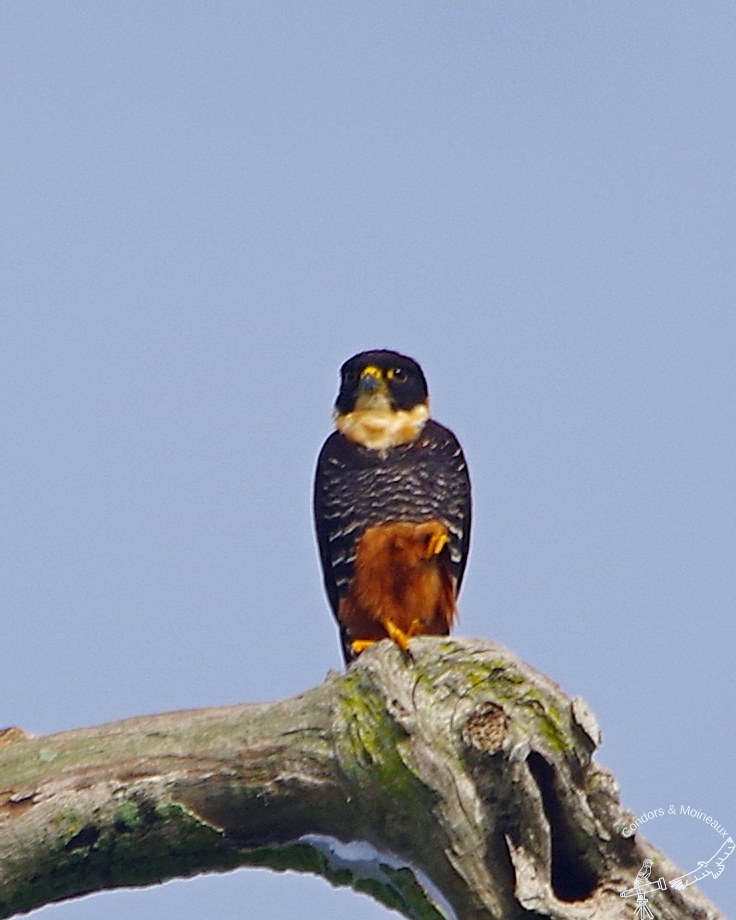
Bat Falcon
Falco rufigularis
A small, fast falcon with a black back, orange belly, and a habit of hunting bats and birds at dawn and dusk.
- Size
- 23-30 cm (9-12 in) long
- Habitat
- forest edge, clearings, and open woodland, often near water
- Type
- raptor
Spotted a bird like this?
Identify any bird from a photo, free.
Overview
The Bat Falcon is a compact, powerfully built small falcon known for its speed and agility in pursuit of aerial prey. Adults have a blackish head, back, and upperwings, a white or buffy throat and upper breast, and a rich rufous-orange lower belly and thighs, with fine black barring on the flanks. Despite its small size, it is a bold and capable predator, often seen perched conspicuously on a high dead snag scanning for prey before launching into fast, direct pursuit flights.
How to identify it
Key field marks
- Small, compact falcon shape with pointed wings.
- Black crown, back, and upperwings.
- White/buffy throat and upper breast; rufous-orange lower belly and thighs.
- Fine black barring on the flanks.
Similar species
Orange-breasted Falcon is larger and heavier with a more extensively orange breast and different barring pattern; the two can be confused but Orange-breasted Falcon is much rarer and larger. Bat Falcon's smaller size and sharply demarcated pale throat/dark head pattern help distinguish it.
Habitat & range
Bat Falcons favor forest edge, clearings, gallery forest, and open woodland, frequently near rivers, lakes, or other open areas that concentrate flying prey, from lowlands up to about 1,500-2,000 m. The species ranges from Mexico through Central America and across most of South America to northern Argentina. It is a non-migratory resident, often nesting on cliffs, in cavities, or on tall structures near open hunting grounds.
Behavior & voice
Voice
A sharp, high-pitched series of "kee-kee-kee" notes, given especially near the nest site or during territorial disputes.
Feeding
Bat Falcons are renowned for hunting bats at dusk and dawn as they emerge from or return to roosts, using extremely fast, agile flight to snatch them from the air; they also take small birds and large flying insects such as dragonflies and beetles, often eating insect prey on the wing.
Nesting and breeding
Pairs typically nest in natural cavities, on cliff ledges, or increasingly on tall human structures such as towers, rather than building a stick nest of their own. Both parents help defend the nest site and provision the young.
Frequently asked questions
Does the Bat Falcon really eat bats?
Yes, it is well known for hunting bats at dawn and dusk near roost sites, in addition to birds and large flying insects.
How can you tell a Bat Falcon from an Orange-breasted Falcon?
Bat Falcon is notably smaller with a sharply contrasting pale throat against a black head, while Orange-breasted Falcon is larger with more extensive orange on the breast; Orange-breasted Falcon is also much rarer.
Where does the Bat Falcon nest?
In natural cavities, on cliff ledges, or on tall structures, rather than building its own stick nest.
Where is the Bat Falcon found?
From Mexico through Central America and across most of South America to northern Argentina, in forest edge and open woodland habitats.
Bat Falcon guides
In-depth guides for identifying, finding, and understanding Bat Falcon.
Other birds you may enjoy
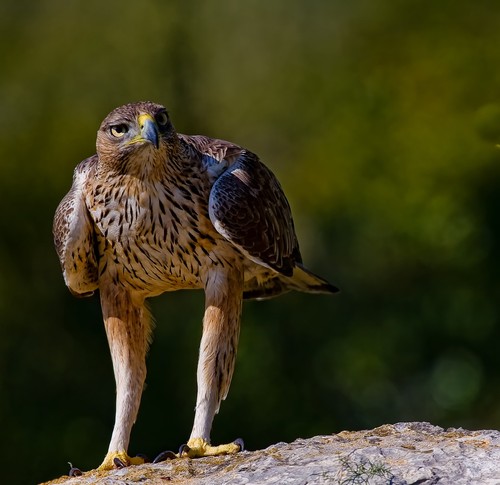
Bonelli's Eagle
Body 65–72 cm (26–28 in); wingspan 150–180 cm (59–71 in)
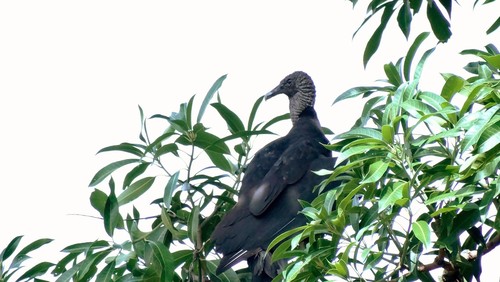
Black Vulture
56-68 cm (22-27 in) long, 137-165 cm wingspan
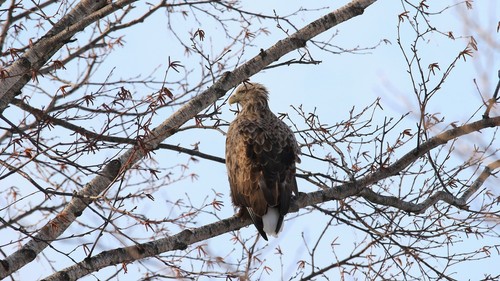
White-tailed Eagle
66-94 cm body length; wingspan 178-245 cm, among the largest eagles in the world
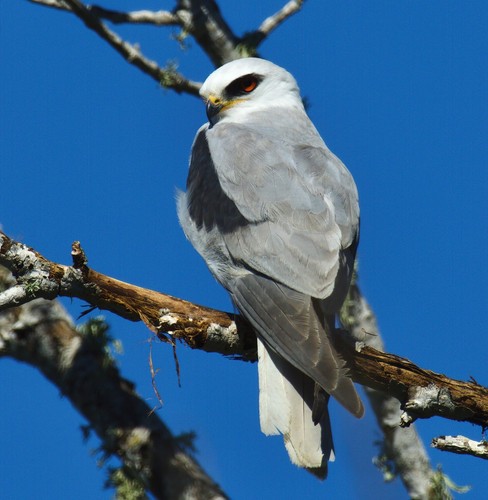
White-tailed Kite
35-43 cm (14-17 in) long, 88-102 cm (35-40 in) wingspan
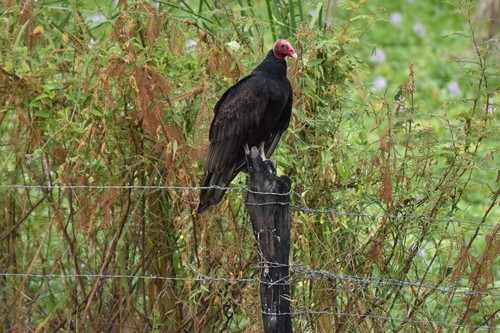
Turkey Vulture
64-81 cm (25-32 in) long, 160-183 cm wingspan
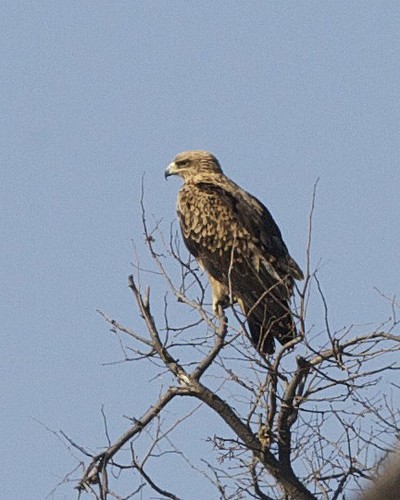
Tawny Eagle
62–75 cm long; wingspan 1.65–2.0 m
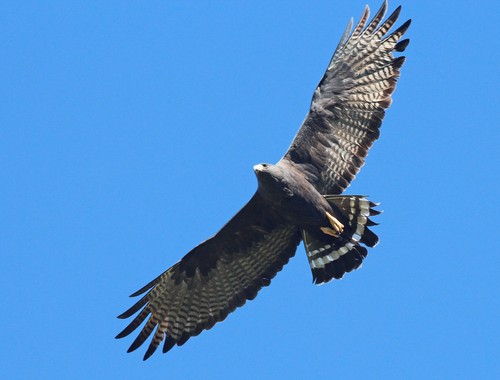
Zone-tailed Hawk
46-56 cm (18-22 in) long, 118-140 cm (46-55 in) wingspan
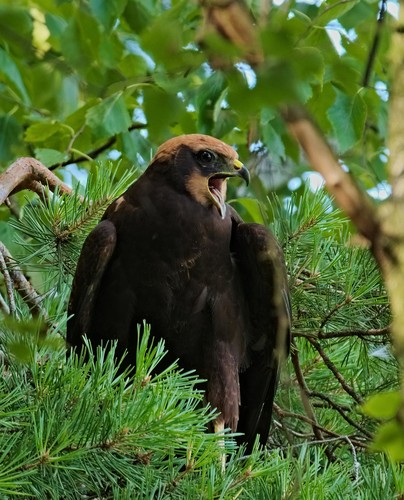
Western Marsh Harrier
Body 43-56 cm; wingspan 115-140 cm
Swallow-tailed Kite
48-68 cm (19-27 in) long including tail streamers, 112-136 cm (44-54 in) wingspan
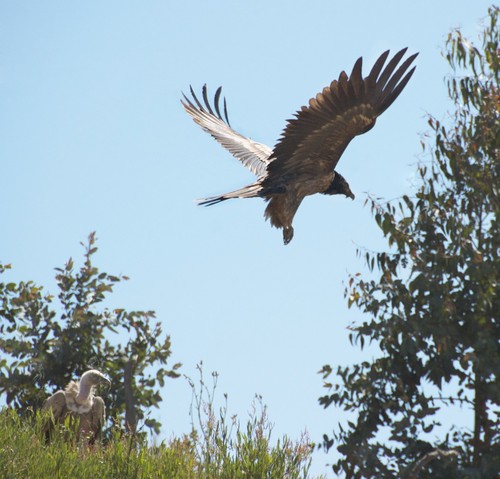
White-backed Vulture
78-98 cm long, wingspan 1.96-2.25 m
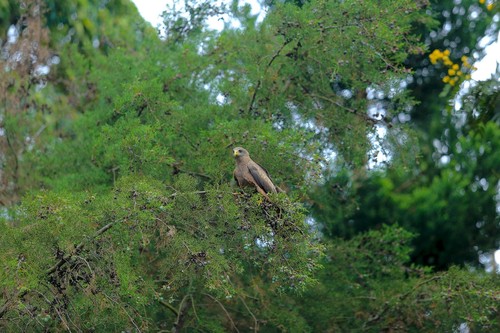
Yellow-billed Kite
55-60 cm long; wingspan 130-155 cm
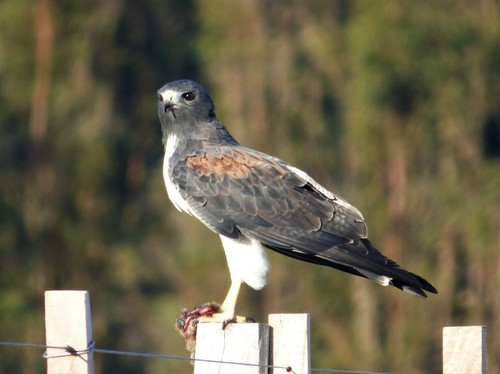
White-tailed Hawk
46-59 cm (18-23 in) long, 122-142 cm (48-56 in) wingspan