
Bat Falcon Identification Guide
A small, fast, dark falcon of the Neotropics with a black head and back, rufous belly, and a habit of hunting bats and swifts at dawn and dusk from an exposed perch.
Read the full Bat Falcon encyclopedia entry →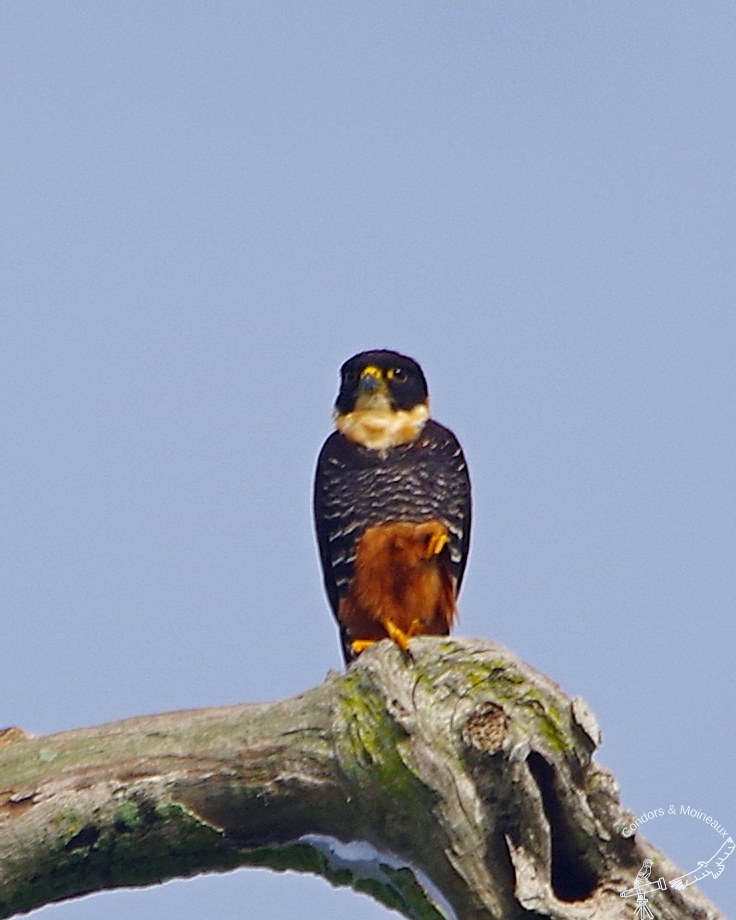
Key Field Marks
- Size & shape: Small, compact falcon (23–30 cm), females noticeably larger than males; pointed wings and a moderately long tail typical of falcons, built for fast pursuit.
- Head & upperparts: Blackish head, back, and wings with a black malar stripe ("mustache") and white to buffy throat and upper breast.
- Underparts: Black-and-white finely barred upper breast transitioning to a rich rufous-orange lower belly and thighs — this rufous belly patch is a key mark.
- Legs & cere: Yellow-orange.
- Flight: Extremely fast and agile, often hunting at dusk/dawn ("crepuscular") after bats, swifts, and large flying insects; frequently seen perched boldly on a dead snag or tower top.
Similar Species
- Orange-breasted Falcon: Very similar pattern but noticeably larger and bulkier with a broader, more extensively orange breast band (extending higher up the chest); much rarer overall and typically found near cliffs.
- Aplomado Falcon: Longer-tailed, more slender, with a bold white eyebrow stripe, black belly band, and orange lower belly — the head pattern and structure differ notably, plus habitat preference (open grassland vs. Bat Falcon's forest edge/clearings).
- American Kestrel: Much smaller, more colorful with rufous back and blue-gray wings (in males), lacking the solid black upperparts of Bat Falcon.
Habitat & Range
Found from Mexico south through Central America into much of South America (to Bolivia and northern Argentina), in forest edge, clearings, gallery forest, and around rivers and clearings with tall dead snags used as hunting perches. Often near human settlements and can be found perched on radio towers, poles, or dead trees.
Best Time to See
Most active hunting at dawn and dusk when bats and swifts are on the wing, though it also hunts large insects and small birds during the day; look for a small, dark falcon perched prominently atop a bare snag or tower — a favored hunting strategy.
Voice
A sharp, high-pitched, repeated "kee-kee-kee-kee" or rapid chattering series, given especially near the nest site or when agitated; generally vocal when perched near a nest cavity (often an old woodpecker hole or tree cavity).
Frequently asked questions
How do I recognize a Bat Falcon perched?
Look for a small falcon with a black head, back, and mustache stripe, a black-and-white barred upper breast, and a rich rufous-orange lower belly, often perched boldly atop a dead snag or tower.
How does Bat Falcon differ from Orange-breasted Falcon?
Orange-breasted Falcon is larger and bulkier with a more extensive orange breast band reaching higher on the chest, and is much rarer, typically near cliff habitats, while Bat Falcon favors forest edges and clearings.
When is the best time to see a Bat Falcon hunting?
Dawn and dusk, when it actively pursues bats and swifts in fast, agile aerial chases, though it also hunts large insects and small birds during the day.
What kind of perch does Bat Falcon prefer?
It favors prominent, exposed perches such as dead snags, tall bare trees, or man-made towers that give a wide view for spotting and launching after prey.