
American Wigeon
Mareca americana
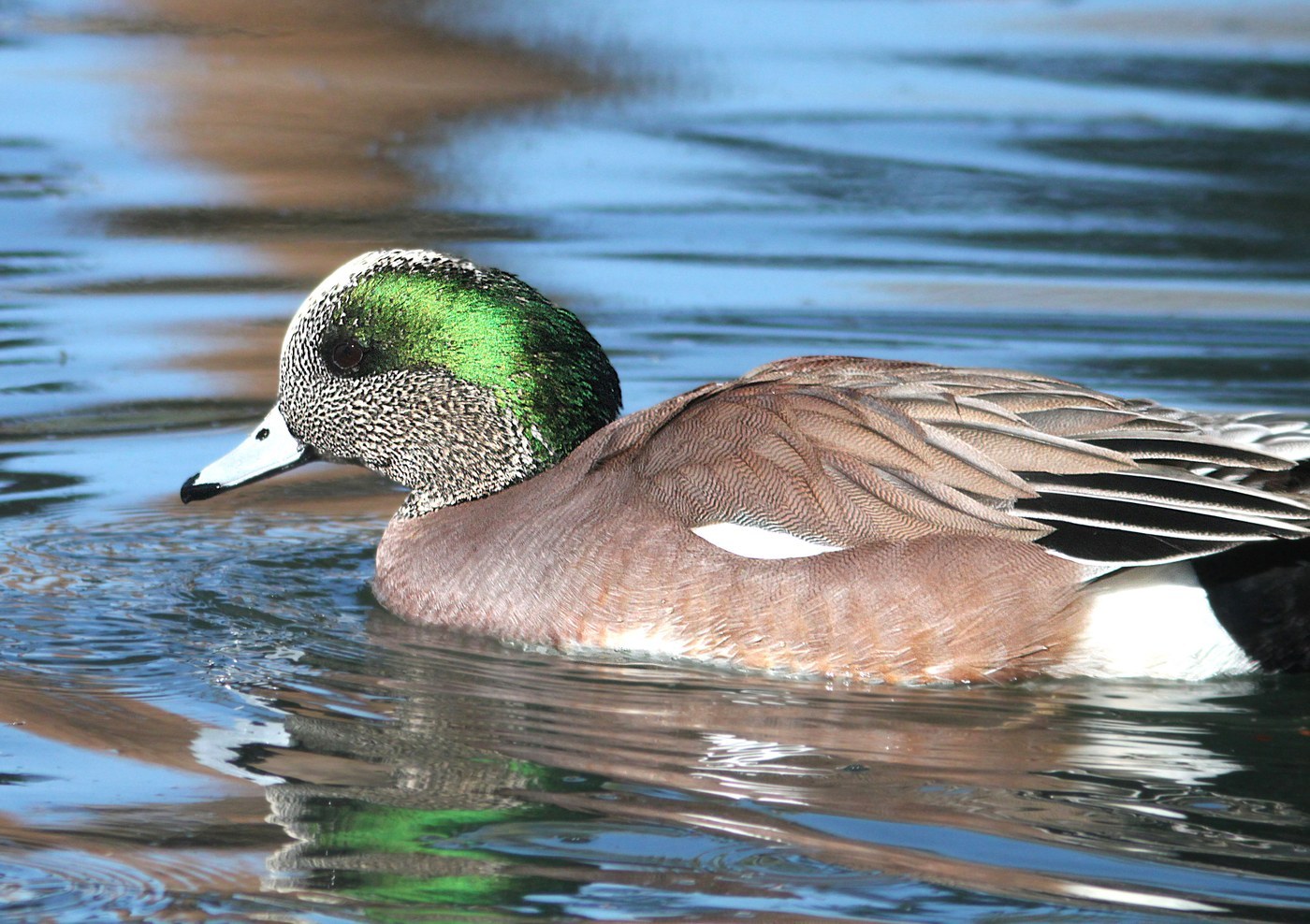
A round-headed dabbling duck nicknamed 'baldpate' for the male's creamy white forehead crown that contrasts with an iridescent green eye patch.
- Size
- 42-59 cm (16.5-23 in) long, 76-89 cm wingspan
- Habitat
- marshes, ponds, lakes, wet grasslands, and coastal bays across North America
- Type
- waterfowl
Spotted a bird like this?
Identify any bird from a photo, free.
Overview
The American Wigeon is a medium-sized dabbling duck with a distinctively round head and short, blue-gray bill tipped in black. The breeding drake shows a creamy-white crown patch (giving rise to the old nickname "baldpate") set against a grayish head speckled with black, a glossy green swath extending back from the eye, and a rich pinkish-brown body.
Females are more subdued, with a grayish head and warm brownish body, but share the male's compact shape and short bill. In flight, both sexes show a large white patch on the forewing, particularly bold and conspicuous on the male.
How to identify it
Key Field Marks
- Round head with a short, pale blue-gray bill tipped black
- Breeding drake: creamy-white crown, iridescent green eye patch, pinkish-brown body
- Female: gray head, warm brown body, same compact shape
- Large white shoulder patch visible in flight (especially bold on males)
Similar Species
The Eurasian Wigeon drake has a solid rufous (rather than gray-speckled) head and a buffy (rather than white) crown; female Eurasian Wigeons are warmer/more rufous-toned than female American Wigeons, which tend to be grayer-headed. Gadwall lack the round head shape and white crown/eye patch of wigeon.
Habitat & range
American Wigeon breed across the prairies, parklands, and boreal wetlands of northern and western North America, favoring marshes, ponds, and lake edges with abundant aquatic and shoreline vegetation. They are migratory, wintering widely across the southern United States, Mexico, and Central America in marshes, flooded fields, reservoirs, and coastal bays and estuaries.
In winter, wigeon often associate in large mixed flocks with other dabbling ducks and are notable for grazing on land alongside American Coots, sometimes even snatching vegetation coots bring up from underwater.
Behavior & voice
American Wigeon are more terrestrial grazers than many dabbling ducks, often seen grazing on short grass and aquatic vegetation along shorelines and in fields, in addition to typical dabbling and tipping-up behavior on the water. They will opportunistically pirate food brought to the surface by diving birds such as coots.
The male's call is a distinctive, whistled "whee-whee-whew," quite different from the low quacks of most dabbling ducks, and often the easiest way to detect the species from a distance. Nests are built on the ground in grass or shrub cover, sometimes well away from water, with females incubating 6-12 eggs alone.
Frequently asked questions
Why is the American Wigeon called 'baldpate'?
The breeding male's creamy-white crown patch resembles a bald head, giving rise to this old colloquial nickname.
How do you tell American Wigeon from Eurasian Wigeon?
Male Eurasian Wigeon have a solid rufous head with a buffy crown, while male American Wigeon have a gray, black-speckled head with a green eye patch and white crown.
What does an American Wigeon sound like?
The male gives a distinctive high, whistled "whee-whee-whew" call, unlike the quacks of most other dabbling ducks.
Do American Wigeon steal food from other birds?
Yes, they are known to grab aquatic vegetation brought to the surface by diving American Coots.
What do American Wigeon eat?
They graze on grasses and aquatic vegetation, and also eat grain and some invertebrates.
American Wigeon guides
In-depth guides for identifying, finding, and understanding American Wigeon.
Other birds you may enjoy
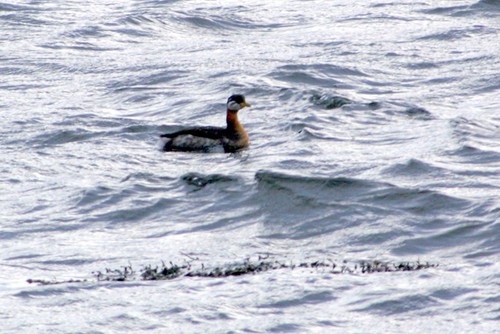
Red-necked Grebe
40-55 cm (16-22 in) long, 77-85 cm wingspan
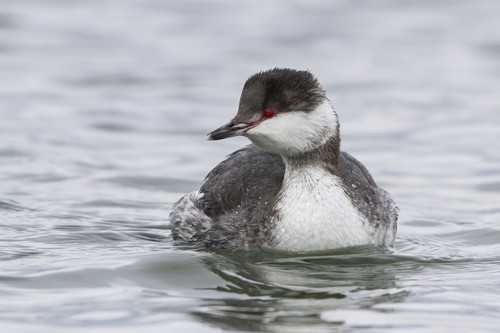
Horned Grebe
31-38 cm (12-15 in) long, 46-55 cm wingspan
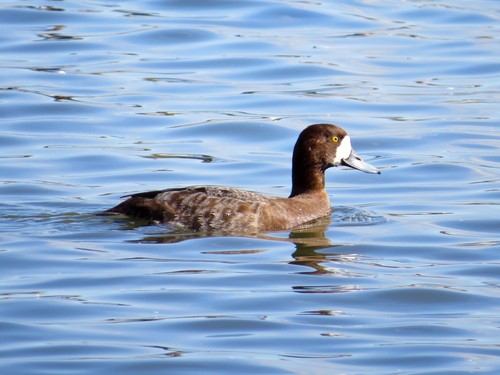
Greater Scaup
42-51 cm (16.5-20 in) long, 71-84 cm wingspan
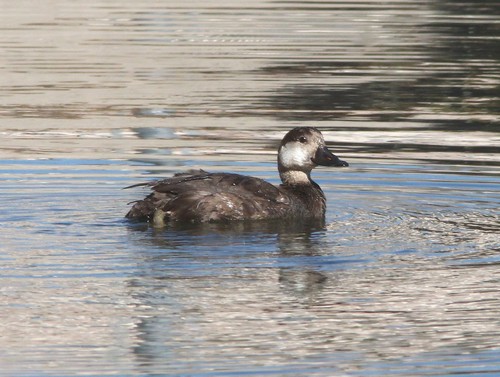
Black Scoter
43-54 cm (17-21 in) long, 79-90 cm wingspan
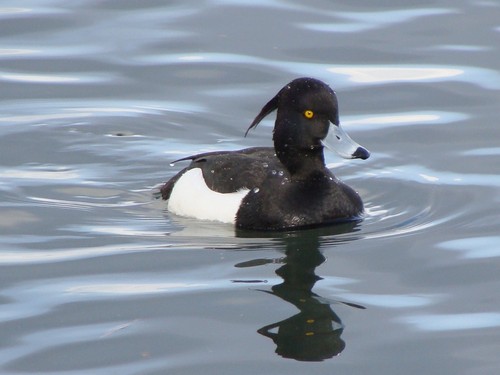
Tufted Duck
40-47 cm (16-18.5 in) long, 67-73 cm wingspan
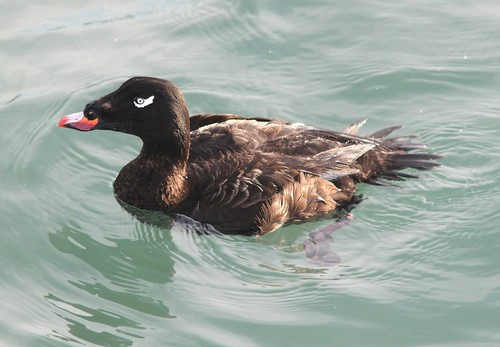
White-winged Scoter
48-58 cm (19-23 in) long, 86-99 cm wingspan
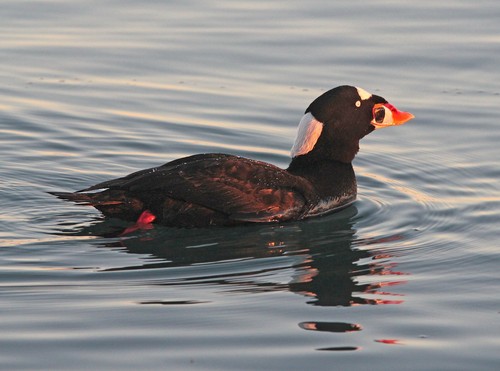
Surf Scoter
45-56 cm (18-22 in) long, 78-92 cm wingspan
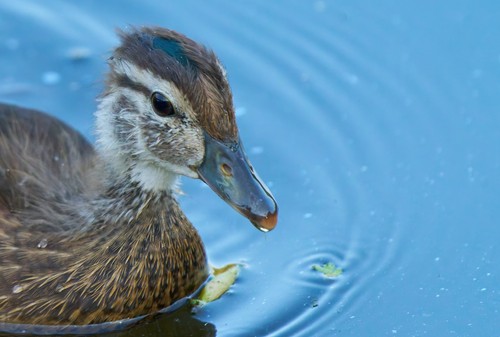
Wood Duck
47-54 cm (18.5-21 in) long, 66-73 cm wingspan
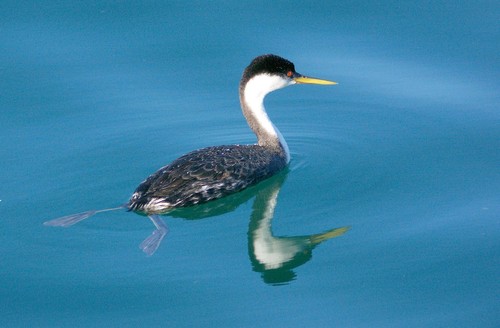
Western Grebe
56-74 cm (22-29 in) long, 79-102 cm wingspan
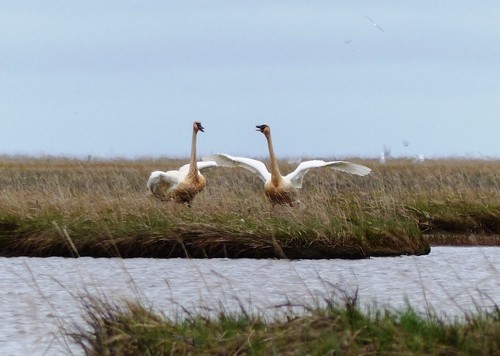
Tundra Swan
115-150 cm (45-59 in) long, about 180 cm wingspan
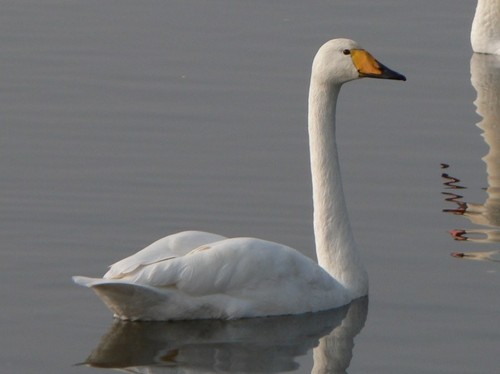
Whooper Swan
140-165 cm (55-65 in) long, 205-235 cm wingspan
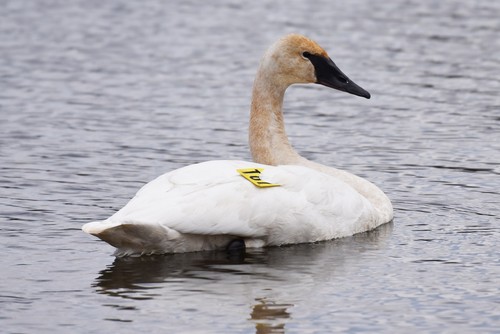
Trumpeter Swan
150-180 cm (59-71 in) long, up to 300 cm wingspan