
American Wigeon Identification Guide
A dabbling duck sometimes called the 'baldpate' for the male's cream-white crown patch, often seen grazing on grass alongside a pale blue bill.
Read the full American Wigeon encyclopedia entry →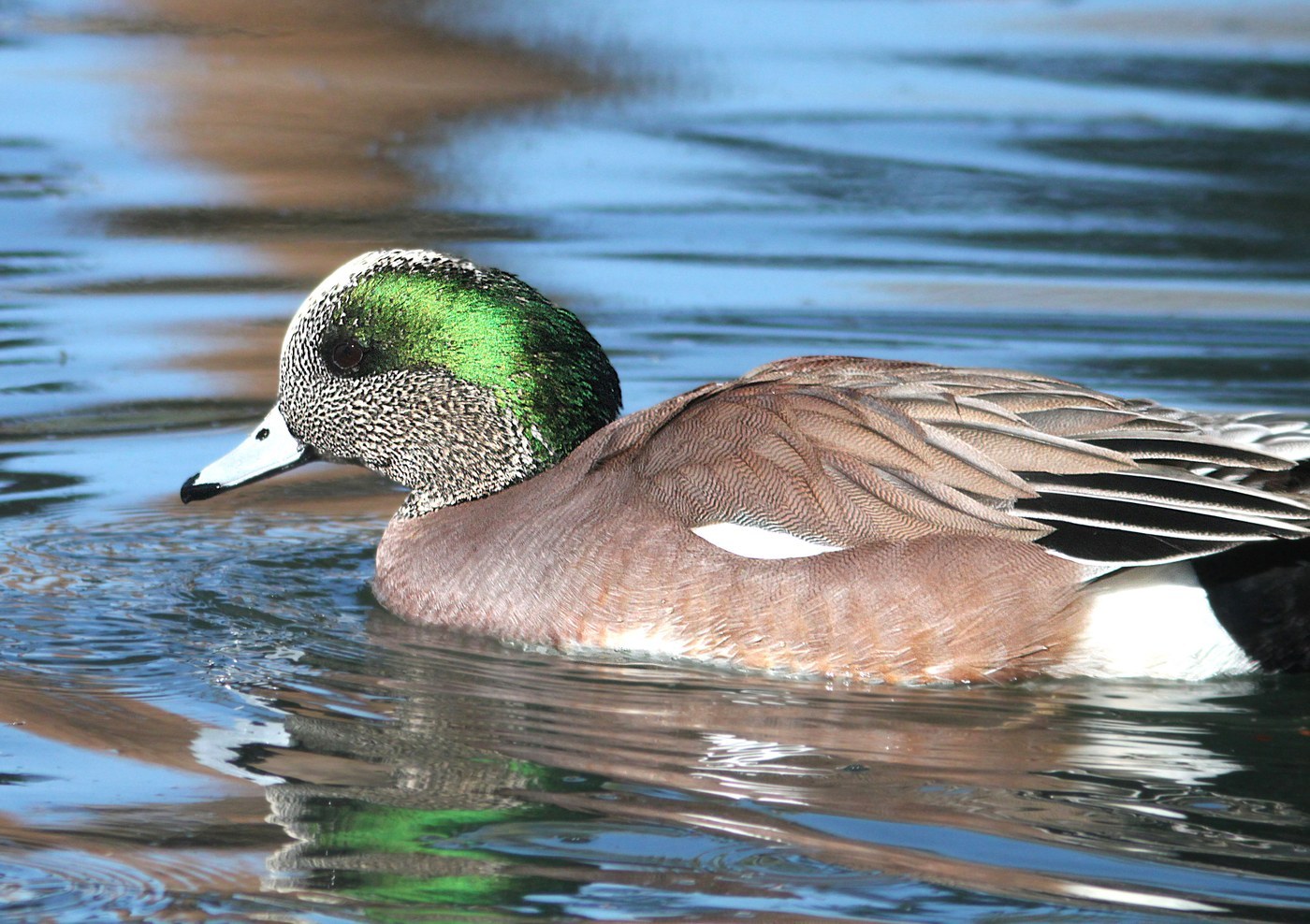
Key Field Marks
- Male: gray head with an iridescent dark green swath behind the eye and a cream-white forehead and crown patch (the source of the old nickname "baldpate"), pinkish-brown breast and flanks, white belly, and a black stern
- Male bill: pale blue-gray with a black tip
- Female: mottled brown overall with a plain grayish head and dark eye, sharing the male's pale blue-gray, black-tipped bill
- Both sexes show a white belly and, in flight, a large white patch on the upper wing (more extensive and brighter in males)
How to Tell It Apart from Similar Species
- Eurasian Wigeon (an uncommon visitor to North America) has a rich rufous-chestnut head with a cream crown stripe rather than the American's gray head with a green eye patch; females show a warmer reddish-brown wash compared to the grayer-headed female American Wigeon.
- Gadwall males are plainer gray-brown overall without a white crown patch and show a white speculum patch in the wing rather than the wigeon's white shoulder patch.
- The combination of pale blue-gray bill with a black tip is shared by both sexes and is a reliable mark at any distance.
Habitat & Range
American Wigeon breed across the prairie pothole region and boreal wetlands of the northern United States, Canada, and Alaska. They winter very widely across the southern and coastal United States, Mexico, and Central America, using marshes, lakes, flooded agricultural fields, estuaries, and coastal bays.
Behavior
More than most dabbling ducks, American Wigeon graze on land, cropping grasses and other vegetation from lawns, fields, and mudflats much like a goose. On the water, they frequently associate with diving ducks and American Coots, snatching aquatic vegetation that the divers bring up from below rather than diving themselves. Flocks can be large, especially in winter.
Voice
The male's call is a distinctive, high, whistled "whew, whew-whew," often the first clue to a wigeon flock's presence; females give a lower, harsher quack.
Frequently asked questions
How do you identify an American Wigeon?
Look for a duck with a pale blue-gray, black-tipped bill; males show a gray head with a green eye patch and a cream-white crown, pinkish-brown flanks, and a white belly, while females are mottled brown with a plain gray head.
What is the difference between an American Wigeon and a Eurasian Wigeon?
The Eurasian Wigeon male has a rich rufous-chestnut head with a cream crown stripe, while the American Wigeon male has a gray head with an iridescent green eye patch; females of the two species differ similarly in overall warmth of color.
Why is the American Wigeon called a 'baldpate'?
The old nickname refers to the male's cream-white forehead and crown patch, which can suggest a bald head at a distance.
What do American Wigeon eat?
Mostly grasses and aquatic plants, which they graze on land and water more than most dabbling ducks, along with some invertebrates and, occasionally, vegetation stolen from diving ducks and coots.
What does an American Wigeon sound like?
Males give a high, whistled 'whew, whew-whew' call, quite distinctive among dabbling ducks.