
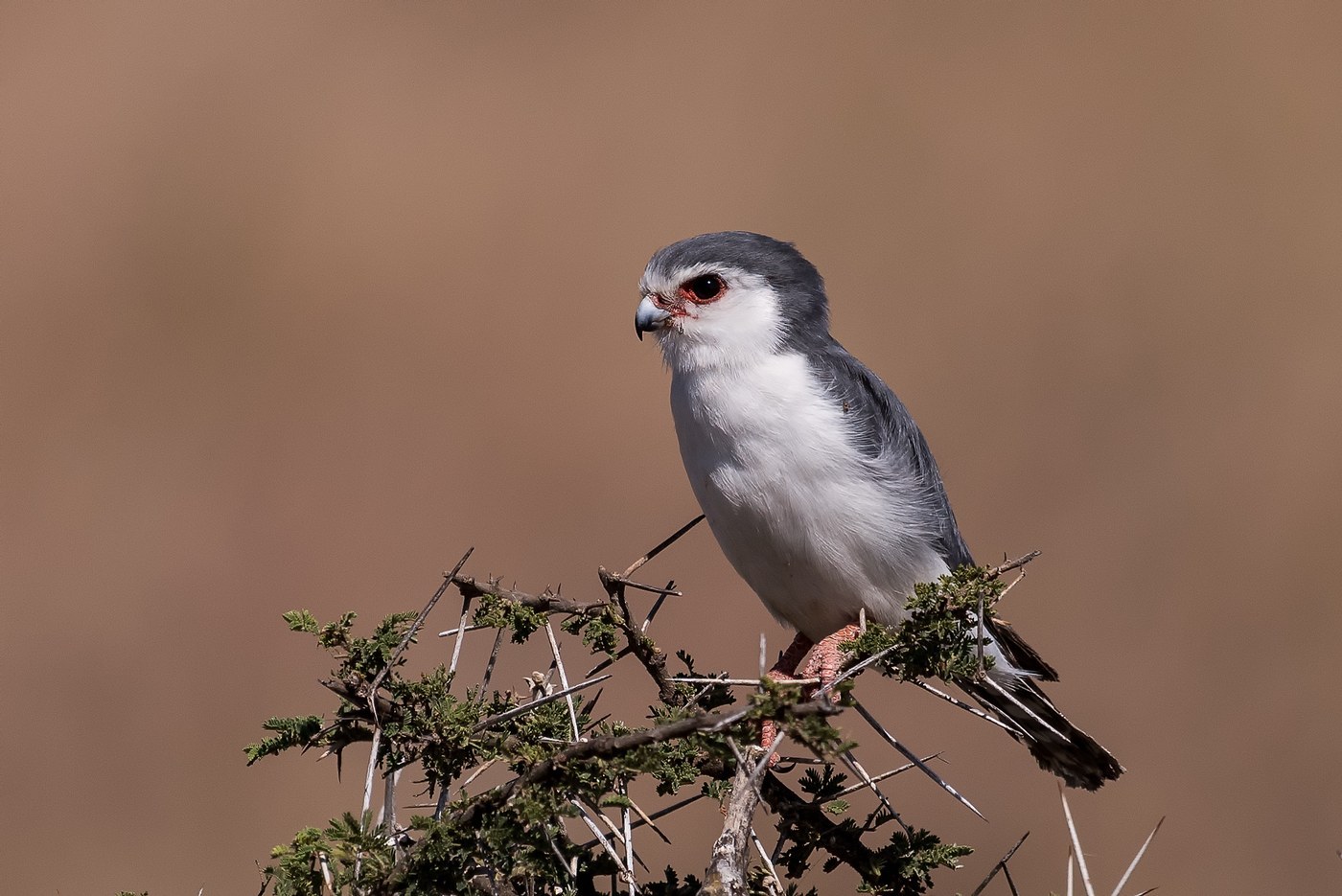
African Pygmy Falcon
Polihierax semitorquatus
Africa's smallest raptor, a tiny falcon of dry savanna that nests almost exclusively in the communal nests of sociable weavers.
- Size
- 19-20 cm long; wingspan about 39-46 cm
- Habitat
- Arid savanna and thornveld of eastern and southern Africa, closely tied to sociable weaver or buffalo weaver colonies
- Type
- raptor
Spotted a bird like this?
Identify any bird from a photo, free.
Overview
The African Pygmy Falcon is the smallest raptor in Africa, a diminutive but fierce predator of arid bushveld and savanna. Despite its small size, it hunts with the speed and boldness typical of falcons.
Appearance
The upperparts are blue-gray and the underparts white, giving a strikingly clean, contrasting pattern for a raptor. Females typically show a chestnut patch on the back (mantle) that males lack, a useful sex-distinguishing feature. In flight, white patches on the black-tipped wings and a white rump are conspicuous. The eyes are dark, and the legs and cere are yellow to orange.
How to identify it
Key field marks
- Very small size, roughly shrike-sized
- Blue-gray upperparts and clean white underparts
- White patches on black wingtips and white rump visible in flight
- Females show a rufous-chestnut mantle patch; males lack it
Similar species
Its tiny size and gray-and-white pattern make it distinctive within its range, but it can be superficially confused with shrikes at a glance due to size and perching habits; the hooked bill, falcon shape, and association with sociable weaver nests confirm identification.
Habitat & range
Habitat
Found in arid and semi-arid thornveld and savanna, almost always in close association with the large communal stick nests of Sociable Weavers (in southern Africa) or White-browed Sparrow-Weavers and buffalo weavers (in East Africa), which it uses for roosting and nesting.
Range
Occurs in two disjunct populations: one in the Horn of Africa and East Africa (Ethiopia, Somalia, Kenya, Tanzania, Uganda), and another in southern Africa (Namibia, Botswana, South Africa).
Migration
Non-migratory and strongly sedentary, remaining year-round in territories centered on weaver nest colonies.
Behavior & voice
Behavior
African Pygmy Falcons live in close association with weaver colonies, using unoccupied nest chambers for roosting and breeding while the weavers continue to occupy other chambers nearby, a relationship that appears largely commensal. Pairs and family groups defend a territory around the nest colony.
Voice
Gives sharp, high-pitched chattering and piping calls, particularly around the nest during territorial or courtship interactions.
Feeding
Hunts mainly from a perch, dropping onto insects such as grasshoppers and beetles, as well as lizards, geckos, small rodents, and occasionally small birds.
Nesting and breeding
Nests inside a chamber of a sociable weaver or similar communal weaver nest, rather than building its own. Typically lays two to four eggs; both parents assist in incubation and feeding the chicks, and family groups may remain together to help raise subsequent broods.
Frequently asked questions
What is the smallest raptor in Africa?
The African Pygmy Falcon, at only about 19-20 cm long, is Africa's smallest bird of prey.
Why does the African Pygmy Falcon live with weaver birds?
It nests and roosts inside unused chambers of the large communal nests built by Sociable Weavers or related weaver species, benefiting from the structure without typically preying on the weavers themselves.
How do you tell male and female African Pygmy Falcons apart?
Females have a chestnut patch on the back (mantle) that males lack; otherwise both sexes share gray upperparts and white underparts.
What does the African Pygmy Falcon eat?
Mostly large insects like grasshoppers and beetles, plus small lizards, rodents, and occasionally small birds.
African Pygmy Falcon guides
In-depth guides for identifying, finding, and understanding African Pygmy Falcon.
Other birds you may enjoy
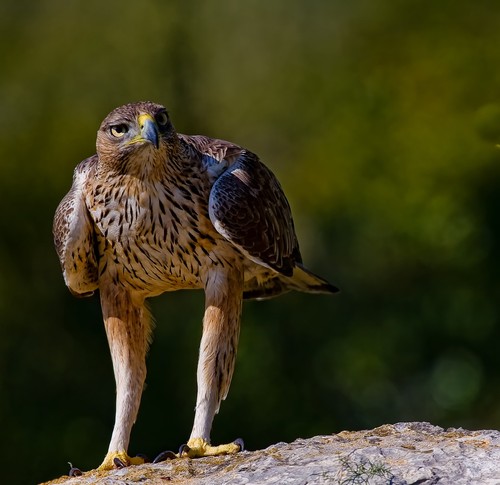
Bonelli's Eagle
Body 65–72 cm (26–28 in); wingspan 150–180 cm (59–71 in)
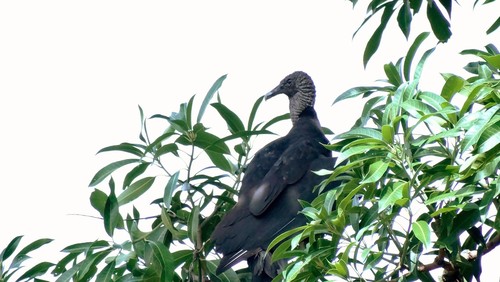
Black Vulture
56-68 cm (22-27 in) long, 137-165 cm wingspan
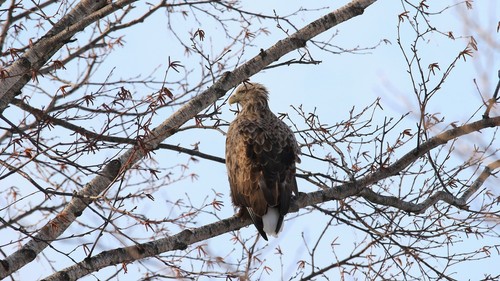
White-tailed Eagle
66-94 cm body length; wingspan 178-245 cm, among the largest eagles in the world
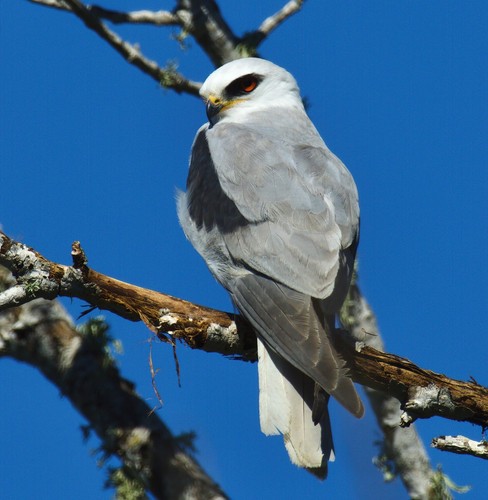
White-tailed Kite
35-43 cm (14-17 in) long, 88-102 cm (35-40 in) wingspan
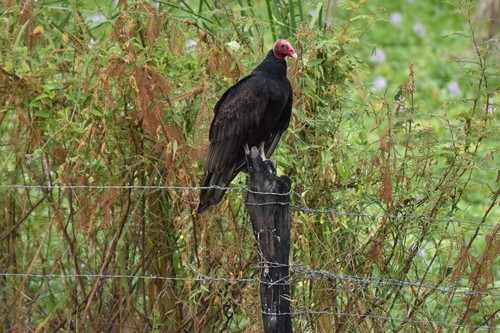
Turkey Vulture
64-81 cm (25-32 in) long, 160-183 cm wingspan
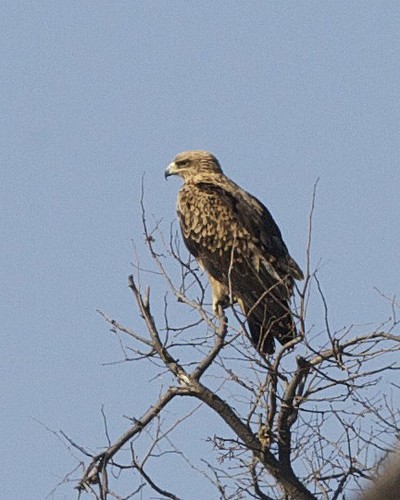
Tawny Eagle
62–75 cm long; wingspan 1.65–2.0 m
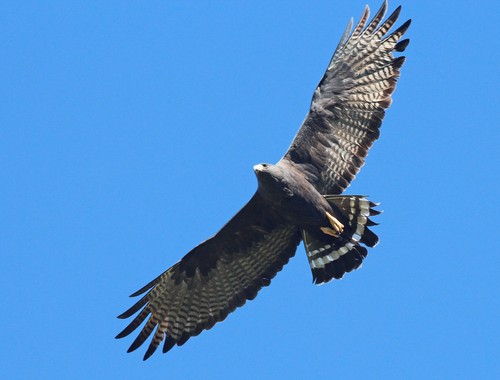
Zone-tailed Hawk
46-56 cm (18-22 in) long, 118-140 cm (46-55 in) wingspan
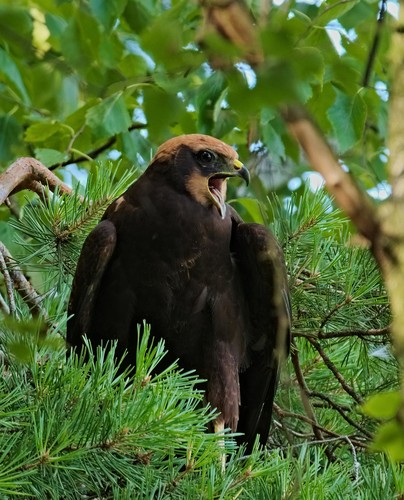
Western Marsh Harrier
Body 43-56 cm; wingspan 115-140 cm
Swallow-tailed Kite
48-68 cm (19-27 in) long including tail streamers, 112-136 cm (44-54 in) wingspan
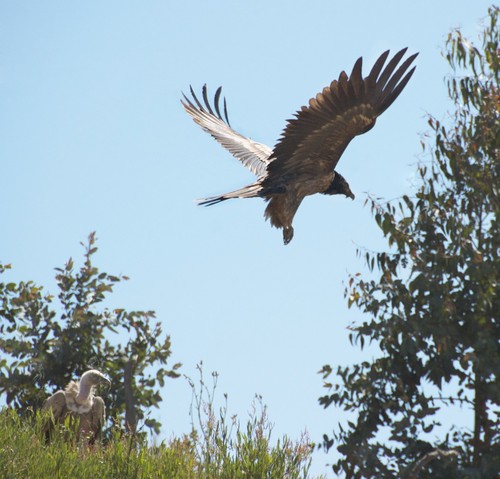
White-backed Vulture
78-98 cm long, wingspan 1.96-2.25 m
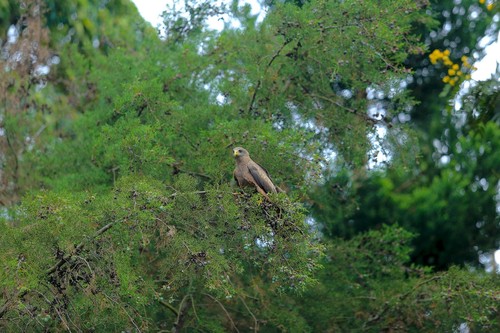
Yellow-billed Kite
55-60 cm long; wingspan 130-155 cm
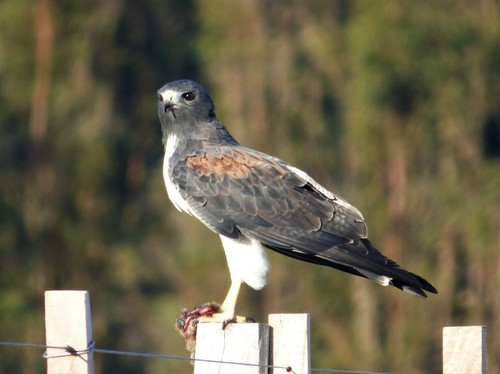
White-tailed Hawk
46-59 cm (18-23 in) long, 122-142 cm (48-56 in) wingspan