
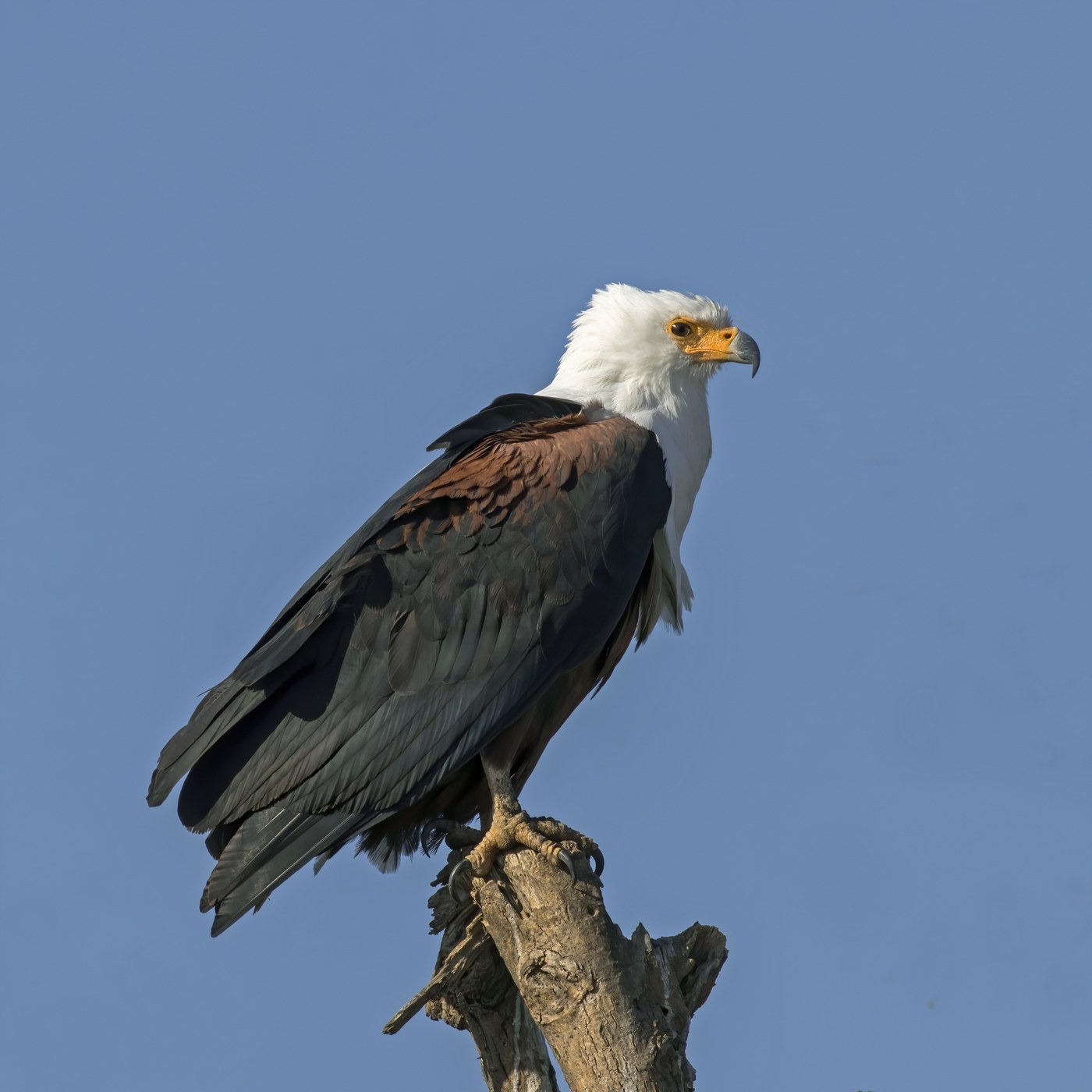
African Fish Eagle
Haliaeetus vocifer
A striking white-headed, chestnut-bodied eagle found near lakes and rivers across sub-Saharan Africa, celebrated for its unmistakable, far-carrying call.
- Size
- Body 63–75 cm (25–30 in); wingspan 175–210 cm (69–83 in)
- Habitat
- Lakes, rivers, reservoirs, and coastal wetlands
- Type
- raptor
Spotted a bird like this?
Identify any bird from a photo, free.
Overview
The African Fish Eagle is a large, boldly patterned eagle closely tied to Africa's lakes and rivers, and is a close relative of the Bald Eagle within the genus Haliaeetus. Adults have a pure white head, neck, and breast that contrast sharply with a rich chestnut-brown body and black flight feathers, along with a white tail.
The bill and cere are yellow with a black tip, and the eyes are dark brown. Its striking appearance and evocative, yelping call have made it a cultural icon across much of sub-Saharan Africa, and it is the national bird of Zambia and South Sudan and appears on the coats of arms of several other nations.
Juveniles are mottled brown overall and take four to five years to acquire full adult plumage.
How to identify it
Key field marks
- Pure white head, chest, and tail contrasting with chestnut-brown body
- Black flight feathers and back
- Yellow bill with black tip and yellow facial skin
- Large size and heavy build typical of fish eagles
- Distinctive yelping call given with the head thrown back
Similar species
Adults are essentially unmistakable within their range. Juveniles are mottled brown and can be confused with immature vultures or other large raptors at a distance, but their heavy build, pale-based bill, and association with water are useful clues.
Habitat & range
Range
The African Fish Eagle is found throughout sub-Saharan Africa wherever there is suitable open water, from West Africa across the Rift Valley lakes to southern Africa.
Habitat
It favors large lakes, rivers, reservoirs, and coastal lagoons with tall trees nearby for perching and nesting, and is rarely found far from water.
Migration
The species is largely resident and sedentary, though individuals may make local movements in response to changing water levels or food availability.
Behavior & voice
Hunting and feeding
African Fish Eagles hunt mainly by watching from a high perch and swooping low over the water to snatch fish near the surface with their talons. They also take waterbirds, scavenge carrion, and will steal food from other birds through kleptoparasitism.
Voice
Its loud, ringing, yelping call, given with the head thrown back over the shoulders, is one of the most evocative and recognizable sounds of the African wilderness and is often used to represent Africa in film and documentaries.
Nesting and breeding
Pairs build a large stick nest in a tall tree near water, often reusing and enlarging the same nest over many years. Typically one to three eggs are laid, and pairs frequently duet calling near the nest site.
Frequently asked questions
What does the African Fish Eagle's call sound like?
It gives a loud, high-pitched, ringing yelp, delivered with the head tilted back, often considered one of the most iconic sounds of the African wilderness.
What does the African Fish Eagle eat?
Mostly fish caught near the water's surface, along with waterbirds, carrion, and occasionally small mammals or stolen prey from other birds.
Is the African Fish Eagle related to the Bald Eagle?
Yes, both belong to the genus Haliaeetus and share a similar white head and tail pattern, though they occupy different continents.
Where does the African Fish Eagle live?
Near lakes, rivers, dams, and coastal wetlands throughout sub-Saharan Africa, rarely straying far from open water.
Which countries have the African Fish Eagle as their national bird?
It is the national bird of Zambia and South Sudan and features on the national emblems of several other African nations.
African Fish Eagle guides
In-depth guides for identifying, finding, and understanding African Fish Eagle.
Other birds you may enjoy
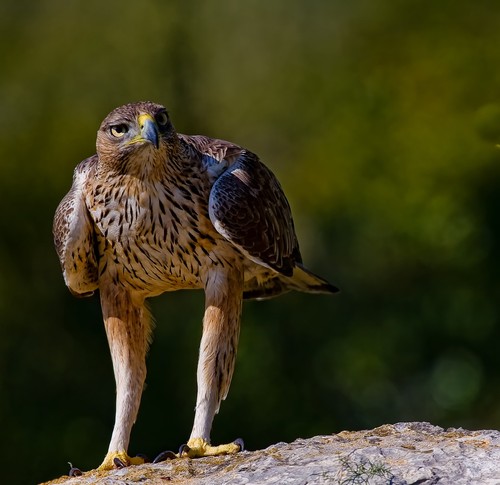
Bonelli's Eagle
Body 65–72 cm (26–28 in); wingspan 150–180 cm (59–71 in)
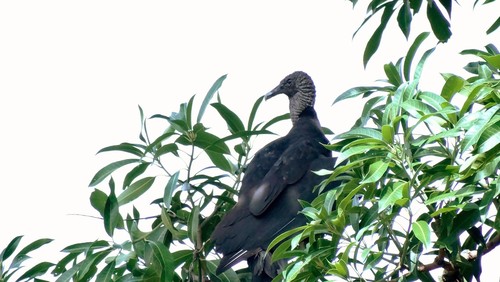
Black Vulture
56-68 cm (22-27 in) long, 137-165 cm wingspan
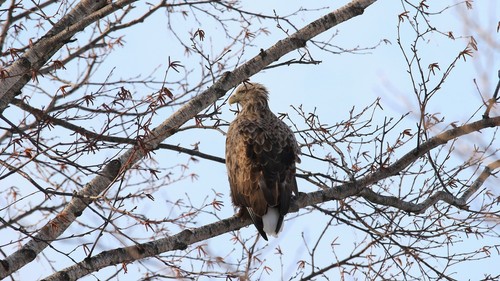
White-tailed Eagle
66-94 cm body length; wingspan 178-245 cm, among the largest eagles in the world
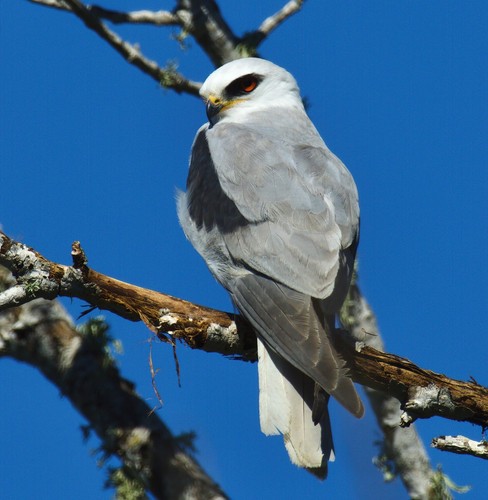
White-tailed Kite
35-43 cm (14-17 in) long, 88-102 cm (35-40 in) wingspan
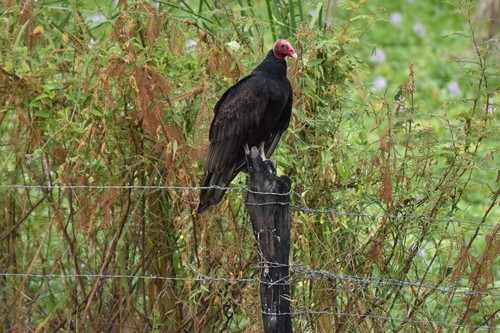
Turkey Vulture
64-81 cm (25-32 in) long, 160-183 cm wingspan
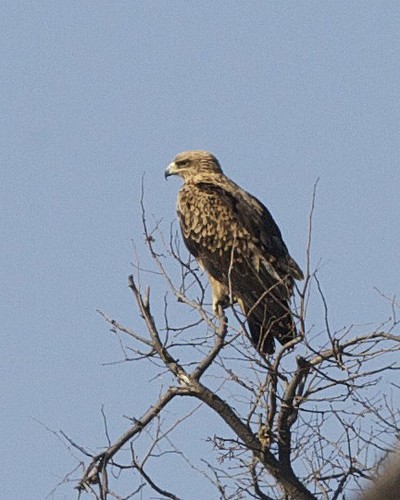
Tawny Eagle
62–75 cm long; wingspan 1.65–2.0 m
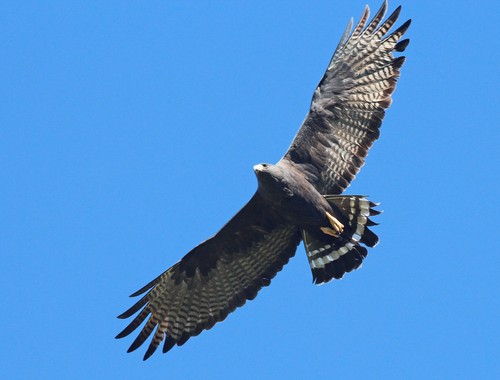
Zone-tailed Hawk
46-56 cm (18-22 in) long, 118-140 cm (46-55 in) wingspan
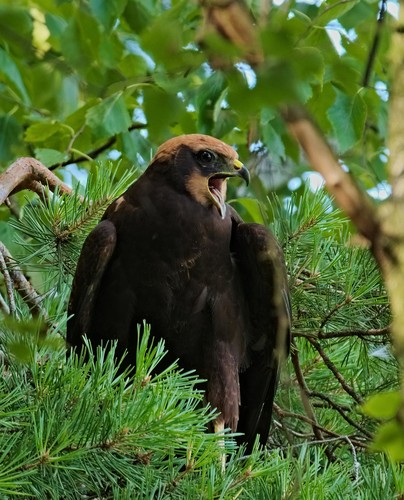
Western Marsh Harrier
Body 43-56 cm; wingspan 115-140 cm
Swallow-tailed Kite
48-68 cm (19-27 in) long including tail streamers, 112-136 cm (44-54 in) wingspan
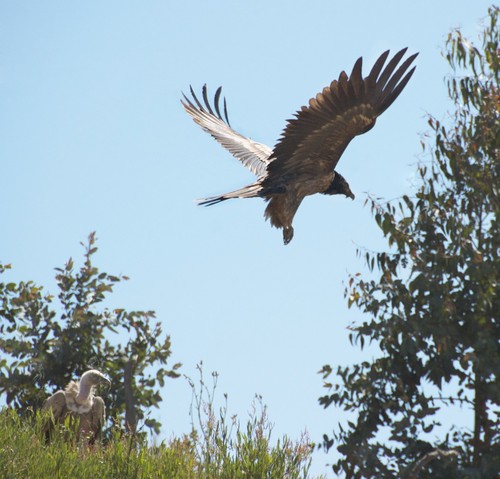
White-backed Vulture
78-98 cm long, wingspan 1.96-2.25 m
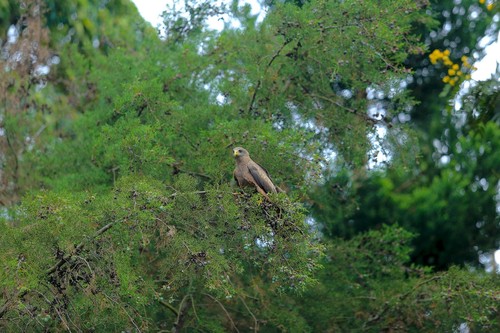
Yellow-billed Kite
55-60 cm long; wingspan 130-155 cm
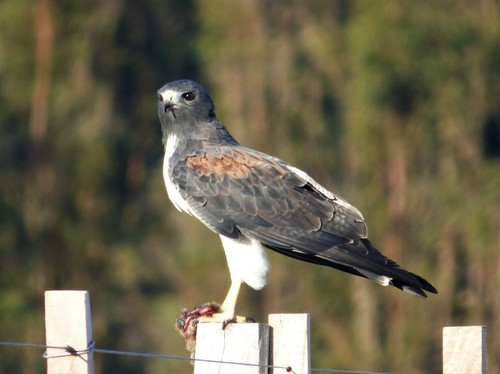
White-tailed Hawk
46-59 cm (18-23 in) long, 122-142 cm (48-56 in) wingspan