
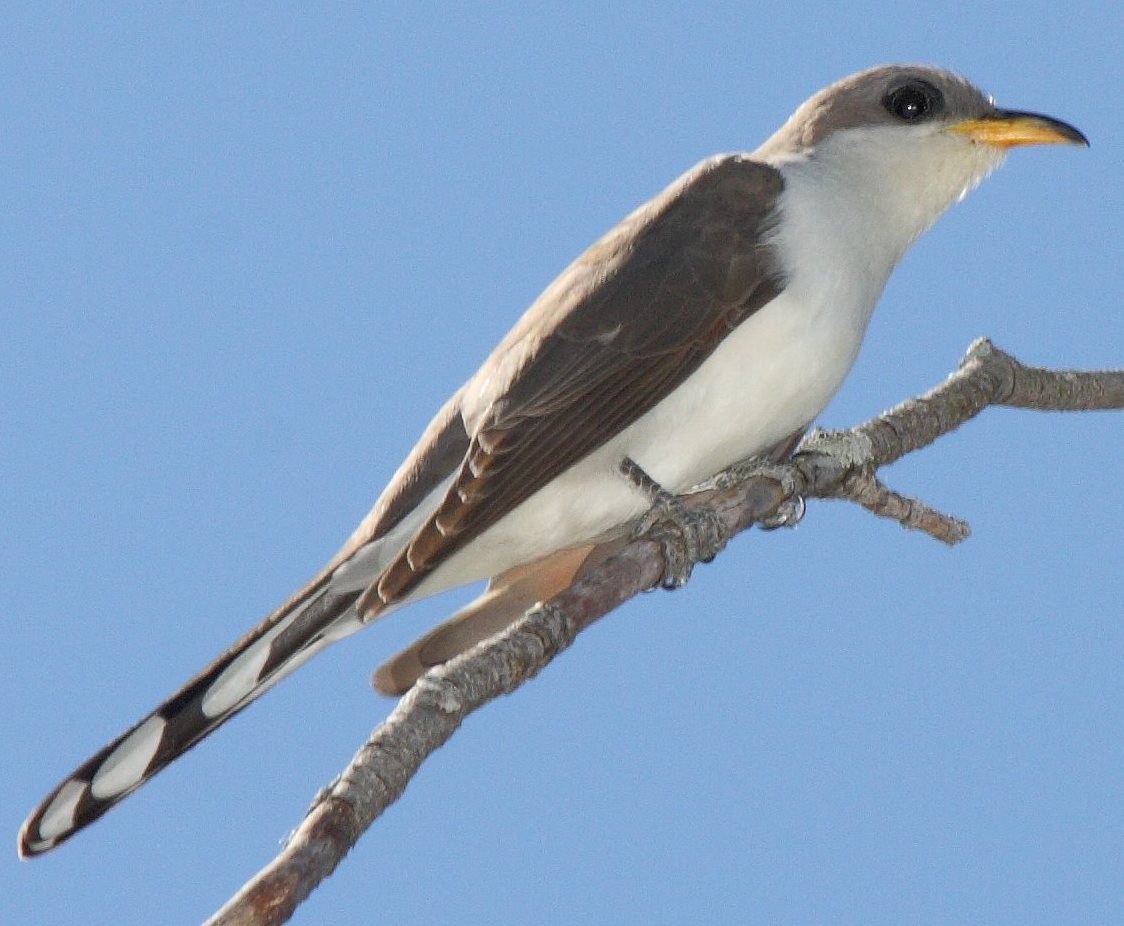
Yellow-billed Cuckoo
Coccyzus americanus
A slender, secretive woodland bird nicknamed the 'rain crow' for its habit of calling before summer storms, marked by a downcurved yellow lower bill and rufous flight feathers.
- Size
- 26-30 cm (10-12 in) long, 38-43 cm wingspan
- Habitat
- dense deciduous woodlands, riparian thickets, and overgrown orchards across much of North America
- Type
- other
Spotted a bird like this?
Identify any bird from a photo, free.
Overview
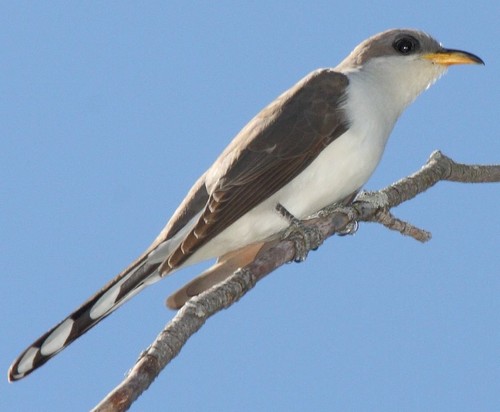
The Yellow-billed Cuckoo is a long, slim bird with smooth grayish-brown upperparts, clean white underparts, and a long tail boldly marked below with large white spots against black. Its most distinctive feature is the bill: mostly yellow on the lower mandible, giving the species its name.
Despite its size, the Yellow-billed Cuckoo is remarkably hard to see, moving quietly and deliberately through dense leafy canopy. It is best known to most people not by sight but by its unusual, hollow, knocking call, and by an old folk belief that it calls ahead of rain — earning it the nickname "rain crow."
How to identify it
Key Field Marks
- Slim, long-tailed silhouette with smooth grayish-brown upperparts and clean white underparts
- Yellow lower mandible contrasting with a dark upper bill
- Rufous-cinnamon patch in the primary flight feathers, visible in flight
- Long tail with bold white spots on the underside, arranged like a row of dots
Similar Species
The Black-billed Cuckoo is very similar in shape and size but has an all-dark bill, a red eye-ring, and lacks the rufous wing patch and bold tail spotting (its tail spots are smaller and grayer). Mourning Doves are sometimes mistaken for cuckoos in flight but have a different, more direct flight style and no rufous wing patch.
Habitat & range
Yellow-billed Cuckoos favor dense deciduous woodland with a thick understory, especially riparian corridors lined with willows and cottonwoods, as well as overgrown orchards, hedgerows, and shrubby second growth. They are widespread breeders across the eastern and central United States, with a smaller, now-fragmented population in the West tied closely to large river cottonwood-willow forests.
The species is a long-distance migrant, wintering in South America, and arrives on its breeding grounds later than most songbirds, often not until late May or June, timed to coincide with outbreaks of caterpillars.
Behavior & voice
Yellow-billed Cuckoos are famous for their fondness for hairy caterpillars, including tent caterpillars and fall webworms that most birds avoid, and they are also effective at consuming large numbers of cicadas during periodic emergences. They move slowly and deliberately along branches, unlike the quick hopping of many songbirds, often freezing motionless when disturbed.
The call is a distinctive, hollow, knocking "ka-ka-ka-ka-kow-kow-kowlp-kowlp," slowing and dropping in pitch toward the end. Nests are loose, flimsy twig platforms placed in dense foliage, and the species is known for having one of the shortest incubation periods of any bird, sometimes hatching in as few as nine to eleven days.
Frequently asked questions
Why is the Yellow-billed Cuckoo called the 'rain crow'?
Folk tradition holds that its distinctive knocking call is often heard before summer thunderstorms, though this is more coincidence tied to breeding-season vocalizing than true weather prediction.
How do you tell a Yellow-billed Cuckoo from a Black-billed Cuckoo?
The Yellow-billed has a yellow lower bill, rufous wing patches, and bold white tail spots, while the Black-billed has an all-dark bill, a red eye-ring, and smaller, grayer tail spots.
What do Yellow-billed Cuckoos eat?
They specialize in large, hairy caterpillars and cicadas, prey many other birds avoid, along with other large insects and occasional fruit.
Are Yellow-billed Cuckoos endangered?
The species overall is Least Concern, but the western population, tied to shrinking cottonwood-willow riverside forest, is listed as Threatened under the U.S. Endangered Species Act.
Where do Yellow-billed Cuckoos go in winter?
They migrate long distances to winter in South America, arriving back on North American breeding grounds relatively late in spring.
Yellow-billed Cuckoo guides
In-depth guides for identifying, finding, and understanding Yellow-billed Cuckoo.
Other birds you may enjoy
Kiwi
35-55 cm (14-22 in) long; roughly chicken-sized
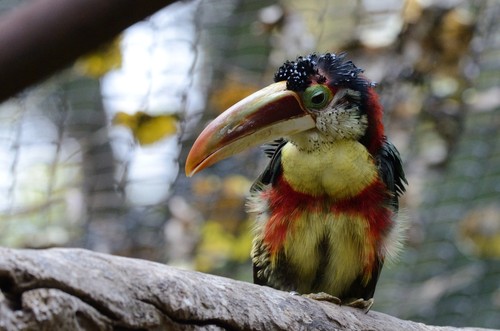
Curl-crested Aracari
41-46 cm (16-18 in) long, including a long bill and tail
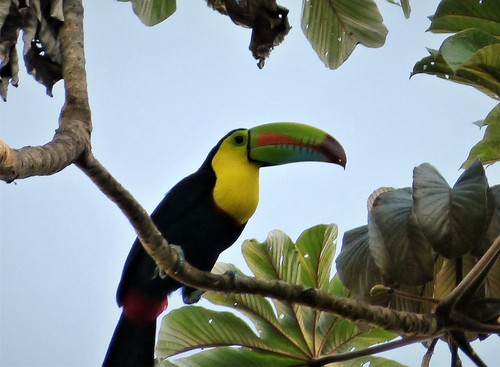
Keel-billed Toucan
42-55 cm (17-22 in) long including bill
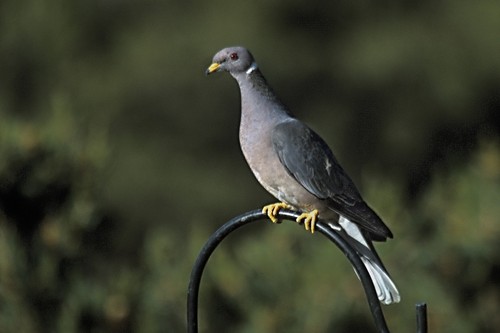
Band-tailed Pigeon
33-38 cm (13-15 in) long, wingspan about 66 cm (26 in)
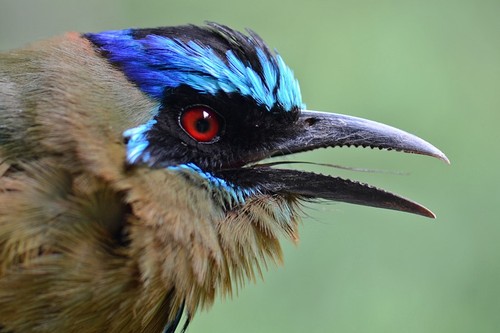
Blue-crowned Motmot
38-43 cm (15-17 in) long including tail
White-tipped Dove
27-30 cm (10.5-12 in) long, 38-43 cm wingspan
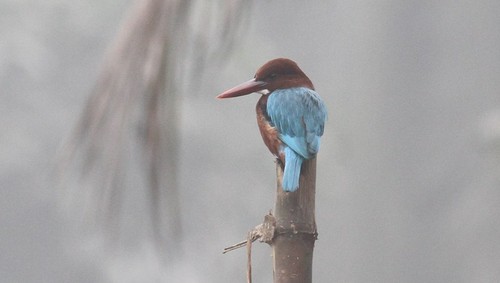
White-throated Kingfisher
27-28 cm (10.5-11 in) long
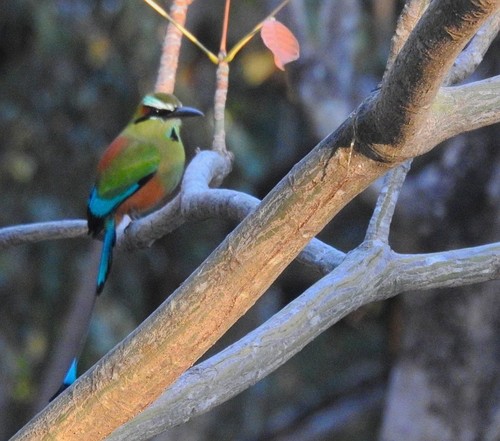
Turquoise-browed Motmot
34 cm (13 in) long including tail
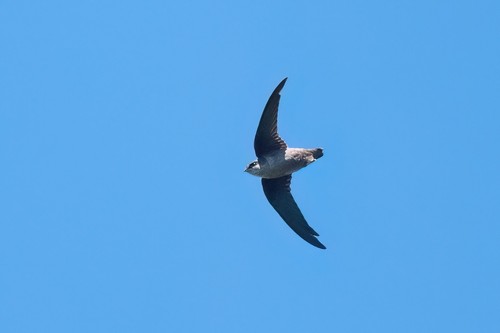
Vaux's Swift
10-12 cm (4-4.5 in) long, 27-30 cm wingspan
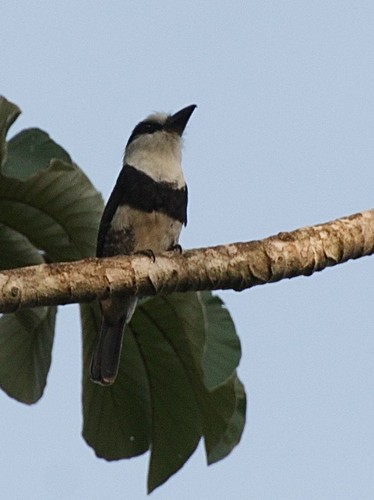
White-necked Puffbird
22-24 cm (8.5-9.5 in) long
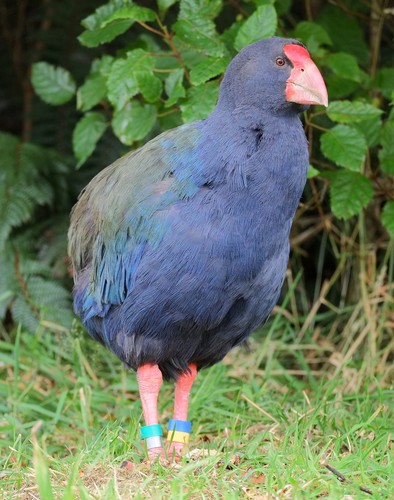
Takahe
50 cm (20 in) long, up to 3.5 kg; flightless
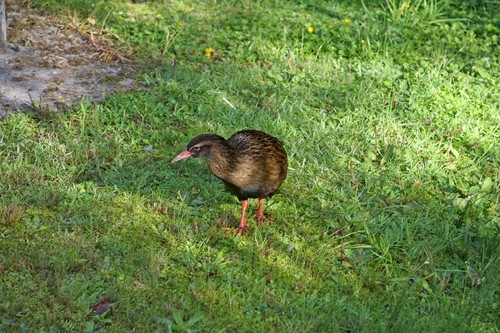
Weka
50-60 cm (20-24 in) long; flightless