
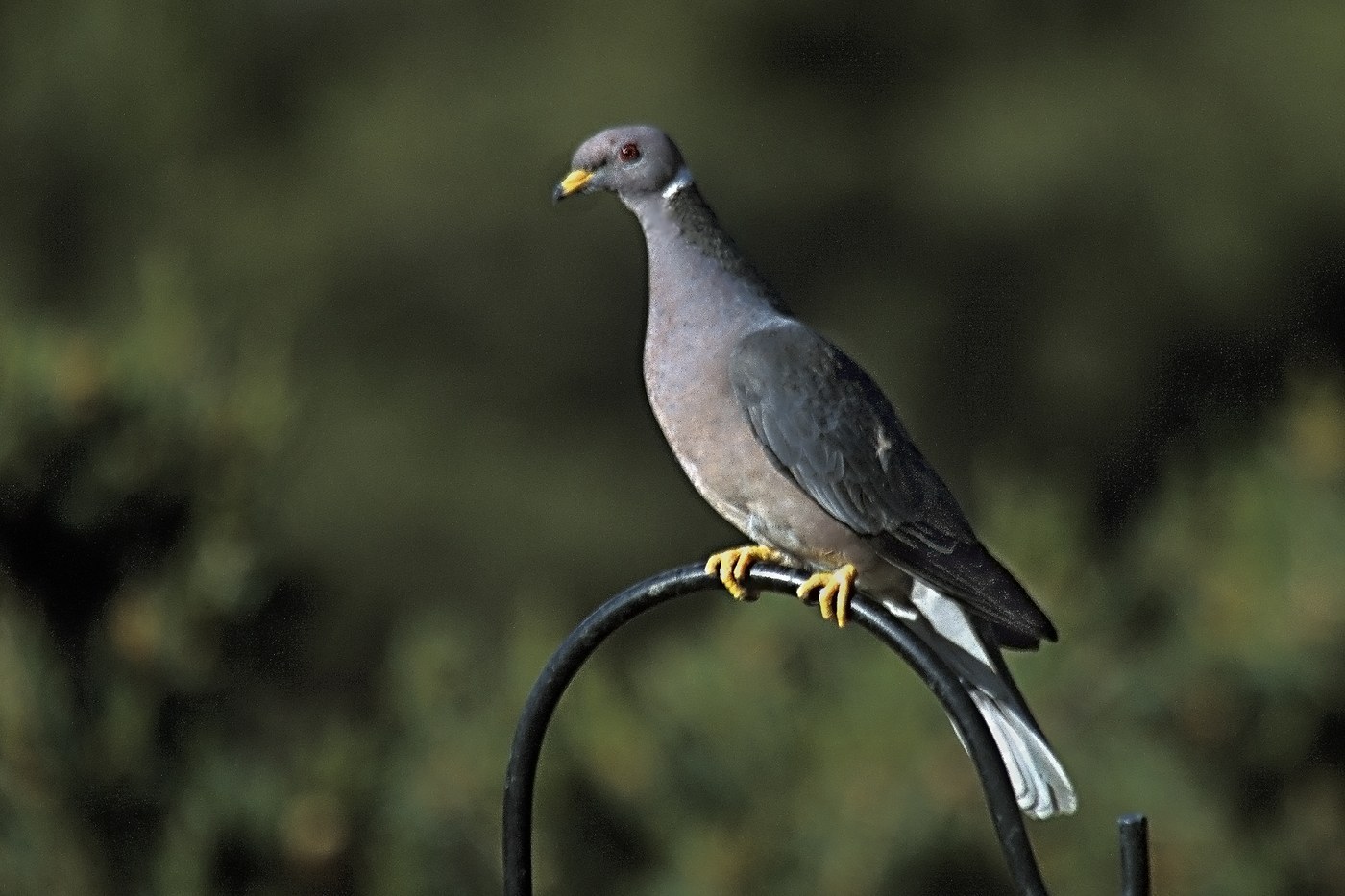
Band-tailed Pigeon
Patagioenas fasciatus
A large, plain gray forest pigeon of the western mountains, told by its yellow bill, white nape crescent, and pale terminal tail band, often gathering in flocks at acorn-rich oak groves.
- Size
- 33-38 cm (13-15 in) long, wingspan about 66 cm (26 in)
- Habitat
- coniferous and mixed forests, oak woodlands
- Type
- other
Spotted a bird like this?
Identify any bird from a photo, free.
Overview
The Band-tailed Pigeon is a large, robust pigeon of western North American forests, the wild counterpart in appearance and size to the familiar Rock Pigeon but restricted to wooded mountain and coastal habitats rather than cities. It has an overall plain, soft gray body with a purplish-pink wash on the head and breast, a distinctive narrow white crescent across the back of the neck bordering an iridescent greenish patch, and a yellow bill with a black tip. In flight, a pale gray band crosses the tip of the otherwise dark tail, giving the species its name.
How to identify it
Key field marks
- Plain gray body with a purplish-pink wash on the head and breast
- White crescent on the nape above an iridescent green neck patch
- Yellow bill with a black tip and yellow legs
- Broad pale gray band across the tip of the tail, visible in flight
Similar species
Rock Pigeon is smaller-headed, more variably plumaged, lacks the nape crescent and pale tail band, and is associated with urban rather than forest habitat. Mourning Dove is much smaller and slimmer with a long pointed tail.
Habitat & range
Habitat and Range
Band-tailed Pigeons inhabit coniferous and mixed forests and oak woodlands, often favoring areas with abundant mast-producing oaks or fruiting shrubs and reliable water sources.
Range
The species occurs along the Pacific coast and interior mountain ranges from British Columbia south through the western United States (California, Oregon, Washington, the Southwest) and further south through Mexico and Central America to South America, in two broadly recognized populations (Pacific coast and interior).
Migration
Many northern and higher-elevation populations are migratory, moving south or to lower elevations for the winter, while populations in milder coastal and southern areas may be largely resident.
Behavior & voice
Behavior
Band-tailed Pigeons are highly social outside the breeding season, gathering in large flocks at abundant food sources such as fruiting or masting trees, and are strong, fast fliers.
Voice
The call is a deep, owl-like series of low hoots, "whoo-whoo" or "who, who-hoo," quite different from the coo of smaller doves and sometimes mistaken for an owl.
Feeding
Acorns are a particularly important food source where available, supplemented by berries, seeds, and other fruit; flocks may travel considerable distances to reach productive mast crops.
Nesting and breeding
Pairs build a loose stick platform nest in a tree, typically laying just a single egg per clutch, and may attempt multiple nesting attempts across a breeding season.
Frequently asked questions
How can you identify a Band-tailed Pigeon?
Look for a plain gray body with a purplish-pink wash on the head and breast, a white crescent on the nape, a yellow bill with a black tip, and a pale gray band across the tip of the tail in flight.
What does the Band-tailed Pigeon's call sound like?
It gives a deep, low, owl-like hooting call, quite different from the softer coo of smaller doves, and is sometimes mistaken for an owl by listeners.
Where do Band-tailed Pigeons live?
They inhabit coniferous and mixed forests and oak woodlands along the Pacific coast and interior mountains from British Columbia through the western US and south through Mexico and Central America to South America.
What is an important food source for Band-tailed Pigeons?
Acorns are a particularly important food where available, and flocks will travel to reach productive oak stands, supplemented by berries and other fruit.
Band-tailed Pigeon guides
In-depth guides for identifying, finding, and understanding Band-tailed Pigeon.
Other birds you may enjoy
Kiwi
35-55 cm (14-22 in) long; roughly chicken-sized
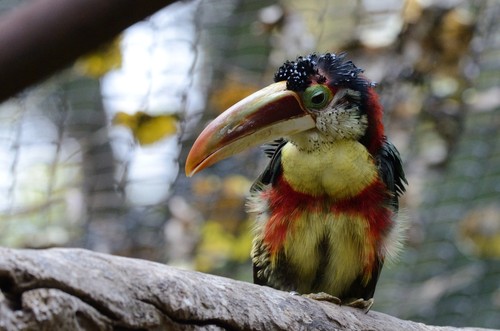
Curl-crested Aracari
41-46 cm (16-18 in) long, including a long bill and tail
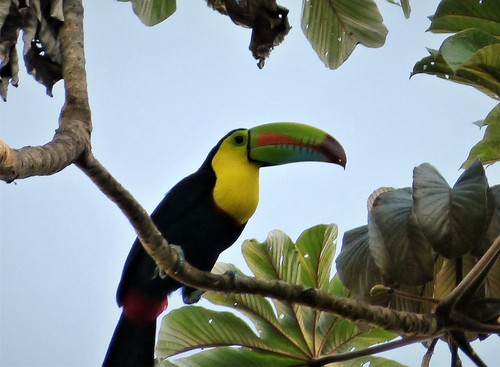
Keel-billed Toucan
42-55 cm (17-22 in) long including bill
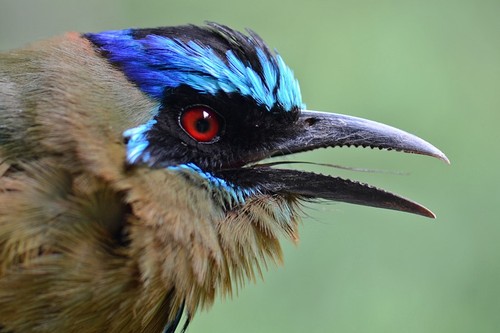
Blue-crowned Motmot
38-43 cm (15-17 in) long including tail
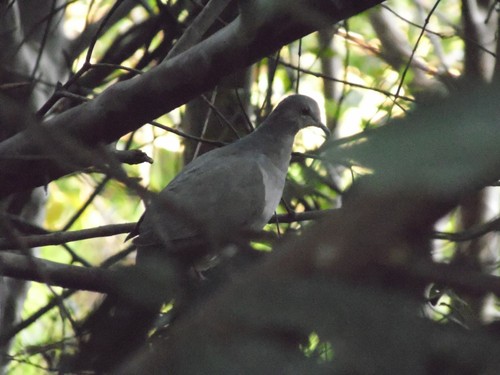
White-tipped Dove
27-30 cm (10.5-12 in) long, 38-43 cm wingspan
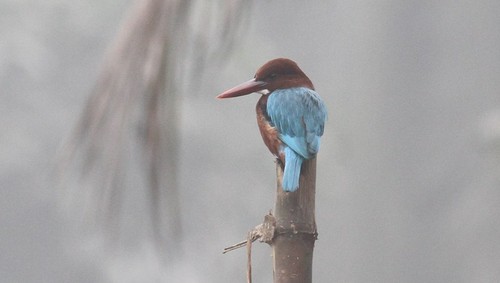
White-throated Kingfisher
27-28 cm (10.5-11 in) long
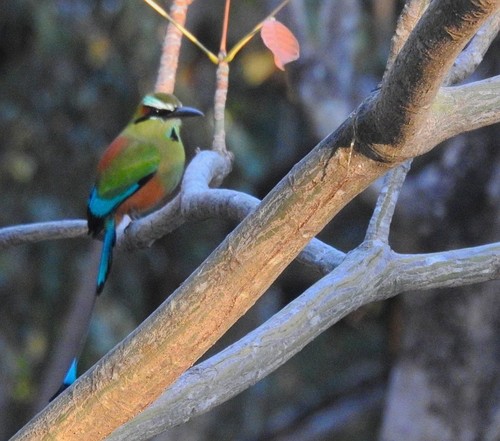
Turquoise-browed Motmot
34 cm (13 in) long including tail
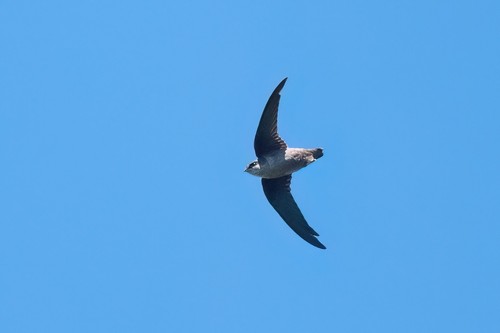
Vaux's Swift
10-12 cm (4-4.5 in) long, 27-30 cm wingspan
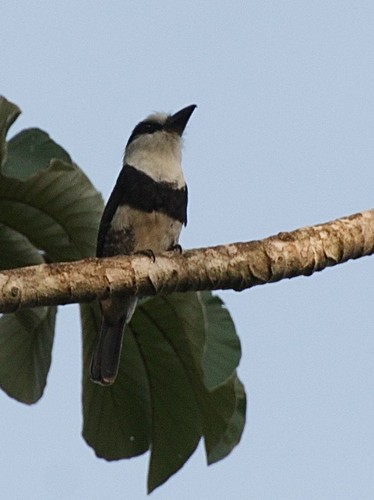
White-necked Puffbird
22-24 cm (8.5-9.5 in) long
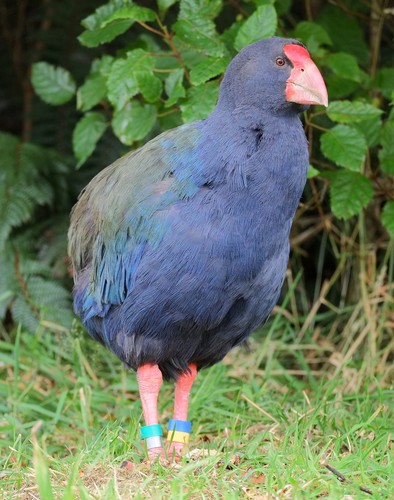
Takahe
50 cm (20 in) long, up to 3.5 kg; flightless
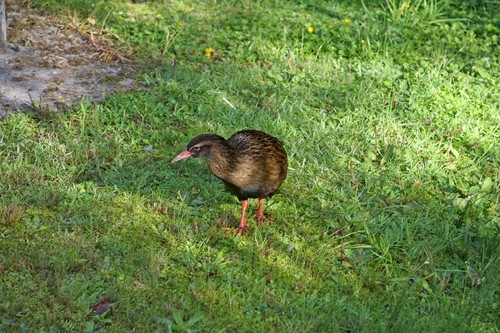
Weka
50-60 cm (20-24 in) long; flightless
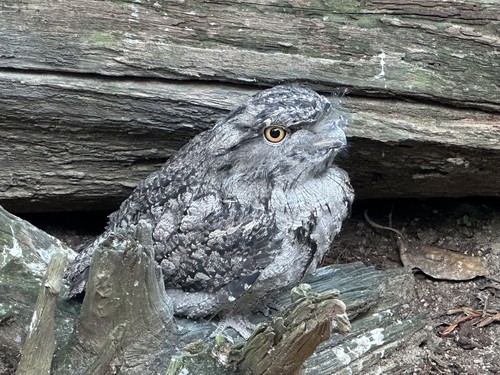
Tawny Frogmouth
35-52 cm (14-20.5 in) long, 65-90 cm wingspan