
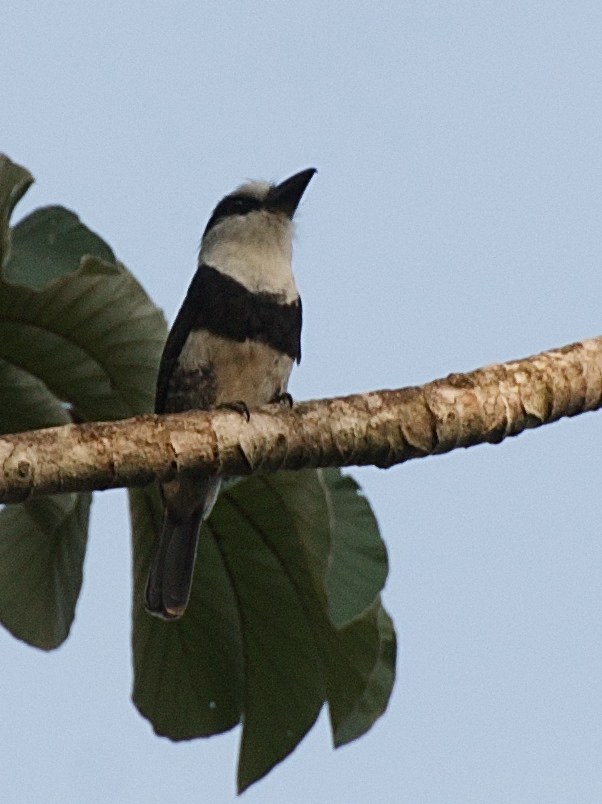
White-necked Puffbird
Notharchus hyperrhynchus
A large, big-headed, black-and-white puffbird that perches motionless on high open branches before sallying out for large prey.
- Size
- 22-24 cm (8.5-9.5 in) long
- Habitat
- forest edge, clearings, and semi-open woodland with tall trees
- Type
- other
Spotted a bird like this?
Identify any bird from a photo, free.
Overview
The White-necked Puffbird is a chunky, large-headed member of the puffbird family (Bucconidae), boldly patterned in black and white: glossy black upperparts and a black breast band set against a crisp white collar, throat, and underparts. Like other puffbirds, it has a stout, hook-tipped bill and a characteristically inert, statue-like posture, often perching for long periods on an exposed high branch before making a sudden sally after prey.
How to identify it
Key field marks
- Large head and heavy, hook-tipped black bill.
- Glossy black upperparts with a white collar around the nape.
- White underparts crossed by a black breast band.
- Upright, motionless perching posture on high open branches.
Similar species
Other black-and-white puffbirds in the region (e.g., Pied Puffbird) are much smaller. The White-necked Puffbird's large size, heavy bill, and prominent white nape collar combined with a black breast band are diagnostic.
Habitat & range
This species favors forest edge, clearings, gallery forest, and semi-open woodland with scattered tall trees, rather than closed forest interior. It ranges from Mexico through Central America and across much of northern and central South America to Bolivia and Brazil. It is a non-migratory resident found from lowlands up to about 1,200-1,500 m.
Behavior & voice
Voice
A thin, high whistled call, sometimes a rolling trill, given infrequently from a high perch.
Feeding
White-necked Puffbirds sit motionless on exposed high branches for extended periods, scanning for prey before sallying out in fast, direct flights to snatch large insects, cicadas, and occasionally small lizards, returning to the same or a nearby perch to subdue and swallow prey.
Nesting and breeding
Pairs excavate a nest burrow in an active arboreal termite nest or occasionally in soft, rotten wood. Both adults are thought to share incubation and provisioning of the young.
Frequently asked questions
Why does the White-necked Puffbird sit so still?
Like other puffbirds, it is a sit-and-wait predator, remaining motionless on an exposed perch to ambush passing prey with a sudden sally.
What does it eat?
Mostly large flying and crawling insects such as cicadas and beetles, plus occasional small lizards.
Where does it nest?
In a burrow it excavates into an active arboreal termite nest, unusual among birds.
How is it distinguished from other puffbirds?
Its large size, heavy black bill, white nape collar, and black breast band across white underparts separate it from smaller relatives like the Pied Puffbird.
White-necked Puffbird guides
In-depth guides for identifying, finding, and understanding White-necked Puffbird.
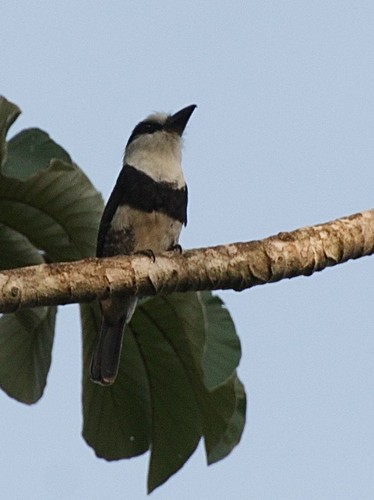
Other birds you may enjoy
Kiwi
35-55 cm (14-22 in) long; roughly chicken-sized
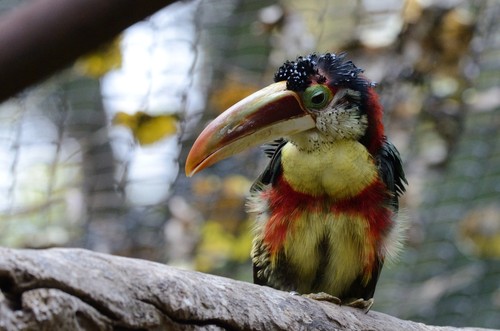
Curl-crested Aracari
41-46 cm (16-18 in) long, including a long bill and tail
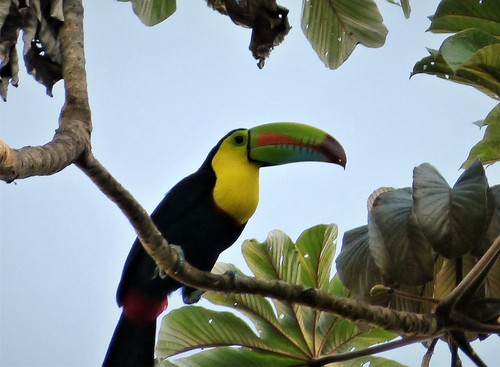
Keel-billed Toucan
42-55 cm (17-22 in) long including bill
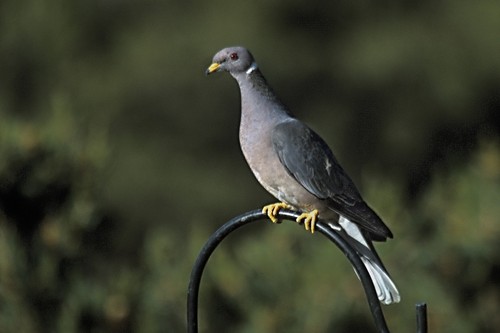
Band-tailed Pigeon
33-38 cm (13-15 in) long, wingspan about 66 cm (26 in)
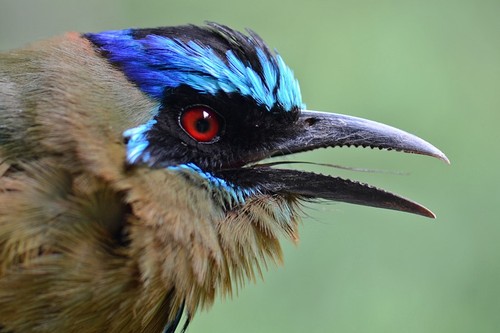
Blue-crowned Motmot
38-43 cm (15-17 in) long including tail
White-tipped Dove
27-30 cm (10.5-12 in) long, 38-43 cm wingspan
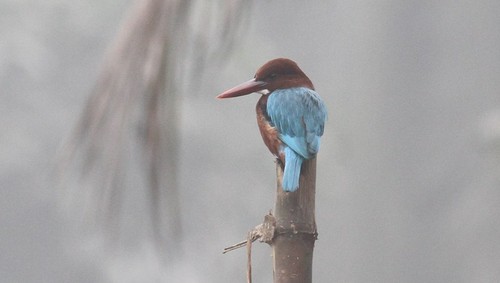
White-throated Kingfisher
27-28 cm (10.5-11 in) long
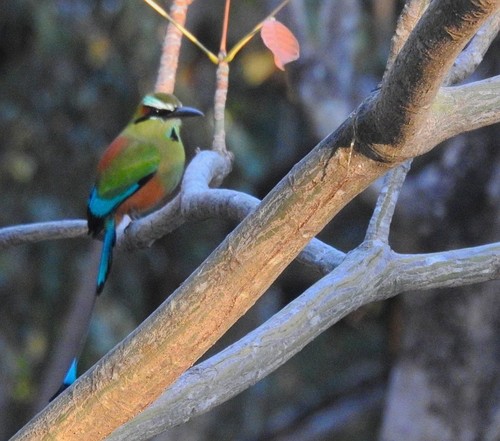
Turquoise-browed Motmot
34 cm (13 in) long including tail
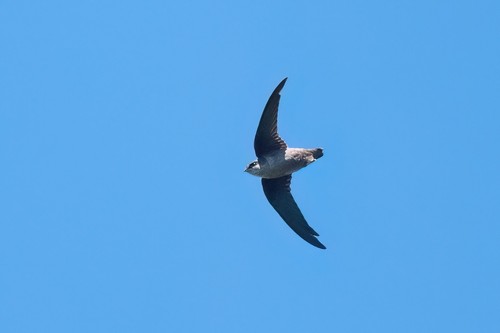
Vaux's Swift
10-12 cm (4-4.5 in) long, 27-30 cm wingspan
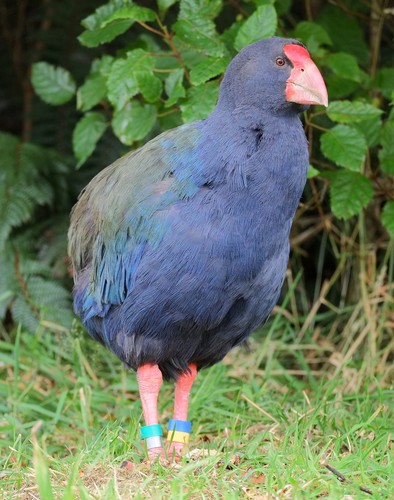
Takahe
50 cm (20 in) long, up to 3.5 kg; flightless
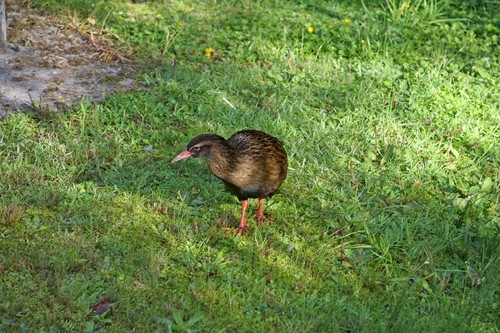
Weka
50-60 cm (20-24 in) long; flightless
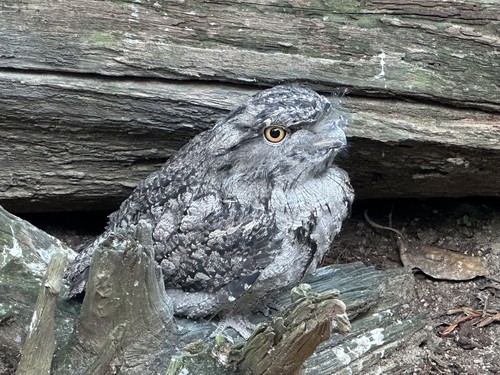
Tawny Frogmouth
35-52 cm (14-20.5 in) long, 65-90 cm wingspan