
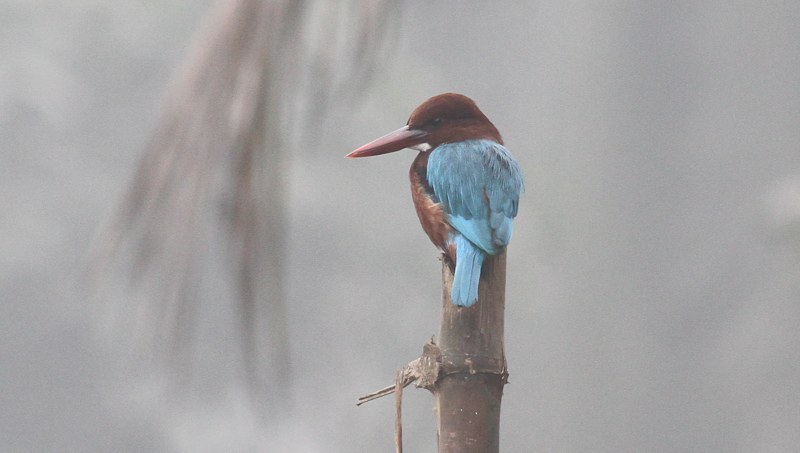
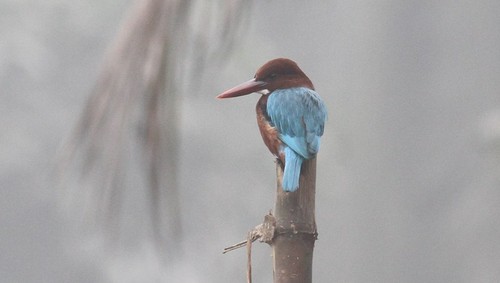
White-throated Kingfisher
Halcyon smyrnensis
A vividly colored kingfisher with turquoise-blue upperparts, a chocolate-brown head, and a bright white throat, often seen far from water.
- Size
- 27-28 cm (10.5-11 in) long
- Habitat
- open country, farmland, wetlands, gardens, and urban areas across South and Southeast Asia
- Type
- other
Spotted a bird like this?
Identify any bird from a photo, free.
Overview
The White-throated Kingfisher is one of the most widespread and easily observed kingfishers across South and Southeast Asia, notable for being found in a huge range of habitats, not just near water. It has a large, dagger-shaped red bill, a rich chocolate-brown head and underparts, a bright white throat and breast patch, and brilliant turquoise-blue upperparts, wings, and tail that flash vividly in flight, revealing large white wing patches.
Often seen perched conspicuously on wires, fence posts, or bare branches, this kingfisher is a familiar sight even in cities and dry farmland well away from water bodies, reflecting its varied, largely non-fish diet.
How to identify it
Key field marks
- Chocolate-brown head, breast sides, and belly
- Bright white throat and upper breast patch
- Turquoise-blue back, wings, and tail
- Large, straight red bill and red legs
- Large white patches on the wings, conspicuous in flight
Similar species
The Common Kingfisher is much smaller with an orange breast and blue-and-orange plumage, lacking the brown head. No other common kingfisher in the region shares the combination of brown head, white throat, and turquoise back at this size.
Habitat & range
White-throated Kingfishers are found from the Middle East across the Indian subcontinent to Southeast Asia and parts of the Philippines. Unusually for a kingfisher, they occupy an extremely broad range of habitats, from wetlands, rivers, and coasts to dry farmland, scrub, gardens, and urban parks, often far from any water source.
The species is largely resident, defending permanent territories year-round.
Behavior & voice
Voice
A loud, ringing, laughing call — a rapid "ki-ki-ki-ki-ki" or trilling chatter — often given from a perch and one of the most familiar bird sounds across South Asian towns and countryside.
Feeding
Despite its name and family, this kingfisher eats surprisingly little fish; its diet is dominated by large insects, small reptiles, frogs, crabs, and other invertebrates, caught by dropping onto prey from an exposed perch, with fish taken only opportunistically near water.
Nesting and breeding
Pairs excavate a tunnel nest in an earthen bank, termite mound, or similar substrate, often well away from water. Both parents help dig the burrow and feed the chicks on a diet of insects and small vertebrates.
Frequently asked questions
Why is the White-throated Kingfisher seen so often away from water?
Its diet is dominated by insects, reptiles, and other land prey rather than fish, so it thrives in dry farmland, scrub, and urban habitats far from rivers or ponds.
How do you identify a White-throated Kingfisher?
Look for a chocolate-brown head and belly, a bright white throat patch, turquoise-blue wings and back, and a large red bill.
What does the White-throated Kingfisher eat?
Mostly large insects, small reptiles, frogs, and crabs, with fish making up only a small part of its diet.
Where do White-throated Kingfishers nest?
They dig a tunnel nest into an earthen bank or termite mound, often far from any water body.
White-throated Kingfisher guides
In-depth guides for identifying, finding, and understanding White-throated Kingfisher.
Other birds you may enjoy
Kiwi
35-55 cm (14-22 in) long; roughly chicken-sized
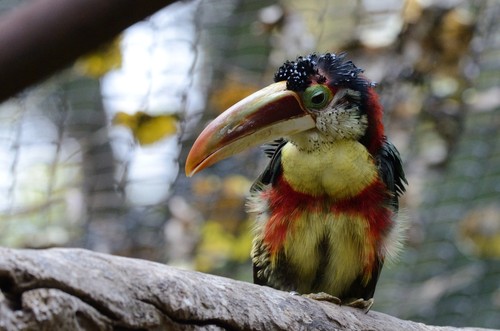
Curl-crested Aracari
41-46 cm (16-18 in) long, including a long bill and tail
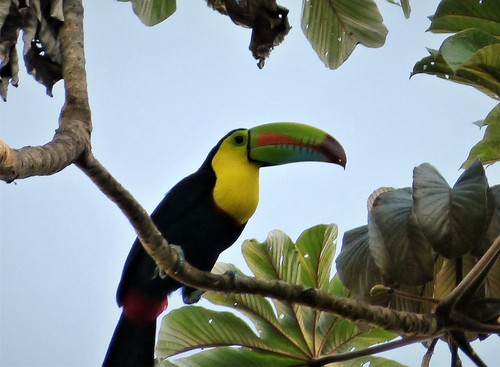
Keel-billed Toucan
42-55 cm (17-22 in) long including bill
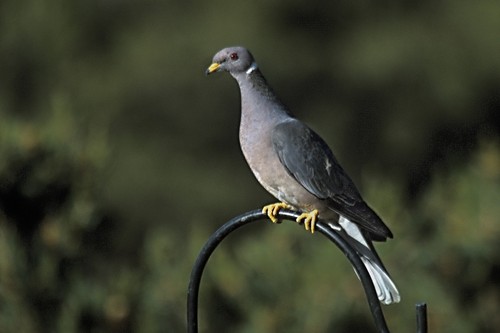
Band-tailed Pigeon
33-38 cm (13-15 in) long, wingspan about 66 cm (26 in)
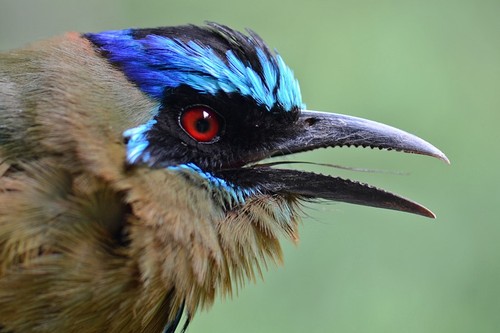
Blue-crowned Motmot
38-43 cm (15-17 in) long including tail
White-tipped Dove
27-30 cm (10.5-12 in) long, 38-43 cm wingspan
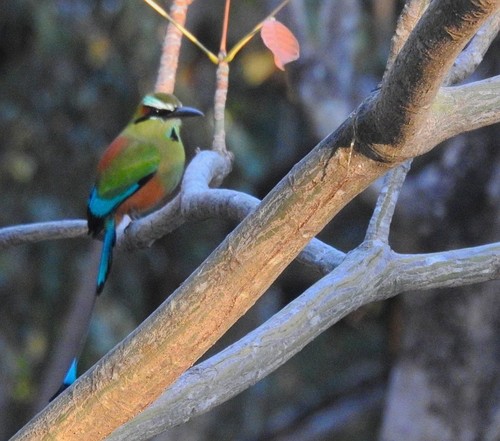
Turquoise-browed Motmot
34 cm (13 in) long including tail
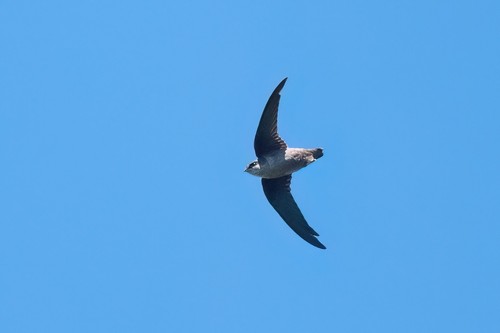
Vaux's Swift
10-12 cm (4-4.5 in) long, 27-30 cm wingspan
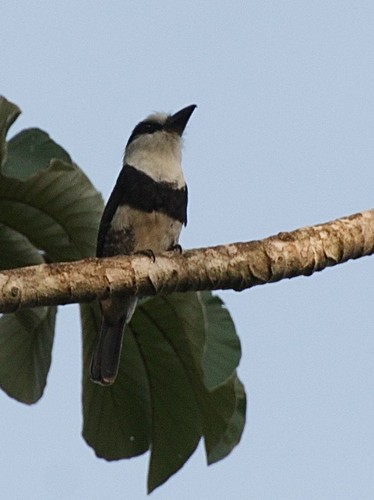
White-necked Puffbird
22-24 cm (8.5-9.5 in) long
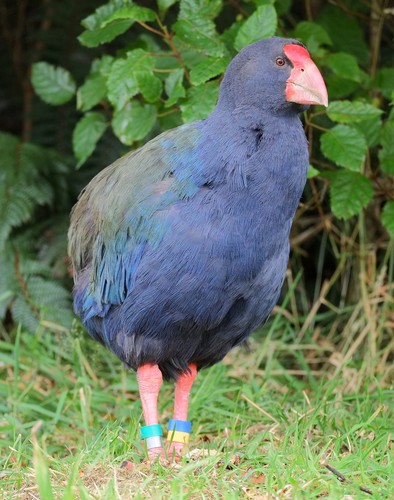
Takahe
50 cm (20 in) long, up to 3.5 kg; flightless
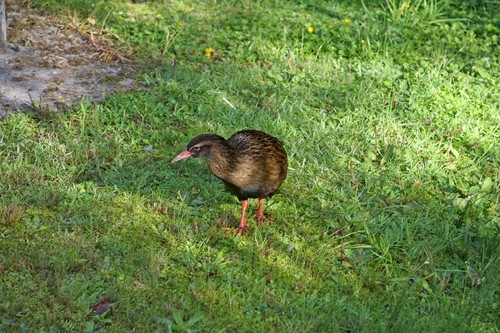
Weka
50-60 cm (20-24 in) long; flightless
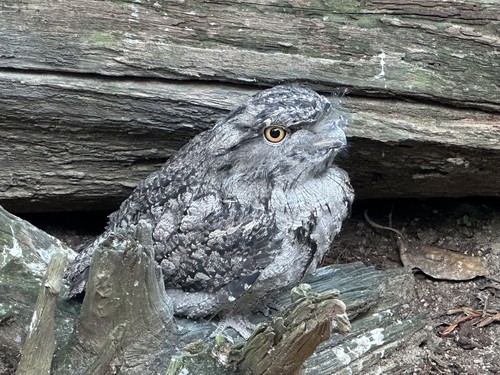
Tawny Frogmouth
35-52 cm (14-20.5 in) long, 65-90 cm wingspan