
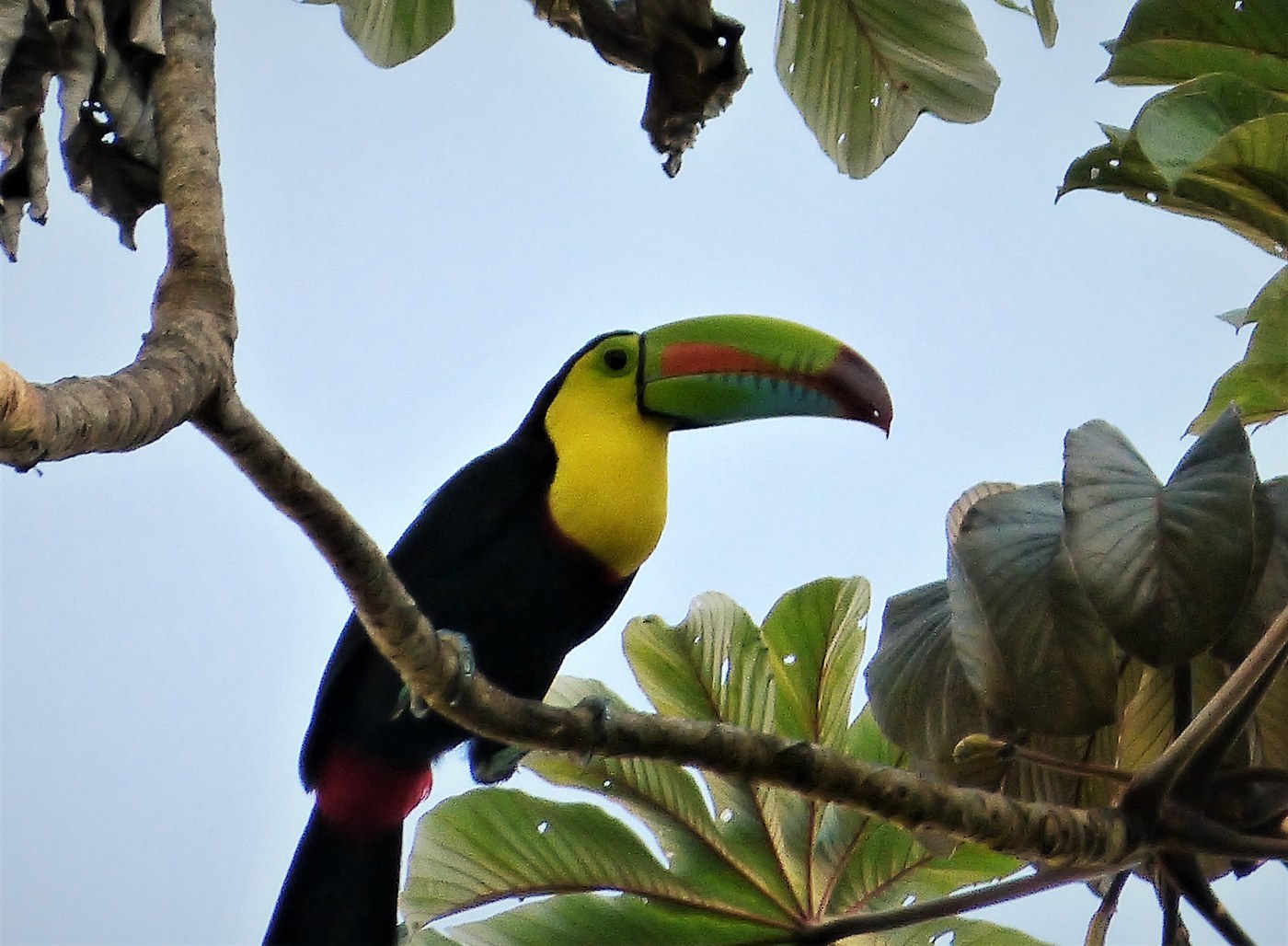
Keel-billed Toucan
Ramphastos sulfuratus
A spectacular Central American toucan with glossy black plumage, a lemon-yellow breast, and an enormous, boldly rainbow-colored bill.
- Size
- 42-55 cm (17-22 in) long including bill
- Habitat
- lowland tropical rainforest and forest edge
- Type
- other
Spotted a bird like this?
Identify any bird from a photo, free.
Overview
The Keel-billed Toucan is one of the most recognizable birds of the American tropics, with mostly glossy black plumage set off by a bright yellow face, throat, and breast, a patch of red beneath the tail, and blue legs and feet. Its most striking feature by far is the huge, laterally flattened bill, marked in bands of green, orange, red, and blue, that can rival the length of the body itself yet is remarkably light thanks to its hollow, honeycombed internal structure.
A highly social bird of the rainforest canopy, it typically travels in small, noisy flocks, hopping between branches and using its oversized bill to reach fruit at the tips of slender twigs that would not support its weight directly, as well as to raid the nests of smaller birds.
How to identify it
Key field marks
- Mostly black body with a bright yellow face, throat, and chest
- Massive, laterally flattened bill striped in green, orange, red, and blue
- Patch of red feathers beneath the tail
- Blue legs and feet
Similar species
- Chestnut-mandibled (Black-mandibled) Toucan has a much larger, mostly black bill with a chestnut-brown lower mandible, lacking the rainbow banding of the Keel-billed Toucan.
- Emerald Toucanet is much smaller and mostly green, with a far smaller bill, easily distinguishing it despite the shared family resemblance.
Habitat & range
Habitat
Inhabits lowland and foothill tropical rainforest, secondary forest, and forest edge, favoring the canopy and subcanopy.
Range
Found from southern Mexico through Central America to northern Colombia and Venezuela.
Migration
Generally non-migratory, though it may make local movements in response to fruiting patterns.
Behavior & voice
Behavior
Highly social, usually seen in small flocks of six or more birds moving through the canopy together, hopping between branches rather than making long flights; also known to raid the nests of smaller birds for eggs and chicks.
Voice
A far-carrying, monotonous croaking call often likened to a frog, repeated persistently, especially at dawn and dusk.
Feeding
Feeds mainly on fruit plucked from the canopy using the tip of its long bill, supplemented with insects, small lizards, and the eggs or nestlings of other birds.
Nesting
Nests in natural tree cavities or old woodpecker holes, often shared cooperatively by several adults; lays 2-4 white eggs.
Frequently asked questions
How do you identify a Keel-billed Toucan?
Look for a mostly black bird with a bright yellow chest and an enormous bill striped in green, orange, red, and blue.
Why is the Keel-billed Toucan's bill so large but still light?
The bill is made of a thin outer layer of keratin over a hollow, honeycomb-like bony structure, making it large in surface area but surprisingly light in weight.
What does a Keel-billed Toucan eat?
Mostly fruit plucked from the treetops, along with insects, small lizards, and occasionally the eggs or chicks of other birds.
Where do Keel-billed Toucans live?
In lowland and foothill rainforest from southern Mexico through Central America to northern South America.
Keel-billed Toucan guides
In-depth guides for identifying, finding, and understanding Keel-billed Toucan.
Other birds you may enjoy
Kiwi
35-55 cm (14-22 in) long; roughly chicken-sized
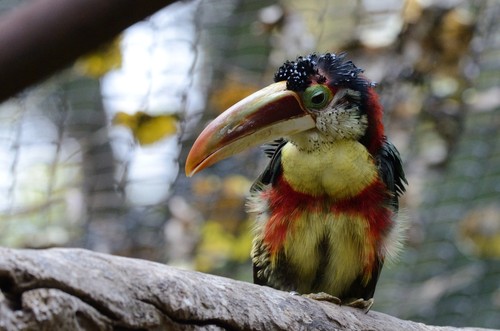
Curl-crested Aracari
41-46 cm (16-18 in) long, including a long bill and tail
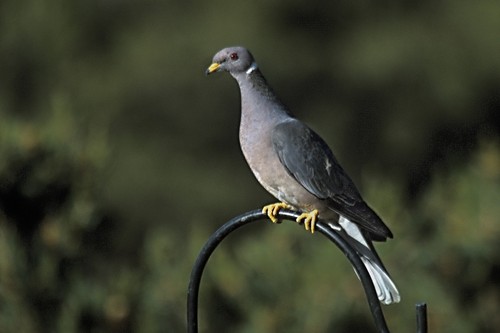
Band-tailed Pigeon
33-38 cm (13-15 in) long, wingspan about 66 cm (26 in)
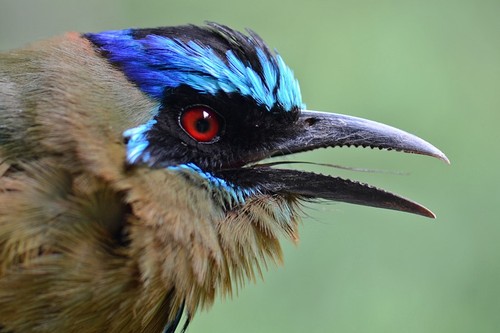
Blue-crowned Motmot
38-43 cm (15-17 in) long including tail
White-tipped Dove
27-30 cm (10.5-12 in) long, 38-43 cm wingspan
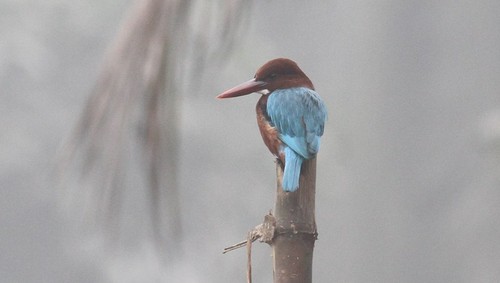
White-throated Kingfisher
27-28 cm (10.5-11 in) long
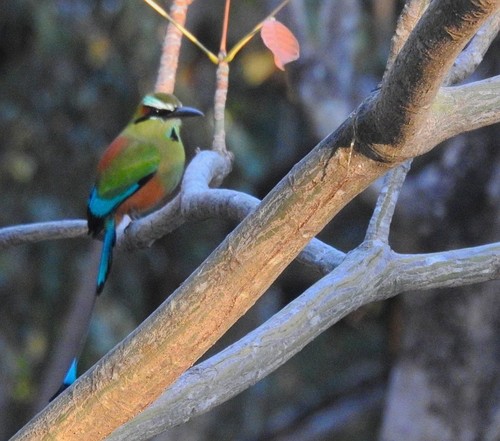
Turquoise-browed Motmot
34 cm (13 in) long including tail
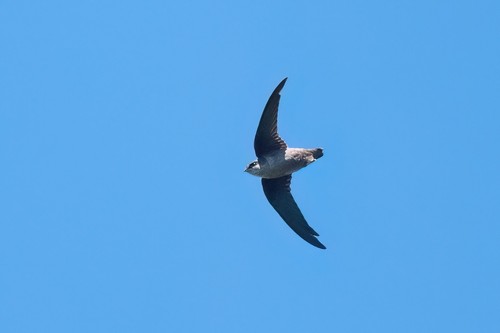
Vaux's Swift
10-12 cm (4-4.5 in) long, 27-30 cm wingspan
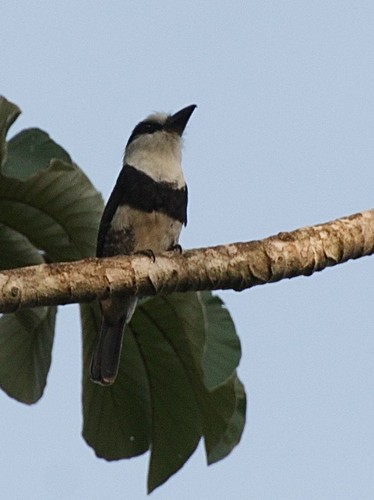
White-necked Puffbird
22-24 cm (8.5-9.5 in) long
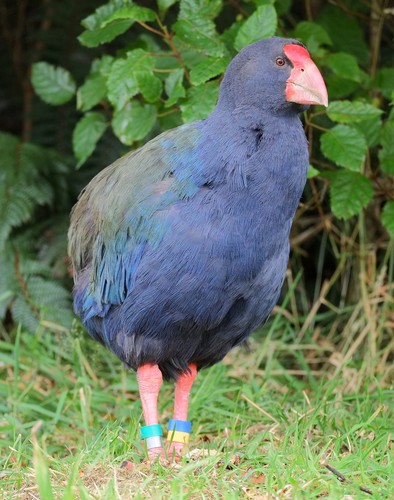
Takahe
50 cm (20 in) long, up to 3.5 kg; flightless
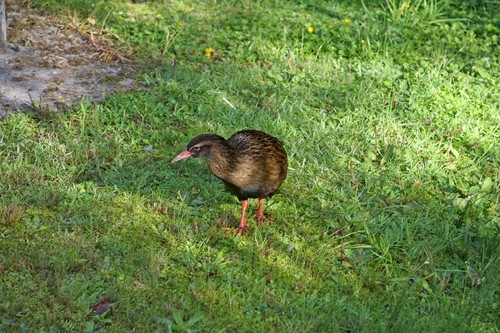
Weka
50-60 cm (20-24 in) long; flightless
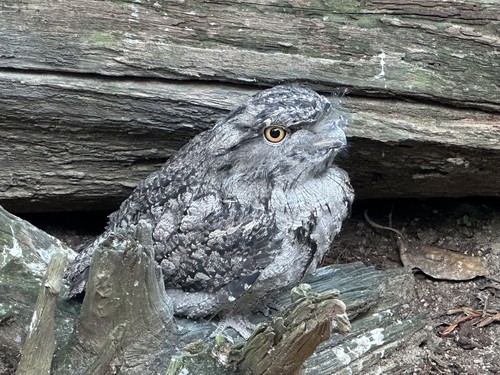
Tawny Frogmouth
35-52 cm (14-20.5 in) long, 65-90 cm wingspan