
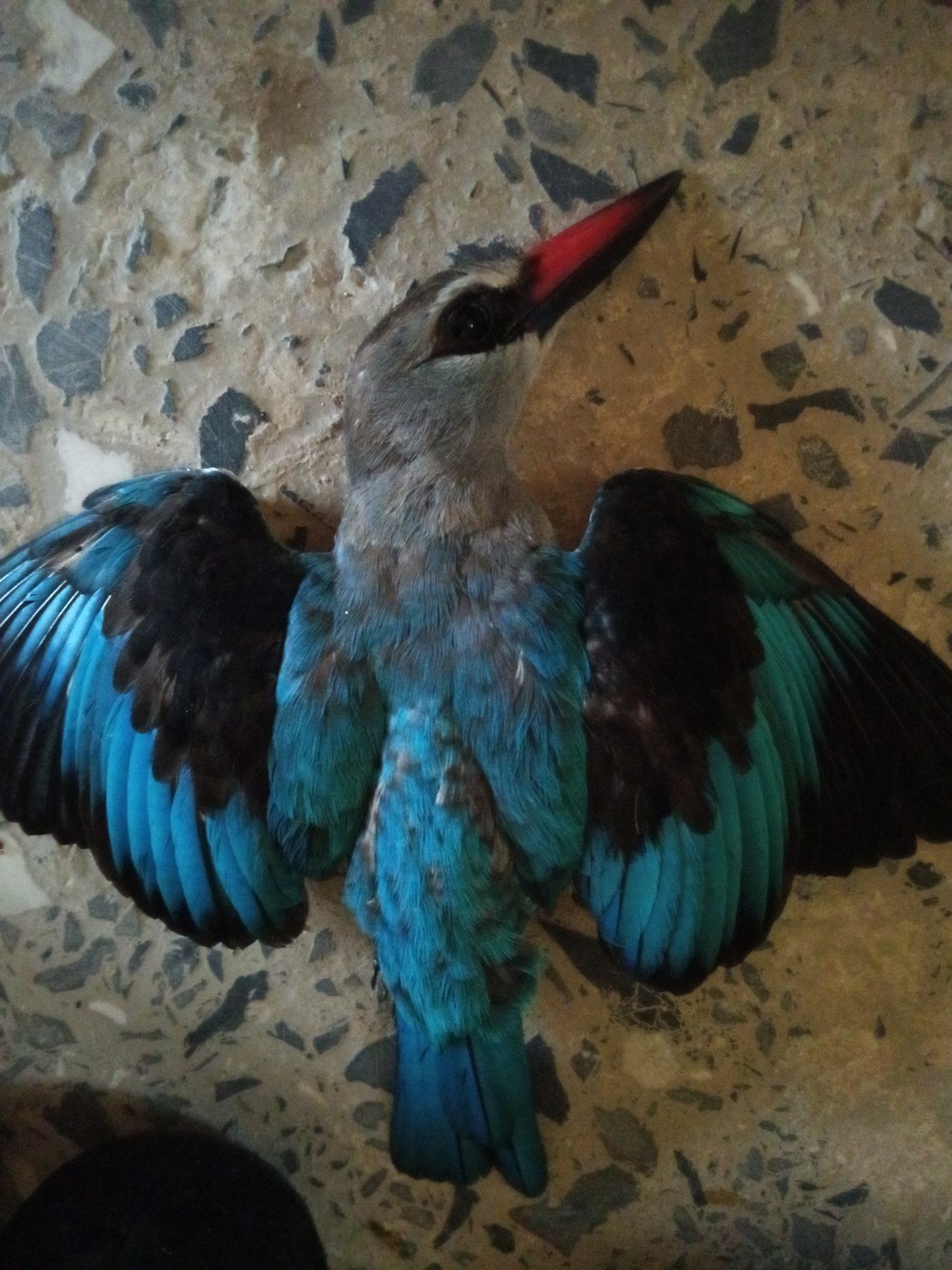
Woodland Kingfisher
Halcyon senegalensis
A vividly colored, non-aquatic African kingfisher famous for its loud trilling call from open perches.
- Size
- About 20-23 cm long
- Habitat
- Savanna, open woodland, riverine trees, and gardens across sub-Saharan Africa
- Type
- other
Spotted a bird like this?
Identify any bird from a photo, free.
Overview
The Woodland Kingfisher is a brightly plumaged, medium-sized kingfisher widespread across savanna and woodland habitats in sub-Saharan Africa. Unlike many kingfishers, it rarely hunts near water, instead favoring open country and tree-lined habitats where it hunts insects and other small prey from exposed perches.
Appearance
- Turquoise to cobalt-blue wing panels and tail contrasting with a pale grey head and nape
- White throat and underparts
- Stout, dagger-like bill that is coral-red on the upper mandible and black on the lower mandible
- A dark line through the eye
- Sexes look similar
How to identify it
Key field marks
- Bright blue wings and tail against a grey head — the two-tone bill (red above, black below) is diagnostic
- White underparts and throat
- Perches conspicuously on bare branches, wires, and treetops, often bobbing its tail
Similar species
- Mangrove Kingfisher (Halcyon senegaloides) is similar but has an all-red bill and is restricted to coastal and mangrove habitats
- Grey-headed Kingfisher (Halcyon leucocephala) has chestnut underwing coverts and a smaller, mostly red bill
- The Woodland Kingfisher's loud, far-carrying trill is often the quickest way to confirm identification even before it is seen
Habitat & range
Range
Widespread across sub-Saharan Africa, from Senegal east to Ethiopia and south to South Africa, avoiding only dense rainforest and true desert.
Habitat
Favors open woodland, savanna with scattered trees, farmland edges, and well-treed gardens. It is rarely found near water despite being a kingfisher.
Migration
Many southern African populations are intra-African migrants, arriving in the austral spring (around September–October) to breed and departing north again after the rains, while more equatorial populations tend to be resident.
Behavior & voice
Voice
A loud, piercing, descending trill — often rendered as a shrill "tirrrrrrr" — delivered repeatedly from an exposed perch, especially at dawn and during the breeding season; the call is one of the classic sounds of the African bushveld.
Feeding
Hunts by watching from a perch and dropping onto prey on the ground, taking large insects such as grasshoppers and beetles, as well as lizards, small snakes, and occasionally nestling birds.
Nesting and breeding
Nests in tree cavities, frequently old barbet or woodpecker holes, or excavates a chamber in an arboreal termite mound; typically lays 2–4 eggs, and both parents help feed the young.
Frequently asked questions
What does a Woodland Kingfisher eat?
Mostly large insects such as grasshoppers and beetles, along with lizards, small birds, and occasionally fish, hunted by dropping from a perch.
Does the Woodland Kingfisher live near water?
No — despite its name, it hunts in dry savanna and woodland far from rivers or lakes.
How can I identify a Woodland Kingfisher by sound?
Listen for a loud, shrill, descending trill repeated from an open perch, especially at dawn.
Is the Woodland Kingfisher migratory?
Southern populations migrate into the region to breed during the rainy season and move north afterward, while equatorial populations are largely resident.
What color is a Woodland Kingfisher's bill?
The upper mandible is coral red and the lower mandible is black, a useful field mark distinguishing it from similar species.
Woodland Kingfisher guides
In-depth guides for identifying, finding, and understanding Woodland Kingfisher.
Other birds you may enjoy
Kiwi
35-55 cm (14-22 in) long; roughly chicken-sized
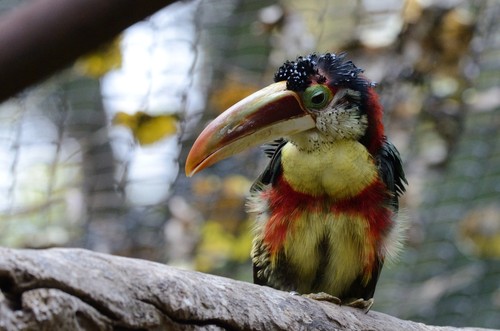
Curl-crested Aracari
41-46 cm (16-18 in) long, including a long bill and tail
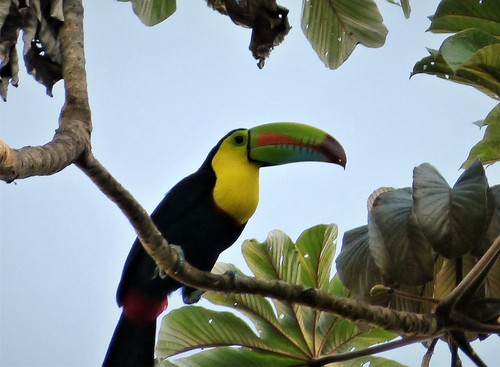
Keel-billed Toucan
42-55 cm (17-22 in) long including bill
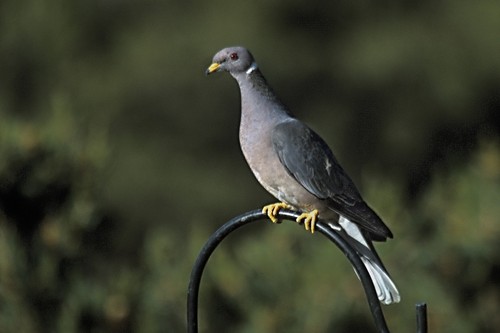
Band-tailed Pigeon
33-38 cm (13-15 in) long, wingspan about 66 cm (26 in)
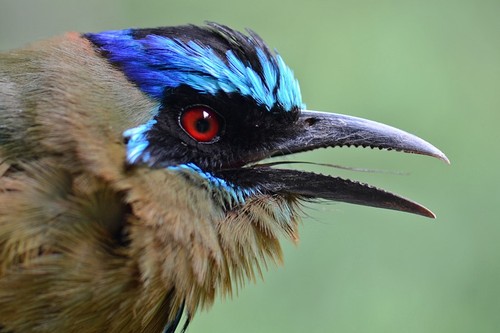
Blue-crowned Motmot
38-43 cm (15-17 in) long including tail
White-tipped Dove
27-30 cm (10.5-12 in) long, 38-43 cm wingspan
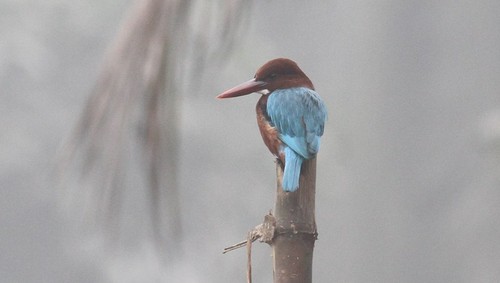
White-throated Kingfisher
27-28 cm (10.5-11 in) long
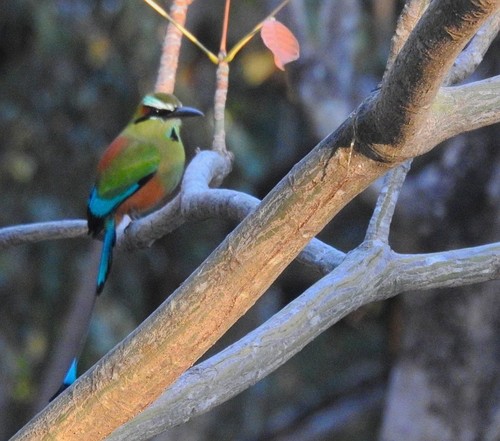
Turquoise-browed Motmot
34 cm (13 in) long including tail
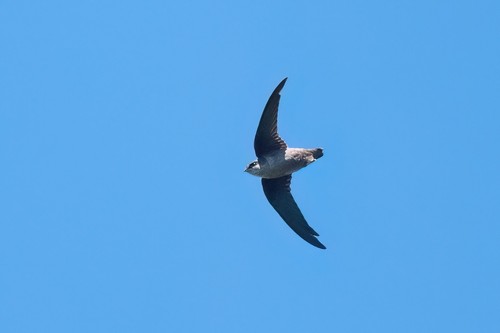
Vaux's Swift
10-12 cm (4-4.5 in) long, 27-30 cm wingspan
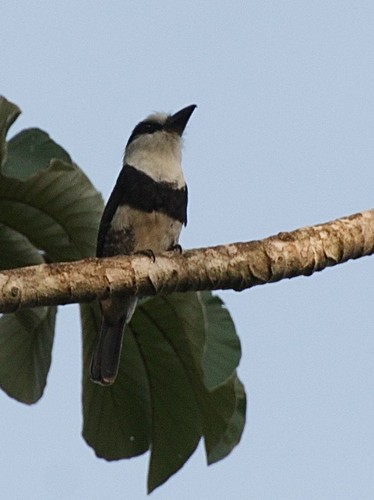
White-necked Puffbird
22-24 cm (8.5-9.5 in) long
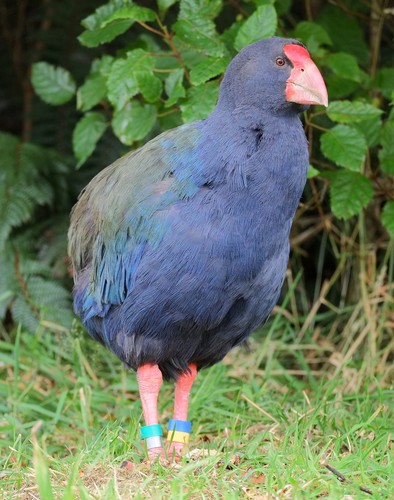
Takahe
50 cm (20 in) long, up to 3.5 kg; flightless
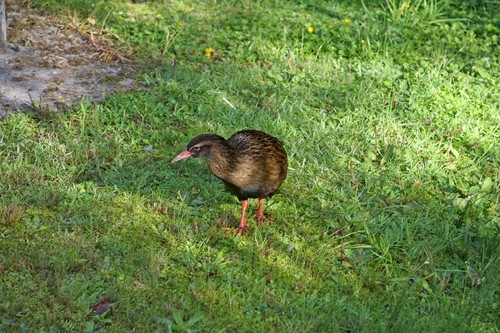
Weka
50-60 cm (20-24 in) long; flightless