
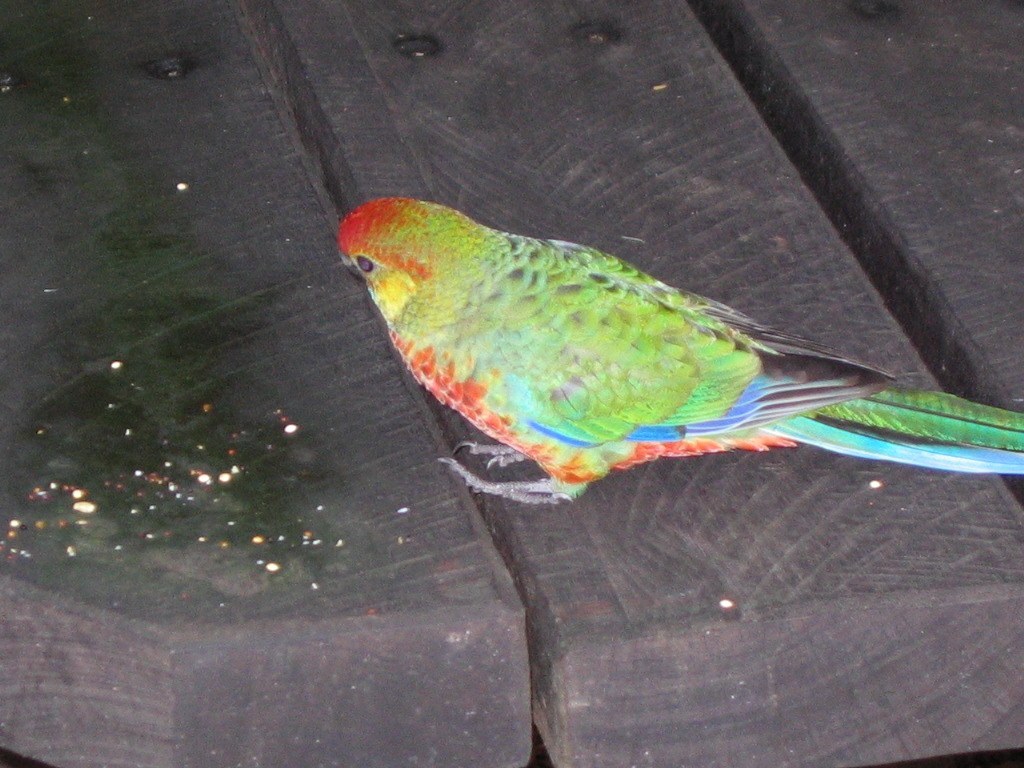
Western Rosella
Platycercus icterotis
The smallest of the rosellas, found only in southwestern Australia, with a red head and underparts, green back, and bright yellow cheek patches.
- Size
- 25-30 cm (10-12 in) long
- Habitat
- eucalypt forest, woodland, and farmland in southwestern Australia
- Type
- parrot
Spotted a bird like this?
Identify any bird from a photo, free.
Overview
The Western Rosella is the smallest member of the rosella group and, unlike its relatives, shows a marked difference between the sexes. Males have a rich red head, breast, and belly, a green back, and a distinctive yellow cheek patch; females are duller overall, with more green mixed through the red and a paler, less defined cheek patch.
Geographically restricted to the far southwest corner of Australia, it is often split into two subspecies: a green-backed form in forested areas and a more yellow-tinged form in drier woodland further inland, sometimes called the Moyadong or inland form.
How to identify it
Key field marks
- Small size compared to other rosellas
- Red head, breast, and belly in males; duller, greener plumage in females
- Distinct yellow cheek patch (rather than white or blue)
- Green back and wings
- Sexual dimorphism unusual for rosellas, aiding identification
Similar species
- Eastern Rosella: larger, with white cheek patches and no range overlap (Western Rosella is confined to southwestern Australia).
- No other rosella species occurs within its restricted range, making misidentification unlikely locally.
Habitat & range
Habitat
Western Rosellas occupy eucalypt forest and woodland, farmland with remnant trees, orchards, and rural gardens.
Range
This species is endemic to the southwestern corner of Western Australia, roughly from Perth south and east through the forested and wheatbelt regions.
Migration
Sedentary, with pairs typically remaining on the same territory year-round.
Behavior & voice
Behavior
Western Rosellas are usually seen alone, in pairs, or in small family groups, feeding quietly and often staying low to the ground or perched inconspicuously in foliage.
Voice
The calls are softer and less strident than those of other rosellas, including a mellow contact call and quiet chattering between paired birds.
Feeding
Diet consists of grass and tree seeds, fruits, blossoms, and some insects, foraging both on the ground and in vegetation.
Nesting and breeding
Nests in tree hollows, usually at lower heights than other rosellas, lined with wood dust. Clutches average four to seven white eggs, incubated by the female, with young fledging around five weeks after hatching.
Frequently asked questions
What makes the Western Rosella different from other rosellas?
It is the smallest rosella species, the only one confined to southwestern Australia, and one of the few showing clear differences between male and female plumage.
What color is a Western Rosella?
Males have a red head and underparts, a green back, and yellow cheek patches; females are duller and greener overall.
Where do Western Rosellas live?
They are endemic to southwestern Western Australia, in forests, woodlands, and farmland.
What is another name for the Western Rosella?
It was historically known as the Stanley Parrot, and an inland form is sometimes called the Moyadong.
Western Rosella guides
In-depth guides for identifying, finding, and understanding Western Rosella.
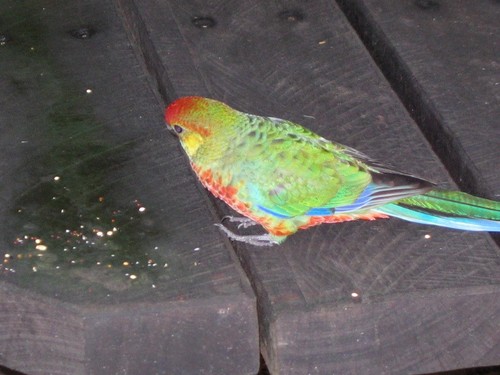
Other birds you may enjoy
Eclectus Parrot
35-42 cm (14-16.5 in) long
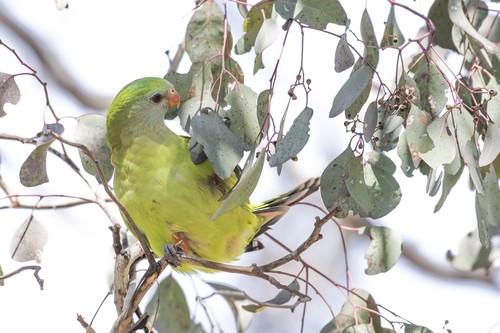
Superb Parrot
About 40 cm (16 in) long including a long tail
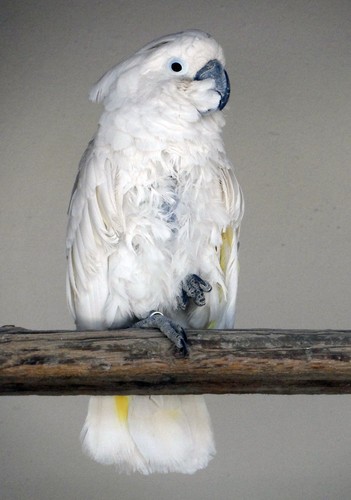
Umbrella Cockatoo
About 46 cm (18 in) long
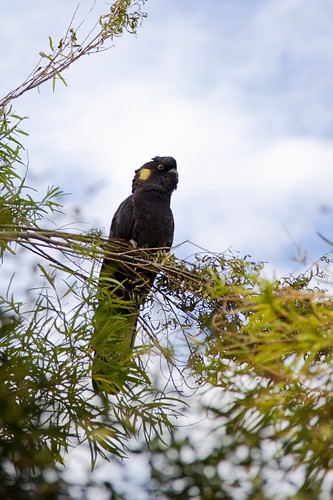
Yellow-tailed Black Cockatoo
55-65 cm long; wingspan up to about 130 cm
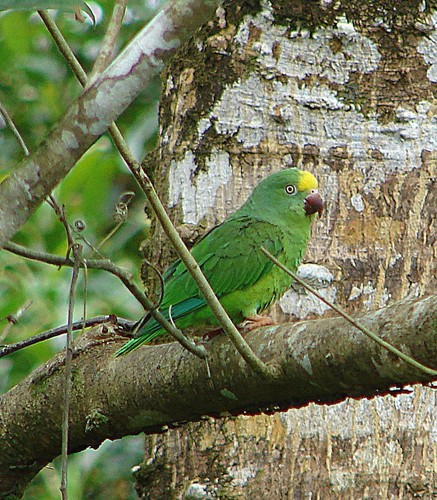
Yellow-crowned Amazon
About 35-38 cm (14-15 in) long
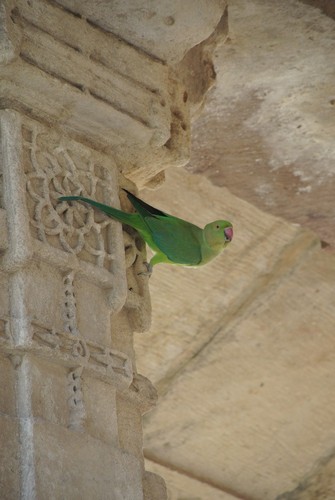
Rose-ringed Parakeet
40 cm (16 in) long including long tail
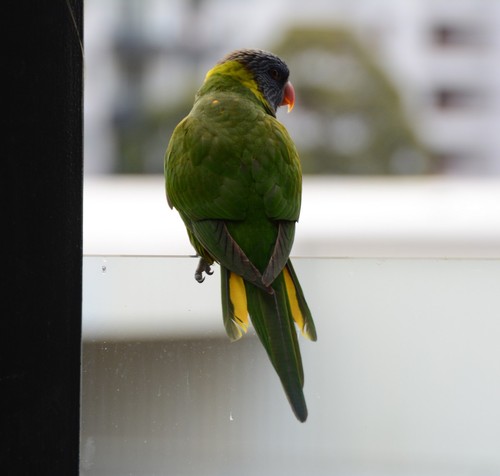
Rainbow Lorikeet
25-30 cm (10-12 in) long
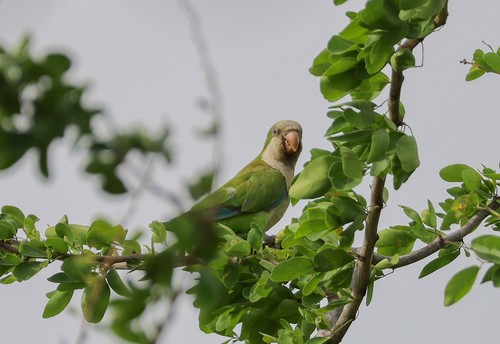
Quaker Parrot
28-31 cm (11-12 in) long
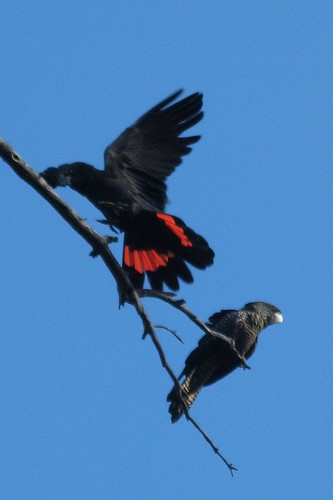
Red-tailed Black Cockatoo
55-65 cm long
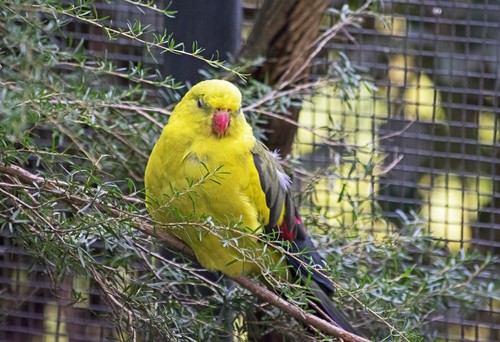
Regent Parrot
37-42 cm (15-17 in) long, including a long tail
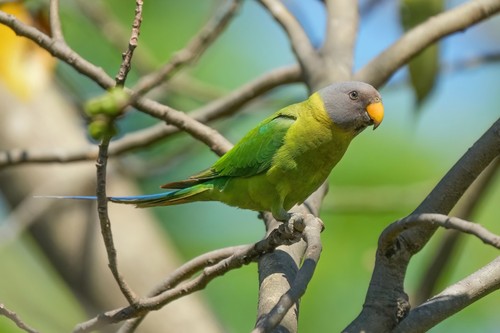
Plum-headed Parakeet
33 cm (13 in) long including tail
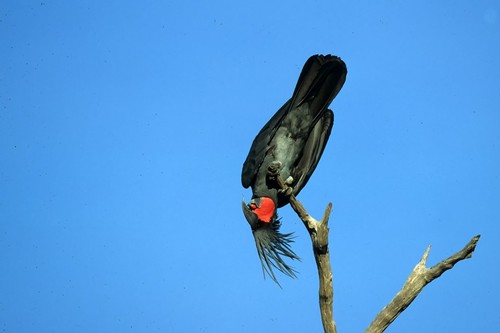
Palm Cockatoo
55–65 cm long; wingspan around 85 cm