
Eclectus Parrot
Eclectus roratus
A large rainforest parrot famous for extreme sexual dimorphism, with males bright green and females vivid red and purple.
- Size
- 35-42 cm (14-16.5 in) long
- Habitat
- Lowland and hill rainforest, forest edge, and coconut plantations
- Type
- parrot
Spotted a bird like this?
Identify any bird from a photo, free.
Overview
The Eclectus Parrot is a large, robust parrot of the rainforests of New Guinea, nearby islands, and northeastern Australia. It is best known for one of the most extreme cases of sexual dimorphism in the parrot family, so much so that males and females were originally described as separate species.
Appearance
Males are bright emerald green overall with a yellow-tinged bill, red flanks and underwing coverts, and blue in the wing. Females are strikingly different, showing deep red plumage on the head and body with a rich purple-blue breast and belly, and a black bill. Both sexes have a stocky build, a relatively short square tail, and a heavy bill.
General Impression
Eclectus Parrots are often seen flying above the forest canopy in pairs or small groups, their bright colors and slow, deliberate wingbeats making them conspicuous even at a distance.
How to identify it
Key Field Marks
- Large, stocky parrot with a short, square tail
- Males: bright green body, red underwing/flank patches, orange-yellow upper mandible
- Females: red head and body with purple-blue underparts, black bill
- Slow, heavy, characteristic flight above the canopy
Similar Species
Because males and females look so different, they are sometimes mistaken for entirely different species:
- Male Eclectus Parrots can suggest other large green parrots, but the red flank patches and orange bill are distinctive.
- Female Eclectus Parrots can superficially resemble large red lories, but the Eclectus is bulkier with a heavier black bill and purple-blue belly.
No other parrot in its range combines this degree of green-versus-red/purple sexual dimorphism.
Habitat & range
Range
Found across New Guinea and many surrounding islands, the Moluccas, the Solomon Islands, and Sumba, with an isolated population (the subspecies macgillivrayi) in Cape York Peninsula, northeastern Australia.
Habitat
Inhabits lowland and hill rainforest, forest edges, and adjacent coconut plantations, generally below about 1,000 meters elevation, though it occurs higher in some areas.
Movements
Largely sedentary, though birds may make local movements to track fruiting trees.
Behavior & voice
Social Behavior
Usually seen in pairs or small flocks, often gathering in larger numbers at communal roost or feeding trees, particularly figs.
Voice
Gives loud, harsh, far-carrying screeches and squawks, especially in flight and around roosting sites at dusk and dawn.
Feeding
Feeds mainly on fruit, unripe seeds, buds, nectar, and blossoms gathered from the forest canopy, using its strong bill to crack open tough seed pods.
Nesting and Breeding
Nests in large, deep tree cavities, which are a limited and valuable resource, leading to intense competition among females for nest sites. A female may remain inside the nest cavity for months, being fed by the male and, unusually, sometimes by other males as well. Clutches typically contain two eggs, incubated mainly by the female.
Frequently asked questions
Why do male and female Eclectus Parrots look so different?
The species shows extreme sexual dimorphism: males are bright green while females are red and purple-blue, an adaptation linked to their nesting ecology and mate competition.
Where do Eclectus Parrots live in the wild?
They inhabit lowland rainforest across New Guinea, nearby islands, the Solomon Islands, the Moluccas, and a small area of northeastern Australia.
What does an Eclectus Parrot eat?
Mainly fruit, seeds, buds, nectar, and blossoms found in the rainforest canopy.
How big is an Eclectus Parrot?
It is a large parrot, typically 35 to 42 cm (14 to 16.5 inches) long.
What does an Eclectus Parrot sound like?
It gives loud, harsh, far-carrying screeches, especially in flight and near roost sites.
Eclectus Parrot guides
In-depth guides for identifying, finding, and understanding Eclectus Parrot.
Other birds you may enjoy
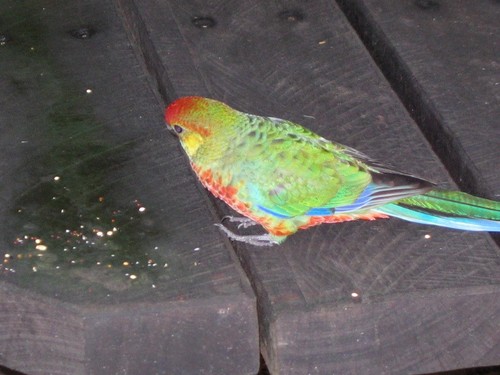
Western Rosella
25-30 cm (10-12 in) long
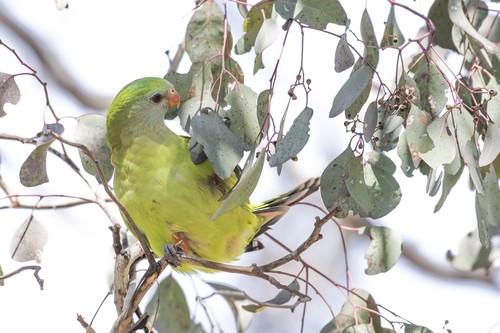
Superb Parrot
About 40 cm (16 in) long including a long tail
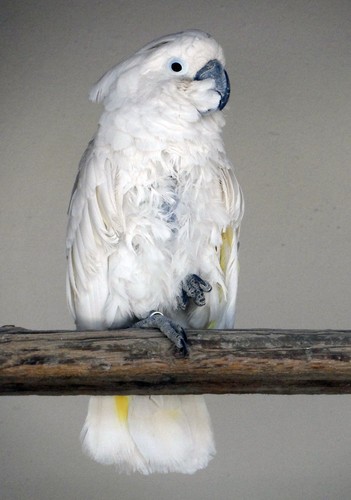
Umbrella Cockatoo
About 46 cm (18 in) long
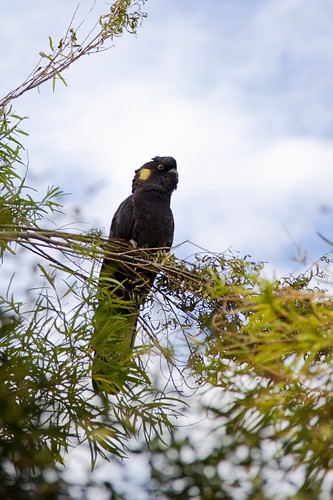
Yellow-tailed Black Cockatoo
55-65 cm long; wingspan up to about 130 cm
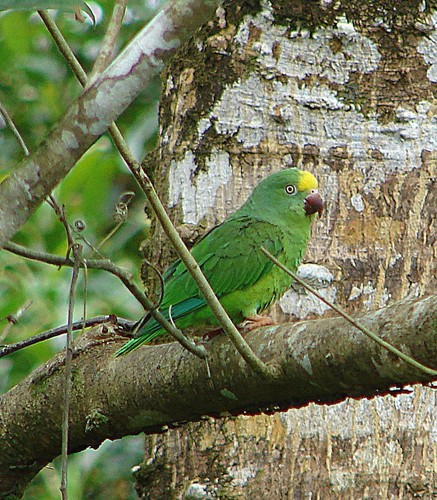
Yellow-crowned Amazon
About 35-38 cm (14-15 in) long
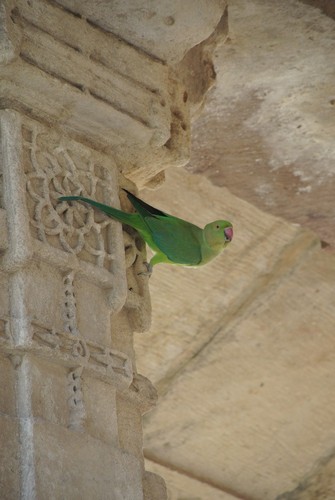
Rose-ringed Parakeet
40 cm (16 in) long including long tail
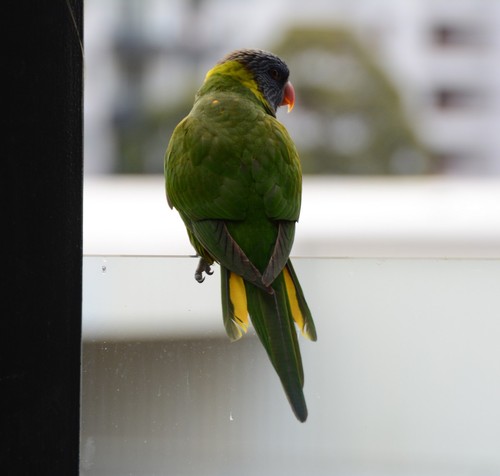
Rainbow Lorikeet
25-30 cm (10-12 in) long
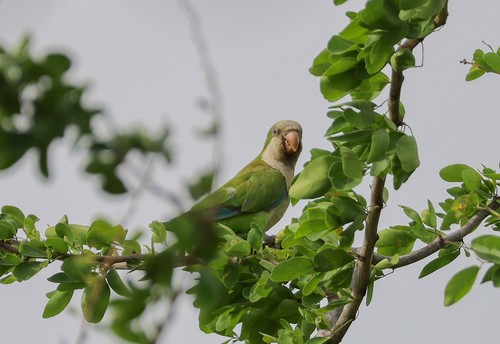
Quaker Parrot
28-31 cm (11-12 in) long
Red-tailed Black Cockatoo
55-65 cm long
Regent Parrot
37-42 cm (15-17 in) long, including a long tail
Plum-headed Parakeet
33 cm (13 in) long including tail
Palm Cockatoo
55–65 cm long; wingspan around 85 cm