
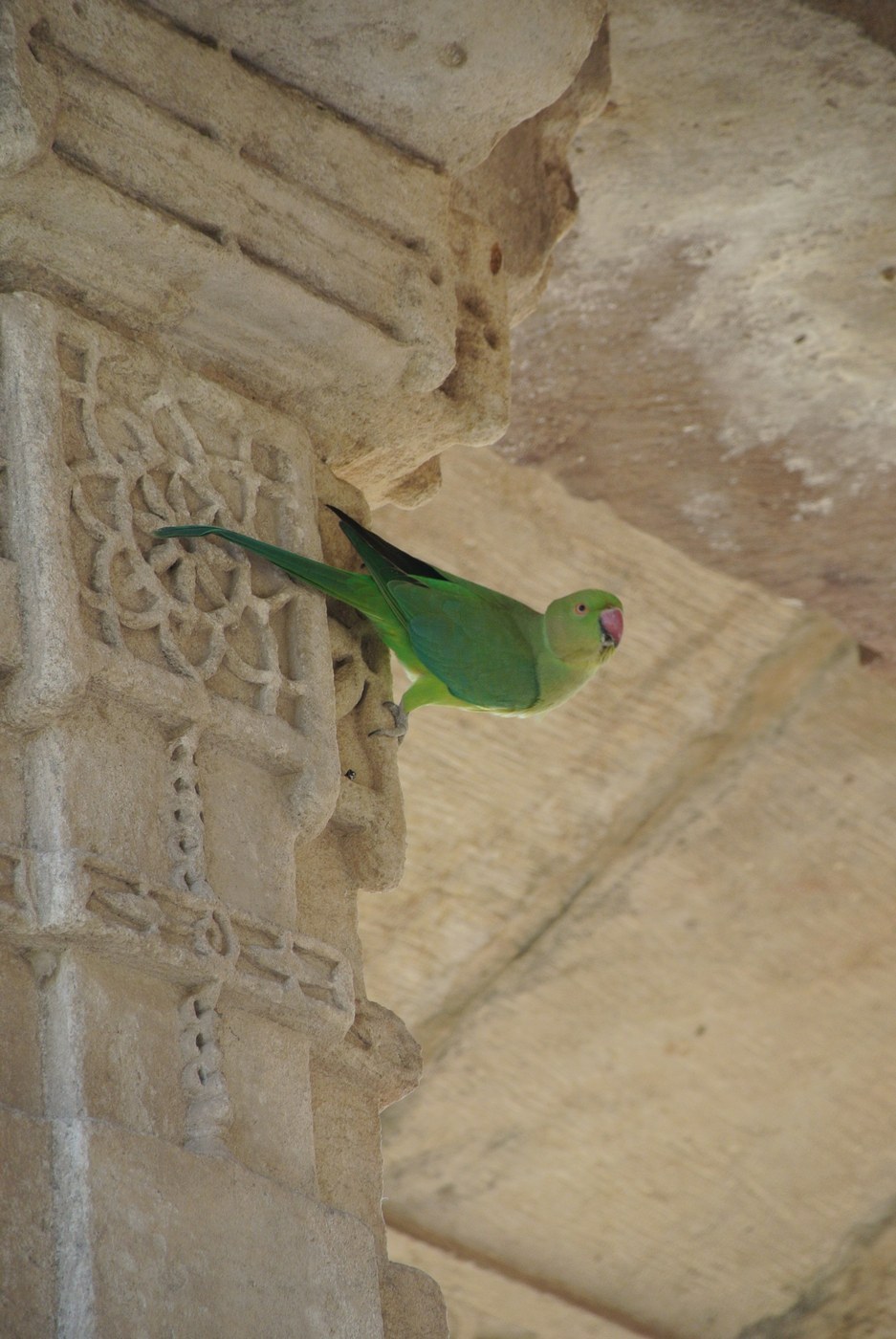
Rose-ringed Parakeet
Psittacula krameri
A slender bright-green parakeet with a long pointed tail; males sport a narrow black-and-pink neck ring.
- Size
- 40 cm (16 in) long including long tail
- Habitat
- open woodland, farmland, gardens, and urban parks across Africa, South Asia, and introduced ranges worldwide
- Type
- parrot
Spotted a bird like this?
Identify any bird from a photo, free.
Overview
The Rose-ringed Parakeet is a slim, medium-sized parrot with bright grass-green plumage, a long pointed tail, and a stout red bill. Adult males develop a distinctive narrow black stripe across the lower face and chin that continues as a thin rose-pink ring around the back of the neck, a feature that gives the species its common name; females and immature birds lack this ring and appear uniformly green-headed.
Native to a broad swath of Africa and South Asia, this adaptable parakeet has also established large feral populations in cities across Europe, the Middle East, and elsewhere, thriving alongside people in parks and gardens.
How to identify it
Key field marks
- Slender bright green body with a long, graduated tail
- Red bill; pale eye-ring
- Adult male: thin black chin stripe extending into a rose-pink neck ring
- Female and juvenile: plain green head and neck, no ring
- Fast, direct flight with rapid wingbeats, often in noisy flocks
Similar species
The Alexandrine Parakeet is noticeably larger with a heavier red bill and a maroon shoulder patch. The Plum-headed Parakeet male has a plum-purple head rather than a plain green one. Female Rose-ringed and Alexandrine Parakeets can be separated mainly by size and the presence/absence of the shoulder patch.
Habitat & range
The species is native to a broad band across sub-Saharan Africa and the Indian subcontinent, and has become established as a feral breeding species in numerous cities worldwide, including across Europe, the Middle East, and parts of North America and East Asia, likely originating from escaped or released cage birds. It occupies open woodland, farmland, orchards, gardens, and urban parks, generally avoiding dense forest.
Most populations are resident, gathering in large communal roosts, sometimes numbering in the thousands, especially in urban areas.
Behavior & voice
Voice
A loud, screeching "kee-ak" or "kee-kee-kee" call, often given in flight or before large roosting flocks settle for the night, making the species highly conspicuous even when not visible.
Feeding
Rose-ringed Parakeets feed on seeds, grain, fruit, nuts, buds, and blossoms, and can become significant agricultural pests in orchards and grain fields due to their large flock sizes and adaptability.
Nesting and breeding
They nest in tree cavities, sometimes taking over old woodpecker holes or building crevices in urban areas, and will compete aggressively with native cavity-nesting species for these sites. Clutches typically number 3-4 eggs, incubated by the female, with both parents helping feed the chicks.
Frequently asked questions
How do you tell a male Rose-ringed Parakeet from a female?
Adult males show a thin black chin stripe that becomes a rose-pink ring around the neck; females and young birds have a plain green head and neck without this ring.
Why are Rose-ringed Parakeets found in cities far from their native range?
Escaped or released cage birds have established large, self-sustaining feral populations in many cities worldwide, where the adaptable species thrives in parks and gardens.
What is the difference between a Rose-ringed and an Alexandrine Parakeet?
The Alexandrine Parakeet is considerably larger and has a maroon shoulder patch that Rose-ringed Parakeets lack.
What do Rose-ringed Parakeets eat?
Seeds, grain, fruit, nuts, and blossoms, and they can raid orchards and crops in large flocks.
Rose-ringed Parakeet guides
In-depth guides for identifying, finding, and understanding Rose-ringed Parakeet.
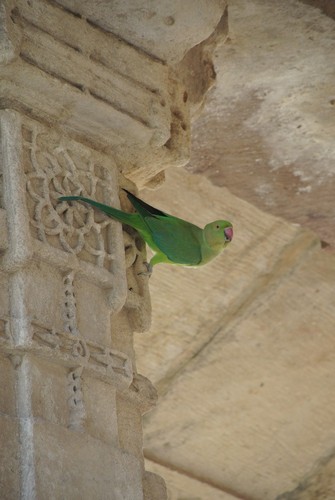
Rose-ringed Parakeet identified by the community
Real birds identified with Bird Identifier.
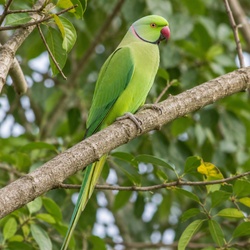
Other birds you may enjoy
Eclectus Parrot
35-42 cm (14-16.5 in) long
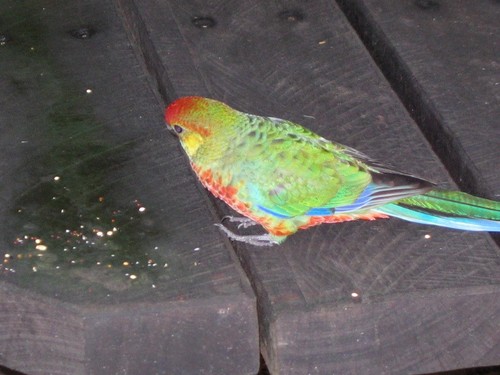
Western Rosella
25-30 cm (10-12 in) long
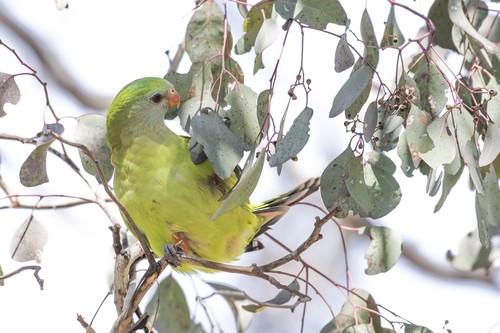
Superb Parrot
About 40 cm (16 in) long including a long tail
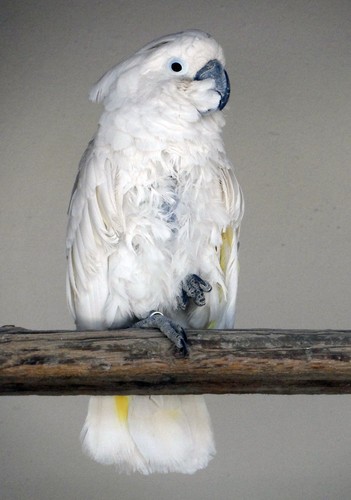
Umbrella Cockatoo
About 46 cm (18 in) long
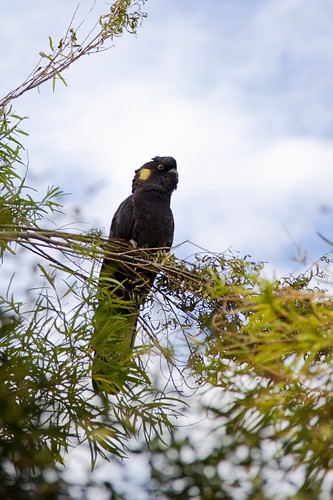
Yellow-tailed Black Cockatoo
55-65 cm long; wingspan up to about 130 cm
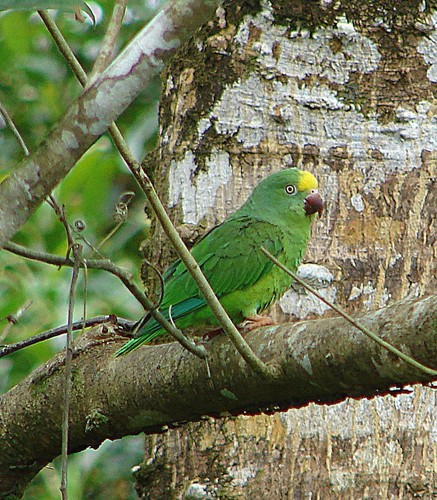
Yellow-crowned Amazon
About 35-38 cm (14-15 in) long
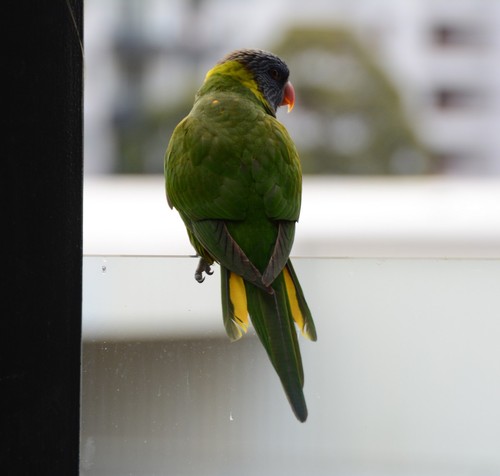
Rainbow Lorikeet
25-30 cm (10-12 in) long
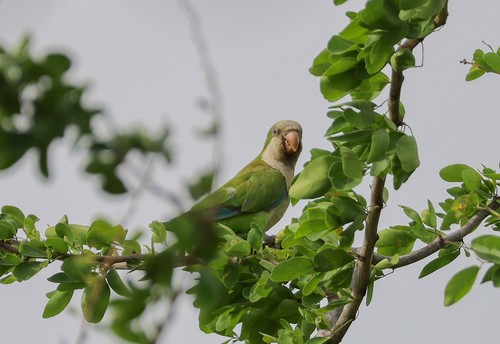
Quaker Parrot
28-31 cm (11-12 in) long
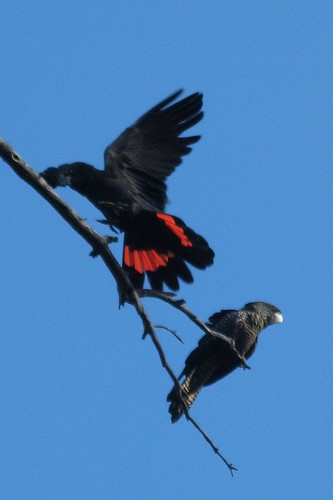
Red-tailed Black Cockatoo
55-65 cm long
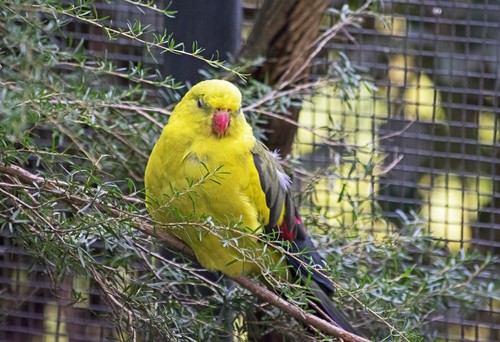
Regent Parrot
37-42 cm (15-17 in) long, including a long tail
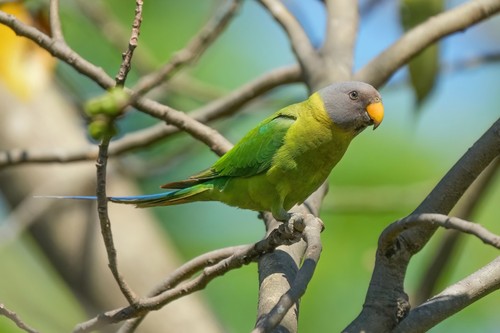
Plum-headed Parakeet
33 cm (13 in) long including tail
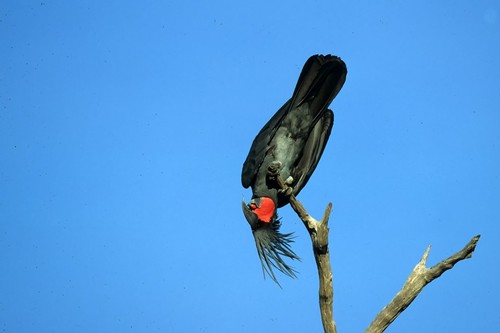
Palm Cockatoo
55–65 cm long; wingspan around 85 cm