
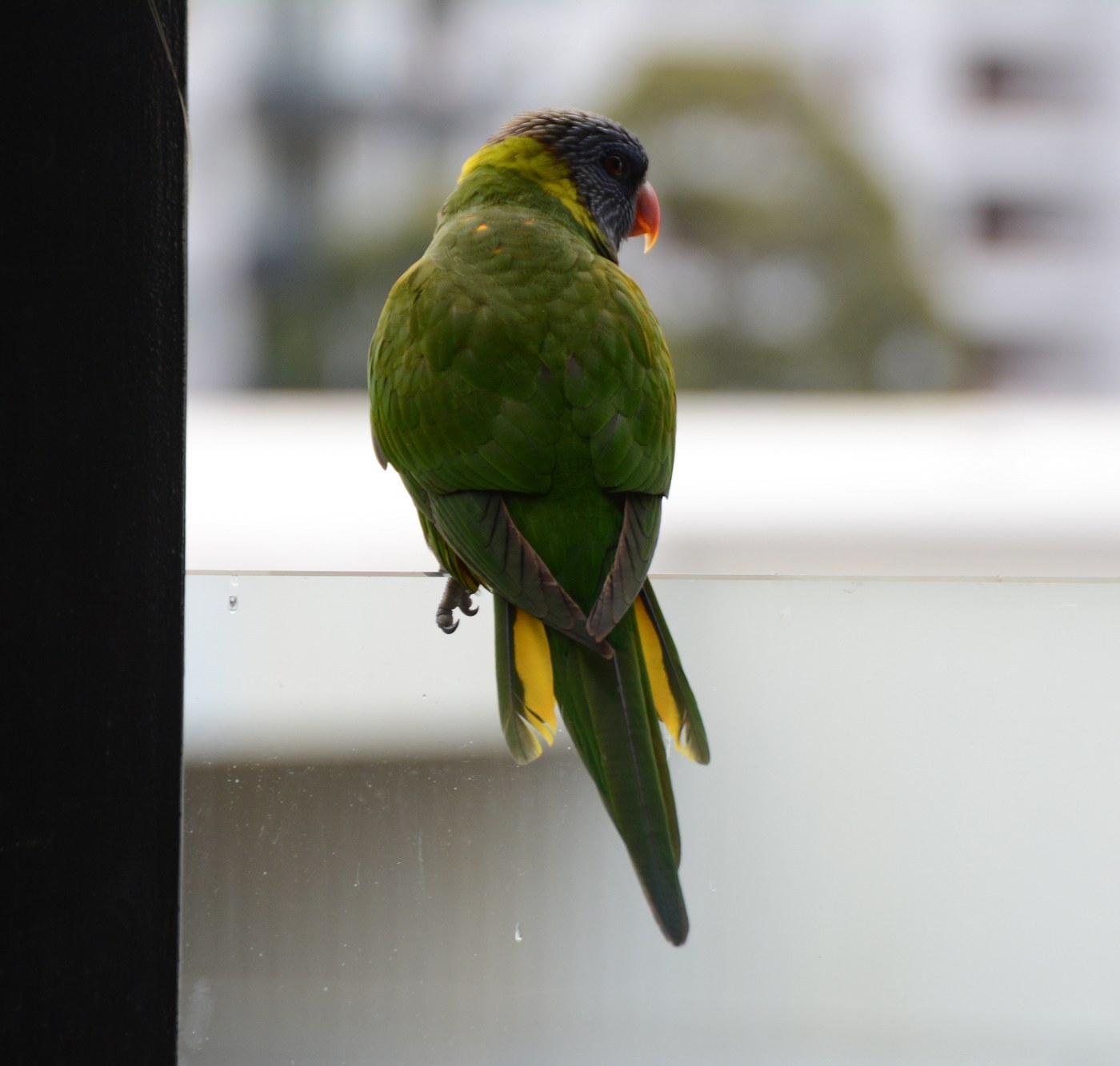
Rainbow Lorikeet
Trichoglossus moluccanus
A brilliantly multicolored Australian parrot with a deep blue head, green wings, and an orange breast band, common in gardens and flowering trees.
- Size
- 25-30 cm (10-12 in) long
- Habitat
- Rainforest, woodland, coastal scrub, and urban parks and gardens
- Type
- parrot
Spotted a bird like this?
Identify any bird from a photo, free.
Overview
The Rainbow Lorikeet is one of Australia's most familiar and colorful parrots, easily recognized by its striking combination of colors.
Appearance
The head is a rich deep blue-violet, the nape and back are bright green, and the breast shows an orange-yellow band with dark blue-black barring extending onto the belly. The bill is bright red-orange and the eyes are red. Green wings and tail complete the vivid plumage. Sexes look alike.
How to identify it
Key field marks
- Deep blue head contrasting with a green back and wings
- Orange-yellow breast band with dark barring on the belly
- Bright red-orange bill
- Fast, direct flight often in noisy flocks
Similar species
The Scaly-breasted Lorikeet is green overall with yellow streaking on the breast and lacks the blue head. The Musk Lorikeet is smaller, mostly green with a red forehead and cheek patch rather than a fully blue head. The combination of blue head and orange breast band makes the Rainbow Lorikeet distinctive within its range.
Habitat & range
Range
Native to eastern and northern coastal Australia, from Cape York south to South Australia, the Rainbow Lorikeet has also been introduced to Perth, Western Australia, and to Auckland, New Zealand, among other locations.
Habitat
It occupies rainforest, eucalypt woodland, coastal scrub, mangroves, and heavily uses urban parks and gardens where flowering plants provide reliable food.
Migration
Largely sedentary, though flocks are nomadic locally, tracking the flowering of eucalypts and other nectar-producing trees.
Behavior & voice
Behavior
Rainbow Lorikeets are gregarious, forming large, noisy flocks that gather at flowering trees and communal evening roosts, sometimes numbering in the thousands.
Voice
Calls are loud, sharp screeches and chattering notes, given constantly in flight and while feeding.
Feeding
They feed acrobatically, often hanging upside down, using a specialized brush-tipped tongue to lap up nectar and pollen; fruit and some seeds and insects supplement the diet.
Nesting and breeding
Nests are built in tree hollows, typically high up in eucalypts, with clutches of one to three eggs incubated by the female.
Frequently asked questions
Where are Rainbow Lorikeets found?
They are native to eastern and northern coastal Australia and have been introduced to areas such as Perth, Western Australia, and Auckland, New Zealand.
What do Rainbow Lorikeets eat?
Primarily nectar and pollen from flowering trees, lapped up with a specialized brush-tipped tongue, supplemented by fruit.
How do you identify a Rainbow Lorikeet?
Look for a deep blue head, green back and wings, an orange-yellow breast band with dark barring, and a bright red-orange bill.
Are Rainbow Lorikeets and Rainbow Lories the same bird?
The names are used interchangeably for this species and its close relatives; lorikeet and lory both refer to this brush-tongued nectar-feeding parrot group.
Do Rainbow Lorikeets migrate?
They are largely sedentary but move locally and nomadically in response to the flowering of food trees.
Rainbow Lorikeet guides
In-depth guides for identifying, finding, and understanding Rainbow Lorikeet.
Other birds you may enjoy
Eclectus Parrot
35-42 cm (14-16.5 in) long
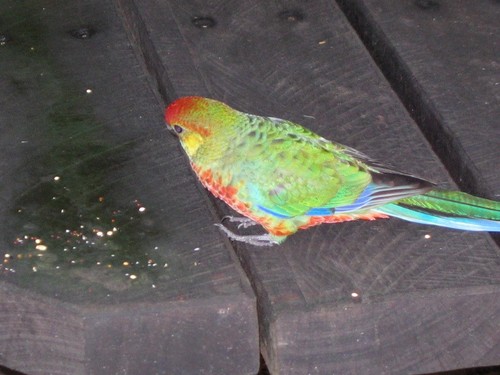
Western Rosella
25-30 cm (10-12 in) long
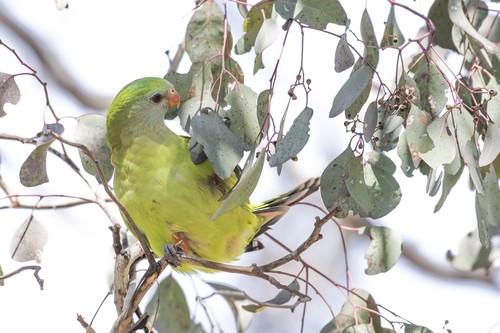
Superb Parrot
About 40 cm (16 in) long including a long tail
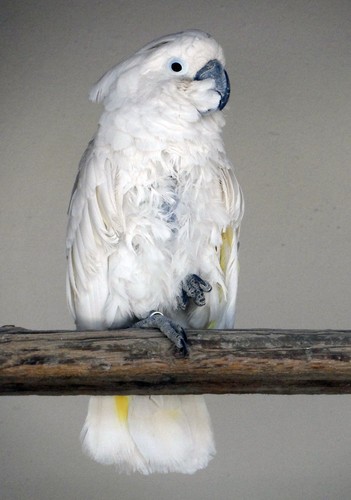
Umbrella Cockatoo
About 46 cm (18 in) long
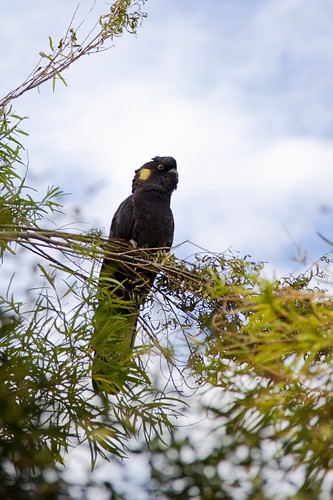
Yellow-tailed Black Cockatoo
55-65 cm long; wingspan up to about 130 cm
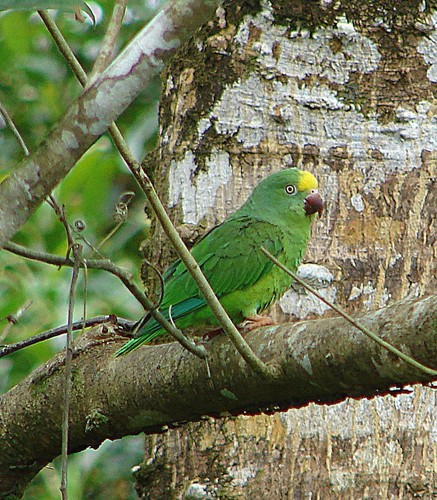
Yellow-crowned Amazon
About 35-38 cm (14-15 in) long
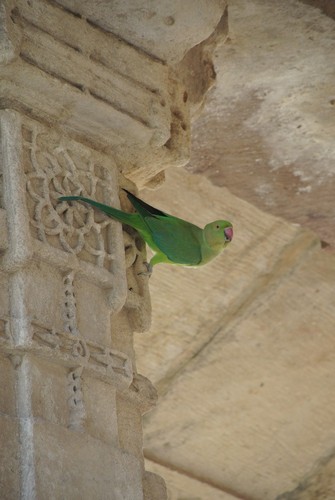
Rose-ringed Parakeet
40 cm (16 in) long including long tail
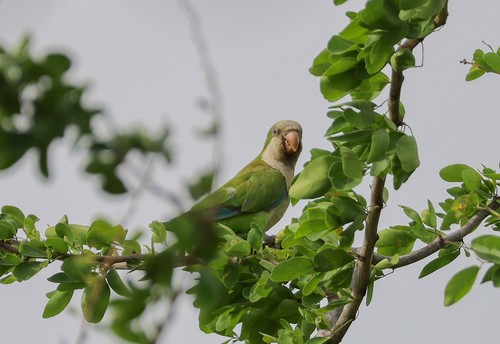
Quaker Parrot
28-31 cm (11-12 in) long
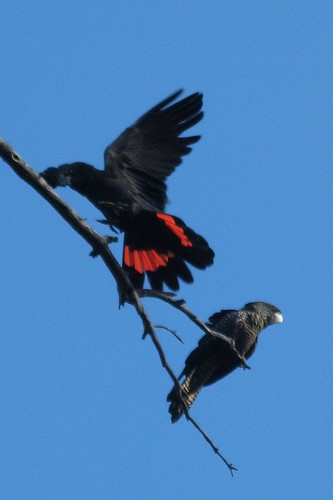
Red-tailed Black Cockatoo
55-65 cm long
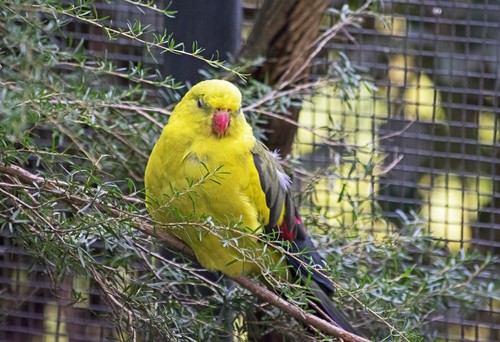
Regent Parrot
37-42 cm (15-17 in) long, including a long tail
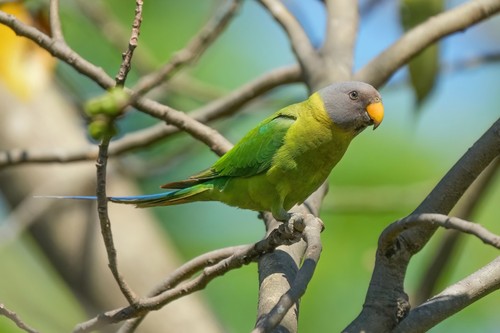
Plum-headed Parakeet
33 cm (13 in) long including tail
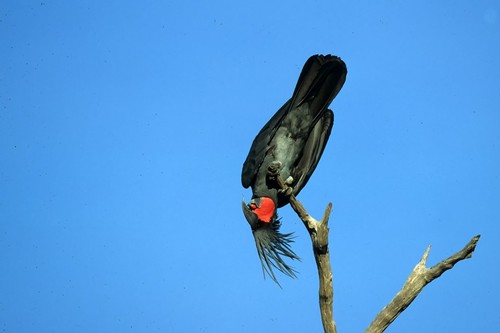
Palm Cockatoo
55–65 cm long; wingspan around 85 cm