
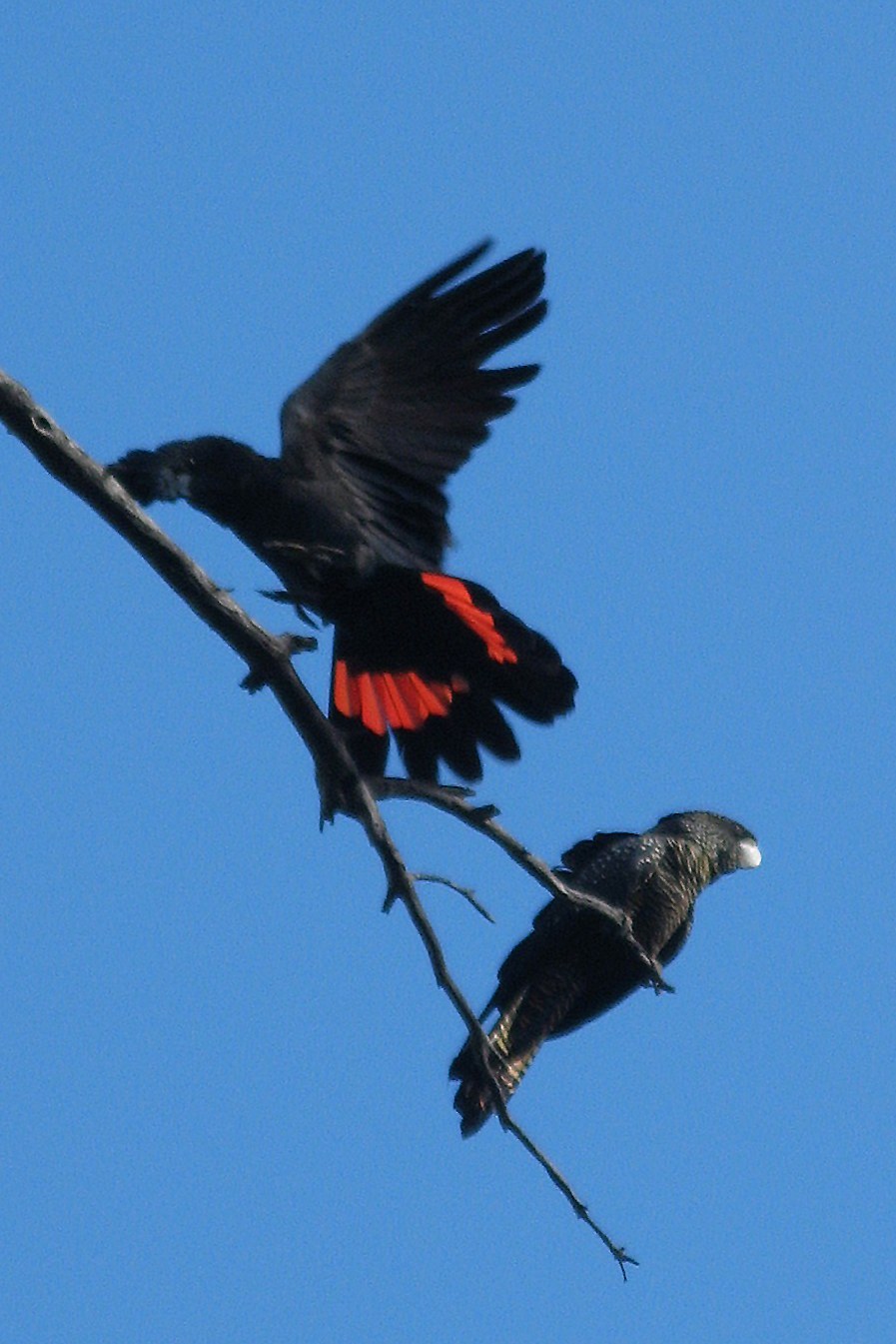
Red-tailed Black Cockatoo
Calyptorhynchus banksii
A glossy black cockatoo widespread across mainland Australia, with males showing bold red tail panels and females a spotted, orange-barred pattern.
- Size
- 55-65 cm long
- Habitat
- Eucalypt woodland, mallee, riverine forest and tropical savanna
- Type
- parrot
Spotted a bird like this?
Identify any bird from a photo, free.
Overview
The Red-tailed Black Cockatoo is a large, striking cockatoo occurring in several regional forms across Australia. Males are glossy black overall with broad red panels in the tail. Females and immature birds are duller sooty black or brown, marked with yellow-to-orange spots on the head and body and finely barred orange-yellow tail panels rather than solid red.
Five subspecies are recognized, varying somewhat in size, bill shape, and habitat preference across the bird's extensive range.
How to identify it
Key field marks
- Males: glossy black body with bold, solid red tail panels
- Females: sooty brown-black with yellow-orange spotting on the head and wing coverts, and tail panels barred (not solid) orange-yellow
- Large bill, heavier in some inland subspecies
Similar species
Female Red-tailed Black Cockatoos can be confused with female Yellow-tailed Black Cockatoos, but lack the solid yellow ear patch, instead showing scattered yellow-orange spotting over the head, and have barred (not solid yellow) tail panels.
Habitat & range
Range
Widespread across mainland Australia, with distinct subspecies ranging from the Kimberley and Top End across northern Australia, through central Australia, to southwestern Queensland, and a small, threatened population in southeastern South Australia and southwestern Victoria.
Habitat
Uses eucalypt woodland, mallee shrubland, riverine forest along watercourses, and tropical savanna, depending on the subspecies and region.
Movement
Generally sedentary or locally nomadic, tracking seasonal seed availability; some inland populations range more widely in dry periods.
Behavior & voice
Voice
Gives loud, grating screeches and a rolling "kree" contact call, often audible as flocks move between feeding and roosting sites.
Feeding
Forages in the canopy of eucalypts, casuarinas, banksias and grevilleas, using its powerful bill to crack open woody seed capsules and extract seeds.
Breeding
Nests in large hollows in mature trees, typically near water, laying one or two eggs though usually only one chick survives. Some subspecies, particularly the southeastern form, face ongoing threats from habitat loss and are conservation priorities.
Frequently asked questions
How do you tell a male from a female Red-tailed Black Cockatoo?
Males are glossy all-black with solid red tail panels, while females are duller brownish-black with yellow-orange spotting on the head and body and barred orange-yellow tail panels.
Where do Red-tailed Black Cockatoos live?
They occur widely across mainland Australia in several regional subspecies, from the tropical north to inland woodlands and a small population in the southeast.
What do Red-tailed Black Cockatoos eat?
Seeds of eucalypts, casuarinas, banksias and grevilleas, cracked open with their powerful bills.
Are all Red-tailed Black Cockatoo populations doing well?
The species overall is not threatened, but some regional subspecies, notably the southeastern population, are of significant conservation concern due to habitat loss.
Red-tailed Black Cockatoo guides
In-depth guides for identifying, finding, and understanding Red-tailed Black Cockatoo.
Other birds you may enjoy
Eclectus Parrot
35-42 cm (14-16.5 in) long
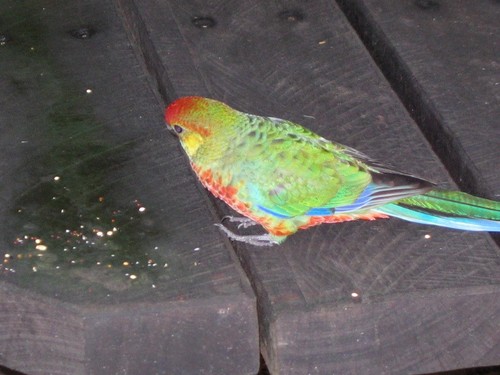
Western Rosella
25-30 cm (10-12 in) long
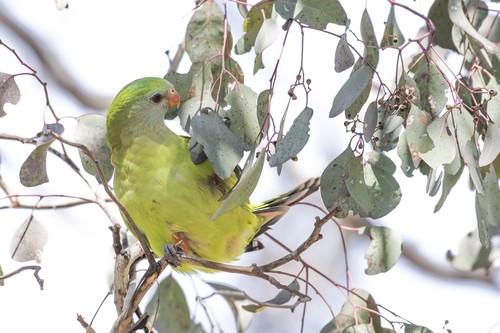
Superb Parrot
About 40 cm (16 in) long including a long tail
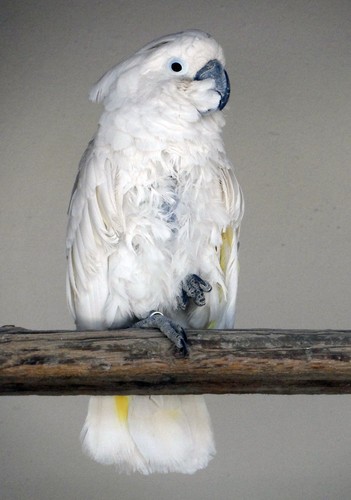
Umbrella Cockatoo
About 46 cm (18 in) long
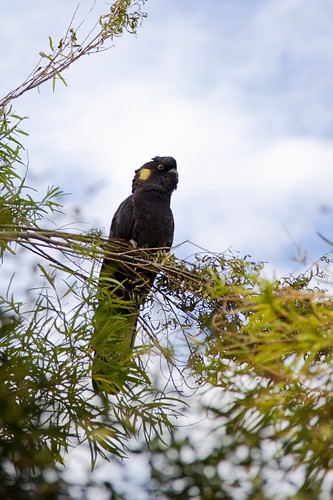
Yellow-tailed Black Cockatoo
55-65 cm long; wingspan up to about 130 cm
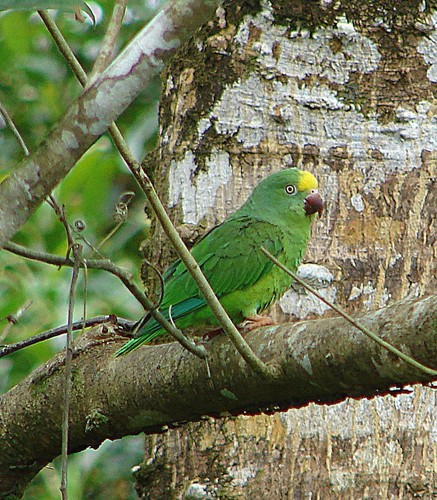
Yellow-crowned Amazon
About 35-38 cm (14-15 in) long
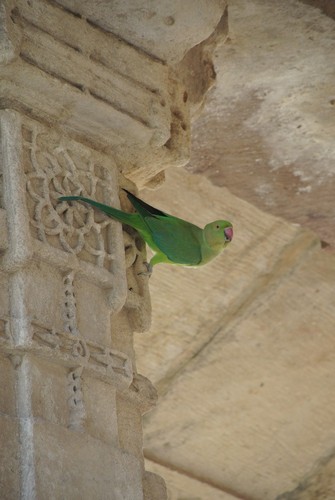
Rose-ringed Parakeet
40 cm (16 in) long including long tail
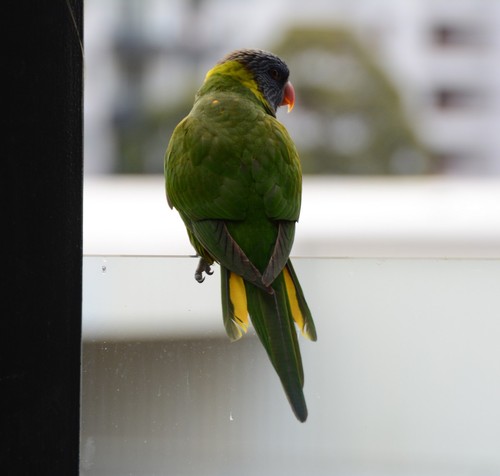
Rainbow Lorikeet
25-30 cm (10-12 in) long
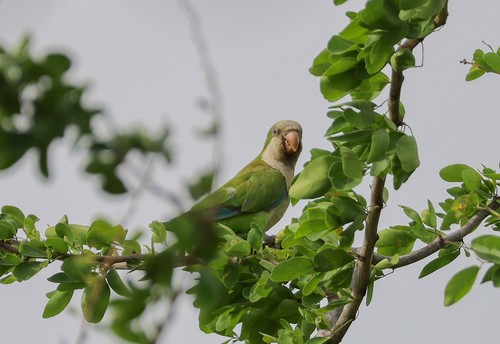
Quaker Parrot
28-31 cm (11-12 in) long
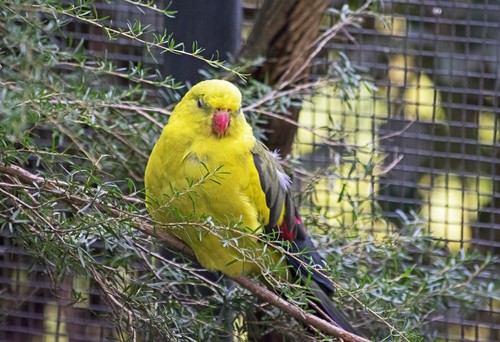
Regent Parrot
37-42 cm (15-17 in) long, including a long tail
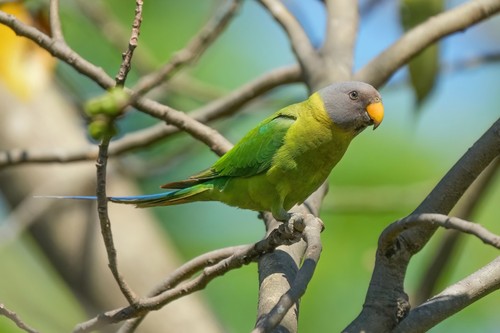
Plum-headed Parakeet
33 cm (13 in) long including tail
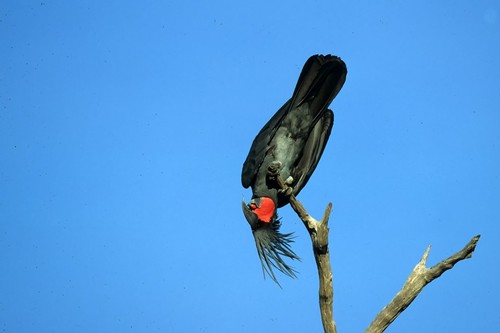
Palm Cockatoo
55–65 cm long; wingspan around 85 cm