
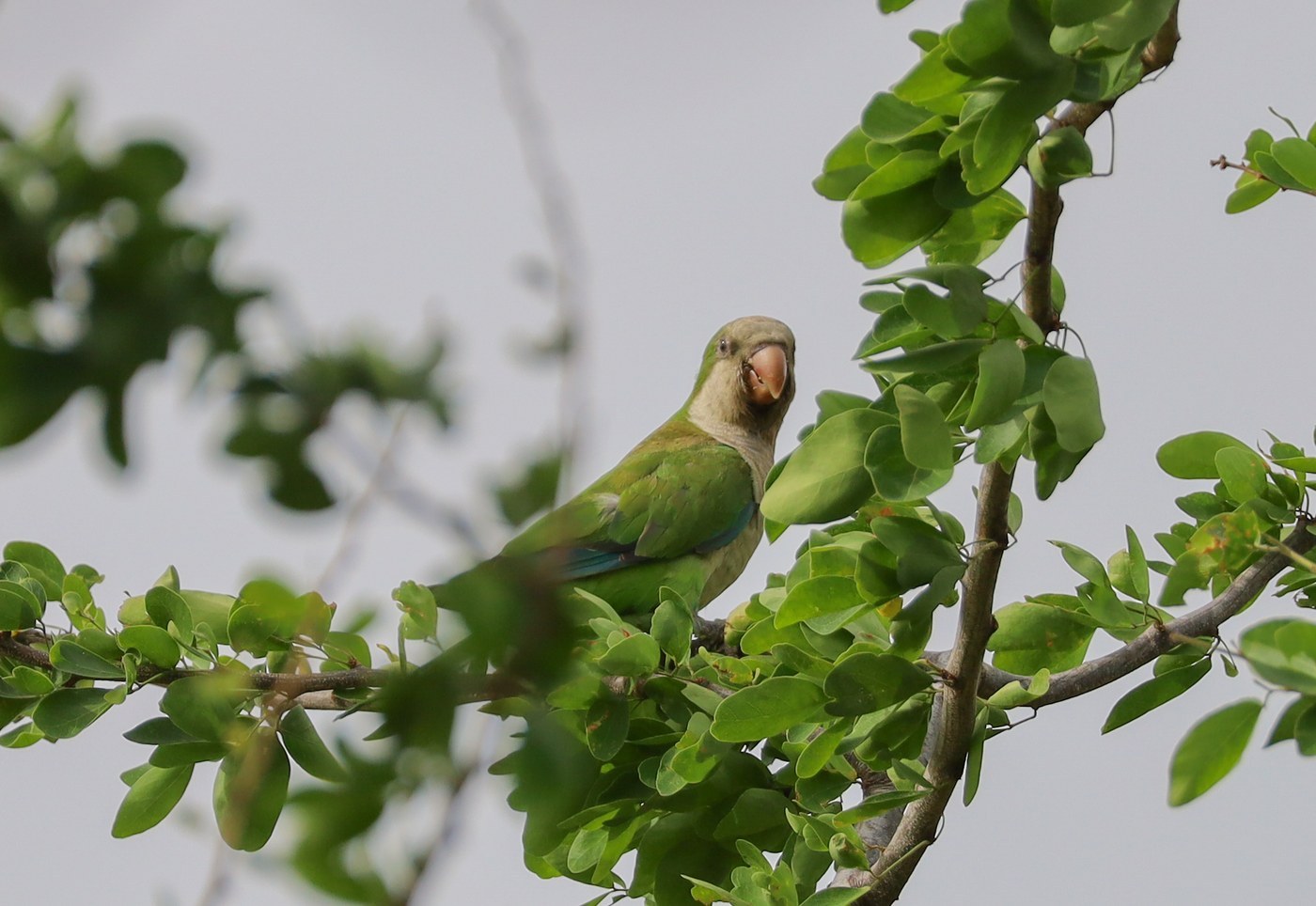
Quaker Parrot
Myiopsitta monachus
A grey-faced South American parakeet uniquely known for building large communal stick nests rather than nesting in tree cavities.
- Size
- 28-31 cm (11-12 in) long
- Habitat
- Savanna, palm groves, open woodland, and agricultural and urban areas
- Type
- parrot
Spotted a bird like this?
Identify any bird from a photo, free.
Overview
The Quaker Parrot, more formally called the Monk Parakeet, is a medium-small South American parrot notable for being the only parrot species that constructs its own stick nest rather than using a natural cavity.
Appearance
The upperparts are bright green, while the forehead, face, throat, and breast are pale grey with a faint scalloped pattern. The belly shows a yellowish-green wash, the flight feathers are tinged blue, and the bill is pale horn-colored.
How to identify it
Key field marks
- Pale grey face, throat, and breast with fine scalloping
- Bright green crown, back, and wings
- Pale horn-colored bill
- Large communal stick nests in trees or on structures, a diagnostic behavioral clue
Similar species
Most other green parakeets sharing its range, such as the Mitred Parakeet, lack the grey face and breast. The presence of an enormous, multi-chambered stick nest, often visible on utility poles or tall trees, is itself a strong identification clue since no other parrot builds this type of structure.
Habitat & range
Range
Native to temperate and subtropical South America, including Argentina, Bolivia, Brazil, Paraguay, and Uruguay.
Habitat
It occupies savanna, palm groves, open woodland, farmland, and readily adapts to urban and suburban environments with scattered trees.
Migration
Non-migratory. Because its insulated stick nests provide effective shelter, feral populations established from escaped birds have persisted in a range of temperate climates outside its native range, including parts of the United States and Europe, tolerating colder winters than most parrot species.
Behavior & voice
Behavior
Quaker Parrots are highly social, living in colonies and cooperating in the construction and maintenance of communal nest structures used year-round for roosting as well as breeding.
Voice
Calls are loud, harsh, and chattering, often given by multiple birds at once around the nest colony.
Feeding
The diet includes seeds, fruit, buds, blossoms, and agricultural grain, foraged both in trees and on the ground.
Nesting and breeding
Unlike other parrots, Quaker Parrots build large stick nests with multiple internal chambers, each typically housing a single breeding pair, within a shared colonial structure that can grow to considerable size over years of continuous use. These nests are sometimes built on artificial structures such as utility poles.
Frequently asked questions
What is unique about Quaker Parrot nests?
Quaker Parrots, also called Monk Parakeets, are the only parrot species that builds a bulky stick nest with multiple chambers rather than nesting in a tree cavity.
Where are Quaker Parrots native?
They are native to temperate South America, including Argentina, Bolivia, Brazil, Paraguay, and Uruguay.
How do you identify a Quaker Parrot?
Look for bright green upperparts combined with a pale grey, finely scalloped face, throat, and breast, and a pale bill.
Why can Quaker Parrots survive in cold climates outside their native range?
Their insulated, multi-chambered stick nests provide effective shelter, allowing feral populations to persist through winters in temperate regions such as parts of the United States and Europe.
What do Quaker Parrots eat?
Seeds, fruit, buds, blossoms, and agricultural grain.
Quaker Parrot guides
In-depth guides for identifying, finding, and understanding Quaker Parrot.
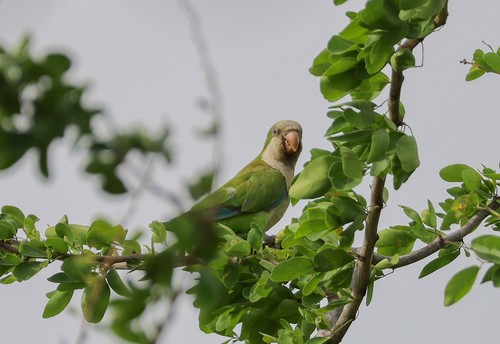
Other birds you may enjoy
Eclectus Parrot
35-42 cm (14-16.5 in) long
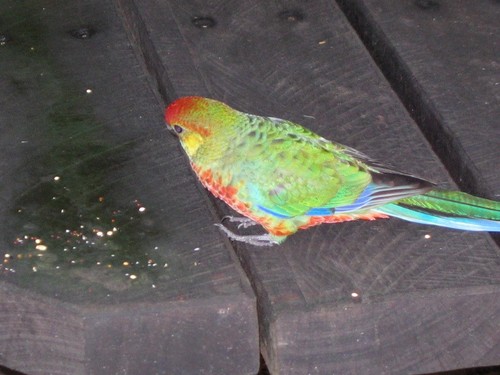
Western Rosella
25-30 cm (10-12 in) long
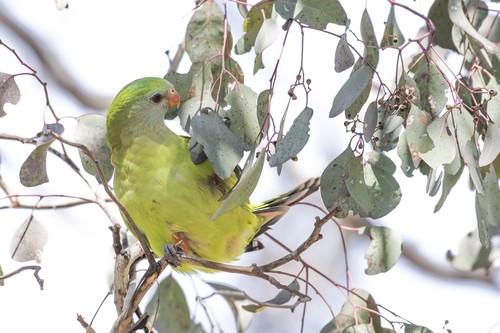
Superb Parrot
About 40 cm (16 in) long including a long tail
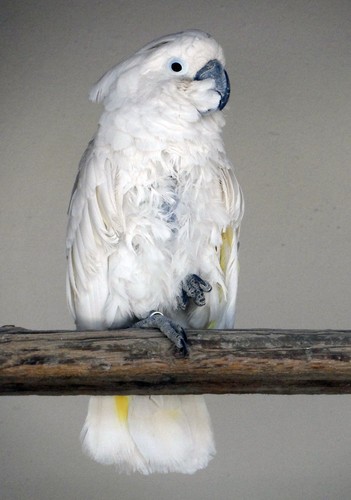
Umbrella Cockatoo
About 46 cm (18 in) long
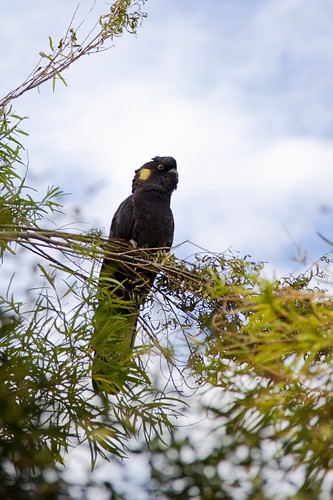
Yellow-tailed Black Cockatoo
55-65 cm long; wingspan up to about 130 cm
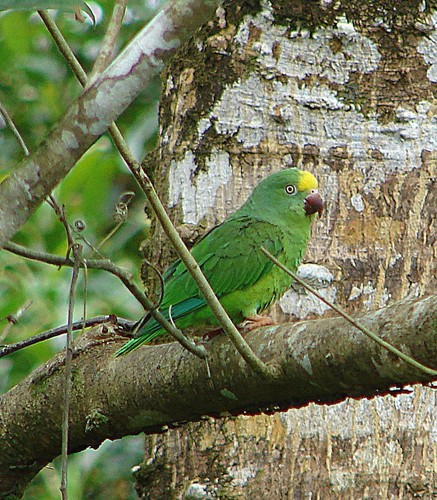
Yellow-crowned Amazon
About 35-38 cm (14-15 in) long
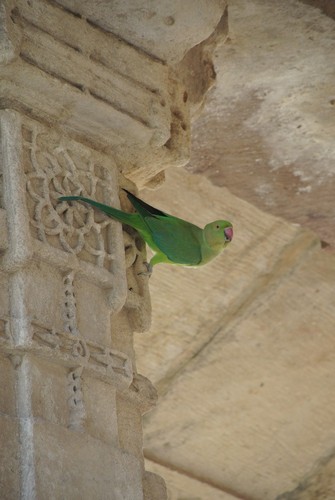
Rose-ringed Parakeet
40 cm (16 in) long including long tail
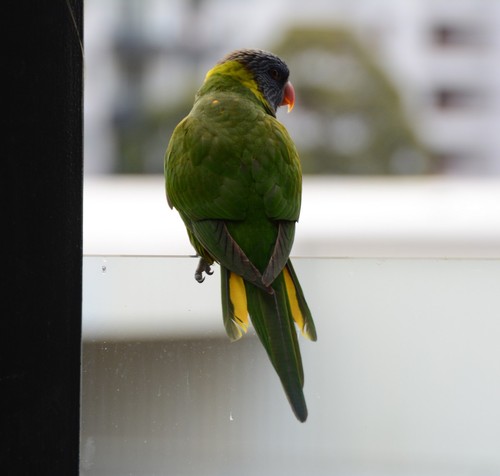
Rainbow Lorikeet
25-30 cm (10-12 in) long
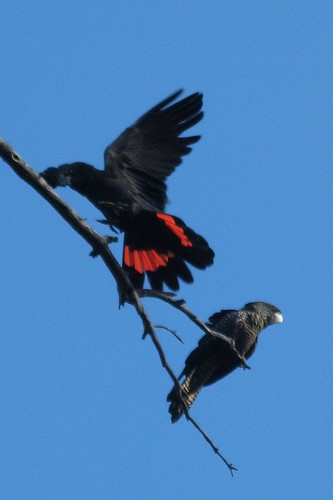
Red-tailed Black Cockatoo
55-65 cm long
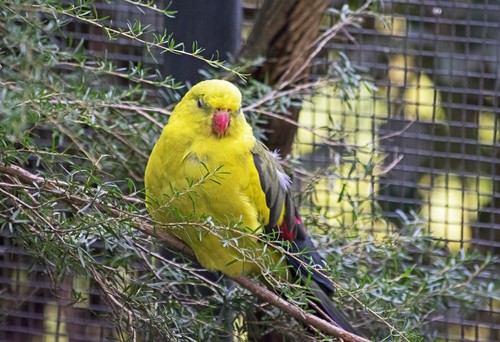
Regent Parrot
37-42 cm (15-17 in) long, including a long tail
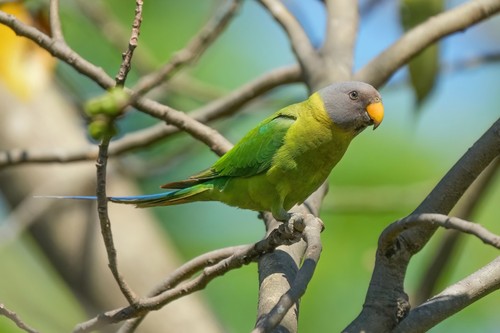
Plum-headed Parakeet
33 cm (13 in) long including tail
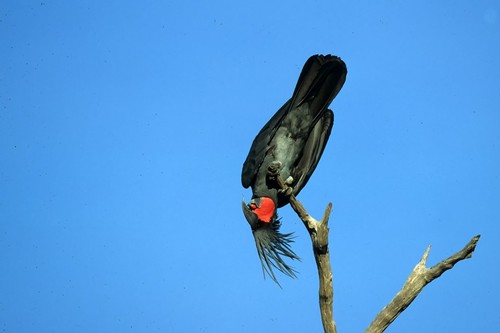
Palm Cockatoo
55–65 cm long; wingspan around 85 cm