
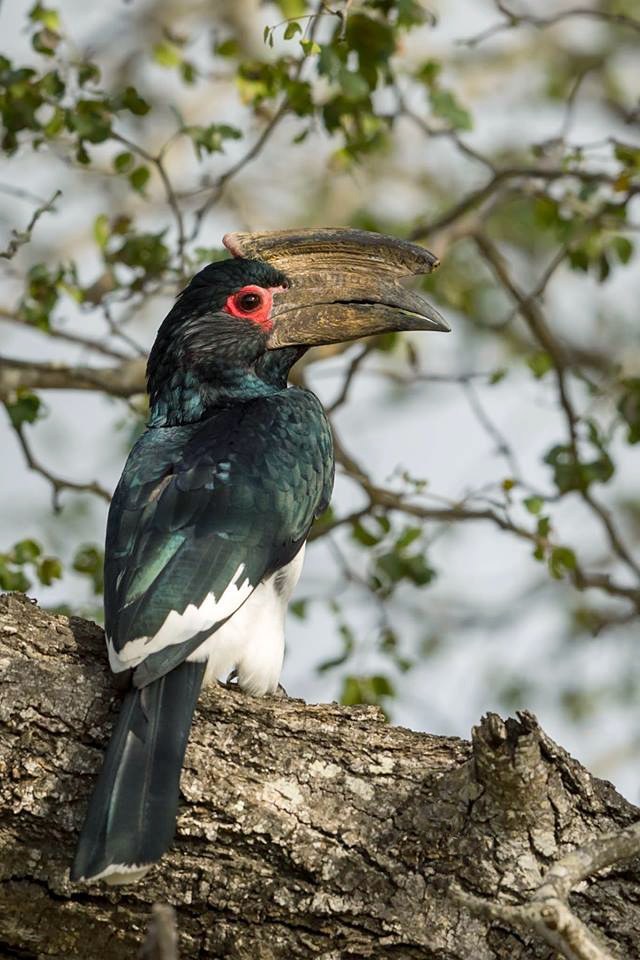
Trumpeter Hornbill
Bycanistes bucinator
A large black-and-white forest hornbill of eastern and southern Africa, named for its loud, wailing, trumpet-like calls.
- Size
- Length 58-65 cm
- Habitat
- Coastal forest, riverine forest, and woodland edges of eastern and southern Africa
- Type
- other
Spotted a bird like this?
Identify any bird from a photo, free.
Overview
The Trumpeter Hornbill is a large, forest-dwelling hornbill of eastern and southern Africa, known for its bold black-and-white plumage, casqued bill, and distinctive far-carrying calls that give the species its name.
Appearance
- Glossy black upperparts, head, and breast, with white underparts and white outer tail feathers
- Large, mostly black bill with a prominent, hollow, arched casque atop the upper mandible
- Bare pinkish-red skin around the eye
- White rump visible in flight, contrasting with the black wings and back
- Sexes are similar, though the casque tends to be somewhat larger in males
How to identify it
Key field marks
- Large size with a heavy black bill and prominent arched casque
- Black-and-white plumage with a white belly and white outer tail feathers, conspicuous in flight
- Bare reddish skin around the eye
- Loud, wailing calls often heard before the bird is seen
Similar species
Other large forest hornbills in the genus Bycanistes, such as the Silvery-cheeked Hornbill, can appear similar but typically have a larger, more strongly ridged casque and different vocalizations; range and habitat, along with casque shape, help distinguish them.
Habitat & range
Habitat
Trumpeter Hornbills inhabit coastal forest, riverine and gallery forest, and forest edges and woodland with large fruiting trees.
Range
They are found along the eastern side of southern Africa and up into East Africa, including coastal regions of South Africa, Mozambique, Zimbabwe, Malawi, Tanzania, and Kenya.
Migration
They are largely sedentary but may make local movements tracking the fruiting of key food trees such as figs.
Behavior & voice
Behavior
Trumpeter Hornbills are usually seen in pairs or small to large flocks, especially at fruiting fig trees where many individuals may gather to feed together. Their flight is heavy and undulating, with audible whooshing wingbeats.
Voice
The species is named for its loud, wailing, nasal calls that resemble a baby crying or a trumpet-like wail, often given as duets and audible over long distances in forest habitat.
Feeding
They are primarily frugivorous, favoring figs and other forest fruits, which they pluck and swallow whole, but they also take insects and small animals opportunistically, playing an important role in seed dispersal.
Nesting & breeding
Like other hornbills, the female seals herself into a natural tree cavity using mud and droppings, leaving only a narrow slit for the male to pass food through during incubation and early chick development, before breaking out later in the nesting cycle.
Frequently asked questions
Why is it called a Trumpeter Hornbill?
It is named for its loud, wailing calls that resemble a trumpet or a crying baby, which carry far through forest habitat.
What does the Trumpeter Hornbill eat?
It feeds mainly on fruit, especially figs, and also takes insects and small animals, making it an important seed disperser in forest ecosystems.
Where does the Trumpeter Hornbill live?
It inhabits coastal and riverine forest and woodland edges in eastern and southern Africa, including South Africa, Mozambique, and Tanzania.
How can you recognize a Trumpeter Hornbill?
Look for its large black-and-white body, prominent arched casque on the bill, bare reddish skin around the eye, and white outer tail feathers visible in flight.
Trumpeter Hornbill guides
In-depth guides for identifying, finding, and understanding Trumpeter Hornbill.
Other birds you may enjoy
Kiwi
35-55 cm (14-22 in) long; roughly chicken-sized
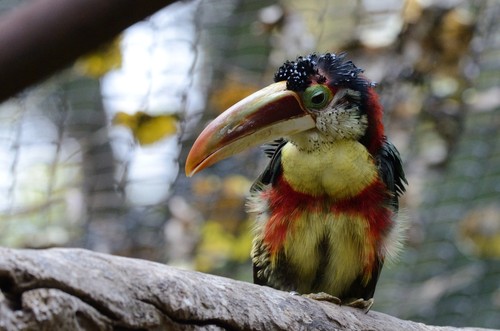
Curl-crested Aracari
41-46 cm (16-18 in) long, including a long bill and tail
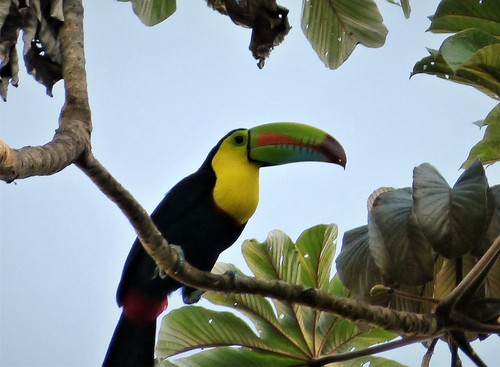
Keel-billed Toucan
42-55 cm (17-22 in) long including bill
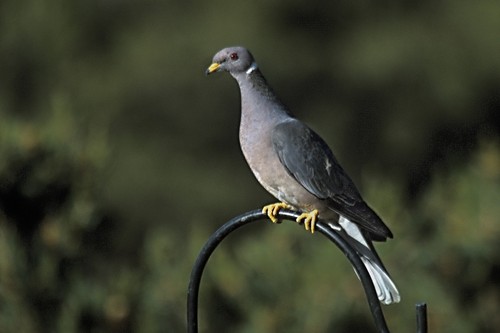
Band-tailed Pigeon
33-38 cm (13-15 in) long, wingspan about 66 cm (26 in)
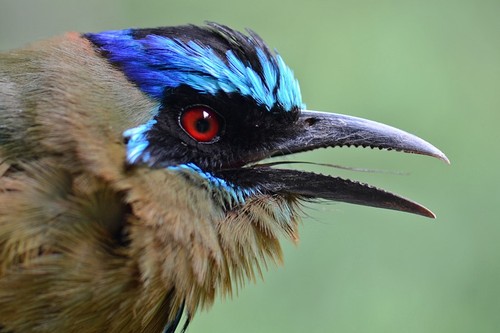
Blue-crowned Motmot
38-43 cm (15-17 in) long including tail
White-tipped Dove
27-30 cm (10.5-12 in) long, 38-43 cm wingspan
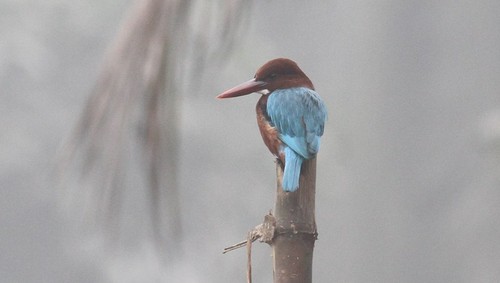
White-throated Kingfisher
27-28 cm (10.5-11 in) long
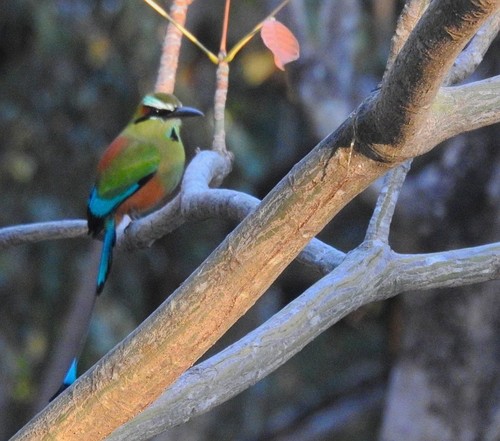
Turquoise-browed Motmot
34 cm (13 in) long including tail
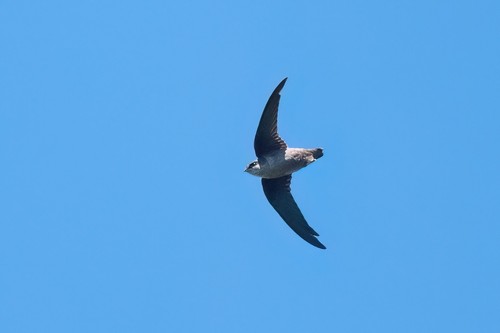
Vaux's Swift
10-12 cm (4-4.5 in) long, 27-30 cm wingspan
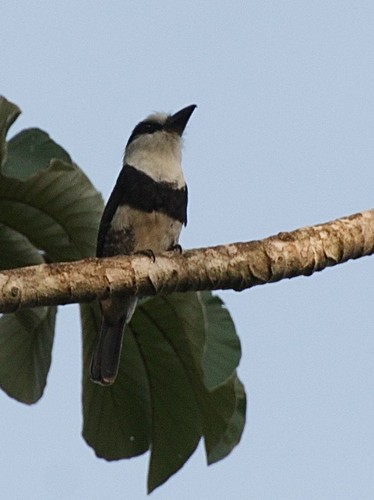
White-necked Puffbird
22-24 cm (8.5-9.5 in) long
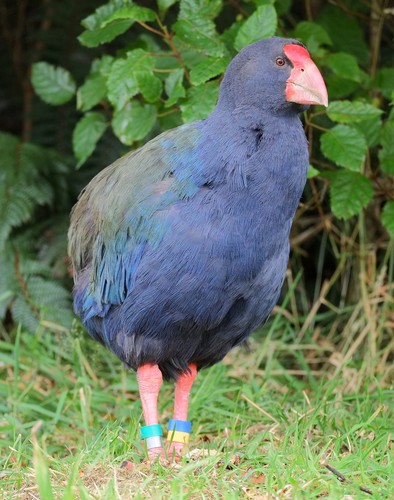
Takahe
50 cm (20 in) long, up to 3.5 kg; flightless
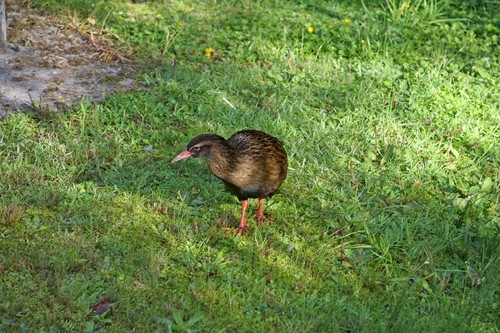
Weka
50-60 cm (20-24 in) long; flightless