
Tawny Frogmouth
Podargus strigoides
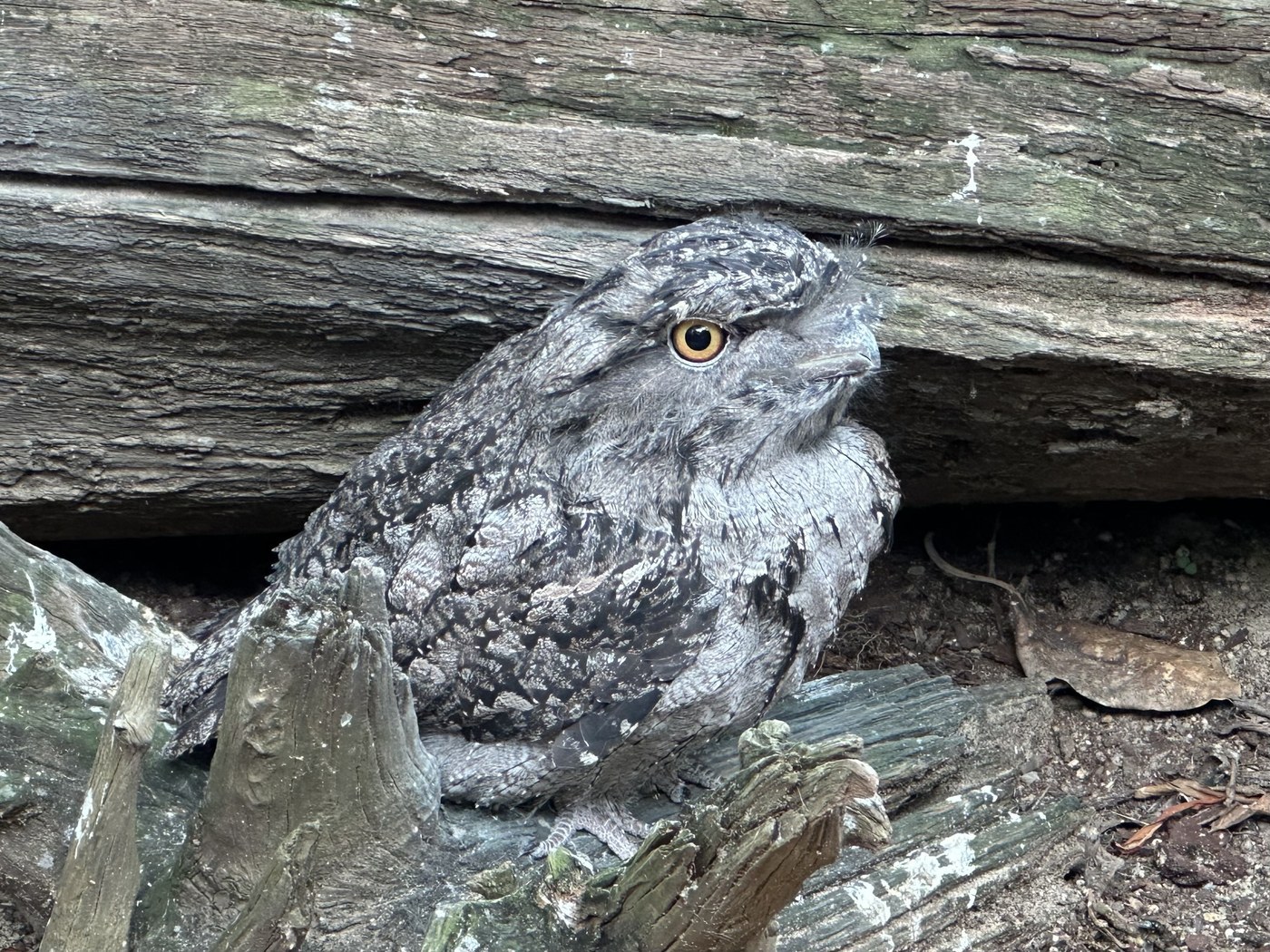
A nocturnal bird with mottled grey, brown, and white plumage that mimics broken bark, a wide gaping mouth, and large yellow eyes, often mistaken for an owl.
- Size
- 35-52 cm (14-20.5 in) long, 65-90 cm wingspan
- Habitat
- woodlands, forests, and suburban parks and gardens
- Type
- other
Spotted a bird like this?
Identify any bird from a photo, free.
Overview
The Tawny Frogmouth is a large, nocturnal bird whose intricately mottled grey, brown, black, and white plumage provides extraordinary camouflage against tree bark, allowing it to disappear almost completely while roosting motionless during the day. It has a broad, flattened head, a wide, hooked bill adapted for a huge gape, and piercing yellow eyes that give it a somewhat fierce expression.
Although frequently mistaken for an owl due to its nocturnal habits and stocky build, the Tawny Frogmouth is not an owl at all, but belongs to a separate order related to nightjars. By day, pairs or family groups often roost together on a horizontal branch, stretching their bodies and pointing their bills skyward to enhance their resemblance to a broken branch stub, a defensive posture known as "cryptic freezing."
How to identify it
Key field marks
- Intricately mottled grey, brown, black, and white plumage resembling tree bark
- Broad, flattened head with a wide, hooked bill and prominent bristles at the base
- Large, staring yellow eyes
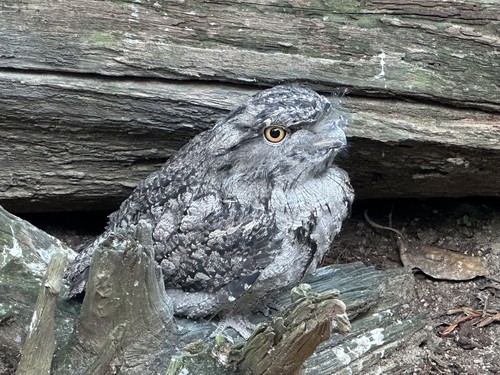
- Stiff, upright "frozen branch" roosting posture during the day
Similar species
- Owls have forward-facing round facial discs, fully feathered legs, and hunt using strongly hooked talons to seize prey, while frogmouths have a wide gaping mouth used to snap up prey and comparatively weak feet.
- Australian Owlet-nightjar is much smaller with a more slender build and different facial pattern.
Habitat & range
Habitat
Occupies a very wide range of wooded habitats, including open forest, woodland, and well-treed urban parks, gardens, and street trees.
Range
Found throughout mainland Australia and Tasmania, wherever suitable trees are present, from coastal regions to arid inland areas.
Migration
Sedentary and strongly territorial, with pairs often remaining on the same territory for many years.
Behavior & voice
Behavior
Roosts motionless on a branch during the day, relying on camouflage and a frozen, branch-like posture to avoid detection; becomes active at dusk, hunting mainly by sitting and waiting before pouncing on prey from a perch, or occasionally hawking insects in flight.
Voice
A low, soft, repetitive "oom-oom-oom" or grunting call, quite different from the hoots of true owls, along with hissing and bill-clicking when threatened.
Feeding
Catches large insects, spiders, worms, and occasionally small mammals, reptiles, and frogs, typically by pouncing from a low perch onto prey on the ground.
Nesting
Builds a loose, flimsy platform nest of sticks in a horizontal tree fork, often reused across seasons; lays 1-3 white eggs, incubated by both parents.
Frequently asked questions
Is a Tawny Frogmouth an owl?
No, despite superficial similarities and nocturnal habits, it is not an owl but belongs to a separate bird order related to nightjars, and differs in bill shape, foot structure, and hunting technique.
Why does a Tawny Frogmouth freeze with its bill pointed upward?
This rigid, branch-like posture combined with its bark-like mottled plumage helps it blend in almost invisibly with a tree branch when roosting during the day, avoiding detection by predators.
What does a Tawny Frogmouth eat?
Mainly large insects, spiders, and worms, and occasionally small mammals, reptiles, and frogs, typically caught by pouncing from a perch.
Where can you find a Tawny Frogmouth?
Throughout mainland Australia and Tasmania in forests, woodlands, and well-treed parks and gardens, though its camouflage often makes it hard to spot.
Tawny Frogmouth guides
In-depth guides for identifying, finding, and understanding Tawny Frogmouth.
Other birds you may enjoy
Kiwi
35-55 cm (14-22 in) long; roughly chicken-sized
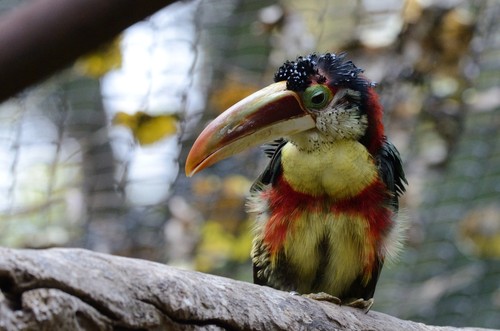
Curl-crested Aracari
41-46 cm (16-18 in) long, including a long bill and tail
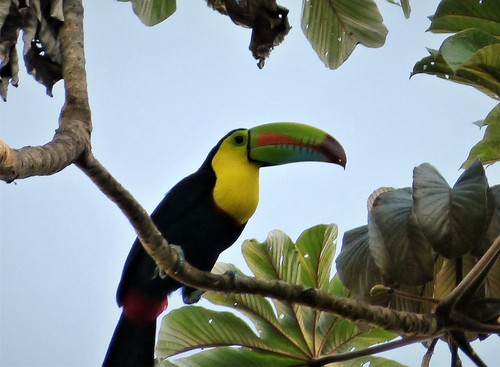
Keel-billed Toucan
42-55 cm (17-22 in) long including bill
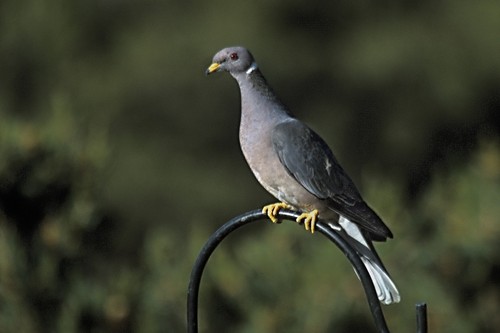
Band-tailed Pigeon
33-38 cm (13-15 in) long, wingspan about 66 cm (26 in)
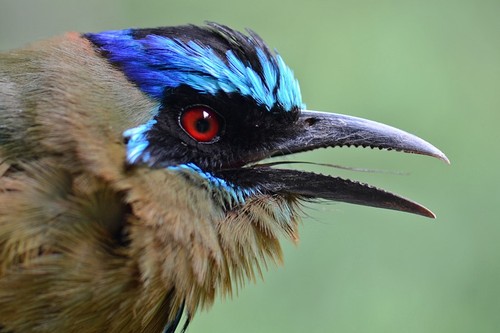
Blue-crowned Motmot
38-43 cm (15-17 in) long including tail
White-tipped Dove
27-30 cm (10.5-12 in) long, 38-43 cm wingspan
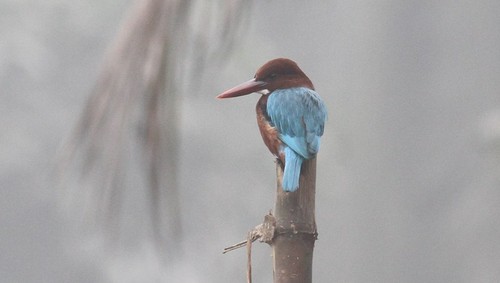
White-throated Kingfisher
27-28 cm (10.5-11 in) long
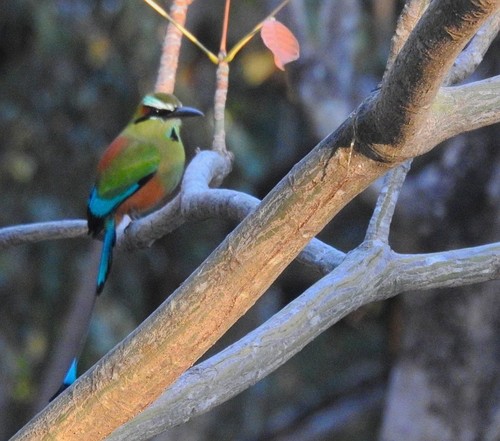
Turquoise-browed Motmot
34 cm (13 in) long including tail
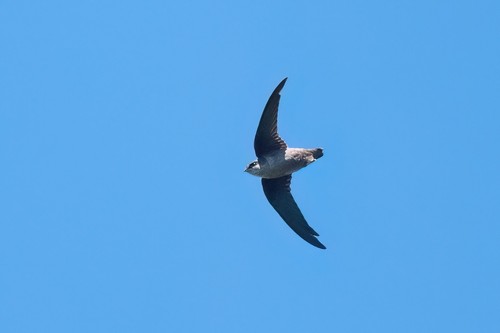
Vaux's Swift
10-12 cm (4-4.5 in) long, 27-30 cm wingspan
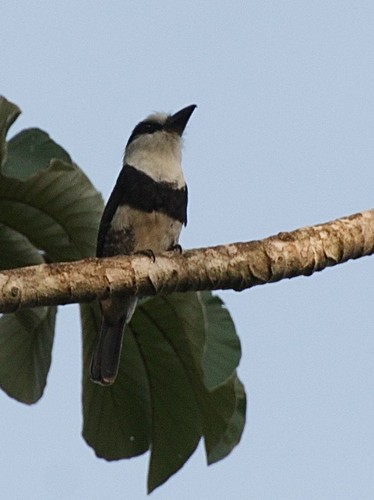
White-necked Puffbird
22-24 cm (8.5-9.5 in) long
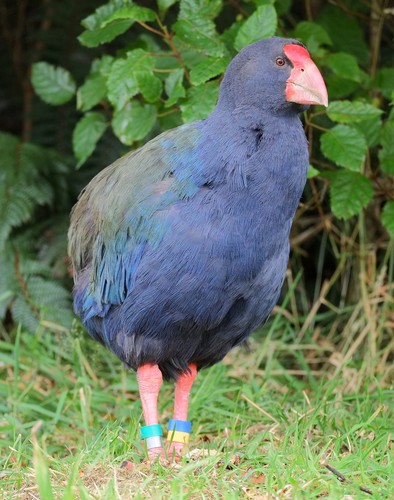
Takahe
50 cm (20 in) long, up to 3.5 kg; flightless
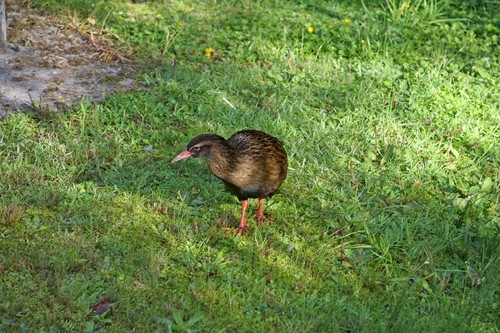
Weka
50-60 cm (20-24 in) long; flightless