
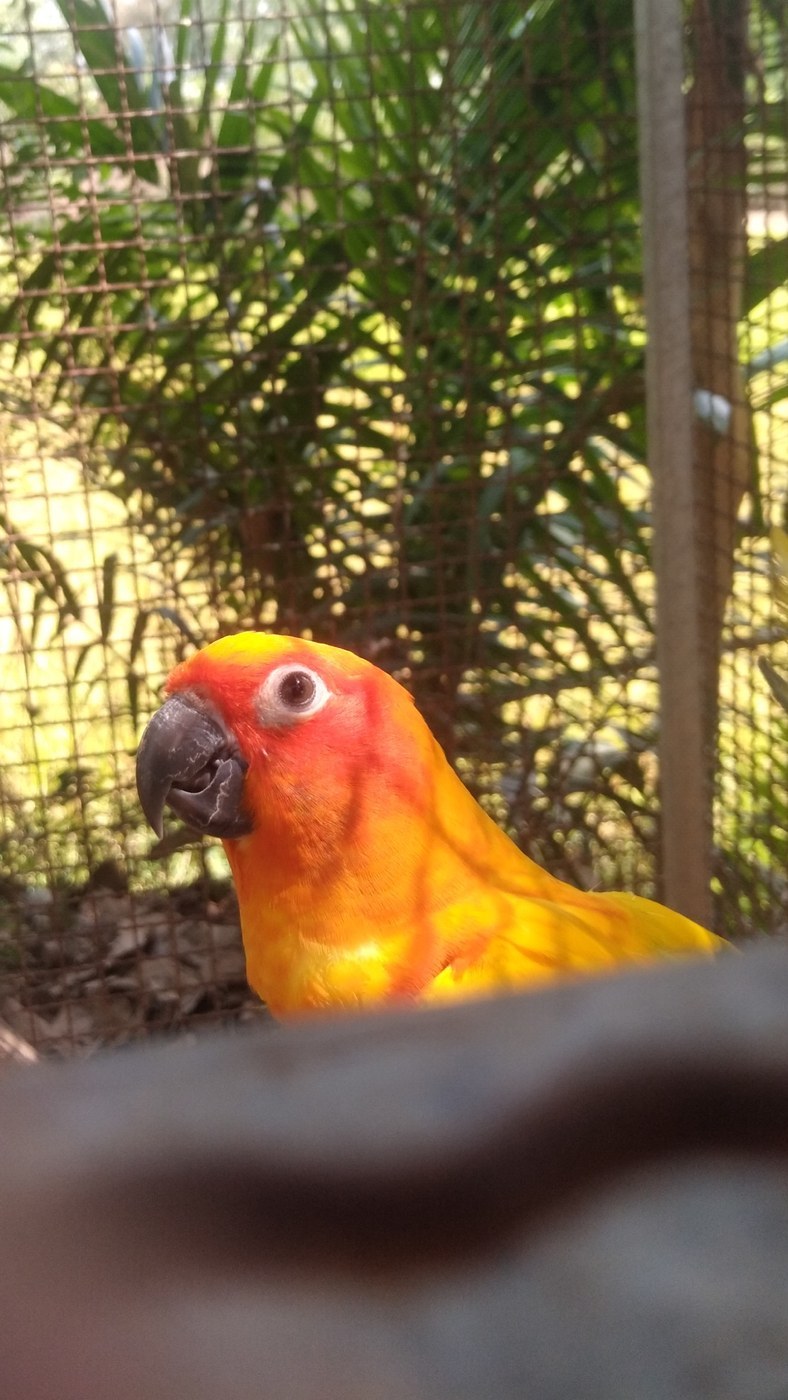
Sun Parakeet
Aratinga solstitialis
A dazzling small parakeet clothed in vivid golden-yellow and orange, with green and blue flight feathers, now endangered in the wild due to trapping for the pet trade.
- Size
- 30 cm (12 in) long
- Habitat
- dry savanna woodland and forest edge
- Type
- parrot
Spotted a bird like this?
Identify any bird from a photo, free.
Overview
The Sun Parakeet, widely known in aviculture as the Sun Conure, is one of the most vividly colored parrots in the world, its plumage a brilliant blend of golden-yellow and orange over the head and underparts, with green wing feathers tipped in blue and orange-tinged flight feathers. Immature birds are duller and greener, gradually acquiring the full blaze of adult coloring as they mature.
Despite its popularity in captivity, the species has suffered a severe decline in the wild, driven overwhelmingly by illegal capture for the pet trade alongside habitat loss, and it is now considered Endangered, with wild populations restricted to a comparatively small area of savanna woodland in northeastern South America.
How to identify it
Key field marks
- Small parakeet with vivid golden-yellow and orange plumage over the head and underparts
- Green wing feathers tipped with blue
- Long, pointed tail typical of Aratinga parakeets
- Duller, greener plumage in immature birds
Similar species
- Sulphur-breasted Parakeet and Jandaya Parakeet, close relatives, show more extensive green in the plumage and differ in the precise extent of orange and yellow coloring, with limited range overlap.
- No other parakeet in its range combines such an intensely saturated yellow-orange body with green-and-blue wings.
Habitat & range
Habitat
Inhabits dry savanna woodland, forest edge, and palm groves.
Range
Restricted to a relatively small area of northeastern South America, including parts of Guyana, Suriname, French Guiana, Venezuela, and northern Brazil.
Migration
Non-migratory, though flocks may move locally in response to food availability.
Behavior & voice
Behavior
Highly social, typically found in small, noisy flocks that forage together and roost communally, often drawing attention with loud, persistent calling.
Voice
Loud, sharp, screeching calls given frequently, especially in flight and at roost sites.
Feeding
Feeds on seeds, fruit, flowers, and some insects, foraging in trees and shrubs of savanna and forest edge habitats.
Nesting
Nests in tree cavities and palm trunks; lays 3-4 white eggs.
Frequently asked questions
How do you identify a Sun Parakeet?
Look for a small parakeet with brilliant golden-yellow and orange plumage on the head and underparts, contrasting with green-and-blue wings.
Why is the Sun Parakeet endangered?
Wild populations have collapsed primarily due to intense illegal trapping for the pet trade, compounded by habitat loss, despite the species remaining common in captivity.
Where does the Sun Parakeet live in the wild?
In a restricted area of dry savanna woodland in northeastern South America, including parts of Guyana, Suriname, French Guiana, Venezuela, and northern Brazil.
What does a Sun Parakeet eat?
Seeds, fruit, flowers, and some insects, foraged in trees and shrubs.
Sun Parakeet guides
In-depth guides for identifying, finding, and understanding Sun Parakeet.
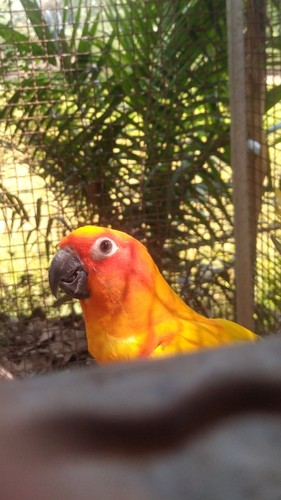
Sun Parakeet identified by the community
Real birds identified with Bird Identifier.

Other birds you may enjoy
Eclectus Parrot
35-42 cm (14-16.5 in) long
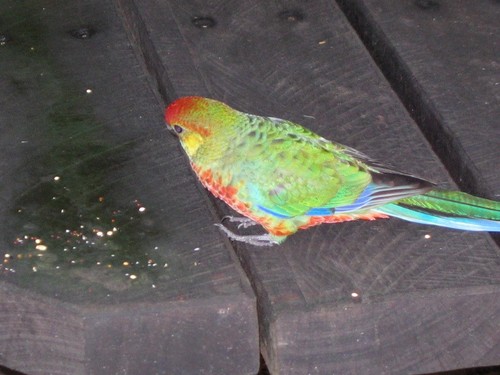
Western Rosella
25-30 cm (10-12 in) long
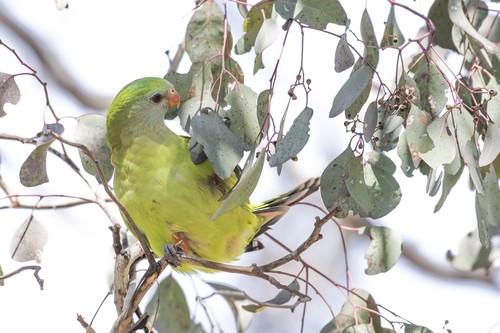
Superb Parrot
About 40 cm (16 in) long including a long tail
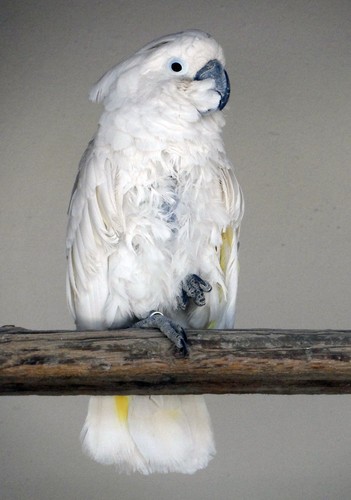
Umbrella Cockatoo
About 46 cm (18 in) long
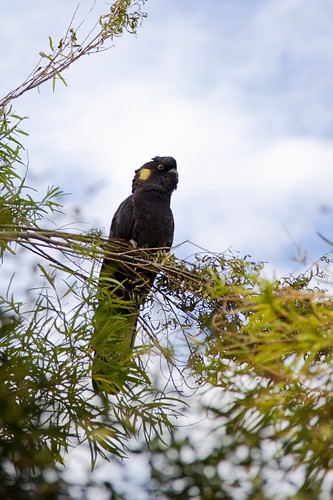
Yellow-tailed Black Cockatoo
55-65 cm long; wingspan up to about 130 cm
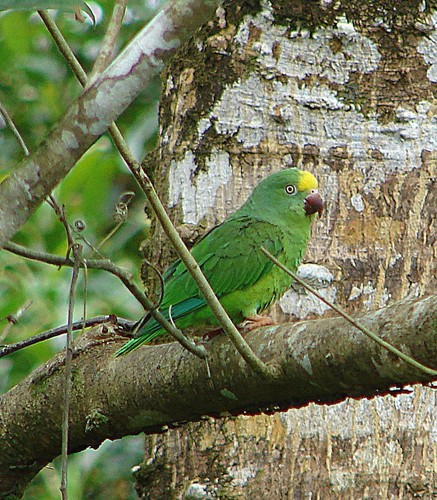
Yellow-crowned Amazon
About 35-38 cm (14-15 in) long
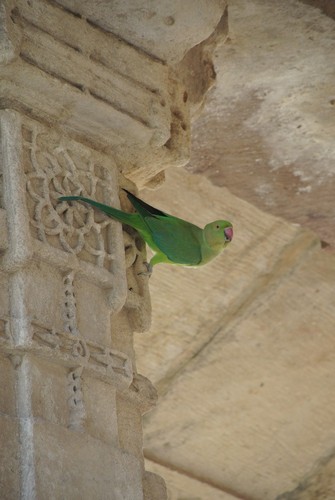
Rose-ringed Parakeet
40 cm (16 in) long including long tail
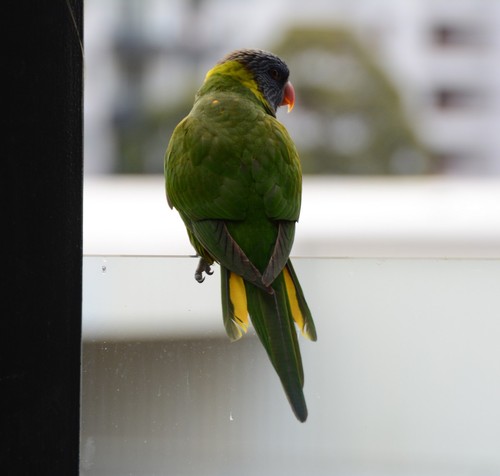
Rainbow Lorikeet
25-30 cm (10-12 in) long
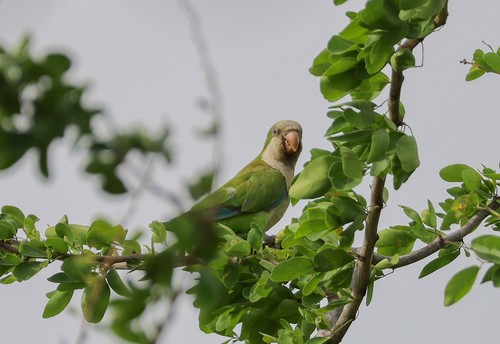
Quaker Parrot
28-31 cm (11-12 in) long
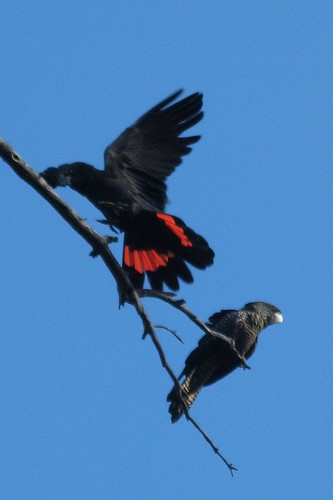
Red-tailed Black Cockatoo
55-65 cm long
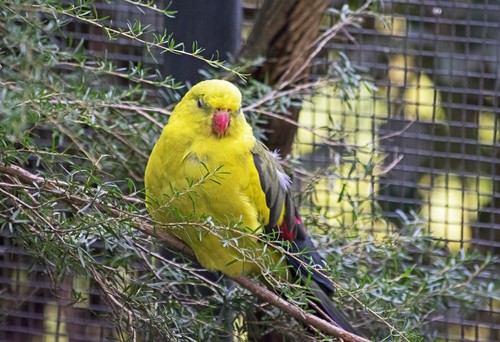
Regent Parrot
37-42 cm (15-17 in) long, including a long tail
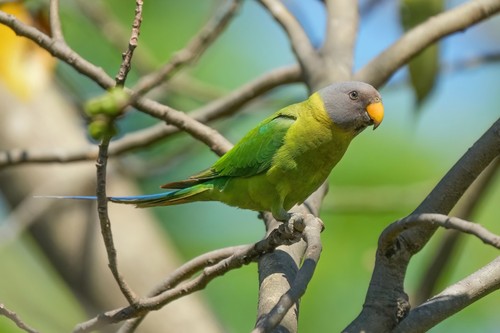
Plum-headed Parakeet
33 cm (13 in) long including tail