
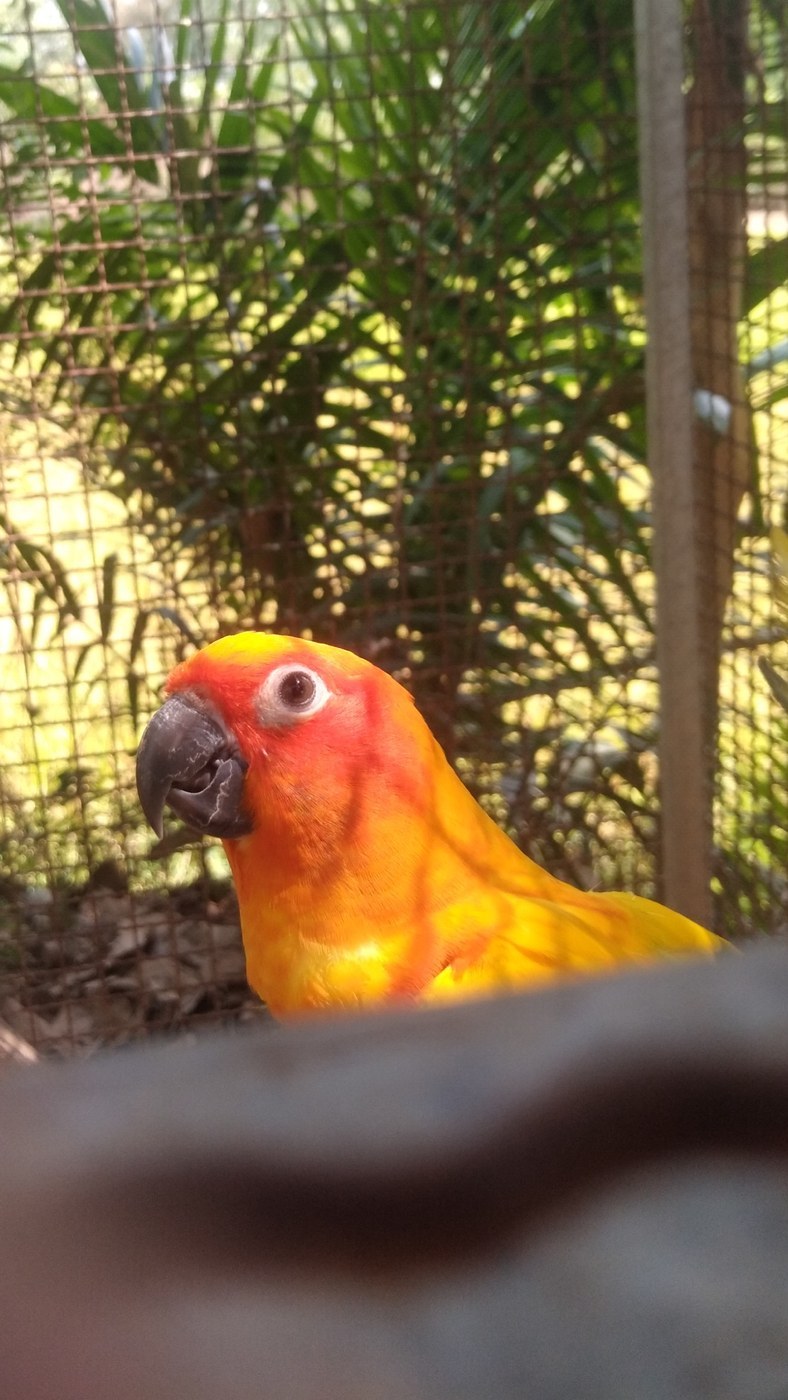
Sun Conure
Aratinga solstitialis
A vividly orange-and-yellow Neotropical parakeet of northeastern South America, prized for its striking sunset-colored plumage.
- Size
- About 30 cm (12 in) long; wingspan approx. 43-48 cm
- Habitat
- Tropical savanna, seasonally dry woodland, and palm groves
- Type
- parrot
Spotted a bird like this?
Identify any bird from a photo, free.
Overview
The Sun Conure, also known as the Sun Parakeet, is a medium-small, long-tailed parrot native to the Guiana Shield region of northeastern South America. It is one of the most colorful members of its genus.
Adults are brilliant golden-orange over most of the body, with a yellow-tinged head and back, greenish-blue flight feathers and tail tip, and orange-red highlights on the face and shoulders. Juveniles are considerably duller, mostly green with only patches of yellow and orange that increase as they mature over a couple of years.
In flight, the mix of orange, yellow, and green with blue-tipped wings makes this one of the most visually striking parakeets in its range.
How to identify it
Key field marks
- Overall golden-orange body plumage
- Green and blue in the flight feathers and tail
- Bare whitish eye-ring
- Long, pointed tail typical of Aratinga parakeets
Age differences
Juveniles are largely green with limited yellow-orange mottling, gradually acquiring full adult coloration over one to two years.
Similar species
The Sun Conure can be confused with the Sulphur-breasted (Jandaya) Parakeet and Golden-capped Parakeet, both of which are less extensively orange and retain more green on the body and back. Range also helps: Sun Conures are restricted to a small area of northeastern South America, while related species occur further south and east in Brazil.
Habitat & range
Range
The Sun Conure has a naturally restricted range in the Guiana Shield, including parts of northern Brazil, Guyana, and Venezuela.
Habitat
It inhabits tropical savanna, dry seasonal woodland, forest edge, and palm-studded scrub, often in areas with scattered trees rather than closed-canopy rainforest.
Movements
Sun Conures are largely sedentary but move locally in flocks in response to the fruiting and flowering of key food trees.
Behavior & voice
Social behavior
Highly social, Sun Conures travel and forage in flocks that can number from a handful of birds to several dozen, often roosting communally in palms or tall trees.
Voice
The voice is loud and piercing, with sharp, screeching contact calls given frequently in flight; flocks are often heard well before they are seen.
Feeding
They feed in the canopy and mid-story on fruits, seeds, blossoms, and nectar-rich flowers, using their feet to hold food while feeding.
Nesting and breeding
Sun Conures nest in tree cavities, including old woodpecker holes and palm hollows, typically laying clutches of 3-4 eggs. They can nest colonially where suitable cavities are clustered, with pairs defending only the immediate nest site.
Frequently asked questions
Why is the Sun Conure endangered?
Its naturally small range in the Guiana Shield has been affected by habitat loss and unsustainable capture pressure, leading to sharp wild population declines.
How can you tell a Sun Conure from a Jandaya Parakeet?
Sun Conures show more extensive golden-orange coloring with less retained green on the back and body compared to the greener-backed Jandaya Parakeet, and the two occupy largely separate ranges.
Do young Sun Conures look like adults?
No, juveniles are mostly green and only develop the full golden-orange plumage over one to two years.
Where are Sun Conures found in the wild?
They are native to a limited area of northeastern South America spanning northern Brazil, Guyana, and Venezuela.
What habitat do Sun Conures prefer?
They favor open tropical savanna, dry woodland, and palm groves rather than dense unbroken rainforest.
Sun Conure guides
In-depth guides for identifying, finding, and understanding Sun Conure.
Other birds you may enjoy
Eclectus Parrot
35-42 cm (14-16.5 in) long
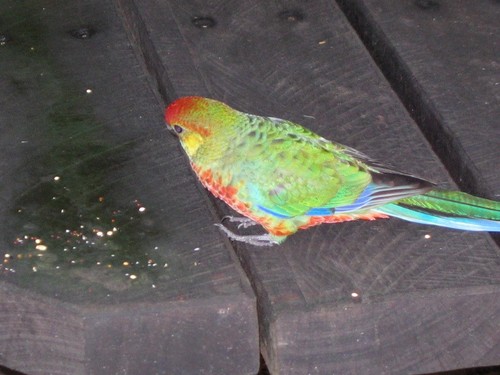
Western Rosella
25-30 cm (10-12 in) long
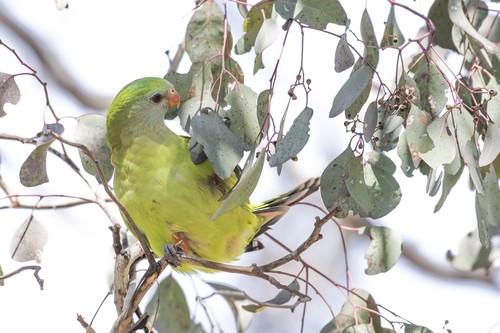
Superb Parrot
About 40 cm (16 in) long including a long tail
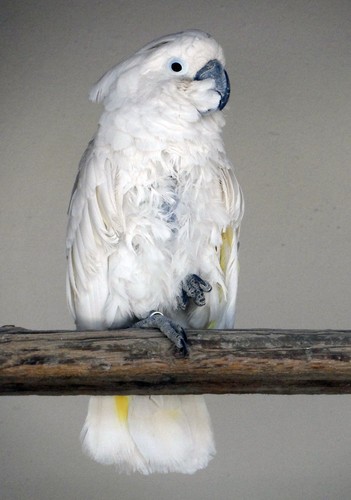
Umbrella Cockatoo
About 46 cm (18 in) long
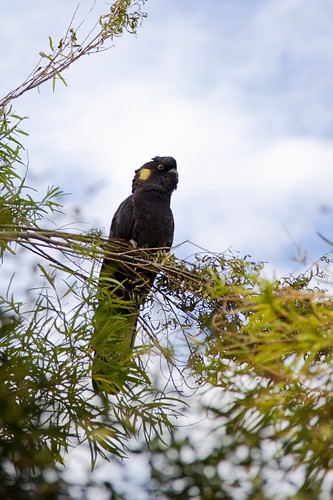
Yellow-tailed Black Cockatoo
55-65 cm long; wingspan up to about 130 cm
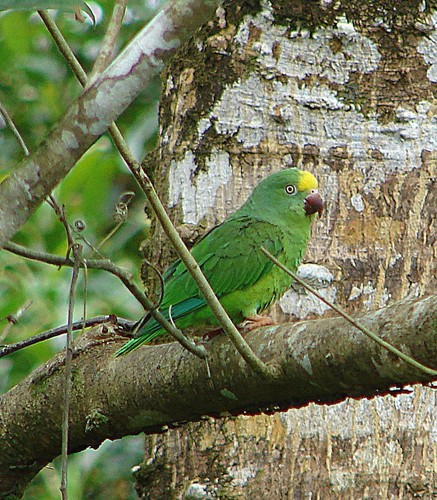
Yellow-crowned Amazon
About 35-38 cm (14-15 in) long
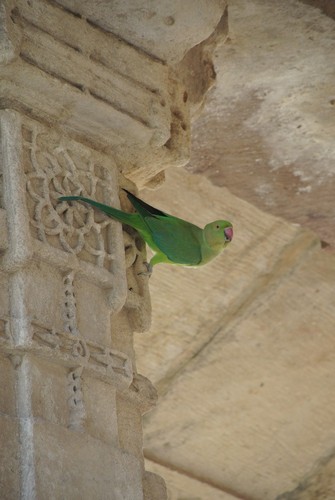
Rose-ringed Parakeet
40 cm (16 in) long including long tail
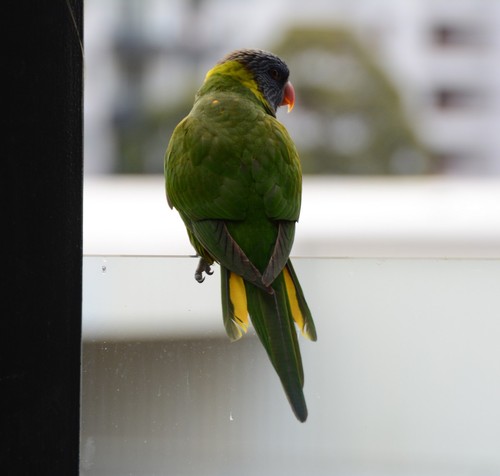
Rainbow Lorikeet
25-30 cm (10-12 in) long
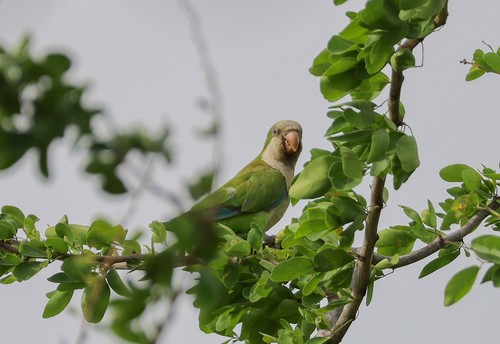
Quaker Parrot
28-31 cm (11-12 in) long
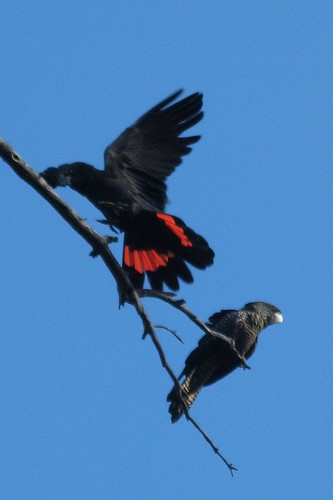
Red-tailed Black Cockatoo
55-65 cm long
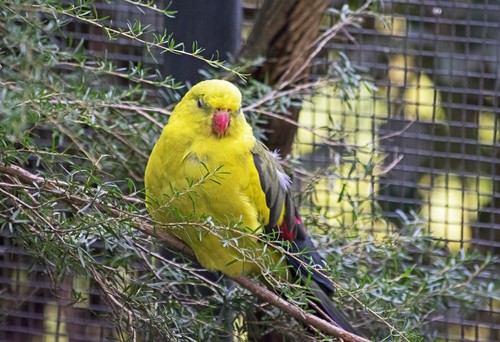
Regent Parrot
37-42 cm (15-17 in) long, including a long tail
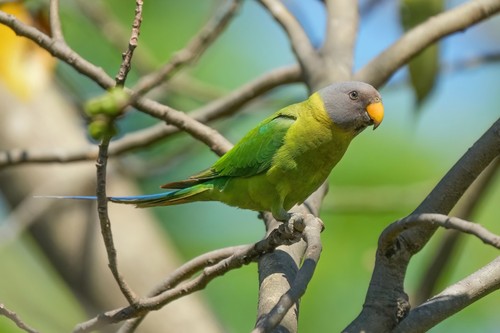
Plum-headed Parakeet
33 cm (13 in) long including tail