
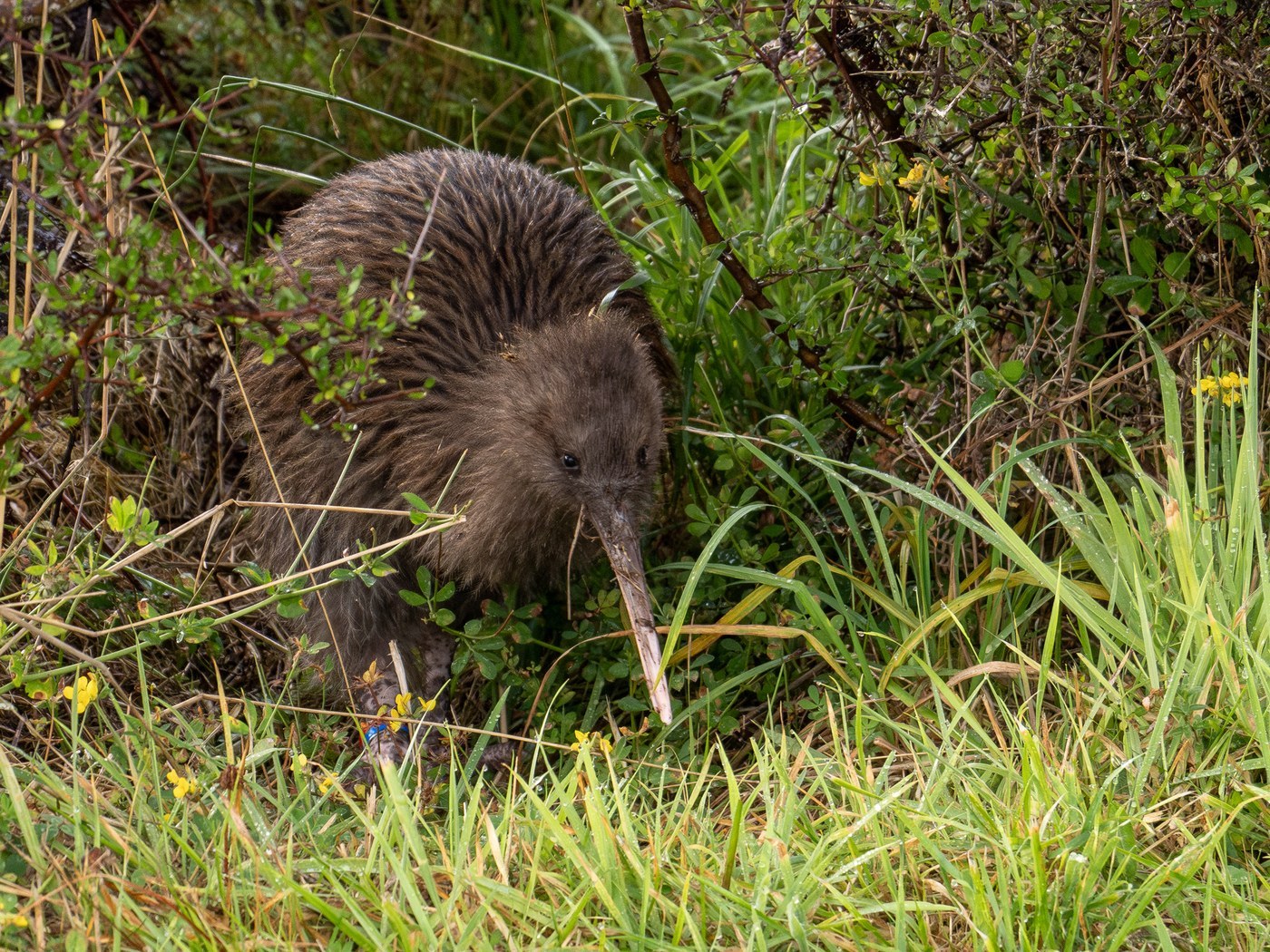
Southern Brown Kiwi
Apteryx australis
A shaggy, flightless, nocturnal New Zealand kiwi of the South Island and Stewart Island, known locally as tokoeka, that finds food entirely by smell.
- Size
- 40-45 cm (16-18 in) body length, flightless
- Habitat
- native forest, scrub, tussock grassland, and coastal dunes in southern New Zealand
- Type
- other
Spotted a bird like this?
Identify any bird from a photo, free.
Overview
The Southern Brown Kiwi, widely known by its Maori name tokoeka, is one of New Zealand's flightless, ground-dwelling kiwi species. It has coarse, hair-like brown feathers streaked with grey and rufous, a tiny vestigial wing hidden beneath the plumage, no visible tail, and stout, powerful legs built for digging and running through dense undergrowth.
Its long, slender bill has nostrils at the very tip, an arrangement unique among birds, which it uses to sniff out invertebrates hidden underground. Like all kiwi, it is almost entirely nocturnal, sleeping by day in burrows, hollow logs, or dense vegetation, and its round, disproportionately large egg is one of the biggest relative to body size of any bird.
How to identify it
Key field marks
- Shaggy, hair-like brown-grey plumage, streaked with rufous
- Long, slightly downcurved pale bill with nostrils at the tip
- No visible tail; small vestigial wings hidden under body feathers
- Stout, sturdy legs relative to body size
- Whiskers (bristle-like feathers) around the base of the bill
Similar species
- North Island Brown Kiwi is similar but geographically separate (North Island only) and genetically distinct; the two do not overlap in range.
- Great Spotted Kiwi and Little Spotted Kiwi both show more contrastingly mottled grey plumage rather than the more uniform brown of the tokoeka.
Habitat & range
Range
Found in Fiordland and Northwest Nelson/coastal South Island, and on Stewart Island/Rakiura, New Zealand, in several genetically distinct populations sometimes treated as separate forms.
Habitat
Occupies native forest, subalpine scrub, tussock grassland, and even coastal dune systems on Stewart Island, tolerating a wider range of habitats than most kiwi species.
Migration
Non-migratory and flightless; individuals hold stable home ranges and territories defended by calling at night.
Behavior & voice
Behavior
Strictly nocturnal and solitary outside of breeding pairs, spending daylight hours hidden in a burrow or dense cover before emerging at dusk to forage by scent and touch.
Voice
Males give a shrill, ascending whistle and females a lower, harsher call, typically heard after dark, often as a duet between paired birds.
Feeding
Probes leaf litter and soil with its long bill to detect earthworms, beetle larvae, and other invertebrates by smell, one of the few birds with a well-developed sense of smell.
Nesting
Nests in a burrow, hollow log, or dense vegetation; the female lays one to two very large eggs, and in most populations the male carries out most or all of the incubation over an unusually long period of around 70-85 days.
Frequently asked questions
What is a tokoeka?
Tokoeka is the Maori name for the Southern Brown Kiwi, the kiwi species found in Fiordland, Northwest Nelson, and Stewart Island.
How does a kiwi find food in the dark?
It uses its exceptional sense of smell, sniffing out earthworms and invertebrates through nostrils located at the very tip of its long bill.
Can Southern Brown Kiwi fly?
No, kiwi are completely flightless, with only tiny vestigial wings hidden beneath their feathers.
Why is the Southern Brown Kiwi vulnerable?
Introduced predators such as stoats, dogs, and cats kill both chicks and adults, and habitat loss has further reduced populations, though predator control and island sanctuaries are helping some populations recover.
Southern Brown Kiwi guides
In-depth guides for identifying, finding, and understanding Southern Brown Kiwi.
Other birds you may enjoy
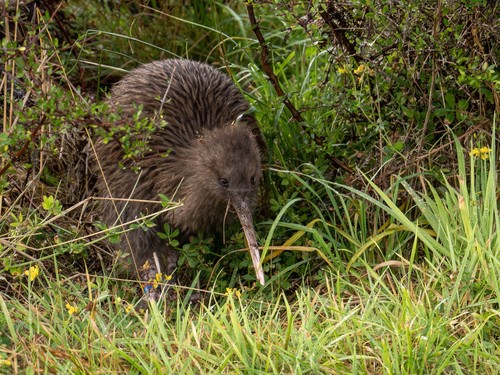
Kiwi
35-55 cm (14-22 in) long; roughly chicken-sized
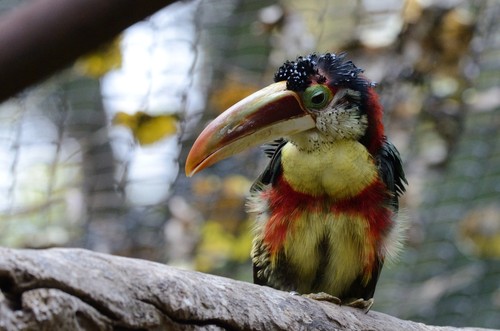
Curl-crested Aracari
41-46 cm (16-18 in) long, including a long bill and tail
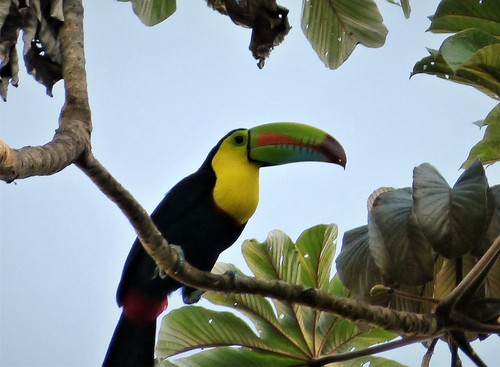
Keel-billed Toucan
42-55 cm (17-22 in) long including bill
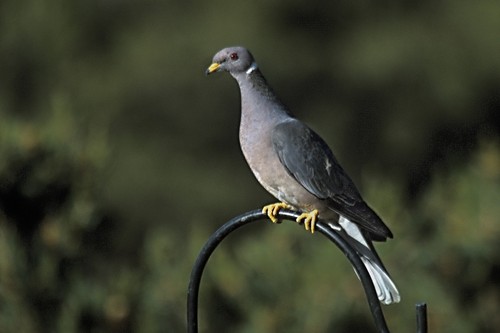
Band-tailed Pigeon
33-38 cm (13-15 in) long, wingspan about 66 cm (26 in)
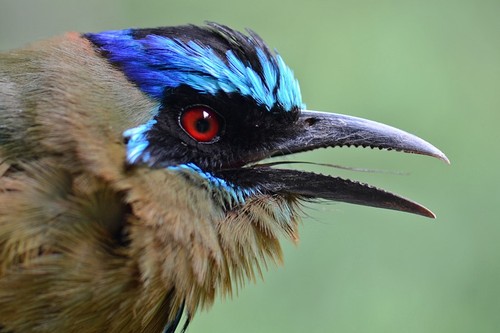
Blue-crowned Motmot
38-43 cm (15-17 in) long including tail
White-tipped Dove
27-30 cm (10.5-12 in) long, 38-43 cm wingspan
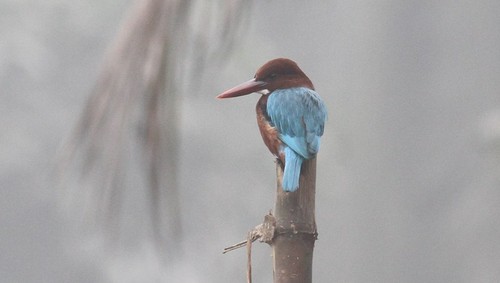
White-throated Kingfisher
27-28 cm (10.5-11 in) long
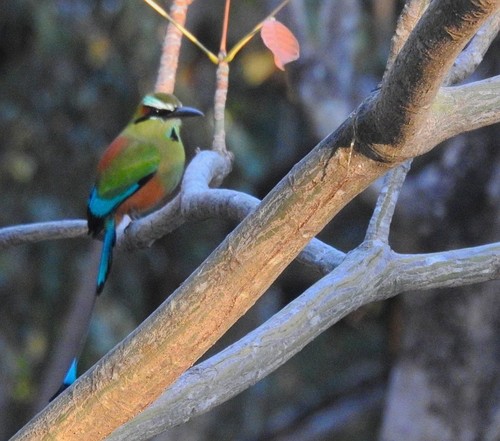
Turquoise-browed Motmot
34 cm (13 in) long including tail
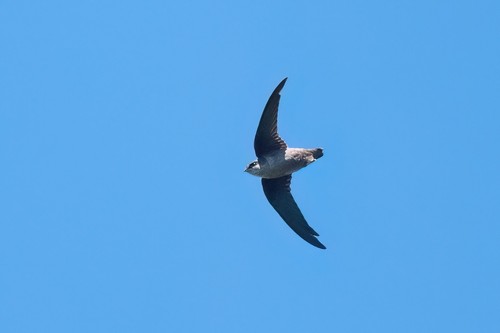
Vaux's Swift
10-12 cm (4-4.5 in) long, 27-30 cm wingspan
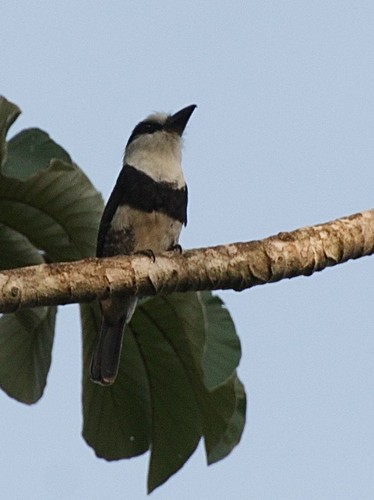
White-necked Puffbird
22-24 cm (8.5-9.5 in) long
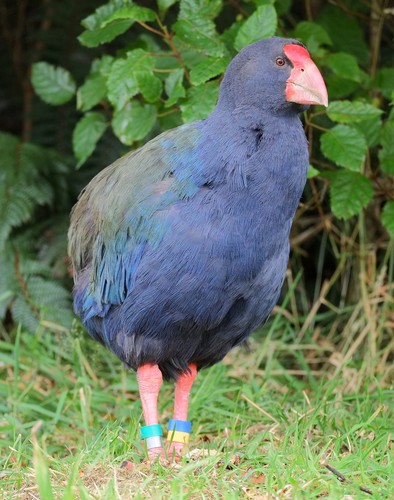
Takahe
50 cm (20 in) long, up to 3.5 kg; flightless
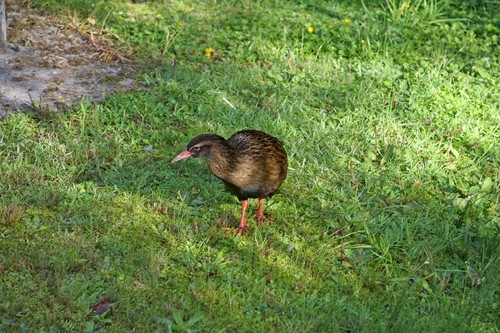
Weka
50-60 cm (20-24 in) long; flightless