
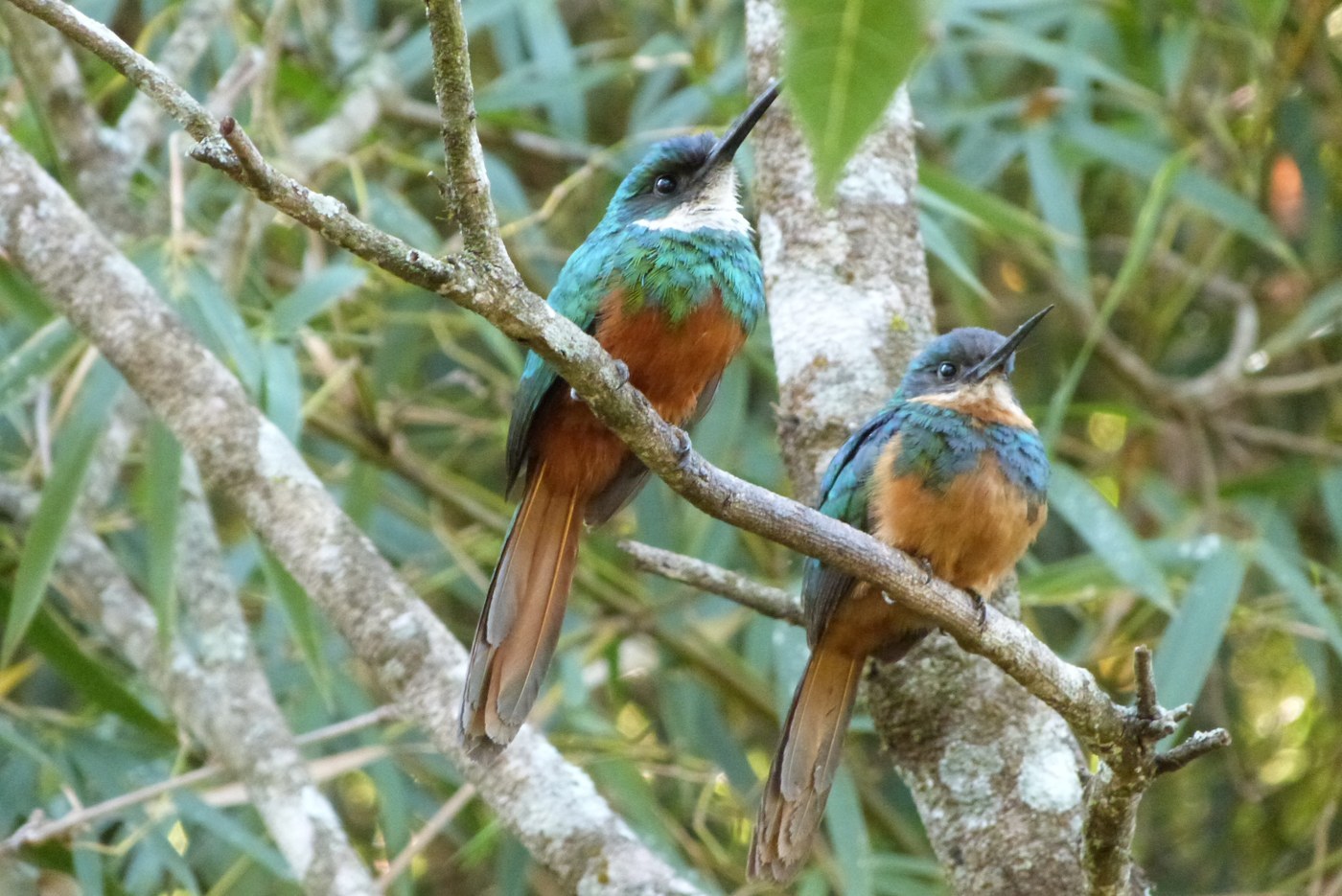
Rufous-tailed Jacamar
Galbula ruficauda
A slender, iridescent green bird with a needle-thin bill and rufous underparts that hawks insects from perches along forest edges.
- Size
- 23-26 cm (9-10 in) long, including long tail
- Habitat
- forest edge, second growth, and clearings near woodland
- Type
- other
Spotted a bird like this?
Identify any bird from a photo, free.
Overview
The Rufous-tailed Jacamar is a jewel-like bird of Neotropical woodland edges, easily recognized by its slender build, long straight bill, and glittering metallic green upperparts contrasting with rich rufous-orange underparts and tail. Males show a crisp white throat patch, while females have a buffier throat. Its shape and iridescence give it a superficial resemblance to an oversized hummingbird or a giant bee-eater relative, though jacamars form their own family, Galbulidae.
It is among the most widespread and frequently seen jacamars, often perched conspicuously on an open twig watching for passing insects.
How to identify it
Key field marks
- Long, thin, straight black bill.
- Iridescent bronze-green upperparts and long tail.
- Rufous-orange underparts and undertail.
- White throat patch (more contrasting in males).
Similar species
Great Jacamar is larger and heavier-billed with a slightly curved bill and lacks the extensive rufous tail contrast. Other jacamars in the genus Galbula are more geographically restricted; the Rufous-tailed Jacamar's wide range and edge habitat make it the jacamar most likely to be encountered.
Habitat & range
Rufous-tailed Jacamars favor forest edges, clearings, second growth, riverbanks, and shrubby areas near woodland rather than deep forest interior. The species ranges from Mexico through Central America and across much of South America east of the Andes to Argentina, plus Trinidad. It is a non-migratory resident throughout its range.
Behavior & voice
Voice
A thin, high, piercing series of notes, often given from an exposed perch; pairs may duet with excited, sharp calls.
Feeding
A classic aerial sallier, it perches upright on an open branch and darts out to snatch flying insects — especially butterflies and dragonflies — in mid-air, returning to the same or a nearby perch to beat the prey against the branch before swallowing it, a technique that removes wings and hard body parts.
Nesting and breeding
Pairs excavate a burrow nest in an earthen bank, termite mound, or occasionally a level patch of ground, in which eggs are laid at the end of a tunnel. Both parents share incubation and feeding duties.
Frequently asked questions
Why does the Rufous-tailed Jacamar look like a hummingbird?
Its slender shape and iridescent green plumage give a superficial hummingbird-like impression, but it belongs to its own family and hunts flying insects from a perch rather than feeding on nectar.
What does a Rufous-tailed Jacamar eat?
Mainly flying insects such as butterflies, dragonflies, and beetles, caught in mid-air sallies from a perch.
Where does it nest?
In a burrow it excavates in an earthen bank or similar substrate, rather than in a tree cavity or open nest.
How can I tell males from females?
Males have a crisp white throat patch while females show a buffier, less contrasting throat.
Rufous-tailed Jacamar guides
In-depth guides for identifying, finding, and understanding Rufous-tailed Jacamar.
Other birds you may enjoy
Kiwi
35-55 cm (14-22 in) long; roughly chicken-sized
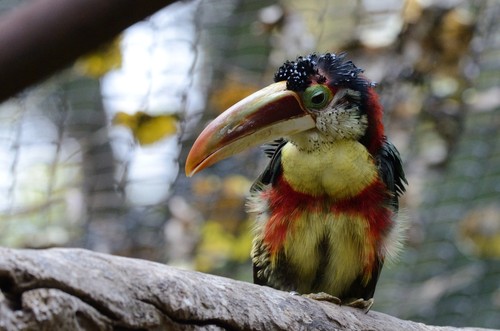
Curl-crested Aracari
41-46 cm (16-18 in) long, including a long bill and tail
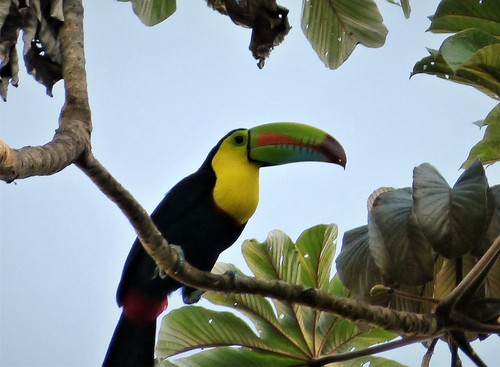
Keel-billed Toucan
42-55 cm (17-22 in) long including bill
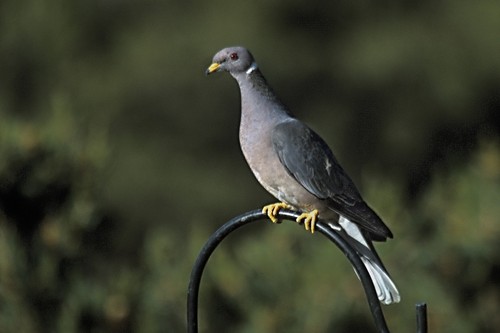
Band-tailed Pigeon
33-38 cm (13-15 in) long, wingspan about 66 cm (26 in)
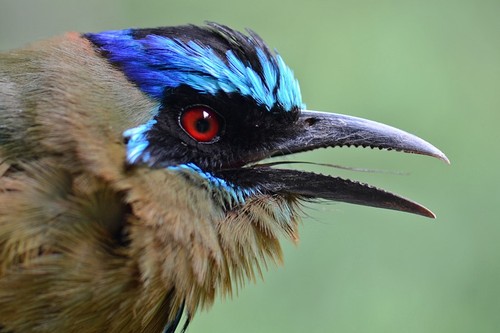
Blue-crowned Motmot
38-43 cm (15-17 in) long including tail
White-tipped Dove
27-30 cm (10.5-12 in) long, 38-43 cm wingspan
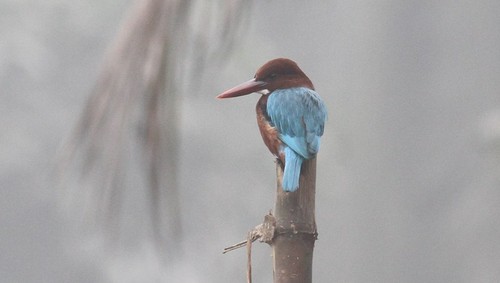
White-throated Kingfisher
27-28 cm (10.5-11 in) long
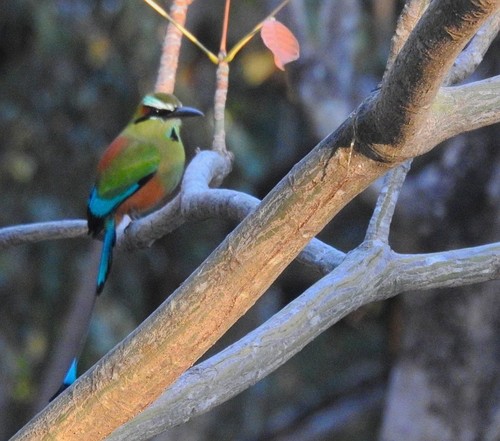
Turquoise-browed Motmot
34 cm (13 in) long including tail
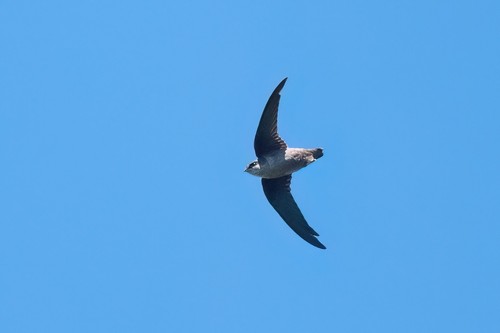
Vaux's Swift
10-12 cm (4-4.5 in) long, 27-30 cm wingspan
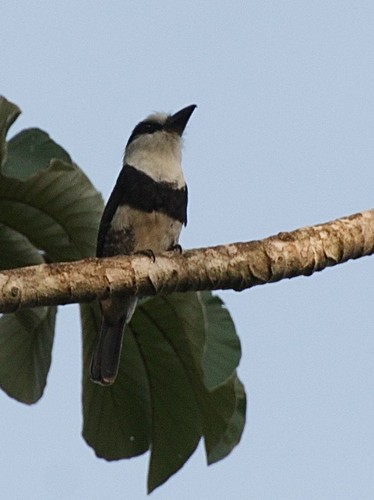
White-necked Puffbird
22-24 cm (8.5-9.5 in) long
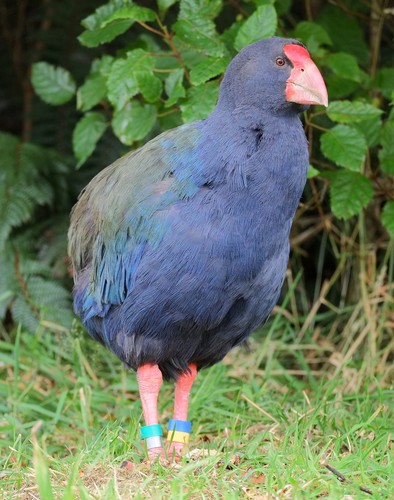
Takahe
50 cm (20 in) long, up to 3.5 kg; flightless
Weka
50-60 cm (20-24 in) long; flightless