
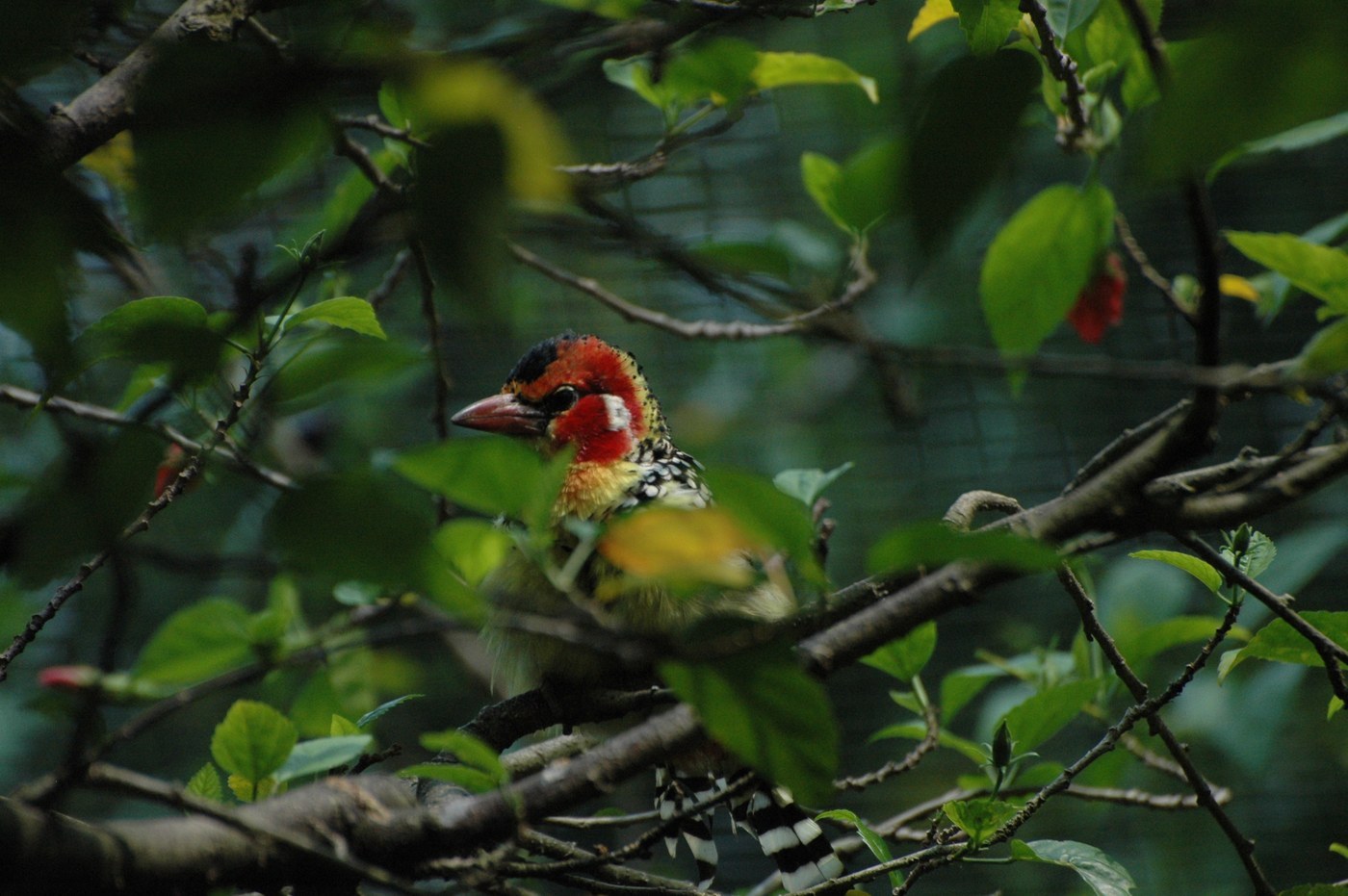
Red-and-yellow Barbet
Trachyphonus erythrocephalus
A vividly patterned East African barbet with a scarlet head, black-spotted yellow underparts, and a habit of nesting in termite mounds.
- Size
- About 19-23 cm long, stocky build
- Habitat
- Dry savanna and thornbush in East Africa
- Type
- other
Spotted a bird like this?
Identify any bird from a photo, free.
Overview
The Red-and-yellow Barbet is one of Africa's most brilliantly colored barbets, combining a fiery red head with rich yellow underparts marked by bold black spotting. It is a conspicuous, unmistakable bird of the dry savanna and thorn country of East Africa.
Adults show an extensively red crown, face, and throat, a black back finely spotted with white, and yellow-orange underparts heavily spangled with black spots, with an overall pattern that looks almost hand-painted. The bill is short and stout, and the tail is relatively long for a barbet.
Like its relative D'Arnaud's Barbet, it is largely a ground-foraging bird of dry bush country, often seen hopping around termite mounds where it also nests.
How to identify it
Key field marks
- Extensive scarlet-red head, face, and throat
- Yellow-orange underparts with bold black spotting
- Black upperparts finely spotted with white
- Short, stout, pale bill
- Frequently seen around termite mounds
Similar species
- D'Arnaud's Barbet: lacks the solid red head, instead showing finely speckled black-and-white upperparts and a yellow (not red) face.
- Crested Barbet: has a shaggy speckled crest rather than a solid red head, and is found further south.
- Black-collared Barbet: red is confined to the face and throat with a black collar, without the extensive black spotting on yellow underparts.
Habitat & range
Habitat
This species inhabits dry Acacia savanna, thornbush, and semi-arid scrubland, typically in areas with scattered termite mounds and thickets.
Range
Found in East Africa, including Kenya, Tanzania, Uganda, Ethiopia, and Somalia, mainly in the drier lowland and rift valley regions.
Migration
Non-migratory and sedentary, with resident pairs or small groups defending a fixed territory year-round.
Behavior & voice
Behavior
Red-and-yellow Barbets forage mostly on the ground, hopping through leaf litter and around termite mounds, often in pairs or small family groups, and can be quite tame in areas used to human presence.
Voice
Pairs give a loud, rhythmic duet of chattering, popping notes, tightly synchronized between mates, used to maintain the bond and proclaim the territory.
Feeding
The diet consists mainly of ants, termites, and other insects taken from the ground, supplemented with fruit and seeds.
Nesting and breeding
Like D'Arnaud's Barbet, this species commonly tunnels its nest into the side of a termite mound or an earth bank, with both parents helping to excavate, incubate, and feed the chicks, sometimes assisted by helpers.
Frequently asked questions
What does a Red-and-yellow Barbet look like?
It has a bright scarlet head, black upperparts spotted with white, and yellow-orange underparts covered in bold black spots.
Where does the Red-and-yellow Barbet live?
In dry savanna and thornbush of East Africa, including Kenya, Tanzania, Uganda, Ethiopia, and Somalia.
Why does the Red-and-yellow Barbet dig into termite mounds?
It excavates its nest burrow into termite mounds, which offer a firm, protected site for raising chicks.
What sound does a Red-and-yellow Barbet make?
Pairs perform a loud, fast, chattering duet of popping notes in close coordination.
What does a Red-and-yellow Barbet eat?
Mainly ants, termites, and other insects taken from the ground, along with some fruit and seeds.
Red-and-yellow Barbet guides
In-depth guides for identifying, finding, and understanding Red-and-yellow Barbet.
Other birds you may enjoy
Kiwi
35-55 cm (14-22 in) long; roughly chicken-sized
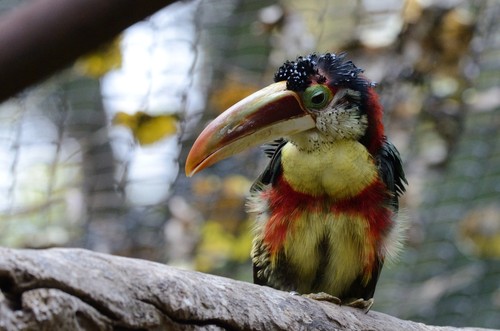
Curl-crested Aracari
41-46 cm (16-18 in) long, including a long bill and tail
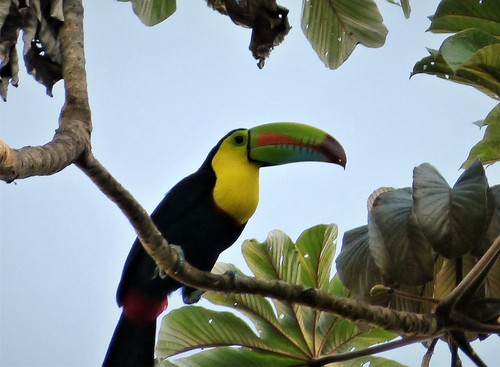
Keel-billed Toucan
42-55 cm (17-22 in) long including bill
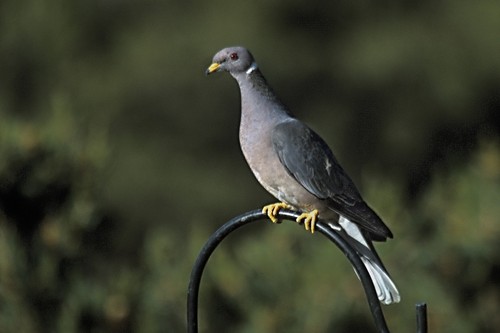
Band-tailed Pigeon
33-38 cm (13-15 in) long, wingspan about 66 cm (26 in)
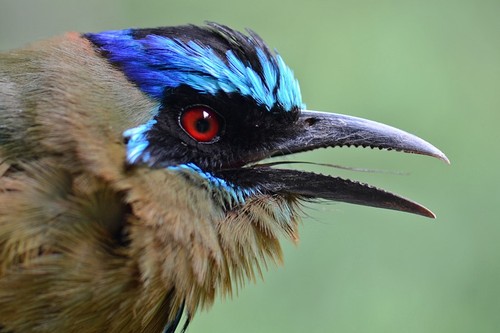
Blue-crowned Motmot
38-43 cm (15-17 in) long including tail
White-tipped Dove
27-30 cm (10.5-12 in) long, 38-43 cm wingspan
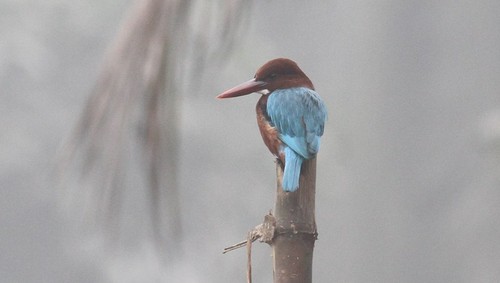
White-throated Kingfisher
27-28 cm (10.5-11 in) long
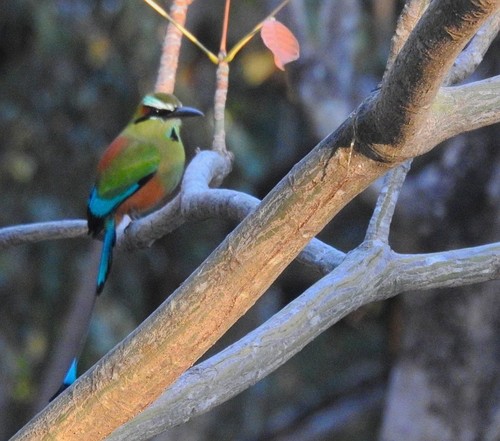
Turquoise-browed Motmot
34 cm (13 in) long including tail
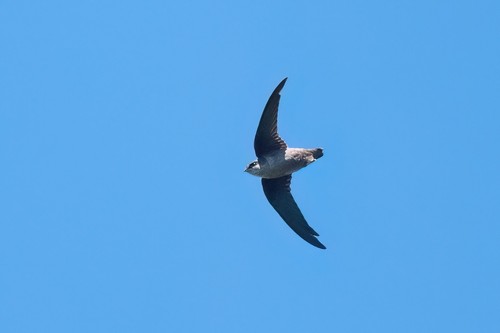
Vaux's Swift
10-12 cm (4-4.5 in) long, 27-30 cm wingspan
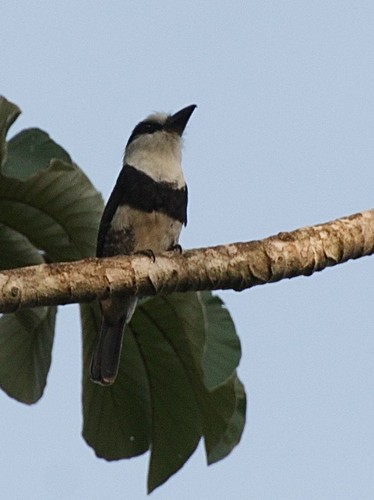
White-necked Puffbird
22-24 cm (8.5-9.5 in) long
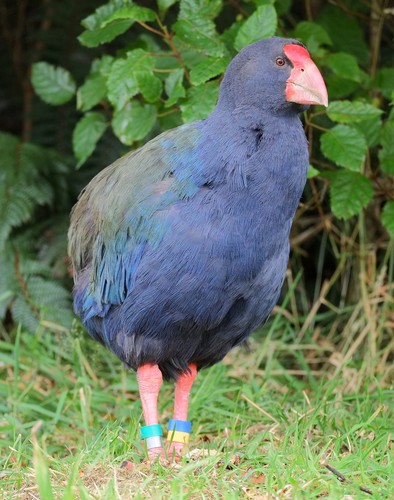
Takahe
50 cm (20 in) long, up to 3.5 kg; flightless
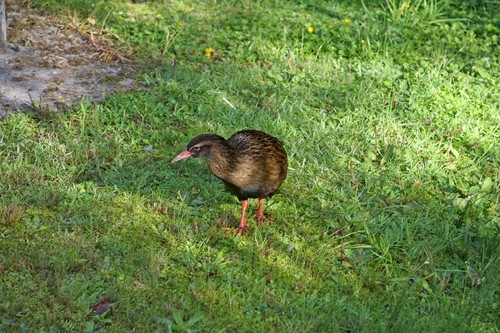
Weka
50-60 cm (20-24 in) long; flightless