
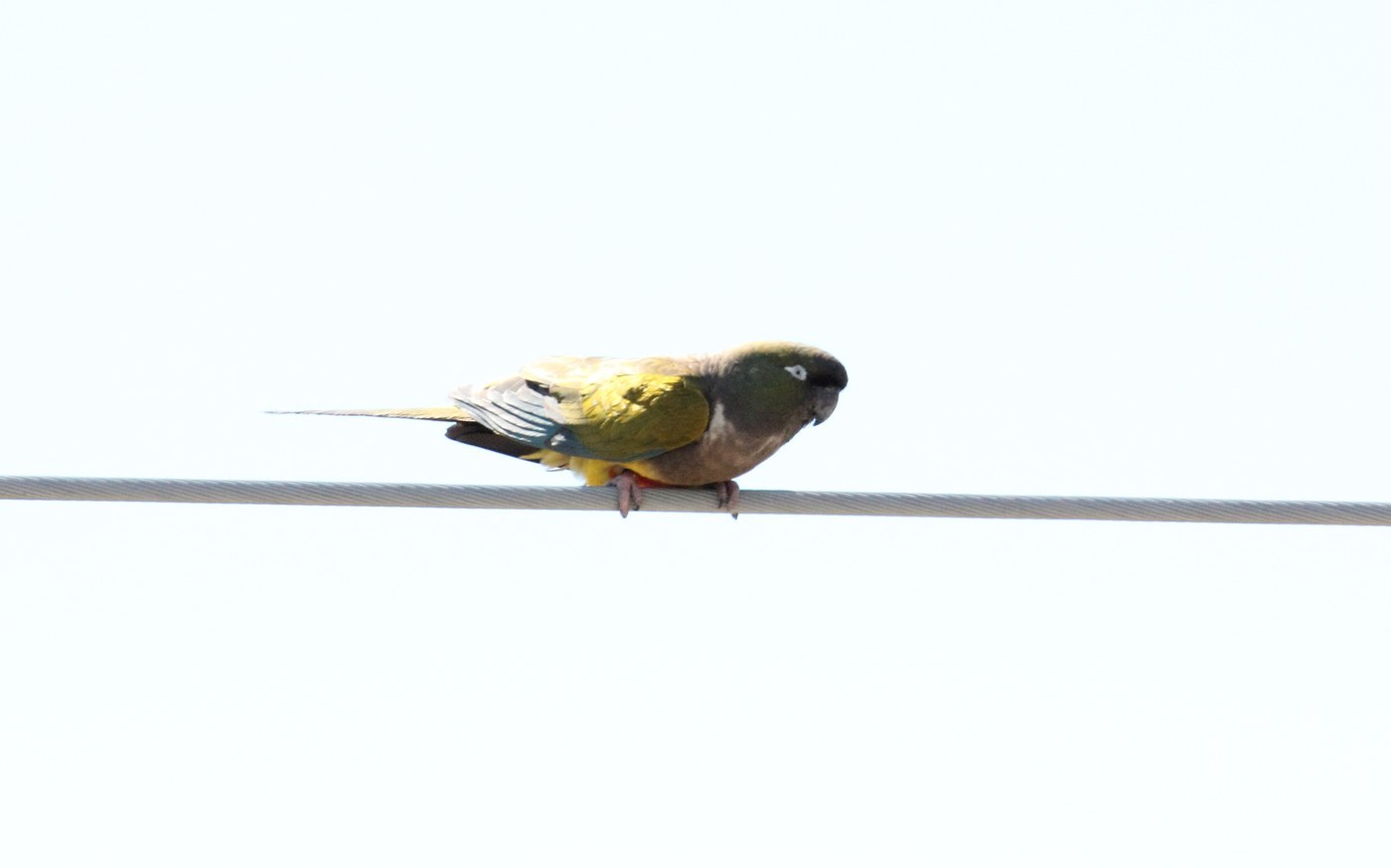
Patagonian Conure
Cyanoliseus patagonus
A large, olive-brown South American parrot famous for nesting colonially in burrows dug into cliff faces.
- Size
- About 42-52 cm (16.5-20.5 in) long, one of the largest conure-type parrots
- Habitat
- Arid steppe, scrubland, and river-cut cliffs and canyons in Argentina and Chile
- Type
- parrot
Spotted a bird like this?
Identify any bird from a photo, free.
Overview
The Patagonian Conure, also known as the Burrowing Parrot, is a large, long-tailed parrot of the open, arid landscapes of Argentina and Chile. Unlike most parrots, it nests in tunnels excavated into earthen or sandstone cliffs, often in enormous colonies.
Appearance
- Upperparts: olive-brown to grayish-brown across the head, back, and wings
- Underparts: pale yellow to yellowish-white throat and breast, with an orange-yellow belly
- Flight feathers: blue-tipped primaries, visible as a flash of blue in flight
- Vent area: often washed with red or orange
- Bill: dark gray to blackish
- Eyes: pale yellow to orange in adults, surrounded by a bare whitish eye-ring
Sexes look alike, and the species is notably larger and more muted in color than most other conures.
How to identify it
Key field marks
- Large size with a long, pointed tail
- Overall brownish-olive body contrasting with a pale whitish throat and yellow-orange belly
- Blue flight feathers flashing in flight
- Found in open, arid steppe and canyon habitat, often near nesting cliffs
Similar species
- Its combination of drab brown upperparts and yellow-orange belly, plus its restricted arid Patagonian range, makes confusion with other South American parrots unlikely.
- Smaller Aratinga-type conures elsewhere in South America are typically green-bodied, lacking the Patagonian Conure's brown tones.
The species' habit of flying in tight, fast flocks low over open steppe, combined with its coloring, is a strong identification clue.
Habitat & range
Range
The Patagonian Conure is found across central and southern Argentina and parts of Chile, ranging from semi-arid Monte and Patagonian steppe habitats to coastal cliffs.
Habitat
It occupies open, arid to semi-arid country, including steppe, scrubland, and agricultural areas, but is especially tied to eroded earthen, sandstone, or clay cliffs and riverbanks used for nesting.
Movements
Some southern populations are partially migratory, moving north to milder areas outside the breeding season, while others remain resident year-round near their nesting cliffs.
Behavior & voice
Social behavior
This species is highly colonial, with some cliff nesting sites hosting many thousands of burrows and among the largest known parrot breeding colonies in the world.
Voice
Calls are loud, harsh, and far-carrying, including raucous screeches given in flight and at the colony, helping to coordinate the movements of large flocks.
Feeding
Flocks forage on the ground and in low vegetation across open steppe and farmland, eating seeds, grains, fruits, and berries, sometimes traveling considerable distances between roosting cliffs and feeding grounds.
Nesting and breeding
Pairs excavate long tunnel burrows, sometimes several meters deep, into soft cliff faces, nesting in dense colonies. A clutch of two to three eggs is typical, and the burrowing habit offers protection from many predators and the elements in the exposed steppe environment.
Frequently asked questions
Why is the Patagonian Conure also called the Burrowing Parrot?
It digs long nesting tunnels into earthen or sandstone cliffs and breeds in large colonies, a nesting strategy unusual among parrots.
Where do Patagonian Conures live?
They are native to arid steppe and scrub habitats across central and southern Argentina and parts of Chile, especially near cliffs and canyons.
What color is a Patagonian Conure?
It has olive-brown upperparts, a pale whitish throat, a yellow-orange belly, and blue-tipped flight feathers.
Is the Patagonian Conure endangered?
The species overall is listed as Least Concern, though some localized populations and subspecies have declined due to habitat disturbance.
How large are Patagonian Conure nesting colonies?
Some cliff colonies contain many thousands of nesting burrows, making them among the largest parrot breeding colonies known anywhere.
Patagonian Conure guides
In-depth guides for identifying, finding, and understanding Patagonian Conure.
Other birds you may enjoy
Eclectus Parrot
35-42 cm (14-16.5 in) long
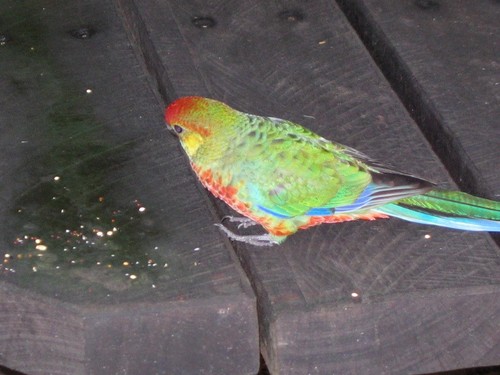
Western Rosella
25-30 cm (10-12 in) long
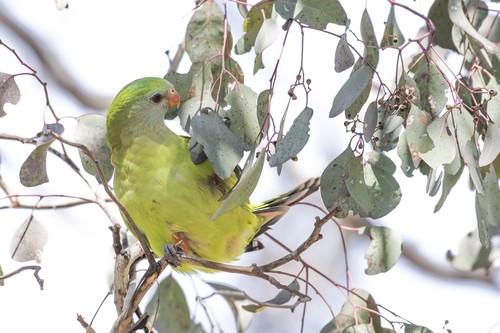
Superb Parrot
About 40 cm (16 in) long including a long tail
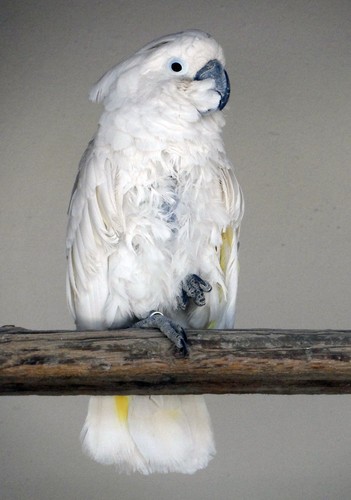
Umbrella Cockatoo
About 46 cm (18 in) long
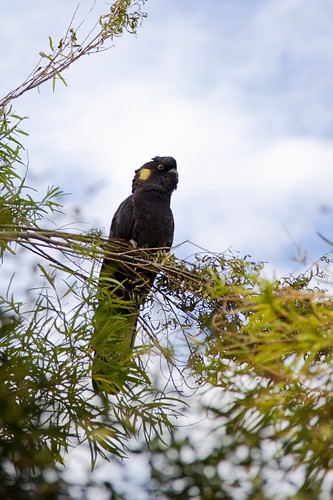
Yellow-tailed Black Cockatoo
55-65 cm long; wingspan up to about 130 cm
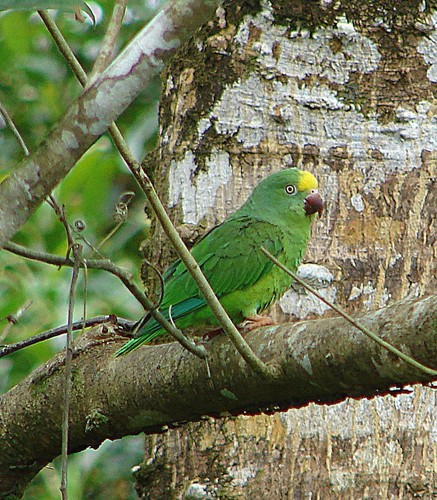
Yellow-crowned Amazon
About 35-38 cm (14-15 in) long
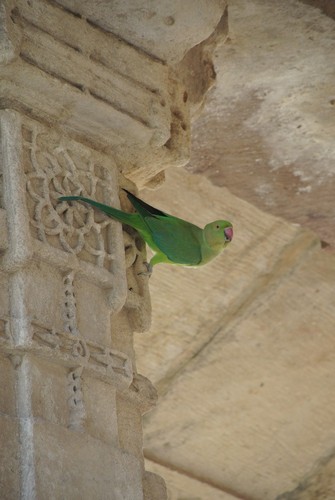
Rose-ringed Parakeet
40 cm (16 in) long including long tail
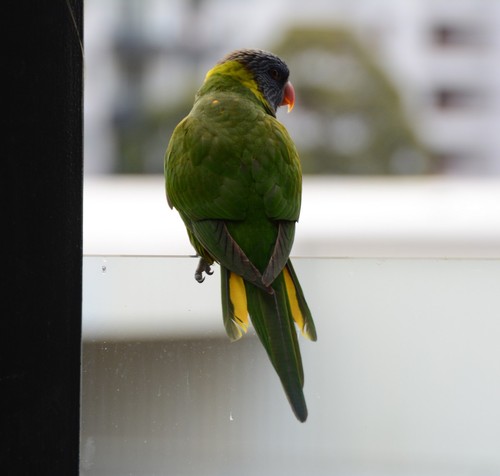
Rainbow Lorikeet
25-30 cm (10-12 in) long
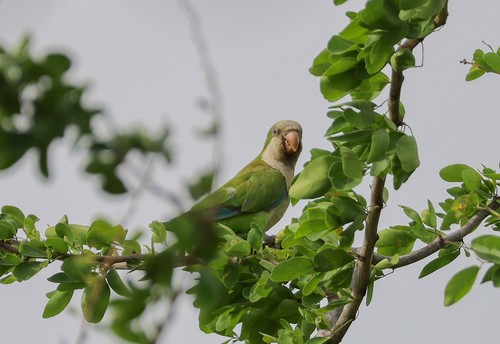
Quaker Parrot
28-31 cm (11-12 in) long
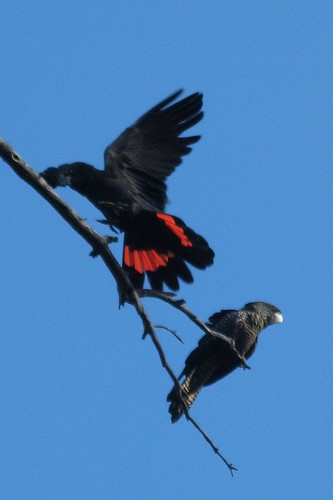
Red-tailed Black Cockatoo
55-65 cm long
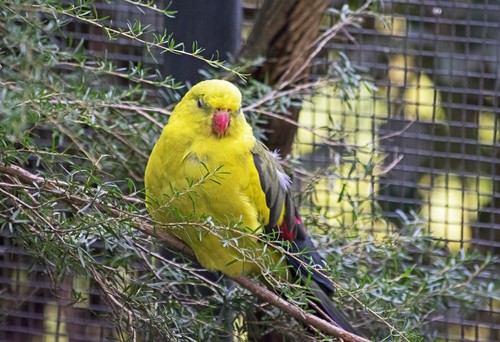
Regent Parrot
37-42 cm (15-17 in) long, including a long tail
Plum-headed Parakeet
33 cm (13 in) long including tail