
Patagonian Conure Identification Guide
A large olive-brown South American parakeet, also called the Burrowing Parrot, famous for nesting in enormous colonies dug into cliff faces.
Read the full Patagonian Conure encyclopedia entry →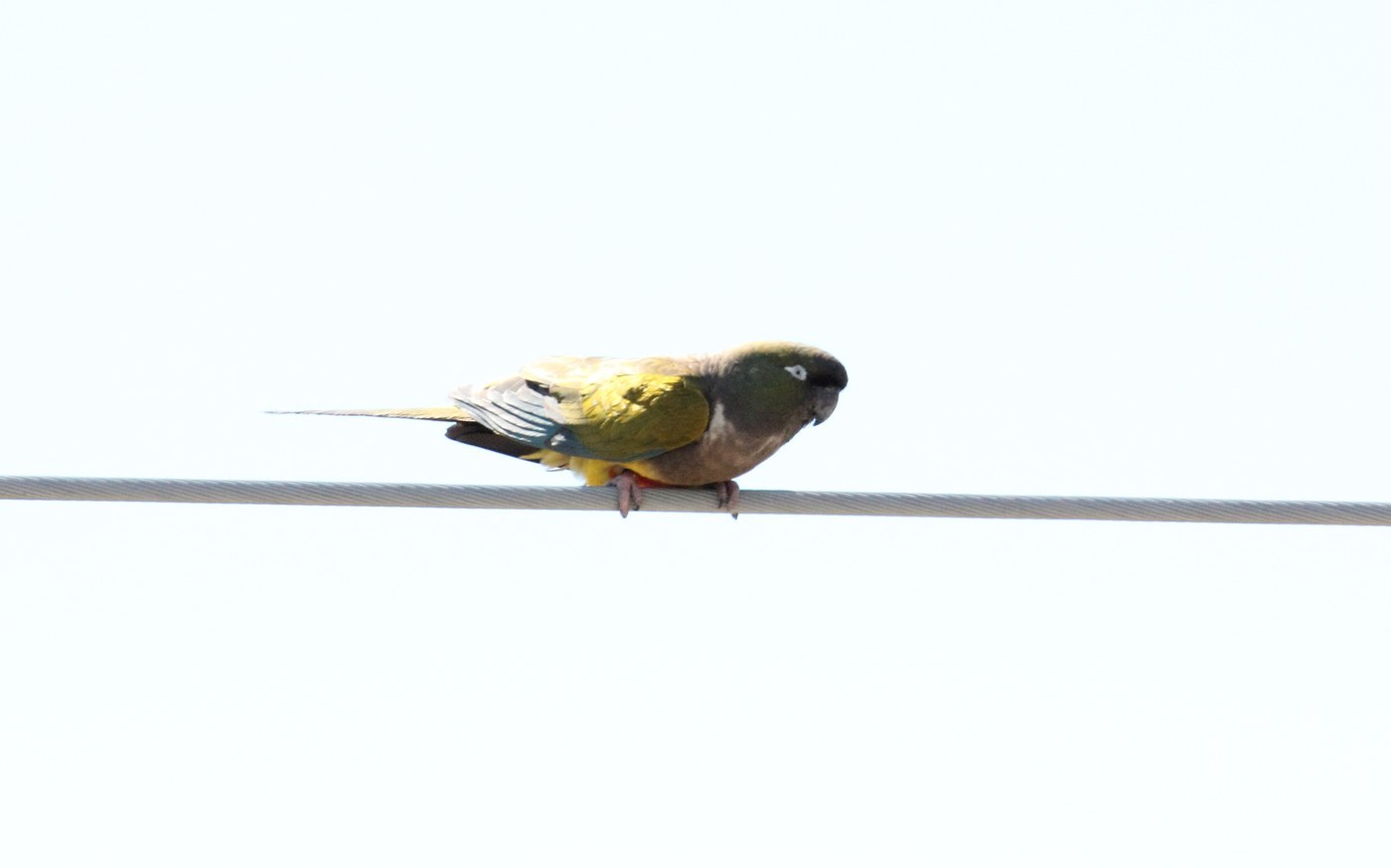
Key Field Marks
- Size & shape: One of the largest parakeets in the Americas, around 45 cm long including a long, tapered tail.
- Plumage: Olive-brown head, back, and breast; a pale grayish-white area on the lower breast; a bright yellow-and-red patch on the belly; and blue-tinged flight feathers visible in flight.
- Bare parts: A pale, whitish eye-ring and a dark bill.
- Behavior: Highly social, forming large, noisy flocks. Nests colonially in tunnels excavated into soft cliff faces or riverbanks, sometimes forming colonies with thousands of nest holes — the largest parrot colonies known anywhere.
Separating It from Similar Species
- Other South American conures/parakeets: Its large size, drab olive-brown plumage, and yellow-red belly patch combined with colonial cliff-nesting behavior make it distinctive; most similarly sized parakeets in its range lack the belly patch or cliff-nesting habit.
- Austral Parakeet: Smaller, greener overall, without the pale breast and belly patch pattern.
Where & When to See It
- Range: Argentina and Chile, primarily in Patagonia, with the largest colonies along the Rio Negro valley in Argentina.
- Habitat: Arid steppe, scrubland, and river valleys with cliffs or eroded banks suitable for burrow excavation.
- Season: Resident, though northern populations may make local seasonal movements; breeding colonies are most active in the austral spring and summer.
Voice
Loud, harsh, screeching calls typical of large parakeets, especially noisy when flocks arrive at or depart from cliff colonies.
Frequently asked questions
Why is the Patagonian Conure also called the Burrowing Parrot?
It nests in tunnels dug into cliff faces and riverbanks, often in massive colonies, unlike most parrots that nest in tree cavities.
Where is the largest Patagonian Conure colony?
Along the Rio Negro valley in Argentina, home to what is considered the largest parrot colony in the world.
What does a Patagonian Conure's belly look like?
It has a distinctive yellow-and-red patch on an otherwise olive-brown and pale gray body.
Are Patagonian Conures social birds?
Yes, they are highly gregarious, nesting and foraging in large, noisy flocks.