
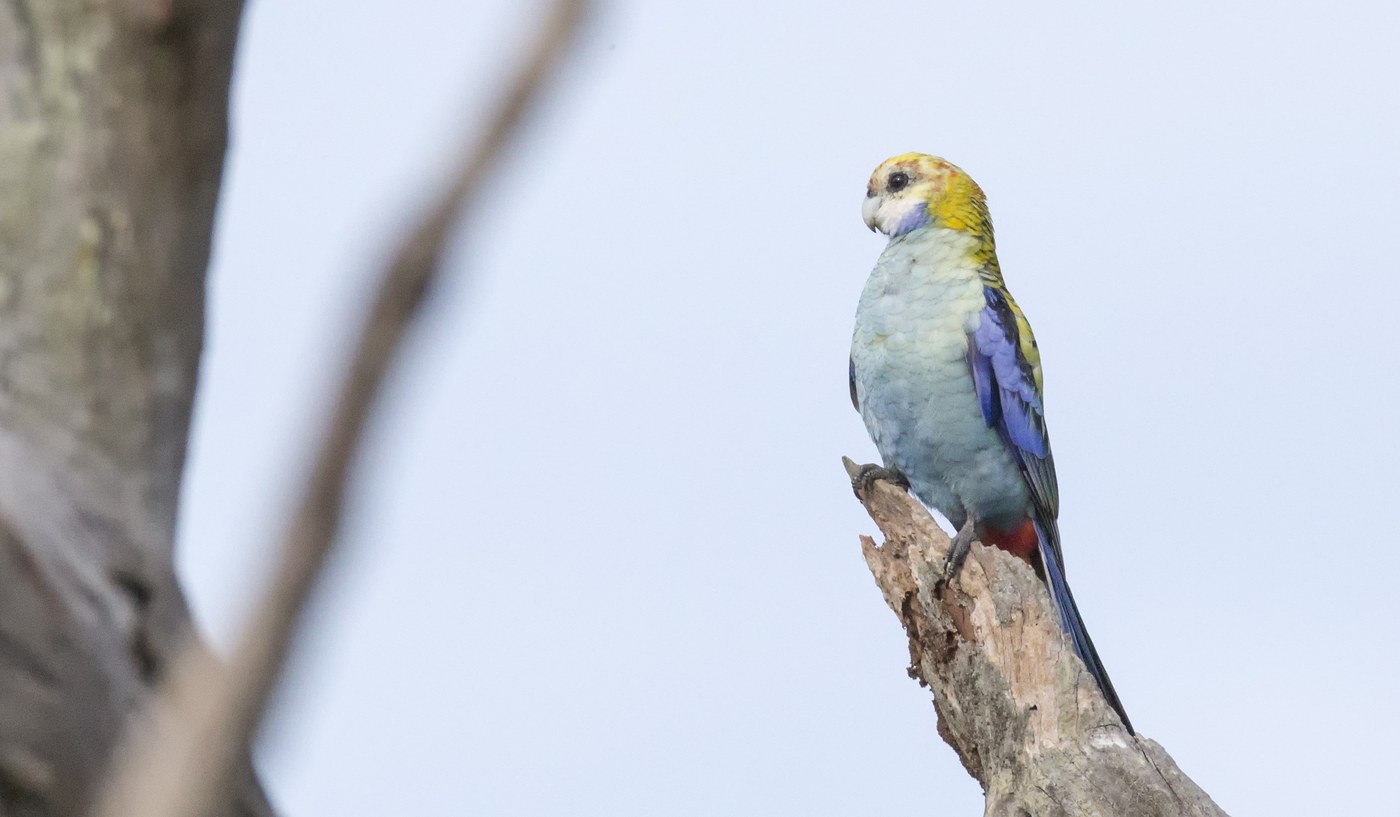
Pale-headed Rosella
Platycercus adscitus
A pale-headed relative of the Eastern Rosella, with a creamy-white head, blue cheeks, and blue underparts, found across Queensland and northern New South Wales.
- Size
- 29-33 cm (11-13 in) long
- Habitat
- open eucalypt woodland, farmland edges, and riverine trees in northeastern Australia
- Type
- parrot
Spotted a bird like this?
Identify any bird from a photo, free.
Overview
The Pale-headed Rosella replaces the closely related Eastern Rosella through much of Queensland and into northern New South Wales, and is easily told apart by its soft, pale yellow-white head rather than red. Blue cheek patches, sometimes edged with a fine white border, stand out against the pale crown and nape, while the underparts are a pale to deep blue rather than yellow.
The back carries the same black-feathers-scalloped-with-color pattern typical of rosellas, here edged in pale yellow, and the tail is long and blue-green. Two recognized forms exist: a paler, whiter-headed northern form and a more richly colored southern form with deeper blue underparts, sometimes called the "blue rosella."
How to identify it
Key field marks
- Pale creamy-yellow to whitish head and nape
- Blue cheek patches, often finely bordered white
- Blue (not yellow) underparts, especially in southern birds
- Black back feathers edged pale yellow, giving a scalloped pattern
- Long blue-green tail
Similar species
- Eastern Rosella: red head and breast rather than pale head, white (not blue-bordered) cheeks. The two species hybridize in a contact zone in northern New South Wales/southern Queensland.
- Northern Rosella: smaller, black-headed species found further north and west, unlikely to be confused given the very different head color.
Habitat & range
Habitat
Pale-headed Rosellas inhabit open eucalypt woodland, timbered farmland, roadside trees, and riverine vegetation, as well as parks and gardens within towns.
Range
The species is endemic to northeastern Australia, occurring through most of Queensland (excluding the far north and interior deserts) and into northeastern New South Wales.
Migration
Generally sedentary, though birds may move locally in response to seasonal food availability, particularly flowering and seeding events.
Behavior & voice
Behavior
Usually found in pairs or small parties, Pale-headed Rosellas forage on the ground and in trees, and can be locally common in rural towns and farmland with scattered timber.
Voice
Calls include a metallic "kwink kwink" contact call similar to other rosellas, along with soft chattering while feeding.
Feeding
They feed on native and introduced grass and tree seeds, fruits, blossoms, nectar, and insects, often foraging quietly on the ground beneath trees.
Nesting and breeding
Nests are built in tree hollows, lined with decayed wood dust. Clutches typically contain four to seven white eggs, incubated by the female for around three weeks, with fledging around five weeks after hatching.
Frequently asked questions
How do you identify a Pale-headed Rosella?
Look for a pale creamy-white head and blue cheek patches and underparts, quite different from the red-headed Eastern Rosella found further south.
Where are Pale-headed Rosellas found?
They are native to Queensland and northeastern New South Wales, in open woodland, farmland, and riverine areas.
Do Pale-headed Rosellas and Eastern Rosellas interbreed?
Yes, in a narrow overlap zone in northern New South Wales and southern Queensland the two species hybridize, producing birds with intermediate coloring.
What do Pale-headed Rosellas eat?
Seeds, fruits, blossoms, nectar, and insects, gathered from trees and the ground.
Pale-headed Rosella guides
In-depth guides for identifying, finding, and understanding Pale-headed Rosella.
Other birds you may enjoy
Eclectus Parrot
35-42 cm (14-16.5 in) long
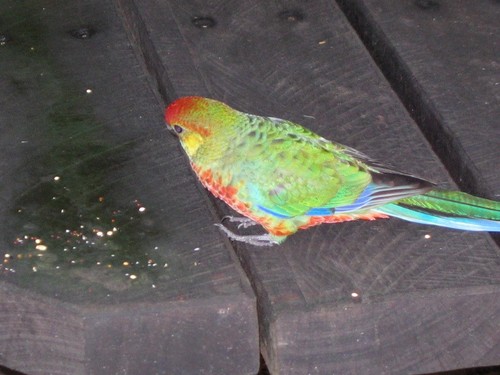
Western Rosella
25-30 cm (10-12 in) long
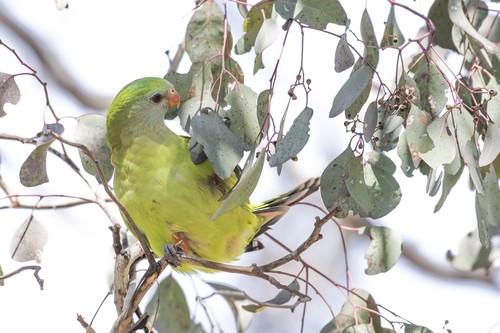
Superb Parrot
About 40 cm (16 in) long including a long tail
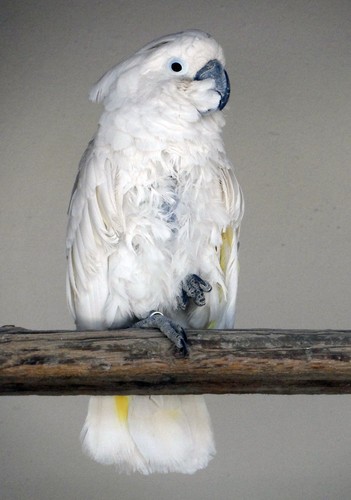
Umbrella Cockatoo
About 46 cm (18 in) long
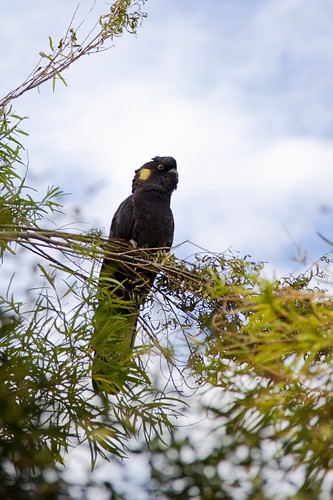
Yellow-tailed Black Cockatoo
55-65 cm long; wingspan up to about 130 cm
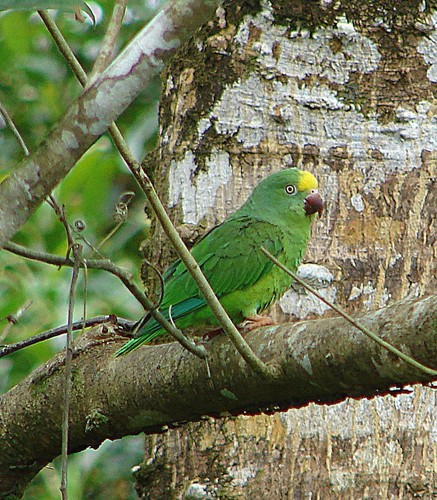
Yellow-crowned Amazon
About 35-38 cm (14-15 in) long
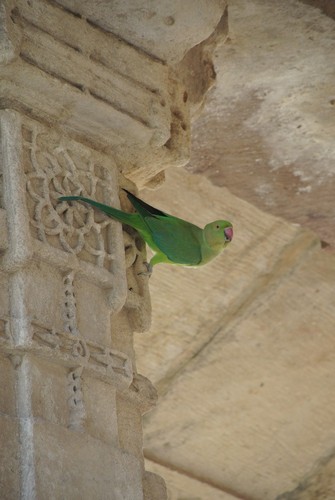
Rose-ringed Parakeet
40 cm (16 in) long including long tail
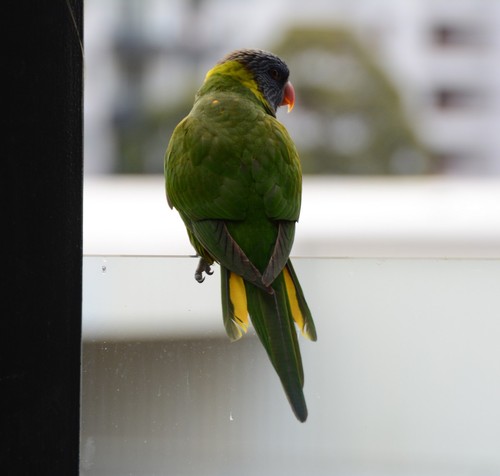
Rainbow Lorikeet
25-30 cm (10-12 in) long
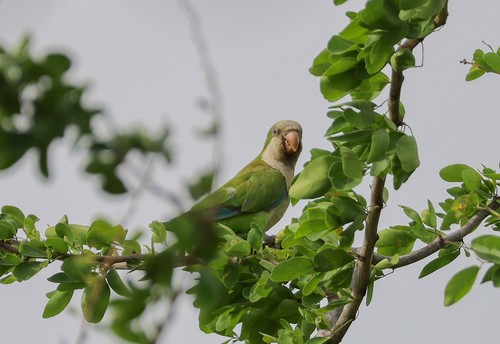
Quaker Parrot
28-31 cm (11-12 in) long
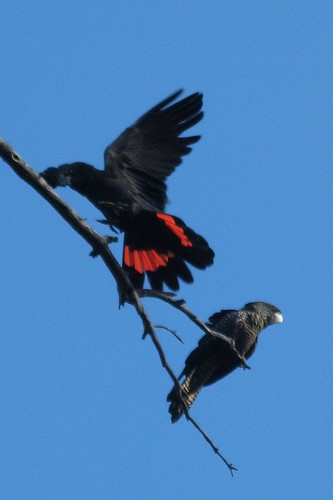
Red-tailed Black Cockatoo
55-65 cm long
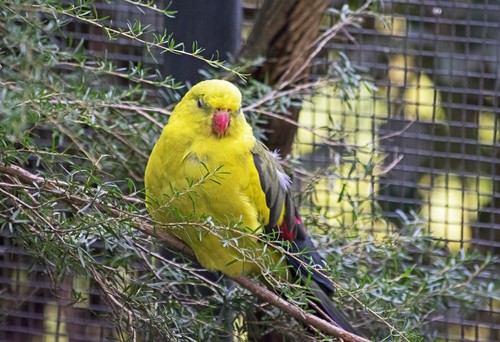
Regent Parrot
37-42 cm (15-17 in) long, including a long tail
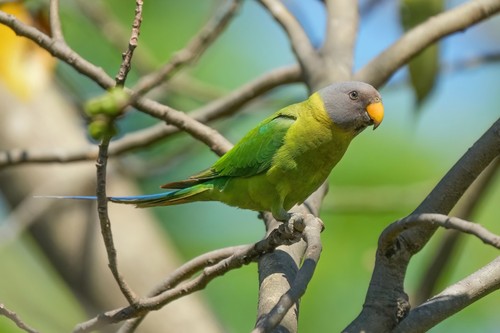
Plum-headed Parakeet
33 cm (13 in) long including tail