
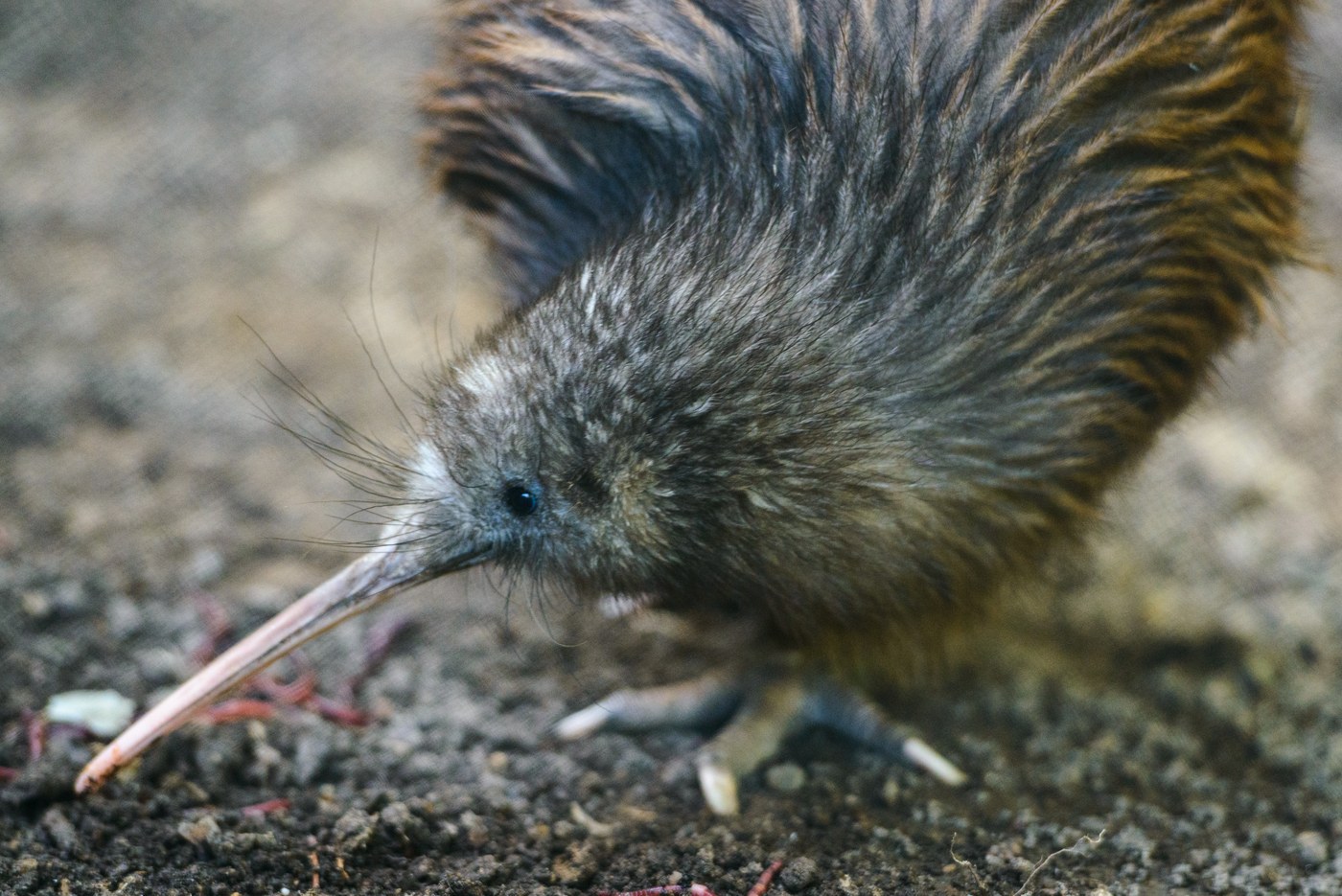
North Island Brown Kiwi
Apteryx mantelli
The most numerous kiwi species and an enduring national symbol of New Zealand, a flightless, nocturnal, shaggy brown bird that hunts invertebrates by smell.
- Size
- 35-45 cm (14-18 in) body length, flightless
- Habitat
- native and exotic forest, scrub, and farmland with cover across the North Island of New Zealand
- Type
- other
Spotted a bird like this?
Identify any bird from a photo, free.
Overview
The North Island Brown Kiwi is the most widespread and familiar of New Zealand's kiwi species and the bird most associated with the national nickname "Kiwi." It has streaky reddish-brown, hair-like plumage, a long pale bill, and no visible tail, with tiny vestigial wings completely concealed beneath its feathers.
Unusually adaptable for a kiwi, it persists not only in native forest but also in exotic pine plantations, scrub, and even farmland with adequate ground cover, helping it remain the most numerous kiwi species despite ongoing threats. It is almost entirely nocturnal and relies on an acute sense of smell, unusual among birds, to locate food.
How to identify it
Key field marks
- Reddish-brown, shaggy, hair-like plumage
- Long, pale, slightly downcurved bill with nostrils at the tip
- Rounded body with no visible tail
- Stout legs and strong claws for digging
- Bristle-like feathers (whiskers) around the bill base
Similar species
- Southern Brown Kiwi (tokoeka) looks similar but is restricted to the South Island and Stewart Island, with no range overlap.
- Great Spotted Kiwi and Little Spotted Kiwi both show greyer, more finely mottled plumage rather than the warmer, more uniform brown tones of this species.
Habitat & range
Range
Endemic to the North Island of New Zealand, with strongholds in Northland, Coromandel, and the central and eastern North Island, plus reintroduced populations on some predator-free islands and fenced sanctuaries.
Habitat
Uses native forest, regenerating scrub, exotic pine plantations, and farmland with hedgerows or gullies offering daytime shelter.
Migration
Non-migratory; adults are strongly territorial and hold stable home ranges for life.
Behavior & voice
Behavior
A nocturnal, largely solitary forager that spends the day resting in a burrow, under tree roots, or in dense vegetation, emerging at dusk to patrol its territory on foot.
Voice
Males give a rising, shrill whistle repeated several times, while females give a slower, more guttural call; calling is most frequent around dusk and dawn.
Feeding
Uses its long, sensitive, smell-equipped bill to probe soil and leaf litter for earthworms and invertebrate larvae, also taking some fallen fruit.
Nesting
Nests in a burrow or under dense cover; the female lays one of the largest eggs relative to body size of any bird, and the male typically performs most of the roughly 70-80 day incubation.
Frequently asked questions
Why is the kiwi New Zealand's national symbol?
As the country's most recognizable native bird, unique for being flightless and nocturnal, the kiwi (especially this widespread North Island species) became an enduring national emblem, giving New Zealanders the nickname "Kiwis."
How big is a kiwi egg?
A kiwi egg can weigh up to around 20 percent of the female's body weight, one of the largest egg-to-body-weight ratios of any bird.
What eats North Island Brown Kiwi?
Introduced predators such as stoats and dogs kill chicks and adults respectively, which is why intensive predator control and fenced sanctuaries are central to conservation efforts.
Are North Island Brown Kiwi active during the day?
Rarely; they are almost entirely nocturnal, resting in burrows or dense cover by day and foraging after dark.
North Island Brown Kiwi guides
In-depth guides for identifying, finding, and understanding North Island Brown Kiwi.
Other birds you may enjoy
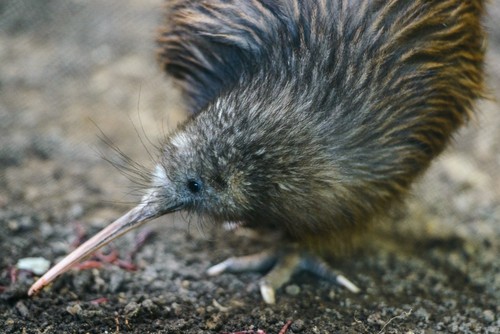
Kiwi
35-55 cm (14-22 in) long; roughly chicken-sized
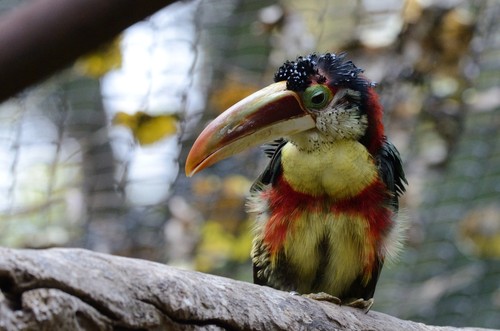
Curl-crested Aracari
41-46 cm (16-18 in) long, including a long bill and tail
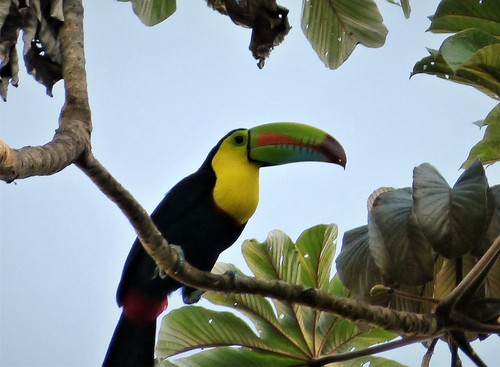
Keel-billed Toucan
42-55 cm (17-22 in) long including bill
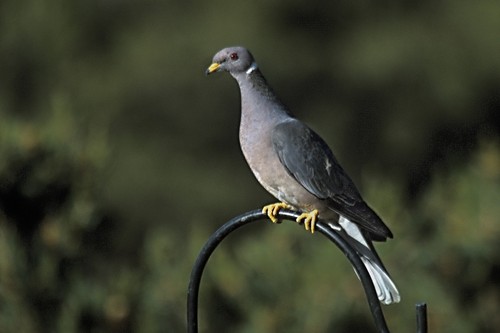
Band-tailed Pigeon
33-38 cm (13-15 in) long, wingspan about 66 cm (26 in)
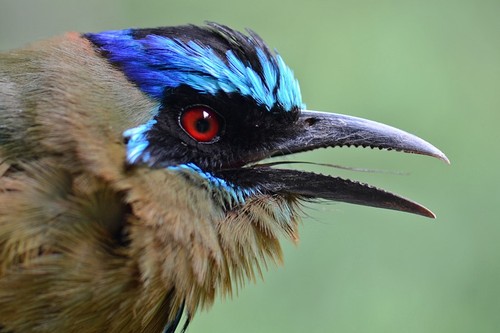
Blue-crowned Motmot
38-43 cm (15-17 in) long including tail
White-tipped Dove
27-30 cm (10.5-12 in) long, 38-43 cm wingspan
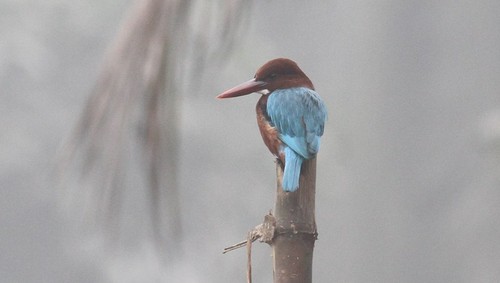
White-throated Kingfisher
27-28 cm (10.5-11 in) long
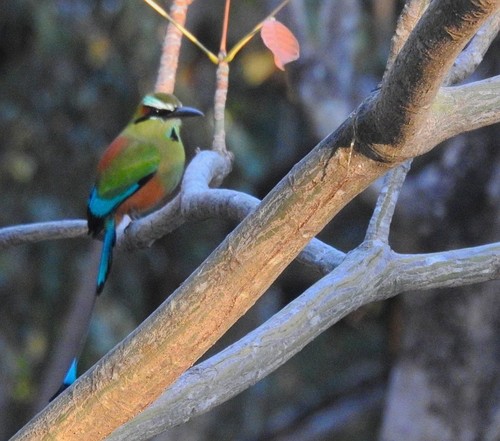
Turquoise-browed Motmot
34 cm (13 in) long including tail
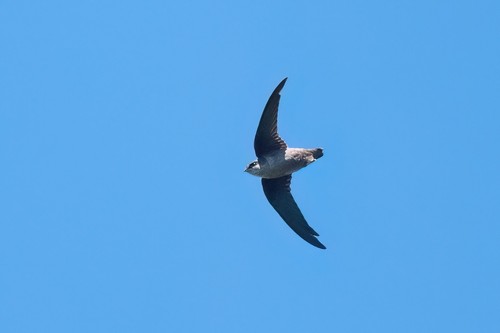
Vaux's Swift
10-12 cm (4-4.5 in) long, 27-30 cm wingspan
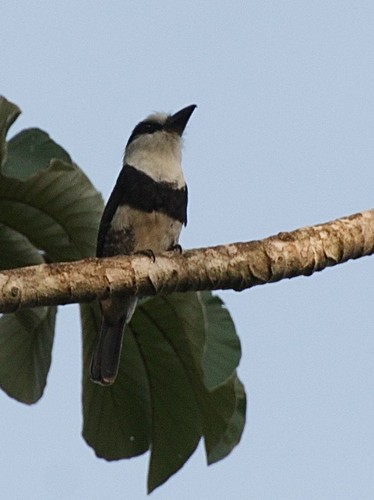
White-necked Puffbird
22-24 cm (8.5-9.5 in) long
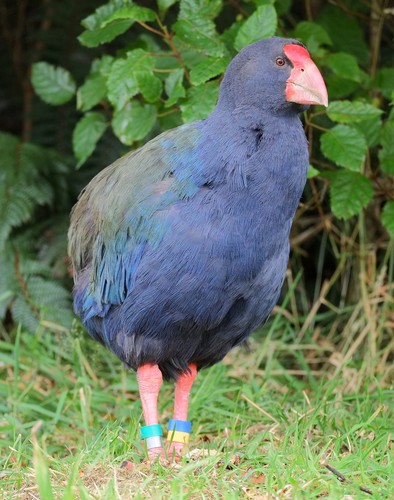
Takahe
50 cm (20 in) long, up to 3.5 kg; flightless
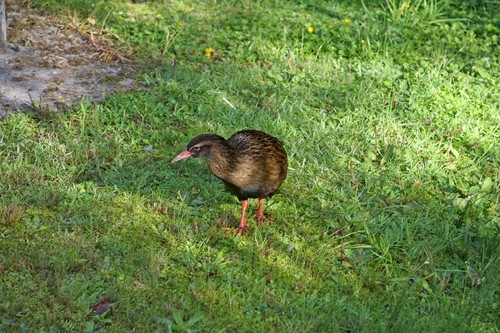
Weka
50-60 cm (20-24 in) long; flightless