
North Island Brown Kiwi Identification Guide
New Zealand's iconic flightless, nocturnal ratite is a shaggy, streaky reddish-brown bird identified more by its loud nighttime calls and long probing bill than by sight, since it is almost never seen in daylight.
Read the full North Island Brown Kiwi encyclopedia entry →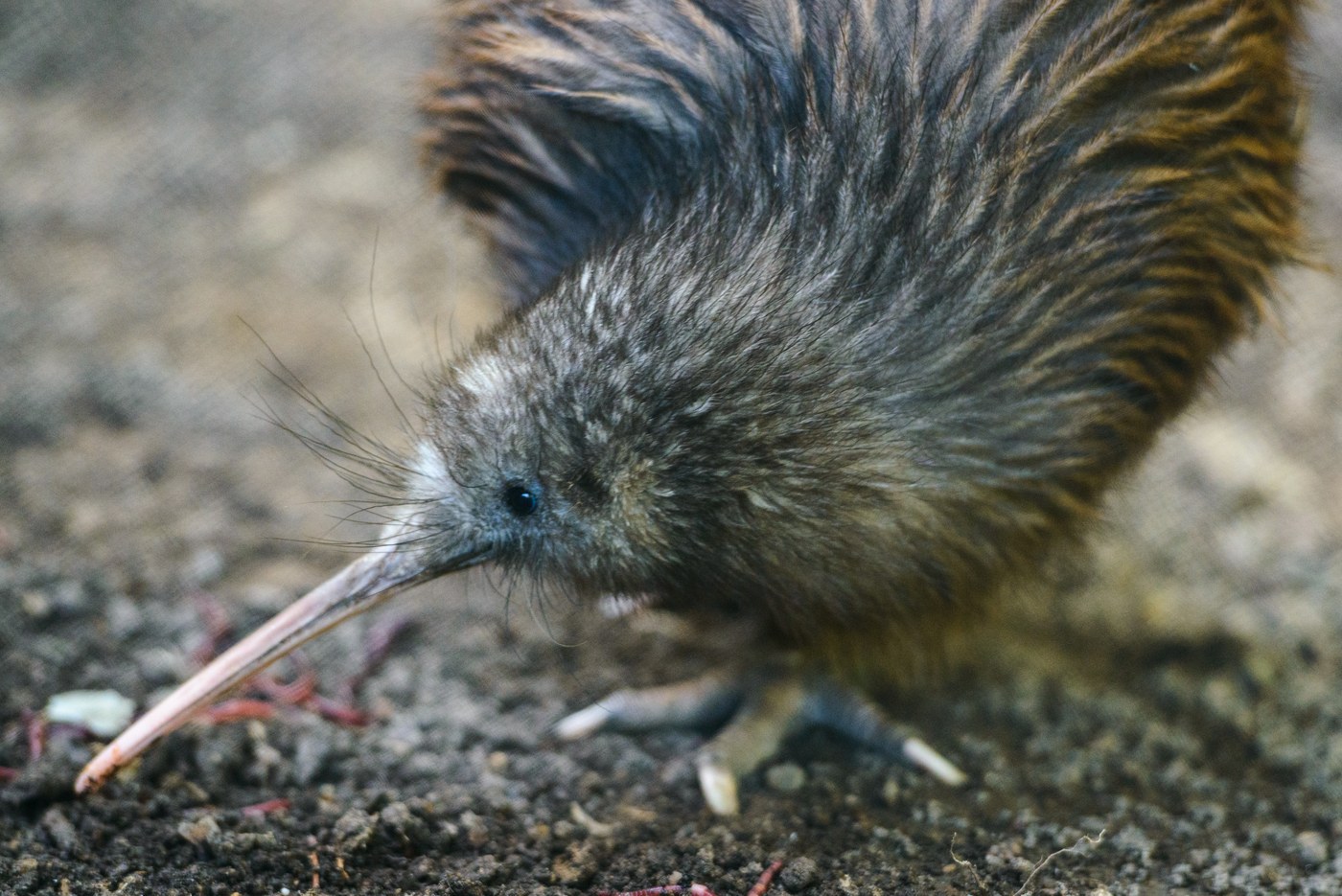
Overview
The North Island Brown Kiwi (Apteryx mantelli) is the most numerous of New Zealand's kiwi species and the one most people encounter, whether wild in North Island forests or in dedicated nocturnal kiwi houses, since its secretive, nighttime habits make direct sightings in the wild rare.
Key Field Marks
- Size & shape: Roughly chicken-sized but with a distinctive round, tailless, almost pear-shaped body, about 40 cm tall, held in a hunched, forward-leaning posture.
- Plumage: Shaggy, coarse, hair-like reddish-brown to streaky grey-brown feathers that look more like fur than typical bird plumage, giving it a distinctive scruffy appearance.
- Bill: Very long (up to 12 cm), slightly downcurved, pale-based bill with nostrils uniquely located at the very tip — used to probe soil for invertebrates by smell, an extremely unusual sensory adaptation among birds.
- Legs: Thick, powerful, strong legs and clawed feet used for digging burrows and defending territory, making up a large proportion of its body weight.
- Wings/eyes: Wings are vestigial and hidden under the plumage; eyes are small and adapted for very low light rather than color vision, reflecting its largely non-visual, scent- and hearing-based lifestyle.
Similar Species
No other bird in New Zealand resembles the kiwi's shape, and among the five recognized kiwi species/subspecies, North Island Brown Kiwi is distinguished from South Island species (e.g., Great Spotted Kiwi, Tokoeka) mainly by range (North Island only) and by generally more uniform, less mottled/spotted plumage than Great Spotted Kiwi, which shows more banded, greyish patterning.
Habitat & Range
Endemic to New Zealand's North Island, found in native forest, scrubland, exotic plantation forest, and even some farmland with adequate cover, from Northland and Coromandel south through the central North Island, including notable populations at reserves such as Tongariro Forest, Whangarei area, and offshore/mainland sanctuaries.
Season
Resident year-round and non-migratory; breeding generally occurs in the austral winter to spring (roughly June to March), with the male doing virtually all incubation of the famously enormous egg relative to the female's body size.
Behavior
Strictly nocturnal and highly secretive, spending daylight hours hidden in burrows or dense cover and emerging at night to forage on the ground for earthworms, insects, and larvae, located largely by smell using its uniquely tip-located nostrils. Pairs are often monogamous and long-term, defending territories with loud calling. Because of its nocturnal habits, most people encounter kiwi through their calls or at nocturnal wildlife houses rather than in the wild.
Voice
Males give a rising, shrill, repeated whistle, often described as the origin of the name "kiwi"; females give a lower, harsher, more guttural call. Calls are given mainly at night, especially around dusk and before dawn, and are a far more common way to detect the species than sight.
Frequently asked questions
Why is it so hard to see a North Island Brown Kiwi in the wild?
It is strictly nocturnal and spends daylight hours hidden in burrows or dense vegetation, only emerging to forage after dark, so most people see kiwi only at dedicated nocturnal houses or hear them calling at night.
How does a kiwi find food without good eyesight?
It has a highly developed sense of smell with nostrils located at the very tip of its long bill, allowing it to detect earthworms and invertebrates underground by scent rather than sight.
How can I tell a male from a female kiwi call?
Male kiwi give a higher, rising, shrill whistled call, while females give a noticeably lower, hoarser, more guttural call.
Are North Island Brown Kiwi endangered?
Yes, they are threatened, primarily due to predation by introduced mammals such as stoats and dogs, though intensive conservation programs including predator control and "Operation Nest Egg" have helped stabilize many populations.