
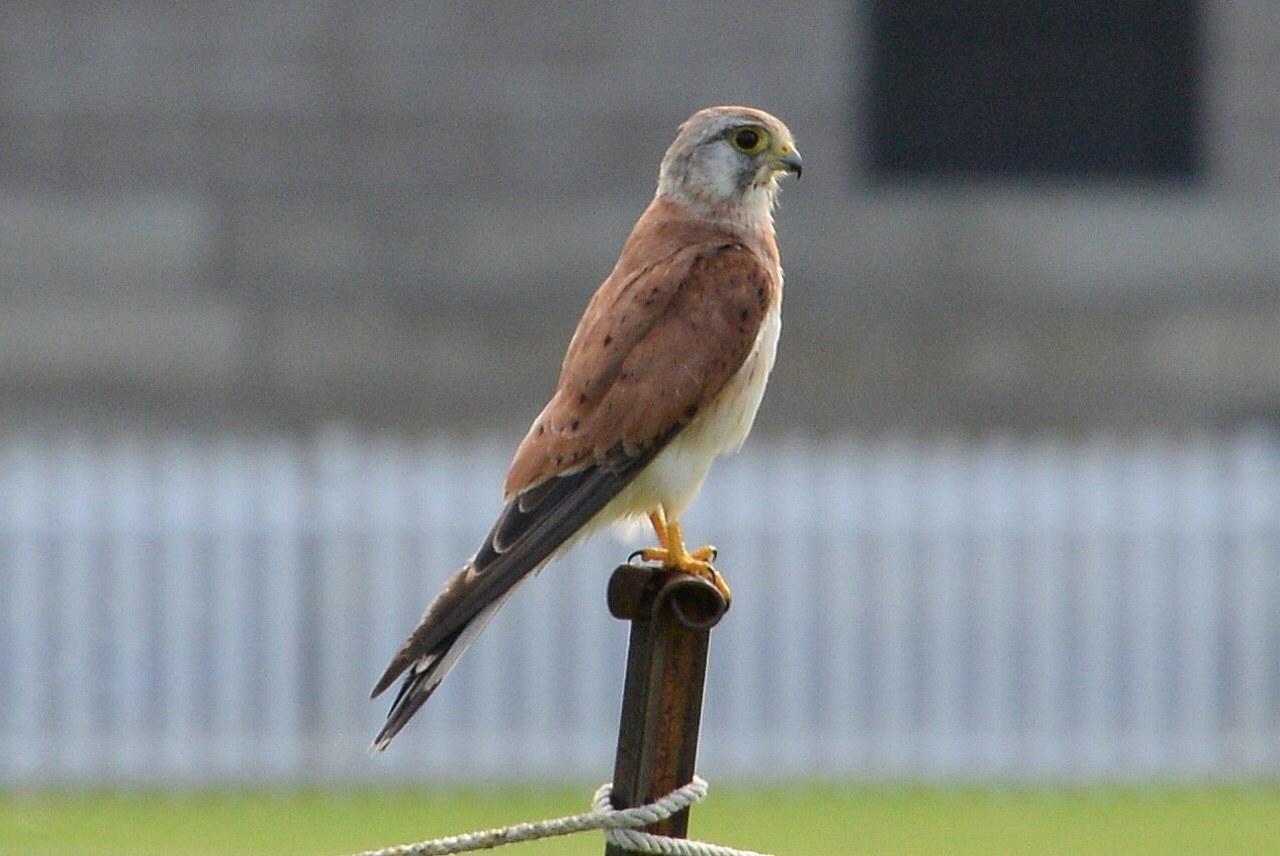
Nankeen Kestrel
Falco cenchroides
Australia's smallest falcon, a rufous-backed kestrel famous for hovering motionless in the air while scanning for prey.
- Size
- 30-35 cm (12-14 in) long, 66-78 cm (26-31 in) wingspan
- Habitat
- open country, grasslands, farmland, roadsides, and urban areas across Australia
- Type
- raptor
Spotted a bird like this?
Identify any bird from a photo, free.
Overview
The Nankeen Kestrel is a small, slender falcon named for its warm, rufous-buff or 'nankeen' coloured back and wings, contrasting with a pale grey head and tail in the male; females and juveniles are more uniformly rufous-brown with fine barring on the tail. Both sexes have dark eyes, a pale cere and legs, and the pointed wings and long tail typical of falcons.
As Australia's smallest and most widespread falcon, the Nankeen Kestrel is a familiar sight along highways and over farmland, where its distinctive hunting technique of hovering almost motionless in the air, wings beating rapidly while the head remains perfectly still, makes it easy to identify even at a distance.
The species has adapted well to agricultural and urban landscapes, often nesting on buildings, bridges, and other structures in addition to natural cliff ledges and tree hollows, and is commonly seen perched on roadside wires and posts scanning for prey.
How to identify it
Key field marks
- Small, slim falcon with long, pointed wings and a long tail
- Male: pale grey head and tail contrasting with rufous back and wings
- Female and juvenile: more uniformly rufous-brown with a barred tail
- Characteristic hovering flight with rapid wingbeats and a fanned tail
Similar species
The Brown Falcon is considerably larger and bulkier with broader wings and lacks the sustained hovering habit. The Australian Hobby is darker overall with a black cap and moustache and pointed, swept-back wings, and hunts fast-flying prey in direct pursuit rather than hovering. The kestrel's small size, pale rufous tones, and distinctive hovering flight are the best distinguishing features.
Habitat & range
Habitat
Nankeen Kestrels favour open habitats of all kinds, including grasslands, farmland, roadsides, semi-arid country, and urban and suburban areas, generally avoiding dense forest.
Range
The species is found throughout Australia, including many offshore islands, and vagrants occasionally reach New Zealand and other nearby islands.
Migration
Most populations are sedentary or locally nomadic, though birds in the arid interior may move more widely in response to prey availability, and some seasonal movement occurs in southern regions.
Behavior & voice
Behavior
This kestrel hunts characteristically by hovering in place, facing into the wind with rapid, shallow wingbeats and a fanned tail while scanning the ground below, before dropping onto prey. It also hunts from an elevated perch such as a wire, post, or dead tree.
Voice
Its call is a shrill, chattering 'ki-ki-ki-ki', typically given near the nest or during territorial and courtship interactions.
Feeding
It preys mainly on insects such as grasshoppers and beetles, along with small mammals like mice, reptiles, and occasionally small birds, taken after hovering or from a perch.
Nesting and breeding
Nankeen Kestrels do not build their own nest, instead using cliff ledges, tree hollows, old stick nests of other birds, or ledges on buildings and bridges; the female performs most incubation while the male supplies food during breeding.
Frequently asked questions
Why is the Nankeen Kestrel famous for hovering?
It hunts by hovering almost motionless in the air with rapid wingbeats while scanning the ground for prey, a distinctive technique that makes it easy to identify.
How big is the Nankeen Kestrel?
It is Australia's smallest falcon, measuring about 30-35 cm in length.
What does a Nankeen Kestrel eat?
Mostly insects such as grasshoppers, along with small mammals, reptiles, and occasionally small birds.
Where does the Nankeen Kestrel nest?
It does not build its own nest, instead using cliff ledges, tree hollows, old nests of other birds, or ledges on buildings and bridges.
How is the Nankeen Kestrel different from the Brown Falcon?
The Nankeen Kestrel is much smaller and slimmer with a distinctive hovering flight, while the Brown Falcon is larger, bulkier, and does not hover in the same sustained way.
Nankeen Kestrel guides
In-depth guides for identifying, finding, and understanding Nankeen Kestrel.
Other birds you may enjoy
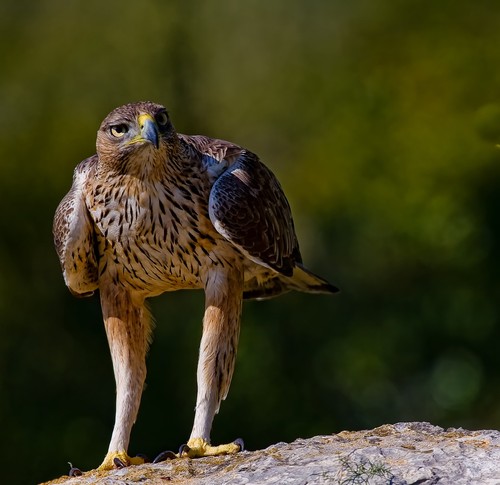
Bonelli's Eagle
Body 65–72 cm (26–28 in); wingspan 150–180 cm (59–71 in)
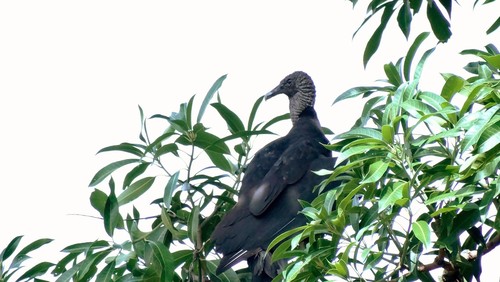
Black Vulture
56-68 cm (22-27 in) long, 137-165 cm wingspan
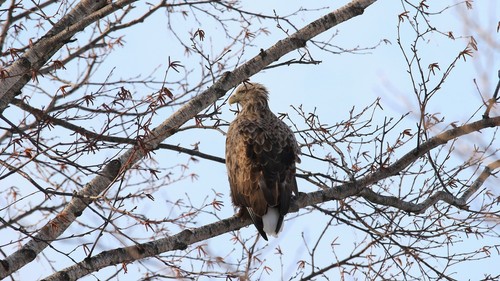
White-tailed Eagle
66-94 cm body length; wingspan 178-245 cm, among the largest eagles in the world
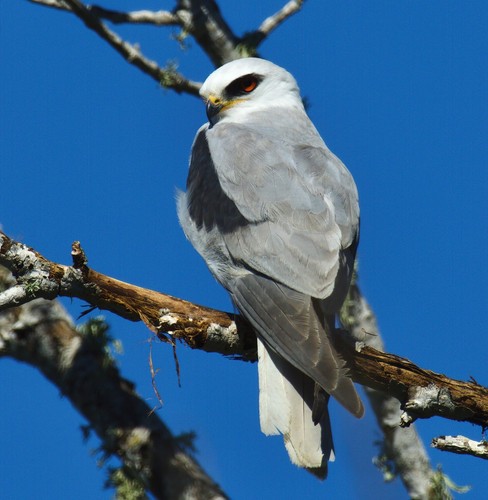
White-tailed Kite
35-43 cm (14-17 in) long, 88-102 cm (35-40 in) wingspan
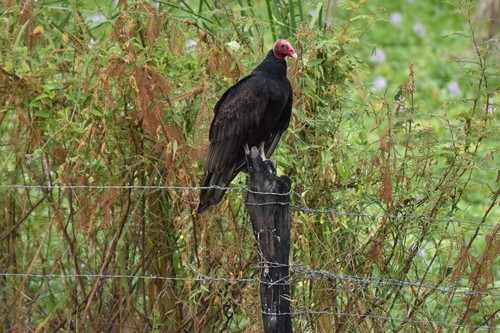
Turkey Vulture
64-81 cm (25-32 in) long, 160-183 cm wingspan
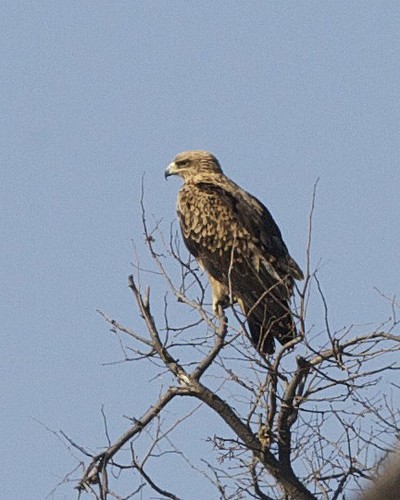
Tawny Eagle
62–75 cm long; wingspan 1.65–2.0 m
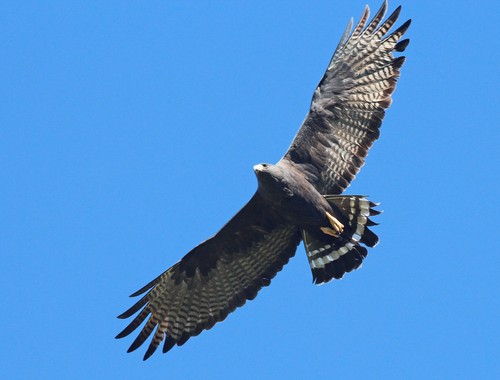
Zone-tailed Hawk
46-56 cm (18-22 in) long, 118-140 cm (46-55 in) wingspan
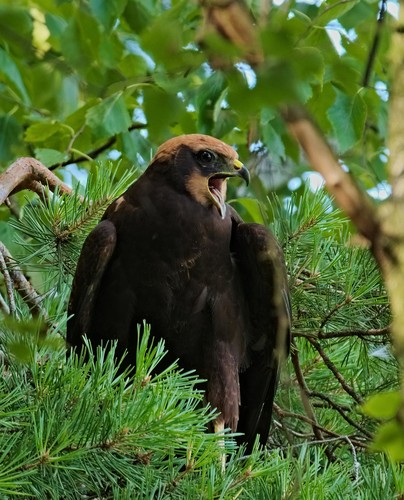
Western Marsh Harrier
Body 43-56 cm; wingspan 115-140 cm
Swallow-tailed Kite
48-68 cm (19-27 in) long including tail streamers, 112-136 cm (44-54 in) wingspan
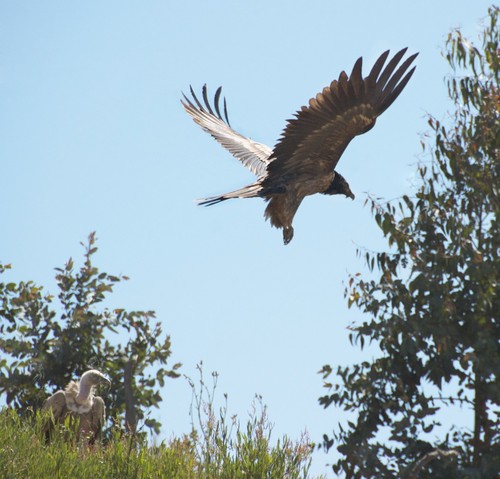
White-backed Vulture
78-98 cm long, wingspan 1.96-2.25 m
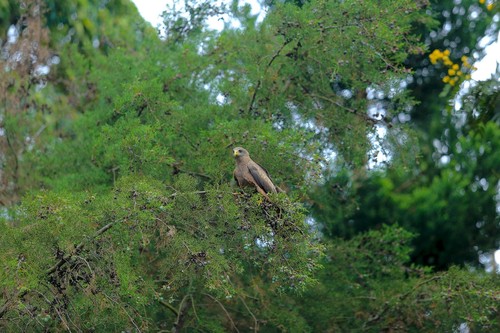
Yellow-billed Kite
55-60 cm long; wingspan 130-155 cm
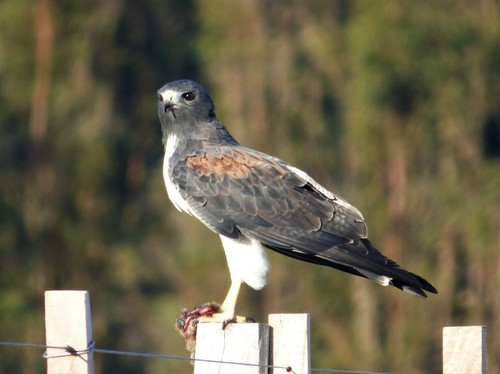
White-tailed Hawk
46-59 cm (18-23 in) long, 122-142 cm (48-56 in) wingspan